
Craving a taste of Thailand? This Basil Chicken with Coconut Curry Sauce (often called Pad Kra Pao Gai) is a vibrant and aromatic dish that’s surprisingly easy to make at home. We’re taking the classic Thai street food favorite and elevating it with a rich and creamy coconut curry sauce. The combination of savory chicken, fragrant basil, and a touch of spice will transport your taste buds straight to Bangkok! This recipe balances authentic flavors with clear instructions, making it perfect for both seasoned cooks and those new to Thai cuisine. Get ready for a culinary adventure!
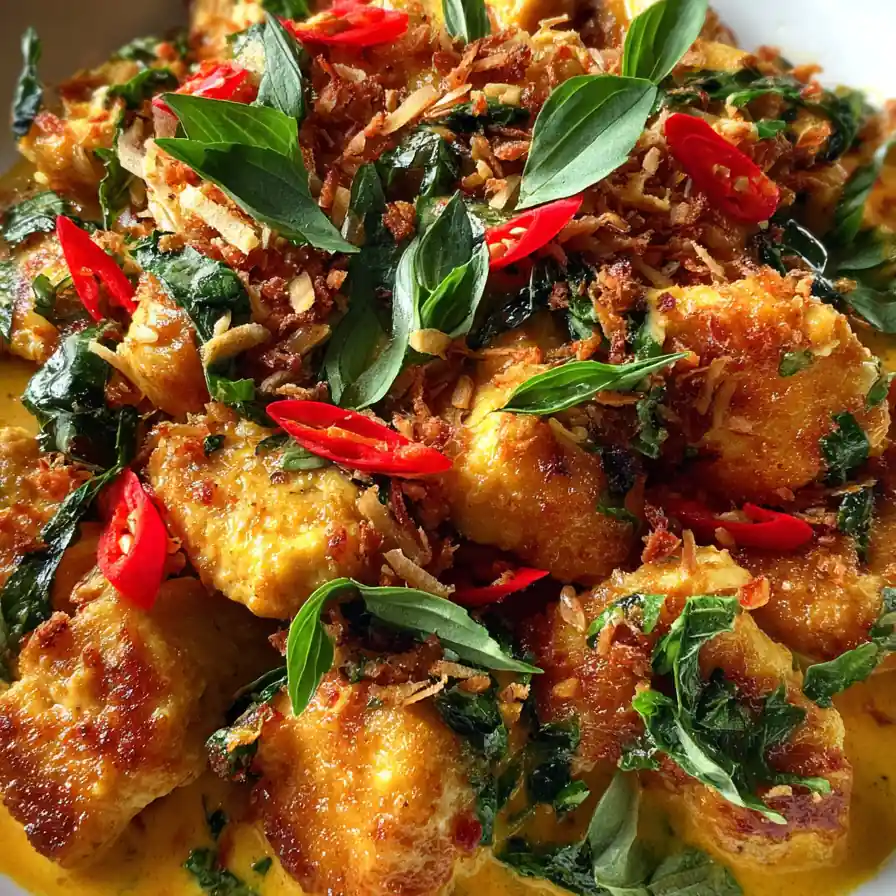
What You’ll Need: The Ingredient List
- 400 g (14 oz) boneless, skinless chicken thighs, cut into 2 cm (¾-inch) cubes: Chicken thighs are preferred for their tenderness and flavor, but breasts can be used if you prefer. Cutting them into cubes ensures even cooking and maximum sauce coverage.
- 2 tbsp (30 ml) vegetable oil: A neutral-flavored oil like vegetable, canola, or sunflower oil is ideal for stir-frying and searing the chicken without adding unwanted flavors.
- 1 medium onion (≈150 g / 5 oz), finely diced: The onion forms the aromatic base of the curry, providing sweetness and depth of flavor. Dicing it finely ensures it cooks down quickly and blends seamlessly into the sauce.
- 3 cloves garlic, minced (≈15 g / ½ tbsp): Garlic is another essential aromatic, adding a pungent and savory note to the dish. Freshly minced garlic is always best for maximum flavor.
- 1 tbsp (15 g) fresh ginger, grated: Ginger brings a warm, spicy, and slightly citrusy flavor to the curry. Grating it releases its essential oils, intensifying the aroma and taste.
- 1 tbsp (15 g) lemongrass paste or 1 stalk lemongrass, minced: Lemongrass is a signature ingredient in Thai cuisine, lending a bright, citrusy, and floral aroma. Using paste is convenient, but fresh lemongrass, finely minced, offers a more vibrant flavor.
- 2 tbsp (30 ml) red Thai curry paste (ensure halal-certified): This is the heart of the curry’s flavor! Look for a high-quality red curry paste – the ingredients will vary by brand, but should include chili peppers, lemongrass, galangal, kaffir lime peel, and spices. Always check for halal certification if needed.
- 400 ml (13.5 fl oz) full-fat coconut milk: Full-fat coconut milk is crucial for a rich and creamy sauce. The fat content contributes to the sauce’s texture and flavor. Do not substitute with light coconut milk.
- 2 kaffir lime leaves, torn: Kaffir lime leaves impart a unique citrusy and floral aroma that’s characteristic of Thai cuisine. Tearing them releases their essential oils.
- 1 tbsp (15 ml) fish sauce (halal-certified): Fish sauce adds a salty, umami-rich flavor that balances the sweetness of the coconut milk and sugar. Ensure it is halal-certified if required.
- 1 tsp (5 ml) palm sugar or brown sugar: Palm sugar has a caramel-like flavor that complements the other ingredients beautifully. Brown sugar is a good substitute if palm sugar isn’t available.
- 1 tsp (5 ml) sea salt: Used to season and enhance the flavors of the dish.
- ½ cup (15 g) fresh Thai basil leaves, packed: Thai basil has a slightly anise-like flavor that’s essential to this dish. It’s added at the very end to preserve its freshness and aroma. Do not substitute with Italian basil.
- 1 small red chili, thinly sliced: Adds a touch of heat and visual appeal. Adjust the amount to your spice preference.
- 1 tbsp (15 g) toasted coconut flakes: Provides a delightful textural contrast and a subtle coconut flavor.
- 1 lime, cut into wedges: A squeeze of lime juice brightens the flavors and adds a refreshing acidity.
Ingredient Substitutions
While we recommend using the ingredients as listed for the best flavor, here are a few substitutions if needed:
- Chicken Thighs: Chicken breast can be used, but reduce cooking time slightly to avoid drying out.
- Lemongrass: If you can’t find lemongrass paste or fresh lemongrass, you can omit it, but the flavor will be less complex.
- Palm Sugar: Brown sugar or maple syrup can be used as a substitute.
- Kaffir Lime Leaves: While difficult to replicate perfectly, a small amount of lime zest can add a similar citrusy note.
Detailed Cooking Instructions: A Step-by-Step Guide
- Prepare the Chicken: Begin by patting the chicken pieces dry with paper towels. This is crucial for achieving a good sear. Season lightly with sea salt and pepper. Don’t over-season at this stage, as the curry paste and fish sauce will contribute significant flavor.
- Sear the Chicken: Heat the vegetable oil in a large skillet (cast iron is ideal for even heat distribution) over medium-high heat until it shimmers. This indicates the oil is hot enough. Add the chicken in a single layer – avoid overcrowding the pan, as this will steam the chicken instead of searing it. Sear for 2-3 minutes per side, until golden brown but not fully cooked through. The goal is to develop color and flavor, not to cook the chicken completely. Transfer the seared chicken to a plate and set aside.
- Build the Aromatic Base: Reduce the heat to medium. Add the diced onion to the skillet and sauté for 3-4 minutes, until softened and translucent. Add the minced garlic, grated ginger, and lemongrass (paste or minced stalk) and continue to sauté for another minute, until fragrant. Be careful not to burn the garlic.
- Bloom the Curry Paste: Stir in the red Thai curry paste and cook for 1 minute, stirring constantly. This process, known as “blooming,” releases the aromatic compounds in the paste, intensifying its flavor. The kitchen will fill with a wonderful fragrance!
- Simmer the Coconut Curry Sauce: Pour in the full-fat coconut milk. Add the torn kaffir lime leaves – these impart a unique citrusy aroma. Bring the mixture to a gentle simmer (around 90°C/194°F), stirring occasionally to prevent sticking. Simmer for 5-6 minutes, allowing the flavors to meld and the sauce to slightly thicken.
- Combine Chicken and Sauce: Return the seared chicken to the pan. Add the fish sauce and palm sugar (or brown sugar). Continue simmering for 4-5 minutes, or until the chicken reaches an internal temperature of 75°C/167°F and the sauce has thickened to your desired consistency.
- Finish with Basil: Remove the pan from the heat. Gently fold in the fresh Thai basil leaves. The residual heat will wilt the basil, releasing its fragrant oils. Allow the basil to wilt for about 30 seconds.
- Rest and Serve: Transfer the Basil Chicken with Coconut Curry Sauce to a serving bowl and let it rest for 2 minutes before serving. This allows the flavors to further develop.
Understanding the Halal Considerations
This recipe specifically calls for halal-certified red Thai curry paste and fish sauce. This is important for those adhering to halal dietary guidelines. Always check the packaging to ensure the products are certified. Substituting with non-halal ingredients will compromise the integrity of the dish for those who require it.
The Magic of Kaffir Lime Leaves
Kaffir lime leaves are a cornerstone of Southeast Asian cuisine, and this Basil Chicken is no exception. Their intensely fragrant citrus notes elevate the dish, adding a complexity that’s hard to replicate. Don’t skip them! If you can’t find fresh kaffir lime leaves, you can sometimes find them frozen, but the flavor won’t be quite as vibrant. Avoid using the zest of regular limes as a substitute, as the flavor profile is significantly different.
Why Coconut Milk is Key
Full-fat coconut milk is essential for achieving the rich, creamy texture of this curry. Lower-fat versions simply won’t provide the same luxurious mouthfeel. The fat content also helps to carry the flavors of the spices and aromatics, creating a harmonious blend. Don’t be tempted to reduce the amount of coconut milk, as it’s the foundation of the sauce.
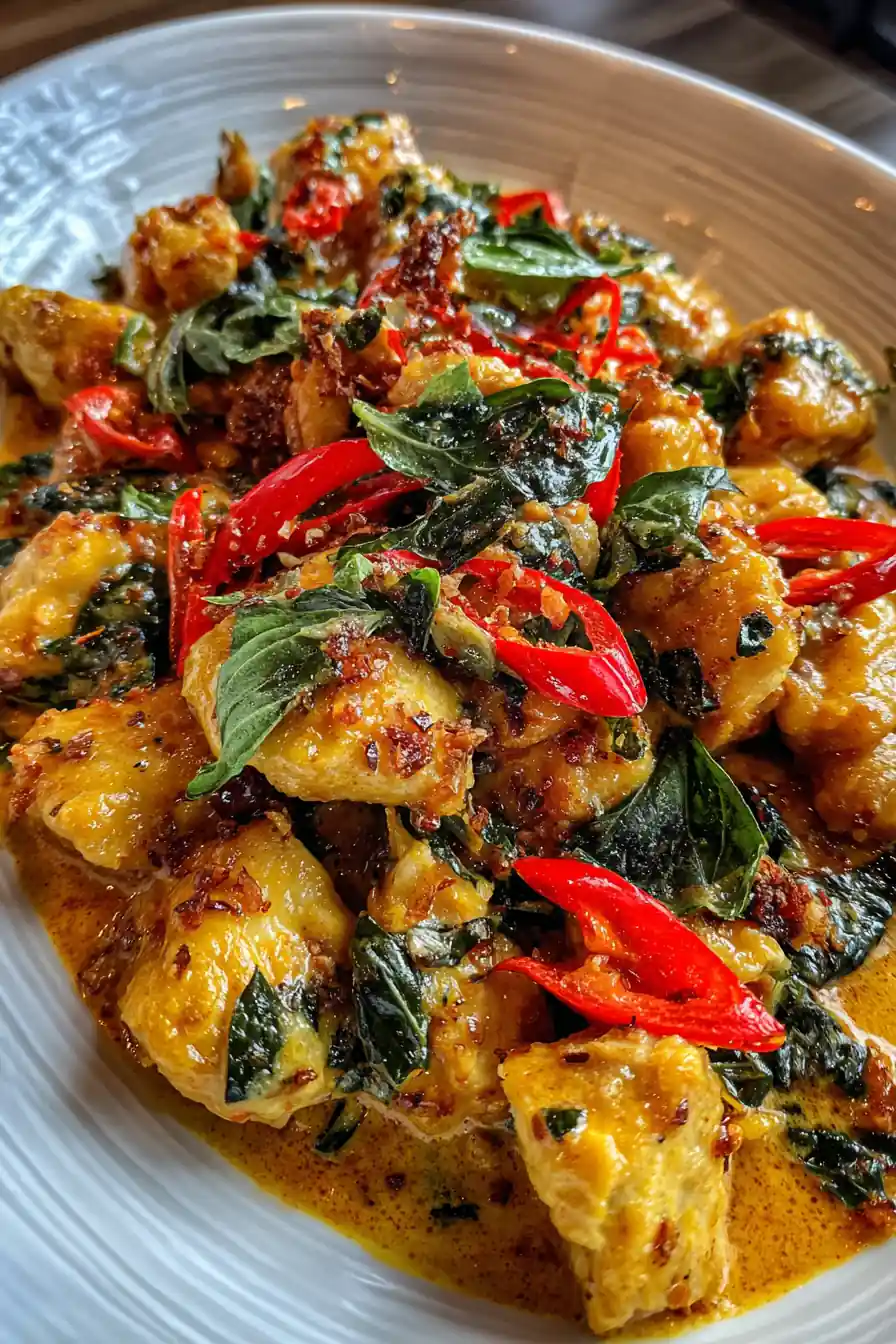
Adjusting the Spice Level
The amount of red Thai curry paste determines the heat level of the dish. Start with 2 tablespoons for a moderate spice level. If you prefer a milder curry, use 1.5 tablespoons. For a spicier curry, add an extra half tablespoon or more, to taste. Remember that the chili slices added as a garnish will also contribute to the overall heat.
Serving Suggestions & Perfect Pairings
This Basil Chicken with Coconut Curry Sauce is best served with steamed jasmine rice to soak up the flavorful sauce. A side of lightly stir-fried vegetables, such as bok choy or green beans, adds a refreshing contrast. For a complete meal, consider a small Thai salad with a tangy dressing.
Frequently Asked Questions (FAQ)
Can I use chicken breast instead of thighs?
While you can use chicken breast, thighs are recommended for their tenderness and flavor. Chicken breast tends to dry out more easily during cooking. If using breast, reduce the simmering time to prevent overcooking.
Can I make this dish ahead of time?
The flavors of this curry actually improve with time! You can make it a day ahead and store it in the refrigerator. Reheat gently before serving.
What if I don’t have palm sugar?
Brown sugar is a perfectly acceptable substitute for palm sugar. It will add a similar sweetness and depth of flavor.
Enjoy this vibrant and flavorful Basil Chicken with Coconut Curry Sauce! Don’t forget to save this recipe to Pinterest for later inspiration.
Print
Basil Chicken With Coconut Curry Sauce
- Total Time: 45 minutes
- Yield: 4 servings
- Diet: General
Description
This Basil Chicken with Coconut Curry Sauce (Pad Kra Pao Gai) is a flavorful Thai dish featuring tender chicken, fragrant basil, and a creamy coconut curry sauce. It’s an easy way to enjoy authentic Thai flavors at home.
Ingredients
- 400 g (14 oz) chicken thighs, cubed: for tenderness and flavor
- 2 tbsp (30 ml) vegetable oil: for searing
- 1 medium onion (≈150 g / 5 oz), diced: for aromatic base
- 3 cloves garlic, minced (≈15 g / ½ tbsp): for savory flavor
- 1 tbsp (15 g) ginger, grated: for warm spice
- 1 tbsp (15 g) lemongrass paste: for citrus aroma
- 2 tbsp (30 ml) red Thai curry paste: for core flavor
- 400 ml (13.5 fl oz) full-fat coconut milk: for rich sauce
- 2 kaffir lime leaves, torn: for citrus aroma
- 1 tbsp (15 ml) fish sauce: for umami
- 1 tsp (5 ml) palm sugar: for caramel sweetness
- 1 tsp (5 ml) sea salt: for seasoning
- ½ cup (15 g) Thai basil leaves: for anise flavor
- 1 small red chili, sliced: for heat
- 1 tbsp (15 g) toasted coconut flakes: for texture
- 1 lime, wedged: for brightness
Instructions
- Prepare Chicken: Pat chicken dry and season lightly.
- Sear Chicken: Sear chicken in hot oil until browned.
- Build Base: Sauté onion, garlic, ginger, and lemongrass.
- Bloom Paste: Cook curry paste for 1 minute.
- Simmer Sauce: Add coconut milk and kaffir lime leaves; simmer.
- Combine & Simmer: Return chicken to pan; add fish sauce and sugar; simmer until cooked through.
- Finish with Basil: Stir in basil leaves.
- Rest & Serve: Let rest before serving.
Notes
For best results, use full-fat coconut milk and fresh Thai basil. Adjust the amount of curry paste to control the spice level.
- Prep Time: 20 minutes
- Cook Time: 25 minutes
- Category: Main Course
- Method: Stir-fry
- Cuisine: Thai
Nutrition
- Serving Size: 1 cup
- Calories: 450 kcal
- Sugar: 15 g
- Sodium: 800 mg
- Fat: 25 g
- Saturated Fat: 15 g
- Unsaturated Fat: 7 g
- Trans Fat: 0 g
- Carbohydrates: 30 g
- Fiber: 5 g
- Protein: 30 g
- Cholesterol: 100 mg