
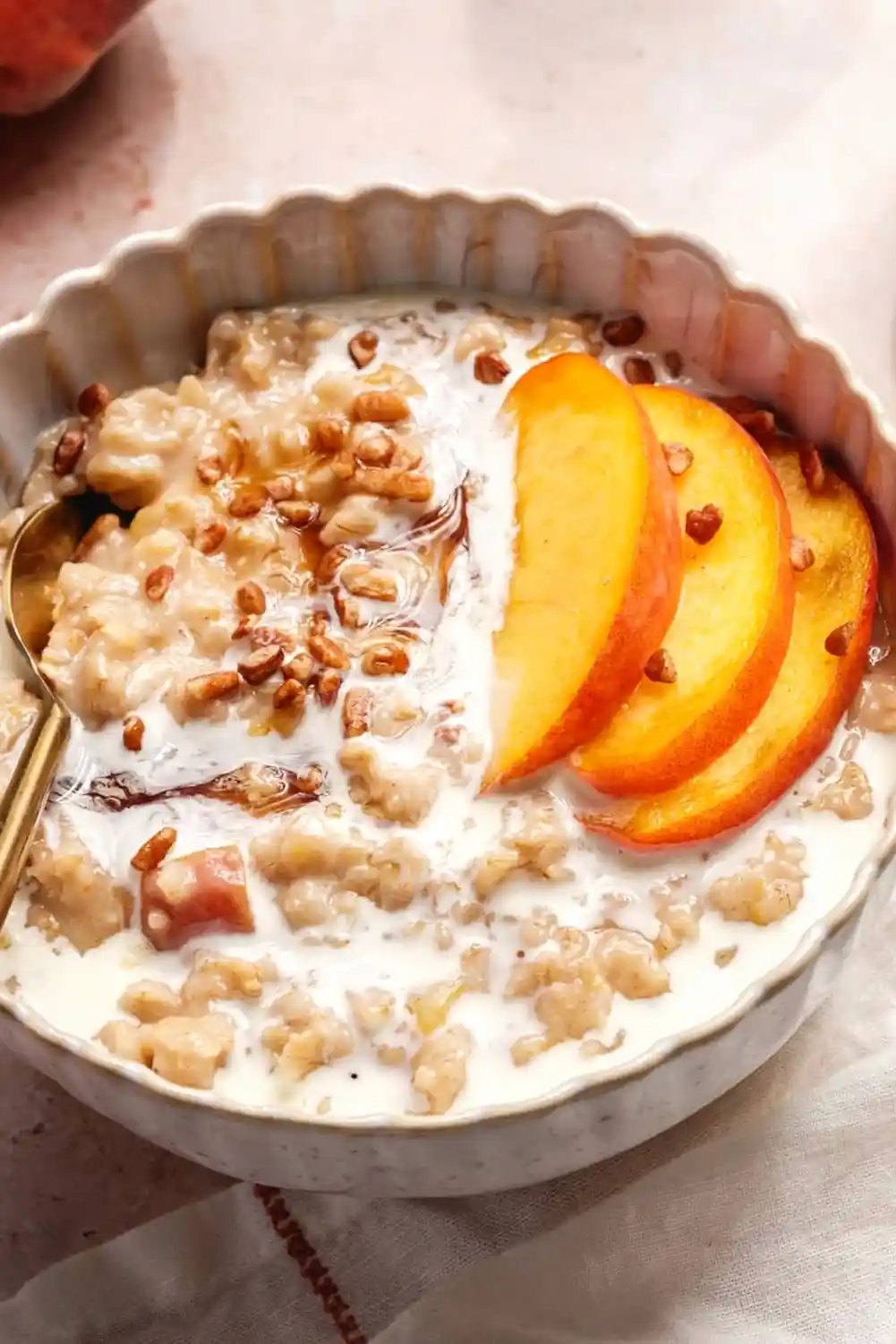
This peaches and cream oatmeal is a filling breakfast that combines fresh fruit with warm spices. It offers a flavor profile similar to peach pie while remaining a practical morning meal. Use fresh, frozen, or canned peaches depending on what you have available.
List of ingredients
- 1 cup Old Fashioned rolled oats (avoid quick cooking or instant oats for better texture)
- 2 cups water
- 1 cup diced fresh peaches (approximately 1 large peach)
- 2 to 3 tablespoons maple syrup
- 1 teaspoon vanilla extract
- 1/4 teaspoon cinnamon
- 1/8 teaspoon kosher salt
- 2 tablespoons heavy cream or whole milk (substitute with non-dairy creamer or full fat coconut milk for a vegan version)
- For topping: maple syrup, sliced or diced fresh peaches, and chopped pecans or almonds
step-by-step instructions
- Combine ingredients: In a saucepan, add the rolled oats, water, diced peaches, maple syrup, vanilla extract, cinnamon, and salt. Stir the mixture well to combine all components.
- Cook until thickened: Bring the mixture to a simmer over medium heat. Cook for 5 to 7 minutes, stirring occasionally, until the oats are tender and the liquid has thickened.
- Stir in cream: Remove the saucepan from the heat. Stir in the heavy cream or milk of your choice.
- Adjust sweetness: Taste the oatmeal. If more sweetness is needed, stir in up to 1 additional tablespoon of maple syrup, remembering that you will add more as a topping.
- Garnish and serve: Portion the oatmeal into bowls. Top with a drizzle of maple syrup, chopped pecans or almonds, fresh sliced peaches, and a final small drizzle of cream to enhance the peach flavor.
Guidelines for Selecting and Preparing Peaches
Selecting the Ripe Fresh Peaches
Choose peaches that are fragrant and give slightly when pressed gently near the stem. They should be ripe but still firm enough to hold their shape when diced. Avoid peaches that are overly mushy as they will dissolve into the oatmeal during cooking.
Preparing Frozen Peaches for Oatmeal
Thaw frozen peaches until they are soft enough to dice into small pieces. Add the peaches along with any liquid they released during thawing into the saucepan. Since frozen peaches are often more tart, you may need to increase the maple syrup slightly.
Adjusting for Canned Peaches
Drain canned peaches thoroughly before adding them to the oats to prevent the mixture from becoming too watery. Check if the canned peaches are packed in syrup or juice. If they contain added sugar, reduce the amount of maple syrup used in the cooking process.
Understanding Oat Varieties and Texture
Benefits of Old Fashioned Rolled Oats
Old fashioned oats provide a chewy, hearty texture that holds up well during the simmering process. They absorb the peach and vanilla flavors without becoming overly mushy. This variety is the best choice for achieving a pie-like consistency.
Why Steel Cut Oats Are Not Suitable Here
Steel cut oats are minimally processed and require significantly more water and a longer cooking time. Because they take much longer to soften, they would overcook the peaches and change the flavor profile. Use a separate steel cut recipe if you prefer that grain.
Avoiding the Mushiness of Quick Oats
Quick-cooking or instant oats are steamed and flattened, which causes them to break down rapidly. This results in a porridge-like consistency that lacks the structural integrity of rolled oats. To maintain the distinct pieces of fruit and grain, stick to rolled oats.
Creamy Liquid Substitutions
Using Heavy Cream for Maximum Richness
Heavy cream provides a thick, velvety texture and a rich mouthfeel. It balances the acidity of the peaches and the warmth of the cinnamon. This is the recommended choice for a dessert-like breakfast experience.
Lightening the Texture with Whole Milk
Whole milk or half-and-half can be used for a lighter version of this recipe. While it lacks the density of heavy cream, it still provides the necessary creaminess. Adjust the amount slightly if you prefer a thinner oatmeal.
Substituting with Full Fat Coconut Milk for Vegan Needs
Full fat canned coconut milk is an excellent plant-based alternative that mimics the richness of heavy cream. It adds a subtle coconut flavor that complements the peaches. Ensure the coconut milk is well-shaken before measuring.
Using Non-Dairy Creamers
Plant-based creamers or almond milk can be used for those avoiding dairy. These options are generally thinner, so you may want to stir them in slowly. Some creamers are pre-sweetened, so taste the oats before adding extra syrup.
Sweetener Alternatives and Flavor Adjustments
Using Maple Syrup for Natural Sweetness
Pure maple syrup adds a distinct woody sweetness that pairs perfectly with cinnamon and peaches. It dissolves quickly into the hot oats, ensuring an even distribution of flavor. It is the primary sweetener used in the original recipe.
Substituting Honey or Agave Nectar
Honey offers a more floral sweetness, while agave nectar provides a neutral sweetness. Both can be swapped 1:1 for maple syrup. Note that honey has a stronger flavor that may slightly overshadow the vanilla.
Adding Brown Sugar for Caramel Notes
Brown sugar can be used to create a deeper, caramelized flavor similar to a traditional peach cobbler. Use the same quantity as the maple syrup. This is a great option if you prefer a more granulated sugar taste.
Enhancing the Recipe with Toppings
Adding Toasted Pecans for Crunch
Toasted pecans provide a buttery contrast to the soft oats and peaches. Toast them in a dry pan over medium heat for 3-5 minutes until fragrant. This enhances the nutty flavor and adds a necessary textural element.
Using Sliced Almonds or Walnuts
Sliced almonds offer a delicate crunch, while walnuts provide a slightly earthier taste. Both are excellent alternatives to pecans. Chop them finely to ensure you get a bit of nut in every spoonful.
Incorporating Toasted Coconut Flakes
Unsweetened toasted coconut flakes add a tropical twist to the dish. They pair exceptionally well with the coconut milk substitution for the cream. Sprinkle them on top just before serving to keep them crisp.
Adding Fresh Berries for Tartness
Blueberries or raspberries can be added as a topping to introduce a tart contrast to the sweet peaches. This creates a mixed-fruit breakfast bowl. Use fresh, organic berries for the best visual appeal and taste.
Using Nut Butters for Extra Protein
A dollop of almond butter or cashew butter adds creaminess and protein to the meal. Swirl the nut butter into the hot oatmeal just before adding the fresh toppings. This makes the meal more satiating for longer periods.
Storage and Freshness Guidelines
Storing Leftovers in Airtight Containers
Store any remaining oatmeal in an airtight glass or plastic container. This prevents the oats from absorbing odors from the refrigerator. The oatmeal will remain fresh for up to 5 days.
Cooling Oatmeal Before Refrigeration
Allow the oatmeal to cool slightly before sealing the container. This prevents excessive condensation from forming inside the lid. Excessive moisture can make the oats too soft when reheated.
Reheating Methods for Best Consistency
Reheating Using a Stovetop
Place the chilled oatmeal in a small saucepan over low heat. Add 1-2 tablespoons of water or milk to loosen the texture. Stir constantly until heated through to avoid burning the bottom.
Reheating Using a Microwave
Place the oatmeal in a microwave-safe bowl and cover it with a damp paper towel. Heat in 30-second intervals, stirring between each session. This ensures the heat is distributed evenly without creating hot spots.
Restoring Creaminess After Reheating
Oatmeal tends to thicken as it cools and sits in the fridge. After reheating, stir in a small splash of fresh cream or milk. This restores the original creamy consistency of the dish.
Alternative Serving and Preparation Styles
Converting the Recipe to Overnight Oats
Combine the oats, diced peaches, maple syrup, cinnamon, salt, and milk in a jar. Shake well and refrigerate overnight instead of cooking. Stir in the vanilla and fresh cream just before eating in the morning.
Making a Baked Oatmeal Version
Increase the liquid slightly and pour the mixture into a greased baking dish. Bake at 350 degrees Fahrenheit for 25-30 minutes until the top is set. Slice into squares and serve with a drizzle of cream on top.
Blending into a Peach Smoothie Bowl
Cook the oatmeal and let it cool completely. Blend the cooled oatmeal with frozen peaches, a splash of milk, and vanilla extract. Pour into a bowl and top with fresh peach slices and nuts.
Troubleshooting Texture and Flavor
Fixing Oatmeal That Is Too Thick
If the oatmeal becomes too dense during the simmer, stir in a tablespoon of water or milk at a time. Continue stirring over low heat until the desired consistency is reached. Do not add too much liquid at once or it will become soupy.
Fixing Oatmeal That Is Too Watery
If the mixture is too thin after 7 minutes, continue to simmer on low heat without a lid. Stir frequently to prevent sticking. The oats will continue to absorb liquid as they cook.
Balancing Excessive Tartness from Frozen Fruit
Frozen peaches can sometimes be more acidic than fresh ones. If the result is too tart, stir in an extra teaspoon of maple syrup. A pinch of extra salt can also help balance the acidity.
Correcting Bland Flavor Profiles
If the oatmeal tastes flat, increase the vanilla extract or cinnamon slightly. Ensure you have added the salt, as it is essential for bringing out the sweetness of the peaches and maple syrup. A final drizzle of cream often solves blandness.
Frequently Asked Questions
Can I use steel-cut oats instead of rolled oats?
No, steel-cut oats require a much longer cooking time and more liquid. Using them in this specific recipe would cause the peaches to overcook and disappear into the oats.
What kind of peaches are best for oatmeal?
Ripe but firm fresh peaches are ideal for the best texture. Frozen peaches work well if thawed, and canned peaches are a good pantry substitute if drained well.
What are some other ways to serve peach oatmeal?
You can serve it as traditional stovetop porridge, prepare it as overnight oats in a jar, or bake it in a casserole dish for a crowd.
Print
Peaches and Cream Oatmeal
- Total Time: 7 minutes
- Yield: 2 servings
- Diet: Vegetarian
Description
This easy peaches and cream oatmeal is a cozy, comforting breakfast that tastes like pie! It’s one of our favorite easy breakfast ideas, made with fresh or frozen peaches, maple, vanilla, and cinnamon.
Ingredients
- 1 cup Old Fashioned rolled oats
- 2 cups water
- 1 cup diced fresh peaches
- 2 to 3 tablespoons maple syrup
- 1 teaspoon vanilla extract
- 1/4 teaspoon cinnamon
- 1/8 teaspoon kosher salt
- 2 tablespoons heavy cream or whole milk
- Maple syrup for topping
- Sliced or diced fresh peaches for topping
- Chopped pecans or almonds for topping
Instructions
- Simmer: In a saucepan, add the oats, water, peaches, maple syrup, vanilla extract, cinnamon, and salt, stirring. Bring to a simmer and cook for 5 to 7 minutes until thickened and the oats are tender.
- Combine: Remove from the heat and stir in the cream. Taste and if desired, use more maple syrup (up to 1 tablespoon).
- Serve: To serve, top with a drizzle of maple syrup, chopped pecans, sliced or diced peaches and a small drizzle of cream.
Notes
Substitute canned or frozen peaches if fresh are unavailable. Pure maple syrup can be replaced with honey, agave nectar, or sugar. Use non-dairy creamer or full fat coconut milk for a vegan alternative.
- Prep Time: 2 minutes
- Cook Time: 5 minutes
- Category: Breakfast
- Method: Stovetop
- Cuisine: American
Nutrition
- Serving Size: 1 serving
- Calories: 310 kcal
- Sugar: 22 g
- Sodium: 150 mg
- Fat: 11 g
- Saturated Fat: 4 g
- Unsaturated Fat: 7 g
- Trans Fat: 0 g
- Carbohydrates: 46 g
- Fiber: 6 g
- Protein: 7 g
- Cholesterol: 15 mg