
This rustic peach galette is a simplified version of a traditional fruit pie, offering a flaky crust and juicy filling. It is an efficient dessert choice for summer when fresh peaches are at their peak ripeness.
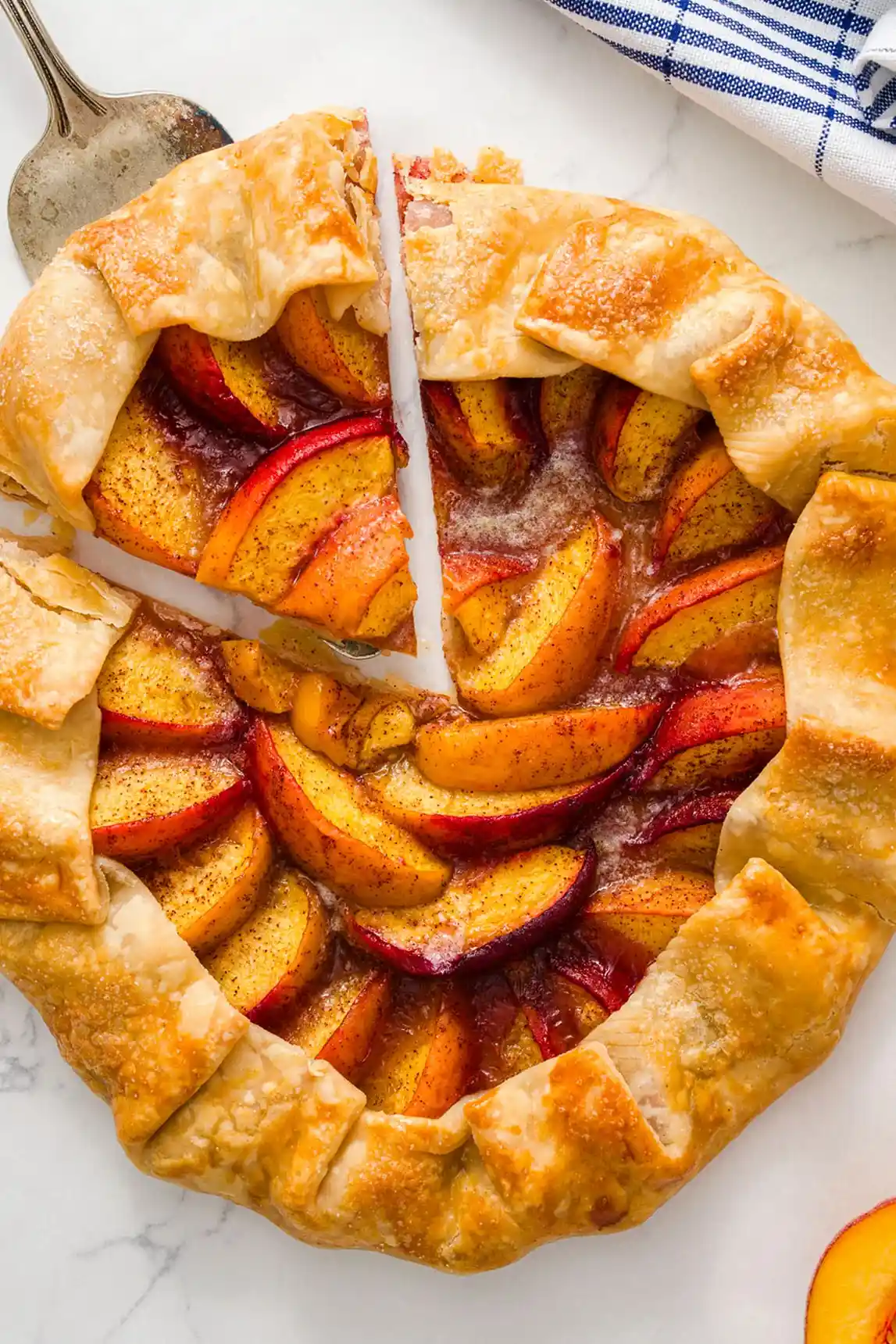
List of ingredients
- 1 refrigerated pie crust – provides a fast, buttery, and flaky base.
- 3 cups sliced peaches – use fresh yellow peaches for the best flavor and texture.
- 1/8 cup granulated sugar – helps create a sweet syrup during baking.
- 1/8 cup brown sugar – adds a deep, caramel-like richness to the filling.
- Juice of half a lemon – provides necessary acidity to balance the sugar.
- 1 teaspoon vanilla extract – enhances the natural sweetness of the peaches.
- 1 tablespoon cornstarch – acts as a thickener for the released fruit juices.
- 1/2 teaspoon cinnamon – adds a warm, aromatic spice to the fruit.
- 1.5 teaspoons butter – dotted on top to add richness to the filling.
- 1 egg – used for the egg wash to create a golden crust.
- 1 tablespoon milk – combined with the egg for a smooth glaze.
- 2 teaspoons coarse sugar – sprinkled on the edges for added crunch and decoration.
step-by-step instructions
- Prepare Oven: Preheat your oven to 400 degrees F and ensure the oven rack is positioned in the center.
- Roll Crust: Unroll the refrigerated pie crust onto a sheet of parchment paper. Use a rolling pin to shape it into a twelve-inch circle, dusting the pin with flour if the dough sticks.
- Position Pan: Carefully lift the sides of the parchment paper to transfer the rolled crust onto a rimmed half-sheet pan.
- Mix Base Liquid: Juice half a lemon into a medium mixing bowl and stir in the vanilla extract.
- Add Thickener: Whisk the cornstarch into the lemon juice mixture thoroughly until all lumps are gone.
- Incorporate Sugars: Slowly whisk in the granulated sugar, followed by the brown sugar, and finally the cinnamon until smooth.
- Coat Peaches: Pour the lemon and sugar mixture over the sliced peaches in a large bowl. Gently stir with a spatula to coat the fruit without crushing it.
- Arrange Fruit: Place the peaches on the crust in a circular pattern, leaving a two-inch border around the edge. Fill in the center and pour any remaining syrup from the bowl over the fruit.
- Fold Edges: Fold the outer edges of the crust over the peaches, crimping the dough with your fingers to secure the filling.
- Apply Toppings: Place small pieces of butter on top of the peaches. Brush the crust with the egg and milk wash, then sprinkle with coarse sugar.
- Bake: Bake for 25 to 30 minutes. Check the crust at 25 minutes; if it is not golden brown, bake for an additional 5 minutes.
- Cool: Remove from the oven and let the galette rest for five minutes before serving.
Pro Tips for a Flaky Crust
Maintain Cold Dough Temperatures
Keep your pie crust chilled until the moment you are ready to roll it out. If the butter in the dough melts before it enters the oven, you will lose the distinct flaky layers. If the dough becomes too soft during rolling, place it in the refrigerator for 15 minutes.
Avoid Overworking the Dough
Handle the dough as little as possible to prevent excessive gluten development. Overworking the dough leads to a tough, chewy crust rather than a tender, flaky one. Roll the dough just until it reaches the desired twelve-inch diameter.
Use Parchment Paper for Easy Transfer
Rolling the dough directly on parchment paper prevents it from sticking to the pan and makes the transfer seamless. This ensures the crust maintains its shape and does not tear during the process. It also simplifies the cleanup process after baking.
Guide to Selecting the Best Peaches
Selecting Peaches with the Right Ripeness
Choose peaches that give slightly when pressed gently near the stem end. Avoid over-ripe peaches, as they release too much moisture and can make the crust soggy. Firm but yielding peaches hold their shape better during the baking process.
Peeling vs Keeping the Skins
You can leave the skins on the peaches for a more rustic look and added pectin, which helps the filling set. If you prefer a smoother texture, peel the peaches using a vegetable peeler or a blanching technique. Both methods work well for this recipe.
Substituting Frozen Peaches
If fresh peaches are unavailable, you can use frozen slices. Thaw the peaches completely and pat them dry with paper towels to remove excess water. Increase the cornstarch by one teaspoon to compensate for the extra moisture released by frozen fruit.
Fruit Substitutions and Flavor Variations
Using Nectarines for a Tangier Taste
Nectarines are an excellent substitute for peaches as they have a similar flavor profile but a smoother skin. They often have a slightly higher acidity, which complements the buttery crust. Use the same quantity as specified for peaches.
Adding Fresh Berries to the Mix
You can combine peaches with blueberries, raspberries, or blackberries for a mixed-fruit galette. Berries release more juice than peaches, so adding an extra teaspoon of cornstarch is recommended. Arrange the berries in clusters for an attractive visual presentation.
Adapting for Apple Filling
To make an apple galette, use thinly sliced Granny Smith or Honeycrisp apples. Apples are denser than peaches, so you may need to increase the baking time by 5 to 10 minutes. Increase the cinnamon slightly to enhance the apple flavor.
Techniques for Shaping the Galette
Creating the Structural Border
Leaving a two-inch margin around the edges of the crust is critical for structural support. This border acts as a dam that prevents the fruit juices from leaking onto the baking sheet. Ensure the fruit is piled slightly higher in the center than at the edges.
Effective Crimping Methods
Crimp the folded edges by pressing the dough firmly with your fingers or the tines of a fork. This creates a seal that holds the filling in place and gives the galette its characteristic rustic appearance. Do not overlap the dough too thickly, or it may remain raw.
Managing Fruit Juices
Pouring the remaining syrup from the bowl over the peaches ensures all fruit is flavored. However, avoid overfilling the center to the point where the syrup overflows the border. If too much juice accumulates, the bottom crust may not crisp properly.
Serving and Pairing Suggestions
Pairing with Vanilla Bean Ice Cream
The most popular way to serve a peach galette is warm with a scoop of high-quality vanilla bean ice cream. The cold cream creates a thermal contrast with the hot fruit and buttery crust. The vanilla notes complement the cinnamon and peach flavors.
Creating a Stable Whipped Cream
For a lighter topping, beat heavy cream with a small amount of powdered sugar until stiff peaks form. Apply the cream in dollops around the edge of the sliced galette. This adds a creamy texture without overpowering the fruit.
Adding Fresh Herb Accents
Garnish the finished galette with a few small leaves of fresh mint or a sprig of thyme. Mint provides a refreshing contrast to the sweetness of the peaches. Thyme adds a subtle earthy note that pairs well with the buttery crust.
Storage and Shelf Life Guidelines
Storing Galettes at Room Temperature
Once the galette has cooled completely, wrap it tightly in plastic wrap or store it in an airtight container. It can be kept at room temperature for up to two days. Keep it in a cool, dry place to prevent the crust from softening.
Refrigerator Storage and Moisture
For longer storage, place the galette in the refrigerator for up to four days. Store it in a sealed container to prevent the crust from absorbing other food odors. Be aware that refrigeration can make the crust slightly softer than when freshly baked.
Freezing and Thawing the Galette
You can freeze the baked galette for up to two months by wrapping it in foil and then placing it in a freezer bag. To thaw, allow it to come to room temperature in the refrigerator overnight. Reheating is necessary to restore the crispness of the crust.
Reheating Instructions for Best Results
Oven Reheating for Maximum Crispness
To restore the flaky texture of the crust, reheat the galette in a 350 degrees F oven for 5 to 10 minutes. This method evaporates surface moisture and crisps the butter in the pastry. Avoid reheating at too high a temperature to prevent the sugars from burning.
Microwave Reheating for Speed
If time is limited, the microwave can be used to warm the galette quickly. Heat on medium power for 30 to 60 seconds. Note that this method will make the crust soft and will not provide the same crunch as oven reheating.
Troubleshooting Common Baking Issues
Fixing a Soggy Bottom Crust
A soggy bottom often occurs when the fruit releases too much juice or the oven temperature is too low. To prevent this, ensure the cornstarch is fully mixed and the oven is preheated to exactly 400 degrees F. Using a rimmed baking sheet helps distribute heat more evenly.
Preventing Overbrowned Crust Edges
If the edges of the crust brown too quickly while the center remains pale, cover the edges with strips of aluminum foil. This creates a shield that slows down the browning process. Continue baking until the center of the crust is golden.
Adjusting Runny Fillings
If the filling is too runny after baking, it usually indicates a lack of thickening agent. In future batches, increase the cornstarch by half a tablespoon. Ensure the cornstarch is whisked into the liquid before adding the fruit to avoid clumps.
Frequently Asked Questions
Can I use a different sugar instead of brown sugar?
Yes, you can use all granulated sugar, but the result will be less rich. Brown sugar contains molasses, which provides a caramel flavor and a thicker syrup consistency that granulated sugar cannot replicate.
How do I prevent the crust from shrinking during baking?
Allow the rolled-out dough to rest for 10 minutes before adding the filling. This relaxes the gluten in the flour, which reduces the tendency of the dough to contract and shrink as it heats up in the oven.
Can I make this recipe gluten-free?
You can use a gluten-free refrigerated pie crust or a homemade almond-flour based pastry. Note that gluten-free crusts are more fragile, so use parchment paper for all transfers and avoid over-handling the edges.
What is the best peach variety for baking?
Yellow peaches are generally preferred for baking because they maintain a balance of sweetness and acidity. White peaches are sweeter and more delicate, which can sometimes lead to a flavor that is lost among the sugar and cinnamon.
Print
Easy Rustic Peach Galette
- Total Time: 60 minutes
- Yield: 6 servings
- Diet: General
Description
This Peach Galette recipe is so easy and fast to whip up. It has a flaky, buttery crust, sweet, juicy peaches, and tempting syrup filling.
Ingredients
- 1 refrigerated pie crust
- 3 cups peaches, sliced
- ⅛ cup granulated sugar
- ⅛ cup brown sugar
- Juice of half a lemon
- 1 teaspoon vanilla extract
- 1 tablespoon cornstarch
- ½ teaspoon cinnamon
- 1½ teaspoons butter
- 1 egg
- 1 tablespoon milk
- 2 teaspoons coarse sugar
Instructions
- Preheat: Preheat oven to 400 degrees F.
- Prepare Crust: Carefully unroll the crust onto a piece of parchment paper, then use a rolling pin to roll out the crust to a twelve-inch circle. Dust the rolling pin with flour if the dough starts to stick.
- Position: Lift the sides of the parchment paper and place the crust and the parchment paper on a rimmed half-sheet pan.
- Combine Wet: Juice half a lemon into a medium mixing bowl. Add vanilla extract to lemon juice.
- Thicken: Whisk the cornstarch into the lemon juice mixture until there are no lumps.
- Add Sweetener: Slowly whisk in the sugars and cinnamon, starting with the granulated sugar and ending with the cinnamon.
- Coat Fruit: Pour lemon mixture over sliced peaches into a large mixing bowl. Use a spatula to stir peaches to coat with the lemon mixture gently.
- Arrange: Arrange the peaches on the crust in a circle about two inches from the edge.
- Fill: Fill in the remaining center of the circle. Pour any juices left in the bowl over the peaches.
- Fold: To form the top crust start folding the outer edge of the crust over the peaches, crimping when necessary.
- Finish: Put small pieces of butter on the peaches, then brush the egg wash on the crust, and sprinkle sugar on the crust.
- Bake: Transfer the sheet pan to a preheated oven and allow to bake for 25 – 30 minutes.
- Check: After 25 minutes, check if the galette’s crust is golden brown. If not, bake for another 5 minutes or until it turns golden brown.
- Rest: Allow the galette to rest for five minutes before serving.
Notes
You can substitute the peaches with other fruits such as strawberries, apples, or blackberries. Serve warm topped with vanilla ice cream or whipped cream. Store at room temperature for two days, in the refrigerator for up to four days, or in the freezer for two months.
- Prep Time: 20 minutes
- Cook Time: 40 minutes
- Category: Dessert
- Method: Baking
- Cuisine: American, French
Nutrition
- Serving Size: 1 slice
- Calories: 228 kcal
- Sugar: 17 g
- Sodium: 147 mg
- Fat: 9 g
- Saturated Fat: 3 g
- Unsaturated Fat: 5 g
- Trans Fat: 0.05 g
- Carbohydrates: 33 g
- Fiber: 2 g
- Protein: 3 g
- Cholesterol: 30 mg