
This French-inspired baked custard dessert combines juicy peaches with a creamy, slightly cake-like batter. It is a versatile treat that can be served warm, at room temperature, or chilled depending on preference.
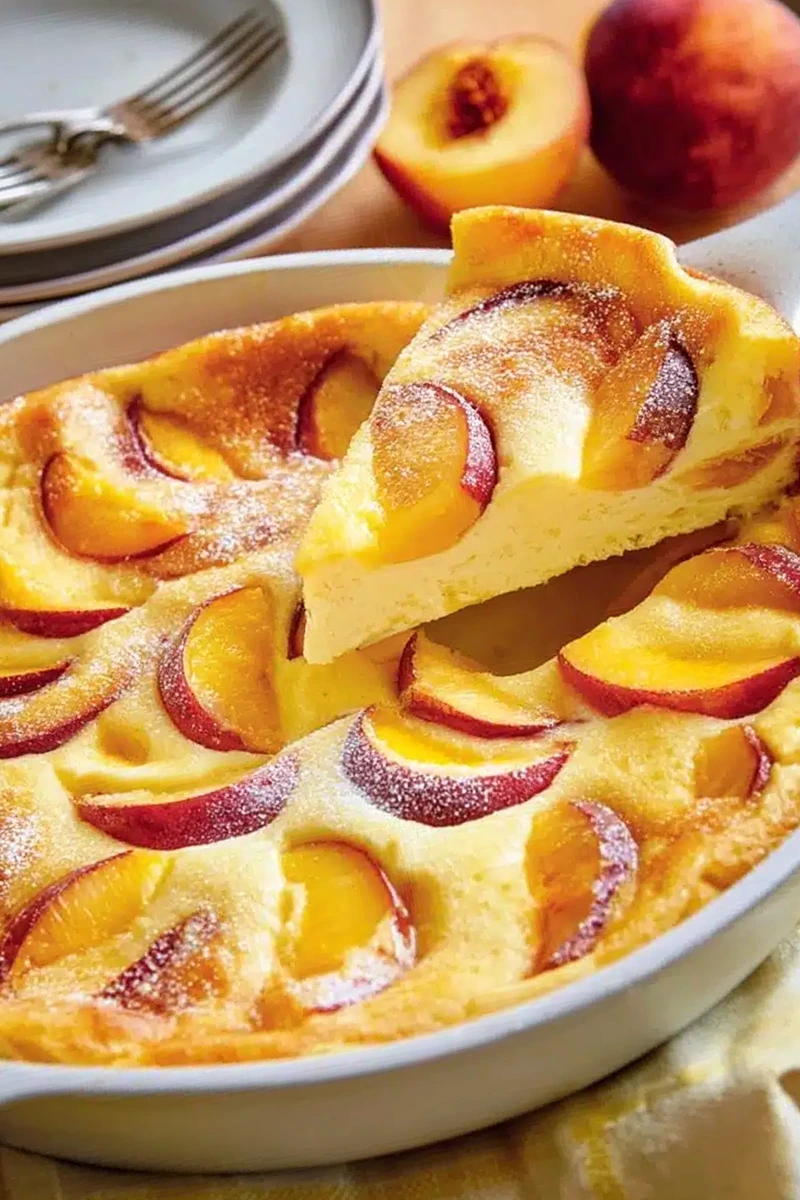
List of ingredients
- 2/3 cup all-purpose flour – provides the necessary structure for the custard.
- 1/2 cup sugar – sweetens the batter base.
- 1 teaspoon kosher salt – balances the sweetness and enhances fruit flavors.
- 4 large eggs – acts as the primary binding agent for the creamy texture.
- 2 1/2 teaspoons vanilla extract – adds a floral aromatic note.
- 1/4 teaspoon almond extract – provides a subtle nutty depth.
- 2 cups heavy whipping cream – creates the rich, velvety mouthfeel.
- 3 cups fresh peaches – sliced into 1/2-inch thick pieces and peeled.
- 2 tablespoons sugar – used for macerating the peach slices.
- Baking spray with flour – ensures the dessert does not stick to the skillet.
step-by-step instructions
- Mix Dry Ingredients: In a large mixing bowl, whisk together the all-purpose flour, 1/2 cup of sugar, and kosher salt until combined.
- Combine Wet Ingredients: Add the eggs, vanilla extract, and almond extract to the flour mixture. Whisk thoroughly until the batter is smooth and no lumps remain.
- Incorporate Cream: Gradually whisk in the heavy whipping cream until the mixture is fully combined and uniform.
- Rest the Batter: Allow the batter to stand undisturbed for 10 minutes. This allows bubbles to subside and helps the flour hydrate for a more tender result.
- Prepare Oven and Pan: Preheat the oven to 350°F (175°C). Lightly coat a 10-inch enamel-coated cast-iron skillet with baking spray containing flour.
- Initial Bake: Pour approximately 1 3/4 cups (about half) of the batter into the prepared skillet. Bake for 10 to 15 minutes until the batter is almost set.
- Prepare Peaches: While the first layer bakes, toss the sliced peaches with 2 tablespoons of sugar in a medium bowl to allow them to macerate.
- Layer the Fruit: Arrange the sugared peaches in gentle concentric circles on top of the partially baked custard.
- Final Batter Pour: Gently stir the remaining batter without whisking. Carefully pour it over the arranged peaches to keep the fruit in place.
- Final Bake: Return the skillet to the oven and bake for about 40 minutes. The dessert is done when a wooden pick inserted in the center comes out clean.
- Cool and Set: Transfer the skillet to a wire rack and let it cool for at least 20 minutes. This allows the custard to firm up before slicing.
Fruit Preparation Techniques
Peeling Peaches Efficiently
To remove peach skins without losing fruit, use the blanching method. Score a small ‘X’ on the bottom of each peach and drop them into boiling water for 30 to 60 seconds. Immediately move them to an ice bath, and the skins will slide off easily.
Slicing for Even Cooking
Cut peaches into uniform slices approximately 1/2-inch thick. Consistent thickness ensures that all fruit pieces soften at the same rate during the baking process. This prevents some slices from becoming mushy while others remain too firm.
Macerating the Fruit
Tossing the peach slices in sugar before adding them to the batter is called maceration. This process draws out the natural juices and creates a light syrup. This enhances the overall flavor and prevents the fruit from drying out in the oven.
Batter Management and Texture
The Purpose of Resting the Batter
Resting the batter for 10 minutes is essential for achieving a professional texture. It allows the flour particles to fully absorb the liquid, which reduces the chance of flour clumps. It also lets air bubbles escape, resulting in a denser, more custard-like consistency.
Avoiding Excess Air Bubbles
When preparing the second pour of batter, stir gently with a spoon rather than whisking. Whisking introduces air that can create large holes or an uneven surface. A gentle stir maintains the smooth, velvety appearance of the finished clafouti.
Achieving a Smooth Consistency
Ensure all eggs are at room temperature before mixing to help them emulsify with the cream and flour. If lumps persist, you can pass the batter through a fine-mesh sieve. This ensures a perfectly silky texture in the final baked dessert.
Pan Selection and Oven Logistics
Benefits of Cast Iron Skillets
Cast iron distributes heat evenly across the bottom and sides of the dessert. This creates golden-brown edges while keeping the center moist. The enamel coating prevents the batter from reacting with the metal and simplifies the cleaning process.
Alternative Baking Dishes
If a cast iron skillet is unavailable, a ceramic or ovenproof glass pie dish can be used. Be aware that glass and ceramic conduct heat differently than iron, so you may need to adjust the baking time by 5 to 10 minutes. Always use a dish that is approximately 10 inches in diameter.
Ensuring Easy Release
Using a baking spray that contains flour is superior to plain oil or butter. The flour particles create a physical barrier between the custard and the pan. This allows the slices to lift away cleanly without tearing the delicate edges.
Serving and Garnish Ideas
Traditional Powdered Sugar
Sift a light layer of powdered sugar over the top just before serving. This adds a professional finish and a hit of immediate sweetness. Use a fine-mesh strainer to avoid clumps of sugar on the surface.
Creamy Accompaniments
A dollop of freshly whipped cream or a scoop of vanilla bean ice cream provides a temperature contrast. The cold cream cuts through the richness of the custard. This is especially effective when the clafouti is served warm from the oven.
Adding Textural Contrast
Scatter toasted sliced almonds over the top of each slice. The crunch of the nuts complements the soft texture of the custard and peaches. Toasting the almonds first brings out their natural oils and deepens the flavor.
Fresh Fruit Pairings
Serve the clafouti with a side of fresh raspberries or blueberries. The tartness of these berries balances the sweet cream and peaches. This adds a vibrant color contrast to the golden-brown dessert.
Storage and Preservation Guidelines
Refrigeration Methods
Store leftovers in the skillet covered with plastic wrap or transfer slices to an airtight container. The dessert stays fresh and velvety for up to 3 days in the refrigerator. Keep it on a shelf rather than in the door for consistent temperature.
Freezing Slices
Wrap individual slices tightly in plastic wrap and then a layer of aluminum foil. Store them in a freezer-safe container for up to 2 months. Avoid freezing the entire skillet, as the custard may separate during the freezing process.
Thawing for Best Quality
Thaw frozen slices slowly in the refrigerator overnight. This prevents the custard from breaking and maintains the integrity of the fruit. Avoid thawing at room temperature to keep the dessert food-safe.
Warming and Reheating Techniques
Microwave Heating
Place a slice on a microwave-safe plate and heat in 20-second intervals. Check the temperature after each burst to avoid overcooking the custard. Overheating can cause the eggs to rubberize or the cream to separate.
Low Oven Warming
Preheat the oven to 300°F and cover the slice loosely with aluminum foil. Warm for about 10 minutes until just heated through. The foil protects the surface from drying out while the oven warms the center.
Serving at Room Temperature
Allowing the dessert to sit at room temperature for 30 minutes before serving often enhances the flavor. This softens the fats in the cream and allows the peach juices to meld with the custard. It is an ideal option for brunch gatherings.
Customizing Your Ingredients
Gluten-Free Flour Options
Substitute all-purpose flour with a gluten-free 1:1 baking blend. Ensure the blend contains xanthan gum to provide the necessary structure. The custard base is naturally forgiving and adapts well to gluten-free alternatives.
Cream Alternatives
For a slightly lighter version, you can substitute half of the heavy cream with whole milk. This will result in a less rich, more pudding-like texture. Do not use skim milk, as the lack of fat will prevent the custard from setting properly.
Using Different Stone Fruits
Nectarines, plums, or apricots can be substituted for peaches. Use the same quantities and slicing thickness as specified in the original recipe. Plums may add a slightly more tart profile to the dessert.
Adjusting Sugar Ratios
If using exceptionally ripe peaches, reduce the macerating sugar from 2 tablespoons to 1 tablespoon. This prevents the dessert from becoming overly sweet. You can also slightly reduce the sugar in the batter for a more fruit-forward taste.
Troubleshooting Common Baking Issues
Preventing Sinking Fruit
The primary reason fruit sinks is pouring it into raw batter. The initial 10-15 minute bake creates a semi-solid base that supports the peaches. Ensure the first layer is set but still slightly jiggly before adding the fruit.
Solving Undercooked Centers
If the center remains liquid after the allotted time, continue baking in 5-minute increments. Use a wooden toothpick to test the center; it should come out clean or with a few moist crumbs. Avoid over-baking, which can make the custard rubbery.
Preventing Sticking
If the clafouti sticks to the pan, you may not have used enough baking spray. To release a stuck dessert, run a thin knife around the edges carefully. For future batches, ensure the flour-based spray covers all side walls of the skillet.
Correcting Over-Browning
If the top browns too quickly, tent the skillet with aluminum foil. This blocks direct heat from the top element while allowing the center to finish cooking. Keep the foil loose to avoid trapping too much steam.
Frequently Asked Questions
Can I use canned or frozen peaches instead of fresh?
Yes, canned or frozen peaches are suitable alternatives. Drain canned peaches thoroughly and pat them dry with paper towels to prevent excess moisture. Thaw frozen peaches completely and blot them dry before tossing with sugar.
Do I have to peel the peaches?
Peeling is optional but recommended for a smoother texture. Leaving the skins on provides more color and a slight chewiness. However, peeling ensures the peaches blend seamlessly into the creamy custard.
What if I don’t have a cast-iron skillet?
You can use a ceramic baking dish or an ovenproof glass pie plate. Adjust the baking time slightly as these materials hold heat differently than cast iron. Ensure the dish is greased well to prevent the custard from sticking.
Can I make Peach Clafouti ahead for brunch or parties?
Yes, this dessert can be baked the night before. Allow it to cool completely and store it in the refrigerator. It can be served chilled or gently reheated, and the texture often becomes creamier after overnight refrigeration.
Print
Easy Cast Iron Peach Clafouti Dessert
- Total Time: 1 hour 15 minutes
- Yield: 8 servings
- Diet: Vegetarian
Description
Peach Clafouti is a delightful French-inspired baked custard dessert, featuring sweet, juicy peaches nestled in a simple batter that’s both creamy and slightly cake-like. Easy to prepare and bursting with fresh fruit flavor, it’s the perfect summer treat to serve warm or at room temperature.
Ingredients
- ⅔ cup all-purpose flour
- ½ cup sugar
- 1 teaspoon kosher salt
- 4 large eggs
- 2½ teaspoons vanilla extract
- ¼ teaspoon almond extract
- 2 cups heavy whipping cream
- 3 cups (½-inch-thick) sliced peeled fresh peaches
- 2 tablespoons sugar
- Baking spray with flour, for spraying the skillet
Instructions
- Make the batter: In a large bowl, whisk together the all-purpose flour, ½ cup sugar, and kosher salt. Add the eggs, vanilla extract, and almond extract, whisking until the mixture is smooth and no lumps remain. Gradually whisk in the heavy whipping cream until fully combined. Allow the batter to stand and rest for 10 minutes to let any bubbles subside and the flour hydrate.
- Prepare for baking: Preheat your oven to 350°F (175°C). Lightly spray a 10-inch enamel-coated cast-iron skillet with baking spray with flour to ensure easy release after baking.
- Partially bake the batter: Pour about half of the batter (roughly 1¾ cups) into the prepared skillet. Reserve the remaining batter. Transfer the skillet to the oven and bake until the batter is almost set, about 10 to 15 minutes. This step helps the fruit stay near the top rather than sinking.
- Prepare the peaches: While the initial bake is happening, stir together the sliced peaches and the remaining 2 tablespoons sugar in a medium bowl, letting the sugar lightly macerate the fruit for better flavor and juiciness.
- Add peaches and the rest of the batter: Arrange the sugared peaches in gentle concentric circles on top of the partially baked custard. Take care to distribute them evenly for a pretty presentation. Gently stir—do not whisk—the remaining batter and carefully pour it over the peaches to avoid disturbing the fruit arrangement.
- Bake until set: Return the skillet to the oven and bake until a wooden pick inserted in the center comes out clean, about 40 minutes. The clafouti should be golden, puffed, and just set in the middle.
- Cool and serve: Let the Peach Clafouti cool on a wire rack for at least 20 minutes before slicing. It can be served warm or at room temperature for a creamy, comforting dessert.
Notes
Gently stir, but do not whisk, the reserved batter before pouring it over the peaches; whisking will introduce too much air and create bubbles in the baked custard. Try adding a dusting of powdered sugar or a dollop of whipped cream for extra flair when serving. Peach Clafouti is best enjoyed the day it’s made, but leftovers can be stored in the refrigerator and enjoyed chilled.
- Prep Time: 20 minutes
- Cook Time: 55 minutes
- Category: Desserts
- Method: Baking
- Cuisine: French
Nutrition
- Serving Size: 1 slice
- Calories: 315 kcal
- Sugar: 23 g
- Sodium: 210 mg
- Fat: 18 g
- Saturated Fat: 11 g
- Unsaturated Fat: 6 g
- Trans Fat: 0 g
- Carbohydrates: 33 g
- Fiber: 2 g
- Protein: 5 g
- Cholesterol: 120 mg