
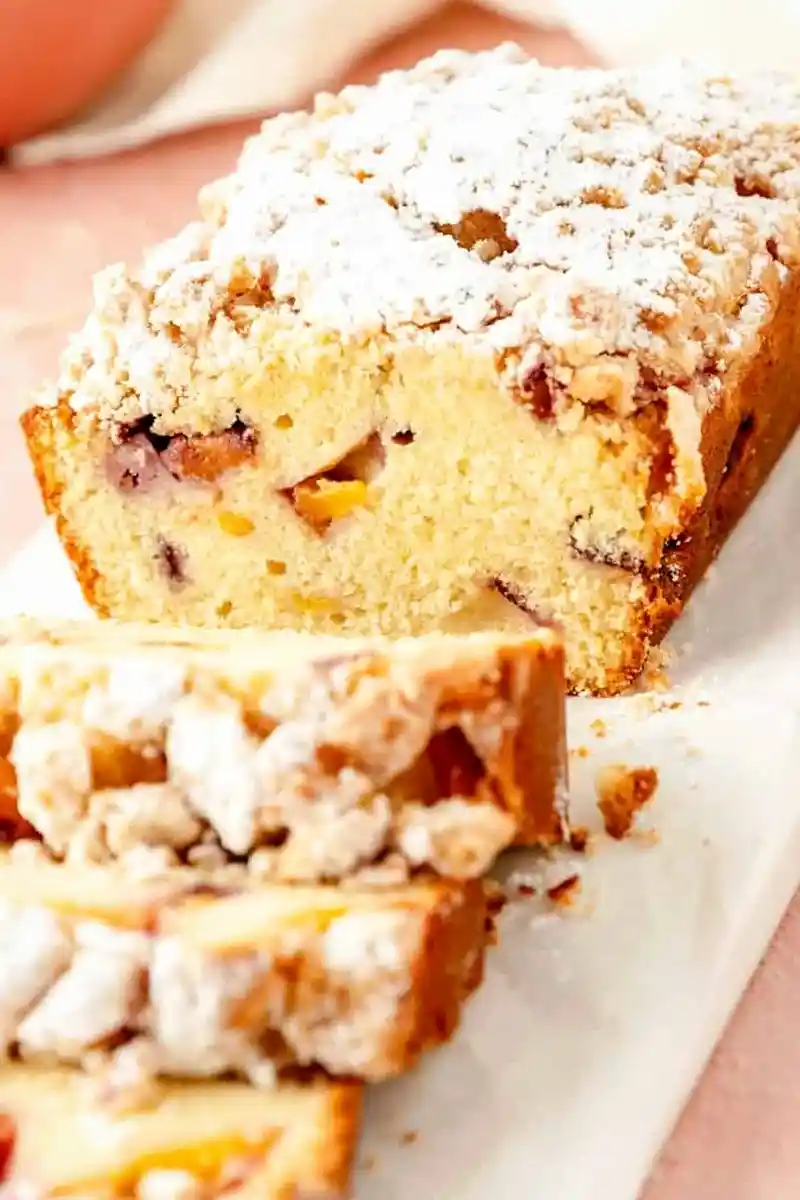
This fresh peach cobbler pound cake combines a buttery, dense crumb with a cinnamon-streusel topping and juicy fruit. It is baked in a loaf pan to ensure a consistent rise and a crisp top layer.
List of ingredients
- 1/3 cup sugar – for the streusel topping.
- 1/4 cup all-purpose flour – for the streusel topping.
- 1/4 teaspoon cinnamon – provides a warm, spiced flavor to the crust.
- 2 tablespoons unsalted butter, melted – binds the streusel ingredients.
- 2 ripe peaches – one for slicing on top, one for dicing into the batter.
- 1 1/2 cups all-purpose flour – the main structure of the cake.
- 3/4 teaspoon baking powder – helps the cake lift and dome.
- 1/2 teaspoon sea salt – balances the sweetness of the batter.
- 10 tablespoons (1 1/4 sticks) unsalted butter, softened – provides the rich pound cake flavor.
- 3/4 cup granulated sugar – sweetens the cake crumb.
- 1 teaspoon vanilla extract – enhances the overall flavor profile.
- 2 large eggs – provides structure and richness.
- 1/3 cup milk – adds moisture and balances the egg flavor.
- Powdered sugar – optional for final decoration.
step-by-step instructions
- Prepare the Pan and Oven: Preheat your oven to 350°F. Lightly grease a 9″ x 5″ loaf pan, line it with a parchment sling, and grease the parchment paper as well. Place the baking rack one position below the center of the oven.
- Create the Streusel: In a small bowl, use a fork to stir together the sugar, flour, and cinnamon. Mix in the melted butter and blend with a fork until the mixture forms crumbs and no dry patches remain. Set this aside.
- Prepare the Peaches: Slice one peach into thin pieces (approximately 1/4 to 1/2 inch thick), ensuring you have at least 12 slices. Cut the second peach into 1/2 inch slices and then dice those into 1/2 inch pieces to get 1 cup of diced fruit.
- Combine Dry Ingredients: Mix the flour, baking powder, and sea salt in a small bowl until well-blended. Set this mixture aside for later.
- Cream the Base: In a large mixing bowl, combine the softened butter, granulated sugar, and vanilla extract. Use a hand or stand mixer to beat the mixture on medium-high speed for about one minute until the texture is smooth and fluffy.
- Incorporate Eggs: Add the eggs to the creamed mixture one at a time. Beat briefly on medium-low speed after each egg until fully combined.
- Mix Flour and Milk: Add the dry ingredient blend to the batter. Mix on low speed until the flour is about 80% incorporated. Scrape the sides of the bowl, pour in the milk, and continue mixing on low speed until the batter is smooth.
- Fold in Fruit: Gently fold the 1 cup of diced peaches into the batter by hand until they are evenly distributed.
- Assemble the Loaf: Transfer the batter into the prepared loaf pan and smooth the top with a spatula. Press the peach slices into the batter on a diagonal in pairs or trios.
- Apply Topping: Sprinkle the streusel over the peach slices in small and large clumps to cover the entire surface.
- Bake the Cake: Bake for 60 to 70 minutes, rotating the pan halfway through. The cake is done when the streusel is golden brown, a toothpick comes out clean, and the center springs back when pressed. An internal temperature of 190°F or higher indicates it is fully baked.
- Cool and Finish: Cool the loaf in the pan on a wire rack for 30 minutes. Use the parchment sling to lift the cake out and allow it to cool completely to room temperature. Dust with powdered sugar if desired and slice with a serrated knife.
Mastering the Streusel Topping
Achieving a Clumpy Texture
To avoid a sandy or powdery topping, create larger clumps of streusel. Squeeze a portion of the mixture in your hand to form a chunk, then gently break it apart over the batter. This creates a variety of texture sizes that bake into a professional-looking crust.
Adjusting Cinnamon Intensity
The standard recipe uses a light touch of cinnamon to mimic a traditional fruit cobbler. If you prefer a more pronounced spice profile, increase the cinnamon to 1/2 teaspoon. This will darken the topping and increase the aromatic quality of the crust.
Managing Butter Temperature
Ensure the butter is fully melted but not boiling when adding it to the dry streusel ingredients. If the butter is too hot, it can melt the sugar prematurely; if it is too cold, the crumbs will not form correctly. Room temperature melted butter is ideal for consistent clumping.
Working with Fresh Peaches
Prioritizing Fresh Fruit Over Canned
Fresh peaches provide a superior flavor and a more predictable water content. Canned or frozen peaches often release excess liquid during the baking process, which can lead to a soggy center or a cake that fails to set. Fresh fruit ensures the structural integrity of the pound cake.
Handling Peach Skins
There is no need to peel the peaches for this recipe. Because the cake bakes for over an hour, the skins soften completely and become unnoticeable in texture. Additionally, the skins provide vibrant red and orange color accents when the cake is sliced.
Slicing for Visual Impact
To achieve the professional look of a cobbler, slice the topping peaches into consistent 1/4 to 1/2 inch thicknesses. Arrange them in a diagonal pattern across the top of the batter. Press them in slightly so they are anchored but still visible above the surface of the cake.
Managing Excess Moisture
If your fresh peaches are exceptionally juicy, pat the diced pieces dry with a paper towel before folding them into the batter. This prevents the fruit from sinking to the bottom of the pan and helps maintain the dense, tight crumb characteristic of a pound cake.
Ensuring a Perfect Pound Cake Crumb
The Importance of Room Temperature Butter
Butter must be softened to a point where it yields to pressure but still holds its shape. Using melted butter in the cake base instead of softened butter will result in a flatter loaf with a greasy texture. Softened butter allows for the aeration necessary during the creaming process.
Proper Creaming Technique
Beating the butter and sugar for at least one full minute on medium-high speed is crucial. This process incorporates air bubbles into the fat, which helps the cake rise and creates a lighter mouthfeel. A properly creamed base prevents the final product from being overly dense or heavy.
Avoiding Over-mixing the Flour
Once the flour is added, switch the mixer to the lowest speed and stop mixing when the flour is nearly incorporated. Over-mixing develops too much gluten, which can make the pound cake tough or cause the loaf to collapse in the center after baking.
Using Milk for Moisture Balance
While traditional pound cakes rely solely on eggs for liquid, the addition of milk here provides a necessary moisture balance. The milk prevents the batter from tasting overly eggy and ensures the crumb remains tender even after the cake has cooled completely.
Baking and Pan Management
Creating a Reliable Parchment Sling
A parchment sling consists of two overlapping strips of parchment paper that cover the bottom and two opposite sides of the pan. This allows you to lift the entire cake out of the pan vertically. This method is far more reliable than greasing alone, especially for heavy, fruit-filled loaves.
Optimal Oven Placement
Bake the loaf on the rack one position below the middle of the oven. This placement ensures that the bottom of the cake receives enough heat to set while preventing the streusel top from being too close to the upper heating elements, which could cause premature burning.
Verifying Doneness with Temperature
While a toothpick is a useful tool, using an instant-read thermometer provides the most accuracy. The center of the cake should reach at least 190°F. This ensures that the moisture from the peaches has evaporated sufficiently and the structure is fully set.
Preventing Surface Over-browning
If the streusel topping reaches a deep golden brown before the center is cooked, loosely tent the pan with aluminum foil. This creates a heat shield that allows the interior to finish baking without burning the delicate sugar and butter on top.
Customizing Your Loaf
Substituting Butter with Cream Cheese
For a tangier, creamier version of this cake, replace a portion of the butter with softened cream cheese. Use 6 tablespoons of softened butter and 4 tablespoons of softened full-fat cream cheese. Blend these together during the initial creaming step for a richer flavor profile.
Adding Flavor Enhancers
While vanilla is the standard, you can add 1/2 teaspoon of almond extract for a more nuanced, nutty flavor. Ensure any added extracts are mixed in during the creaming phase to distribute the oils evenly throughout the batter.
Alternative Sweeteners
Granulated white sugar is used for a clean sweetness and a specific crumb structure. If you prefer a deeper flavor, you can replace half of the sugar with light brown sugar. This will introduce a slight molasses note and make the cake slightly more moist.
Post-Bake Care and Slicing
The Necessity of Full Cooling
Slicing the cake while it is still warm can cause the tender crumb to compress or tear. The structure of a pound cake continues to set as it cools. Wait until the loaf reaches room temperature to ensure clean slices and a stable streusel crust.
Using the Right Knife
A serrated bread knife is essential for this recipe. The hard, crunchy streusel topping can crush the soft cake underneath if a smooth blade is used. Use a gentle sawing motion to cut through the topping without applying downward pressure.
Choosing the Correct Slice Width
Cut the slices relatively wide, approximately 1 inch thick. Because of the fruit and the moist crumb, very thin slices are more likely to fall apart. Wider slices maintain their structural integrity and better showcase the layers of cake and fruit.
Storage, Freezing, and Reheating
Refrigeration Guidelines
Due to the high water content of the fresh peaches, this cake should be stored in the refrigerator. Wrap the loaf tightly in plastic wrap or place it in an airtight container. It will remain fresh and safe to eat for 4 to 5 days.
Freezing the Baked Loaf
You can freeze the fully baked and cooled loaf for up to one month. Wrap the cake in a double layer of plastic wrap and then foil to prevent freezer burn. Thaw the cake slowly in the refrigerator overnight before slicing.
Best Reheating Methods
To restore the buttery texture of a refrigerated slice, microwave it for 10 to 15 seconds. This slightly warms the butter and softens the cake without making it mushy. Avoid overheating, as this can cause the cake to dry out quickly.
Troubleshooting and FAQs
Can I use frozen peaches?
Yes, frozen peaches can be used if fresh ones are unavailable. Add them to the batter while they are still fully frozen to prevent excess moisture from leaking into the batter. Avoid thawing them first, as this increases the risk of a soggy cake.
Can I use canned peaches?
Canned peaches are the least preferred option due to their syrup and high water content. If you must use them, drain them in a colander and rinse them well. Pat them very dry between paper towels before adding them to the recipe to avoid ruining the batter consistency.
Why is my cake sinking in the middle?
A sunken center usually occurs due to over-mixing the flour or opening the oven door too frequently during the first 45 minutes of baking. Ensure you mix on low speed and only rotate the pan once halfway through the baking time.
How do I keep the cake moist?
The secret to moisture in this recipe is the combination of the milk and the fresh fruit. To further ensure moisture, avoid over-baking the cake; remove it as soon as the internal temperature hits 190°F and the toothpick comes out clean.
Print
Fresh Peach Cobbler Pound Cake
- Total Time: 95 minutes
- Yield: 10 slices
- Diet: General
Description
This tasty loaf is a mash-up of the best peach pound cake has to offer and a classic crisp-topped, hint-of-cinnamon fruity cobbler!
Ingredients
- 1/3 cup sugar
- 1/4 cup all-purpose flour
- 1/4 teaspoon cinnamon
- 2 tablespoons unsalted butter, melted
- 2 ripe peaches
- 1 1/2 cups all-purpose flour
- 3/4 teaspoon baking powder
- 1/2 teaspoon sea salt
- 10 tablespoons unsalted butter, softened
- 3/4 cup granulated sugar
- 1 teaspoon vanilla extract
- 2 large eggs
- 1/3 cup milk
- Powdered sugar, for decoration (optional)
Instructions
- Prep: Lightly grease a 9″ x 5″ loaf pan, line it with a parchment sling, then again lightly grease the parchment paper. Preheat oven to 350°F.
- Streusel Dries: Stir together sugar, flour, and cinnamon in a small bowl.
- Streusel Butter: Add melted butter to dries and blend until crumbs form. Set aside.
- Peach Prep: Cut one peach into thin 1/4”-1/2” slices and the other peach into 1/2” diced pieces.
- Dry Mix: Combine flour, baking powder, and salt in a small bowl.
- Cream Butter: Cream butter, sugar, and vanilla extract in a large bowl until smooth and fluffy.
- Eggs: Add eggs one by one, beating briefly on medium-low after each addition.
- Combine: Add dry ingredient blend on low speed until about 80% mixed.
- Milk: Pour in milk and finish mixing on low until batter is smooth.
- Fold Peaches: Mix in the diced peaches by hand until evenly distributed.
- Pan: Transfer batter into the prepared pan and smooth the top.
- Top Peaches: Press peach slices on a diagonal into the batter.
- Top Streusel: Sprinkle streusel clumps over the top of the peach slices.
- Bake: Bake for 60-70 minutes until golden brown and a toothpick inserted into the center comes out clean.
- Cool: Cool on a wire rack in the pan for 30 minutes, then remove using the parchment sling and cool fully to room temperature.
- Finish: Dust with powdered sugar and slice using a serrated knife.
Notes
For a cream cheese variation, substitute 4 tablespoons of softened cream cheese for 4 tablespoons of softened butter. Use a serrated knife for slicing to avoid crushing the cake under the streusel top.
- Prep Time: 30 minutes
- Cook Time: 65 minutes
- Category: Cakes
- Method: Baking
- Cuisine: American
Nutrition
- Serving Size: 1 slice
- Calories: 315 kcal
- Sugar: 25 g
- Sodium: 259 mg
- Fat: 15 g
- Saturated Fat: 9 g
- Unsaturated Fat: 5 g
- Trans Fat: 1 g
- Carbohydrates: 42 g
- Fiber: 1 g
- Protein: 4 g
- Cholesterol: 70 mg