
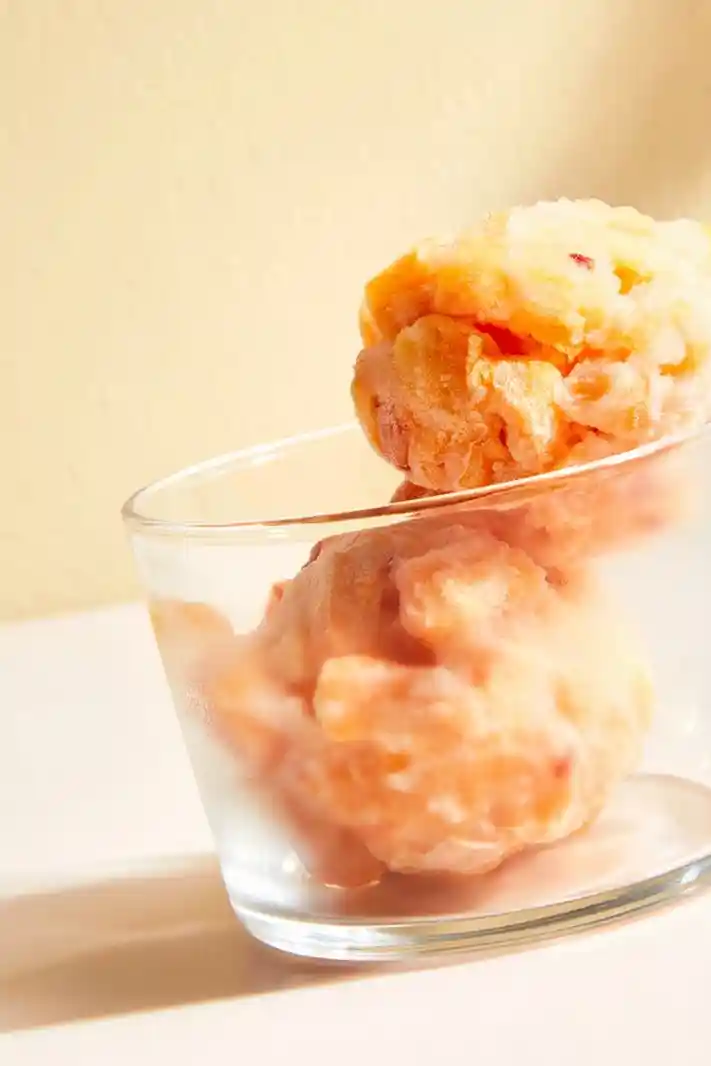
This refreshing peach and lemon sorbet is a simple three-ingredient dessert that captures the essence of ripe stone fruit. It can be prepared easily with or without an ice cream maker, making it an accessible treat for any home cook.
List of ingredients
- 6 ripe but firm yellow peaches (about 500 grams), peeled and pitted – choose fruit that is fragrant but not mushy.
- 1 large lemon – used for both the zest and the fresh juice.
- 200 gram (1 cup plus 1 tablespoon) superfine sugar – also known as caster sugar for faster dissolution.
step-by-step instructions
- Prepare the fruit: Chop the peeled and pitted peaches into pieces approximately 1/3-inch in size to ensure distinct chunks in the final texture.
- Add citrus: Finely grate the peel of the lemon directly over the chopped peaches, then squeeze in the juice of the entire lemon.
- Macerate: Stir in the superfine sugar and let the mixture sit for 30 minutes. This process draws out the natural syrupy juices from the peaches.
- Balance flavor: Taste the mixture and adjust the lemon juice if needed. The flavor should be strong and bright, though it should not overpower the natural taste of the peach.
- Freeze the mixture: Transfer the mixture to a shallow container and freeze. Stir the sorbet every 30 minutes or so until it reaches a firm, scoopable consistency. Alternatively, you may churn the mixture in an ice cream machine.
- Store or serve: Serve the sorbet immediately or cover the container tightly and place it back in the freezer.
- Consumption window: For the best quality in terms of texture and flavor, consume the sorbet within a few days of making it.
- Adjust temperature: If the sorbet has frozen too hard, let it sit at room temperature for about 10 minutes before scooping.
Expert Tips for Preparing Peaches
Blanching for Effortless Peeling
The most efficient way to remove peach skins is through a quick blanching process. Cut a small cross into the bottom of each peach, dunk them in boiling water for a few seconds, and immediately transfer them to a bowl of ice water. The skins should slide off easily without damaging the fruit flesh.
Selecting the Ideal Fruit
Look for peaches that are ripe but still maintain a firm structure. Overripe peaches can become too mushy when chopped and may lack the structural integrity needed for the chunks to remain intact during freezing. Yellow peaches typically provide a more traditional sorbet flavor compared to white peaches.
Utilizing the Fruit Skins
If you prefer a more rustic appearance and additional texture, you can leave some or all of the skins on the peaches. This adds small dots of color to the sorbet and reduces the preparation time significantly. Ensure the fruit is washed thoroughly before chopping if the skins are being kept.
Ingredient Alternatives and Modifications
Substituting Granulated Sugar
While superfine or caster sugar is preferred for its ability to dissolve quickly in cold fruit, granulated sugar is a practical alternative. Use an equal weight of granulated sugar, which is approximately one cup. You may need to let the peaches macerate for a slightly longer period to ensure the crystals fully dissolve.
Using Nectarines as a Base
Nectarines are an excellent substitute for peaches because they share a similar flavor profile and sugar content. Since nectarines have smooth skins, you can skip the peeling process entirely. Simply pit and chop them to the required size.
Exploring Other Stone Fruits
Other ripe stone fruits, such as apricots or plums, can be used to create a similar sorbet. Apricots will yield a slightly more tart result, while plums may introduce a deeper, redder hue. Maintain the same proportions of sugar and lemon to balance the natural acidity of these fruits.
Advanced Freezing Techniques
The Manual Stirring Method
When freezing without a machine, using a shallow container is critical. This increases the surface area, allowing the mixture to freeze more evenly and quickly. Stirring every 30 minutes breaks up large ice crystals, which results in a smoother, more professional mouthfeel.
Using an Ice Cream Machine
For those with a churner, the process is simplified and the texture is often creamier. Pour the macerated peach mixture into the machine and churn according to the manufacturer’s instructions. This method incorporates more air into the sorbet, making it lighter and easier to scoop.
Controlling the Final Consistency
The final texture depends heavily on the sugar concentration and the freezing temperature. If the sorbet is too icy, it may be due to infrequent stirring or under-ripened fruit. If it is too soft, ensure your freezer is set to a standard freezing temperature of 0 degrees Fahrenheit.
Serving and Presentation Ideas
Pairing with Fresh Berries
Serve a scoop of peach sorbet alongside fresh raspberries or blueberries. The tartness of the berries complements the sweetness of the peach and the acidity of the lemon. This creates a visually appealing plate with contrasting colors.
Creating a Sparkling Fruit Float
For a light beverage option, place a small scoop of sorbet into a glass of chilled seltzer water or ginger ale. As the sorbet melts, it flavors the sparkling water and creates a refreshing, effervescent drink. This is a sophisticated alternative to traditional ice cream floats.
Adding Aromatic Garnishes
A small sprig of fresh mint or a thin slice of lemon can enhance the presentation. The scent of mint provides a cooling contrast to the sweet peach flavor. Placing the sorbet in chilled glassware prevents it from melting too quickly upon serving.
Serving in Warm Brioche
For a more substantial dessert, tuck a scoop of the chilled sorbet into a toasted brioche bun. The contrast between the warm, buttery bread and the cold, tart sorbet creates a balanced sensory experience. This variation transforms the sorbet into a plated dessert.
Storage and Maintenance
Preventing Freezer Burn
To keep the sorbet fresh, store it in an airtight container. Press a piece of plastic wrap directly onto the surface of the sorbet before sealing the lid to minimize air exposure. This prevents the formation of ice crystals on the surface, known as freezer burn.
Optimal Shelf Life
Sorbets made from fresh fruit are best consumed within three to five days. Over time, the flavor of the fresh peach can diminish, and the texture may become overly icy. For the best experience, prepare the sorbet shortly before your intended serving date.
Proper Thawing Procedures
Avoid microwaving the sorbet to soften it, as this will melt the edges while leaving the center frozen. Instead, let it sit on the kitchen counter for 10 to 15 minutes. This allows the sorbet to reach a uniform, scoopable temperature.
Troubleshooting Common Issues
Correcting a Grainy Texture
If the sorbet feels grainy, it is usually because the sugar did not dissolve completely. To fix this, you can briefly blend the mixture before freezing or ensure you use superfine sugar next time. Proper maceration for at least 30 minutes is essential.
Balancing Excessive Tartness
If the lemon flavor is too dominant, you can stir in a small amount of extra sugar or a tablespoon of honey. Balance is key; the sorbet should be vibrant and acidic but should still highlight the peach’s natural sweetness. Always taste the mixture before it goes into the freezer.
Managing Watery Results
Watery sorbet often occurs when the fruit is not ripe enough or when the freezing process is too slow. Use only ripe, fragrant peaches to ensure a high natural sugar content. If using the manual method, stick to a shallow container to accelerate the freezing process.
Frequently Asked Questions
Can I use frozen peaches instead of fresh?
Yes, you can use frozen peaches, but ensure they are fully thawed and any excess liquid is drained. Frozen peaches may have a softer texture, so the chunks might be less defined than those from fresh fruit.
Is it possible to make this without sugar?
Sugar is necessary not only for flavor but also to lower the freezing point of the mixture. Without sugar, the sorbet will freeze into a hard block of ice. You can use a sugar substitute designed for freezing, but the texture will differ from the original recipe.
Why do I need to stir the sorbet every 30 minutes?
Stirring incorporates air and breaks up the ice crystals as they form. This prevents the sorbet from becoming a solid mass of ice and ensures a smooth, creamy consistency similar to that produced by a machine.
How do I know when the peaches are ripe enough?
Ripe peaches should give slightly when pressed gently and should have a strong, sweet aroma. If they are too hard, they will lack flavor and won’t release enough juice during the maceration process.
Can I add other citrus juices?
While lemon is traditional, you can replace half of the lemon juice with lime juice for a zestier profile. Orange juice can also be used for a sweeter, more mellow citrus note, though it may slightly alter the color.
Print
Fresh Peach and Lemon Sorbet
- Total Time: 4 hours
- Yield: about 1 quart
- Diet: Vegetarian
Description
A refreshing and simple peach and lemon sorbet featuring juicy-sweet peach chunks, inspired by the iconic River Café style.
Ingredients
- 6 ripe but firm yellow peaches (about 500 grams), peeled and pitted
- 1 large lemon
- 200 grams superfine sugar
Instructions
- Step 1: Chop the peaches in roughly 1/3-inch pieces.
- Step 2: Finely grate the peel of the lemon over the peaches, then squeeze in the juice.
- Step 3: Stir in the sugar and leave for 30 minutes to draw out the syrupy peach juices.
- Step 4: Taste and adjust the lemon; it should be strong but not overpower the peach flavor.
- Step 5: Freeze in a shallow container, stirring every half hour or so until firm and scoopable, or churn in an ice cream machine.
- Step 6: Serve right away or cover and freeze, letting it soften for 10 minutes if frozen too hard.
Notes
To peel peaches easily, dunk them briefly in boiling water then cool in ice water. Nectarines or other ripe stone fruits can be substituted. Granulated sugar can be used as a substitute for superfine sugar.
- Prep Time: 45 minutes
- Cook Time: 0 minutes
- Category: Dessert
- Method: Freezing
- Cuisine: British
Nutrition
- Serving Size: 1/2 cup
- Calories: 135 kcal
- Sugar: 27 g
- Sodium: 5 mg
- Fat: 0.4 g
- Saturated Fat: 0 g
- Unsaturated Fat: 0.4 g
- Trans Fat: 0 g
- Carbohydrates: 34 g
- Fiber: 1.5 g
- Protein: 1 g
- Cholesterol: 0 mg