
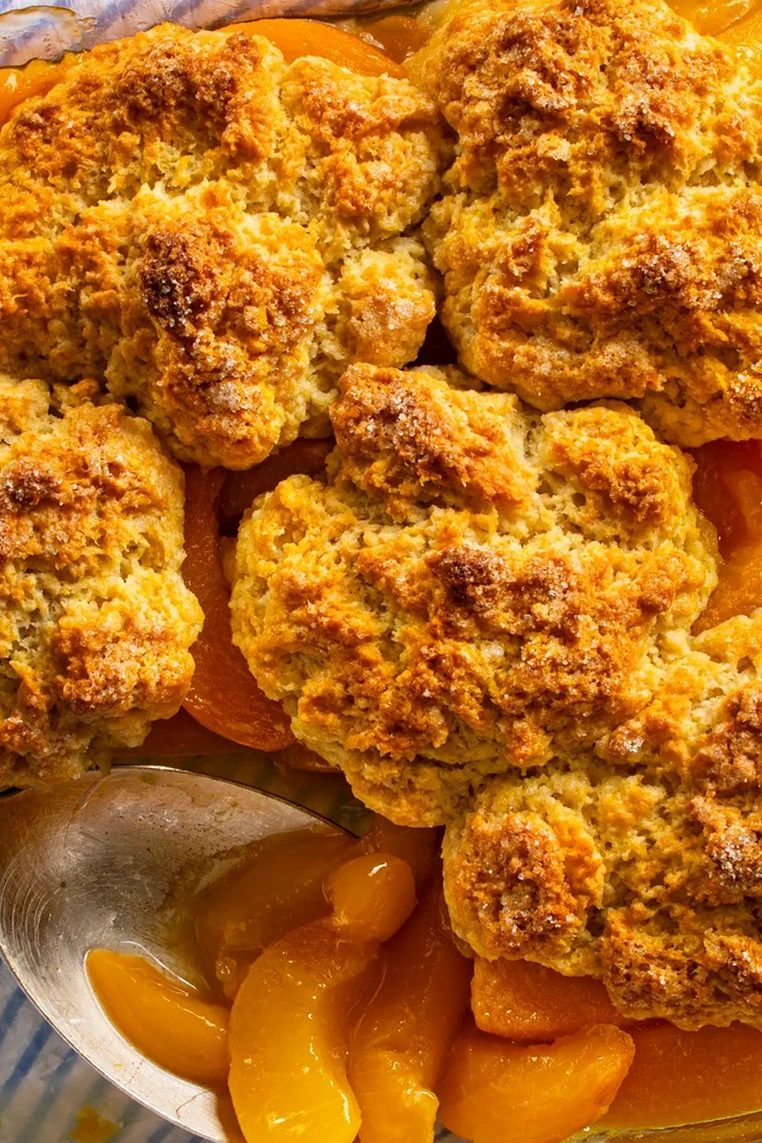
Enjoy a classic summer dessert regardless of the season by using frozen peaches. This method ensures a consistent result with a perfectly thickened filling and tender, golden biscuits.
List of ingredients
- 2 pounds (907 grams) frozen peaches – thawed completely.
- 1/4 cup granulated sugar (50 grams) – for macerating the fruit.
- 1 teaspoon cornstarch – to thicken the peach juices.
- 1 tablespoon lemon juice – freshly squeezed for brightness.
- Pinch table salt – to balance the sweetness.
- 1 cup unbleached all-purpose flour (142 grams) – the base for the topping.
- 3 tablespoons granulated sugar, plus 1 additional teaspoon – for the dough and topping.
- 3/4 teaspoon baking powder – for lift.
- 1/4 teaspoon baking soda – for browning and tenderness.
- 1/4 teaspoon table salt – for flavor enhancement.
- 5 tablespoons unsalted butter (cold) – cut into 1/4-inch cubes.
- 1/3 cup plain whole-milk yogurt – for a moist, tender crumb.
step-by-step instructions
- Prepare the Oven: Adjust the oven rack to the lower-middle position and preheat your oven to 425 degrees.
- Macerate the Peaches: Defrost the frozen peaches completely in a colander. In a large bowl, gently toss the peaches with 1/4 cup sugar and let them stand for 30 minutes, tossing occasionally.
- Prepare Filling Base: Drain the peaches in a colander set over a large bowl. In a small bowl, whisk together 2 tablespoons of the collected juice (discard any extra), cornstarch, lemon juice, and salt.
- Initial Bake: Toss the peach slices with the whisked juice mixture and transfer them to an 8-inch-square glass baking dish. Bake for 15 to 20 minutes until the peaches begin to bubble around the edges.
- Mix Dry Ingredients: While the fruit is baking, pulse the flour, 3 tablespoons of sugar, baking powder, baking soda, and salt together in a food processor.
- Incorporate Butter: Scatter the cold butter cubes over the flour mixture. Pulse about ten 1-second pulses until the mixture looks like coarse meal.
- Form the Dough: Transfer the meal to a medium bowl and add the yogurt. Toss with a rubber spatula until a cohesive dough forms, being careful not to overmix.
- Shape the Topping: Divide the dough into 6 roughly shaped, evenly sized mounds and set them aside.
- Assemble and Final Bake: Remove the bubbling peach dish from the oven. Place the 6 dough mounds on top, spacing them at least 1/2 inch apart.
- Finish and Bake: Sprinkle the remaining 1 teaspoon of sugar over the mounds. Bake until the topping is golden brown, about 18 minutes.
- Cool and Serve: Let the cobbler cool on a wire rack for about 20 minutes until warm before serving.
Pro Tips for Fruit Preparation
Proper Defrosting Technique
Always defrost frozen peaches in a colander rather than a sealed bag. This allows excess moisture to drain away naturally. Using peaches that are too wet will lead to a runny filling regardless of the thickener used.
Controlling Moisture with Maceration
Tossing the peaches with sugar is a process called maceration. This draws the internal moisture out of the fruit cells into a syrup. By draining this liquid and only adding a measured amount back, you ensure the cobbler has a consistent texture.
The Importance of Exact Juice Measurement
Using exactly 2 tablespoons of the reserved peach juice is critical for the filling’s viscosity. Too much juice will make the bottom of the cobbler soggy. Too little will leave the fruit dry and prevent the cornstarch from forming a smooth glaze.
Secrets to a Tender Topping
Maintaining Cold Butter for Flakiness
Keep your butter cubes chilled until the very moment they enter the food processor. Cold butter creates small pockets of steam as it melts in the oven. These steam pockets are what give the biscuit topping its characteristic lift and flake.
Using a Food Processor for Efficiency
The food processor allows you to cut the butter into the flour rapidly. This prevents the butter from warming up through the heat of your hands. Quick pulses ensure a coarse meal texture without overworking the gluten in the flour.
The Role of Yogurt in Texture
Whole-milk yogurt provides a combination of moisture and acidity. The acid reacts with the baking soda to create a tender, soft crumb. It also adds a subtle tang that cuts through the sweetness of the peach filling.
Baking for Optimal Results
Strategic Oven Rack Placement
Placing the rack in the lower-middle position is essential for a balanced bake. This allows the heat to penetrate the bottom of the glass dish effectively. It ensures the fruit is bubbling and thick before the topping is added.
Timing the Biscuit Addition
Adding the dough only after the peaches have bubbled prevents the topping from sitting in raw juice. If the dough is added too early, the bottoms of the biscuits may become soggy. Waiting for the bubble point creates a stable base for the crust.
Identifying the Perfect Golden Hue
Bake the topping until it is a deep golden brown rather than just pale yellow. The browning process, or Maillard reaction, develops the toasted flavor of the biscuit. This contrast in flavor is key to a professional-tasting cobbler.
Ingredient Substitutions and Variations
Adapting for Fresh Peaches
If using fresh peaches, peel and slice them into uniform pieces. You can skip the defrosting step, but you should still macerate them in sugar. Reduce the resting time to 15-20 minutes as fresh fruit often releases juice faster.
Using Greek Yogurt for Thickness
Full-fat Greek yogurt can be used as a substitute for plain yogurt. Because Greek yogurt is thicker, you may need to add an extra teaspoon of yogurt if the dough feels too crumbly. This will result in a slightly denser, richer biscuit.
Adding Aromatic Spices
To add depth to the flavor, mix a pinch of ground cinnamon or nutmeg into the filling sugar. These warm spices complement the natural acidity of the peaches. Avoid using too much, as the goal is to enhance the fruit, not mask it.
Serving and Presentation
Allowing the Filling to Set
Wait at least 20 minutes before slicing into the cobbler. This resting period allows the cornstarch-thickened juices to set into a jammy consistency. Serving it too hot may cause the filling to run across the plate.
Pairing with Cold Creamy Toppings
A scoop of high-quality vanilla bean ice cream is the traditional accompaniment. The cold cream melts into the warm peach syrup, creating a rich sauce. Alternatively, a dollop of unsweetened whipped cream adds a light, airy contrast.
Garnishing for Visual Appeal
Place a small sprig of fresh mint on top of each serving for a pop of color. A light dusting of powdered sugar can also hide any unevenness in the biscuit mounds. These simple touches make the dessert look bakery-fresh.
Long-Term Storage Solutions
Cold Storage and Shelf Life
Store leftover cobbler in an airtight container in the refrigerator. It will remain fresh and tasty for up to four days. Keep the container tightly sealed to prevent the biscuits from absorbing fridge odors.
Freezing Portions for Later
You can freeze individual slices of cobbler for later use. Wrap each piece tightly in parchment paper and then place them in a heavy-duty freezer bag. This prevents freezer burn and preserves the texture for up to two months.
Selecting the Right Storage Vessel
Glass containers are superior to plastic for storing cobbler. Glass does not impart any flavors to the fruit and provides a better seal. It also allows you to see the condition of the topping before reheating.
Effective Reheating Methods
Restoring Crispness in the Oven
To get the topping crispy again, reheat slices in a 350-degree oven for 10-15 minutes. This method evaporates surface moisture and restores the toasted flavor. Place the pieces on a baking sheet for even heat distribution.
Quick Heating in the Microwave
For a faster option, microwave a slice for 30-60 seconds. While this is convenient, it will make the biscuit topping softer and more cake-like. Use a medium power setting to avoid overcooking the fruit.
Preventing Soggy Crusts
When reheating in the oven, do not cover the cobbler with aluminum foil. Covering it traps steam, which will make the biscuits soggy. Leaving the top open allows the crust to crisp up as the filling warms.
Common Troubleshooting Steps
Fixing a Watery Filling
If your filling is too runny, it is usually due to insufficient draining of the peaches. In the future, ensure the fruit is fully defrosted and drained in a colander. You can also slightly increase the cornstarch by a quarter teaspoon.
Solving Tough or Dense Biscuits
Tough biscuits are almost always a result of overmixing the dough. Once the yogurt is added, fold it in just until the flour disappears. Overworking the dough develops too much gluten, which ruins the tender texture.
Balancing Excessive Tartness
If the peaches are unusually tart, increase the granulated sugar in the filling by one tablespoon. You can also add a tiny pinch of extra salt to help neutralize the acidity. Taste the macerated fruit before baking to adjust.
Frequently Asked Questions
Can I use frozen peach halves?
Yes, but you should slice the halves into smaller pieces first. Slices provide more surface area for the thickener to work. Large halves can create uneven gaps in the baking dish, leading to uneven cooking.
Is a glass baking dish required?
A glass dish is recommended because it distributes heat evenly and allows you to see the edges. However, a ceramic or metal 8-inch square pan will also work. Be mindful that metal pans may brown the bottom more quickly.
How far in advance can I prepare this?
You can prepare the filling and the dough separately up to 24 hours in advance. Store the dough in the refrigerator to keep the butter cold. Assemble and bake immediately before you plan to serve.
Why are both baking powder and soda used?
Baking powder provides the primary lift and volume for the biscuits. Baking soda reacts with the lactic acid in the yogurt to create additional lift and a deeper golden color on the crust.
Print
Peach Cobbler with Frozen Peaches
- Total Time: 1 hour 45 minutes
- Yield: 6 servings
- Diet: General
Description
A delicious peach cobbler using frozen peaches, specifically designed to avoid soggy biscuits and overly syrupy filling.
Ingredients
- 2 pounds (907 grams) frozen peaches
- 1/4 cup granulated sugar (50 grams)
- 1 teaspoon cornstarch
- 1 tablespoon lemon juice
- Pinch table salt
- 1 cup unbleached all-purpose flour (142 grams)
- 3 tablespoons granulated sugar, plus 1 additional teaspoon
- 3/4 teaspoon baking powder
- 1/4 teaspoon baking soda
- 1/4 teaspoon table salt
- 5 tablespoons unsalted butter (cold), cut into 1/4-inch cubes
- 1/3 cup plain whole-milk yogurt
Instructions
- Oven Prep: Adjust oven rack to lower-middle position and heat oven to 425 degrees.
- Prepare Peaches: Defrost peaches completely in colander. Gently toss peaches and sugar together in large bowl; let stand for 30 minutes, tossing several times.
- Prepare Juice: Drain peaches in colander set over large bowl. Whisk 2 tablespoons of drained juice (discard extra), cornstarch, lemon juice, and salt together in small bowl.
- Fill Dish: Toss peach juice mixture with peach slices and transfer to 8-inch-square glass baking dish.
- First Bake: Bake until peaches begin to bubble around edges, about 15 to 20 minutes.
- Pulse Dry Ingredients: While peaches are baking, in food processor, pulse flour, 3 tablespoons sugar, baking powder, baking soda, and salt to combine.
- Add Butter: Scatter butter over and pulse until mixture resembles coarse meal, about ten 1-second pulses.
- Form Dough: Transfer to medium bowl; add yogurt and toss with rubber spatula until cohesive dough is formed.
- Divide Dough: Break dough into 6 evenly sized but roughly shaped mounds and set aside.
- Assemble: When peaches bubble around edges, remove baking dish from oven and place dough mounds on top, spacing them at least 1/2 inch apart.
- Garnish: Sprinkle each mound with portion of remaining 1 teaspoon sugar.
- Final Bake: Bake until topping is golden brown, about 18 minutes.
- Cool: Cool cobbler on wire rack until warm, about 20 minutes; serve.
Notes
Start defrosting the peaches about 2 hours before assembling and baking the cobbler. Avoid overmixing the dough to ensure biscuits remain tender.
- Prep Time: 45 minutes
- Cook Time: 38 minutes
- Category: Desserts or Baked Goods
- Method: Baking
- Cuisine: American
Nutrition
- Serving Size: 1 serving
- Calories: 380 kcal
- Sugar: 25 g
- Sodium: 280 mg
- Fat: 16 g
- Saturated Fat: 10 g
- Unsaturated Fat: 6 g
- Trans Fat: 0 g
- Carbohydrates: 45 g
- Fiber: 3 g
- Protein: 5 g
- Cholesterol: 45 mg