
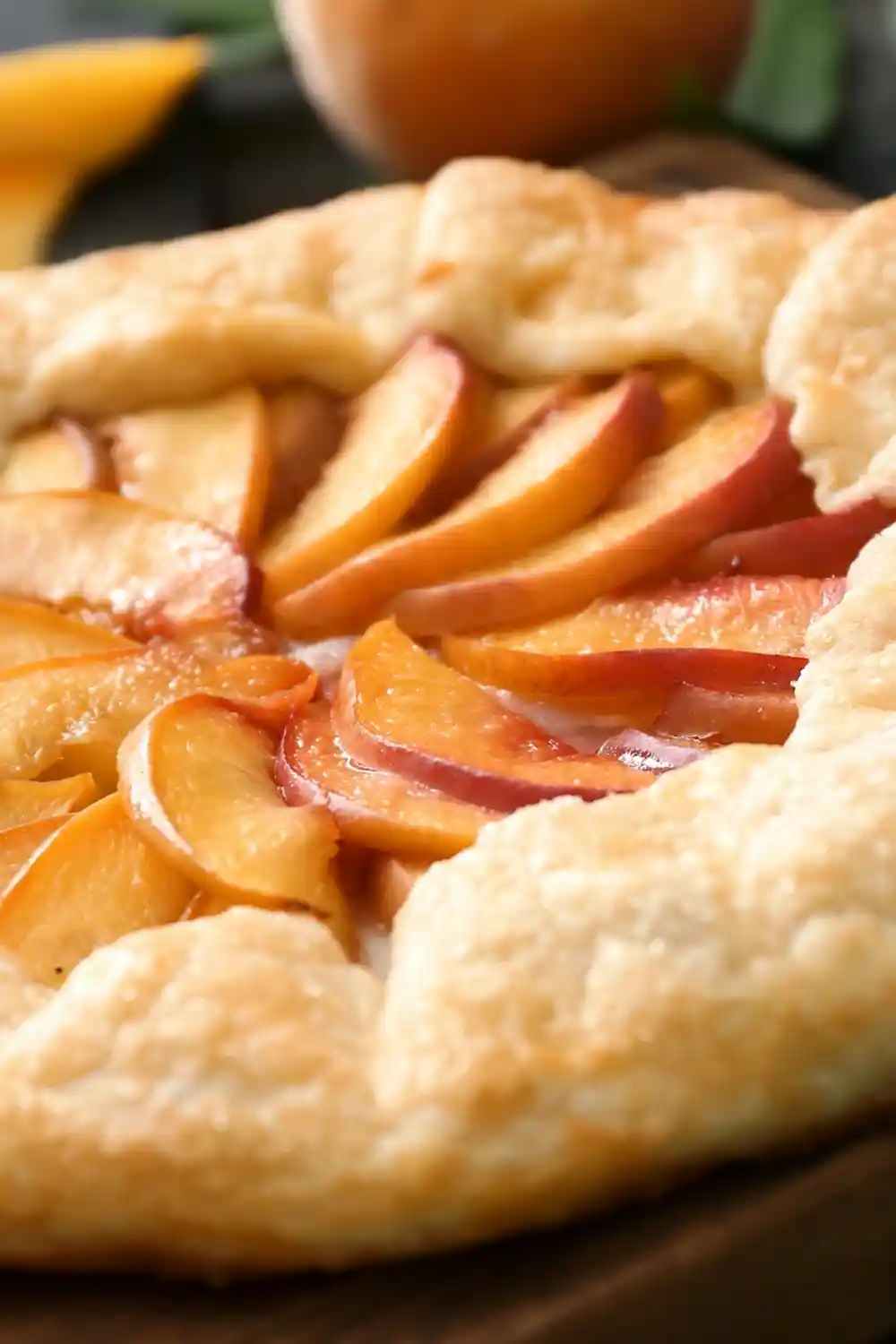
This rustic peach galette features a flaky, buttery crust filled with juicy, cinnamon-spiced peaches. It is a simple, free-form tart that requires no special pie dish and is perfect for summer desserts.
List of ingredients
- 1 1/2 cups all-purpose flour – provides the main structure for the crust.
- 1/4 teaspoon salt – enhances the overall flavor of the pastry.
- 1/4 cup granulated sugar – adds a hint of sweetness to the dough.
- 1/2 cup unsalted butter, cold and cubed – essential for creating a flaky texture.
- 4-5 tablespoons ice water – binds the dough together while keeping it cool.
- 4-5 ripe peaches, sliced – the star filling of the dessert.
- 1/4 cup granulated sugar – used to sweeten the peach filling; adjust based on fruit ripeness.
- 1 teaspoon cinnamon – adds a warm, aromatic spice.
- 1 tablespoon lemon juice – balances sweetness and prevents the peaches from browning.
- 1 tablespoon cornstarch – optional, used to thicken the fruit juices.
- 1 egg – used for the egg wash to achieve a golden crust.
- 1 tablespoon milk – mixed with the egg for a smooth wash.
step-by-step instructions
- Prepare the flour mixture: In a mixing bowl, combine the flour, salt, and sugar. Add the cold, cubed butter and use a pastry cutter or your fingers to blend until the mixture resembles coarse crumbs.
- Form the dough: Stir in the ice water, one tablespoon at a time, until the dough just comes together. Form the dough into a disk, wrap it tightly in plastic wrap, and refrigerate for at least 30 minutes.
- Prepare the filling: In a large bowl, combine the sliced peaches, sugar, cinnamon, lemon juice, and cornstarch if using. Toss the ingredients gently to coat the fruit and let it marinate for about 10 minutes.
- Heat the oven: Preheat your oven to 375°F (190°C).
- Roll the pastry: On a floured surface, roll out the chilled dough into a rough circle about 1/4 inch thick. Carefully transfer the dough to a parchment-lined baking sheet.
- Assemble the galette: Spoon the peach mixture into the center of the dough, leaving a 2-inch border around the edges. Gently fold the edges of the dough over the filling and pleat them as necessary.
- Apply the wash: In a small bowl, whisk together the egg and milk. Brush this mixture over the crust to ensure a golden-brown color after baking.
- Bake: Bake the galette in the preheated oven for 40-45 minutes, or until the crust is golden and the peaches are bubbling.
- Cool and serve: Allow the galette to cool for at least 10 minutes before slicing. Serve it warm or at room temperature.
Pro Tips for a Flaky Crust
Maintaining Low Butter Temperatures
Keeping the butter cold is the most critical part of achieving a flaky crust. When cold chunks of butter hit the hot oven, they release steam, which creates small pockets and layers in the pastry. If the butter melts before baking, the crust will be dense and cookie-like instead of light and flaky.
Avoiding Overworking the Dough
Handle the dough as little as possible to prevent excess gluten development. Over-mixing or over-kneading leads to a tough, chewy crust rather than a tender one. Use a light touch when adding water and stop mixing the moment the dough holds together.
Using Ice Cold Water
Always use water that has been chilled with ice cubes. This ensures that the dough temperature remains low during the mixing process. Warm water can melt the butter prematurely, ruining the structural integrity of the flaky layers.
Allowing the Dough to Rest
Refrigerating the dough for 30 minutes allows the gluten to relax and the fats to firm up. This step makes the dough much easier to roll out without it shrinking in the oven. It also ensures the butter is cold enough for the best possible rise.
Filling Optimizations
Selecting the Right Peaches
Choose peaches that are ripe but still slightly firm to the touch. Overly soft peaches can release too much moisture, leading to a soggy crust. Look for fruit with a fragrant aroma and a slight give when pressed gently near the stem.
Adjusting Sugar for Fruit Sweetness
The amount of sugar needed varies depending on the variety and ripeness of your peaches. Taste a slice of the raw fruit first; if they are exceptionally sweet, reduce the sugar in the filling by a tablespoon. If they are tart, you may want to add an extra teaspoon of sugar.
The Purpose of Lemon Juice
Lemon juice provides a bright, acidic contrast to the sweetness of the sugar and peaches. It also helps preserve the vibrant color of the fruit by preventing oxidation. This small addition enhances the overall flavor profile of the dessert.
Using Cornstarch to Prevent Sogginess
Cornstarch acts as a thickener for the juices released by the peaches during the baking process. Without it, the filling can become watery and soak into the bottom crust. Mixing it in ensures a jam-like consistency that holds the fruit in place.
Flavor Variations and Substitutions
Incorporating Nutmeg or Allspice
For a deeper, more complex spice profile, add a pinch of ground nutmeg or allspice to the cinnamon. These spices complement the natural sweetness of the peach and add a warm, earthy note. Use them sparingly so they do not overpower the fruit.
Using Different Stone Fruits
This recipe works excellently with nectarines or plums. Nectarines have a very similar sugar and water content, making them a direct substitute. Plums provide a tarter flavor that balances well with the sweet crust.
Adding Fresh Summer Herbs
Adding finely chopped fresh thyme or basil to the filling can create a sophisticated, gourmet taste. Thyme adds a subtle earthiness, while basil brings a fresh, peppery note. These herbs pair surprisingly well with the sweetness of ripe peaches.
Substituting Butter with Plant-Based Alternatives
You can use a high-quality plant-based butter block to make this recipe vegan-friendly. Ensure the substitute is a hard block and not a spreadable tub margarine, as the water content in spreads is too high. Keep the plant-based butter frozen until the moment you incorporate it.
Implementing Gluten-Free Flour Blends
Replace the all-purpose flour with a 1:1 gluten-free baking blend that contains xanthan gum. The texture will be slightly more crumbly, but the flavor remains identical. Be careful not to over-roll the dough, as gluten-free pastry can be more fragile.
Serving Suggestions
Pairing with Vanilla Ice Cream
The most classic way to serve a warm peach galette is with a scoop of premium vanilla bean ice cream. The temperature contrast between the hot fruit and cold cream creates a luxurious experience. The creaminess of the ice cream also balances the acidity of the peaches.
Adding a Dollop of Greek Yogurt
For a slightly tangier and healthier option, top a slice with a dollop of plain Greek yogurt. The tartness of the yogurt cuts through the richness of the buttery crust. A drizzle of honey over the yogurt can add an extra layer of sweetness.
Drizzling with Homemade Caramel Sauce
A drizzle of salted caramel sauce adds a deep, burnt-sugar flavor that complements the cinnamon. This is ideal for those who prefer a richer, more decadent dessert. Use a warm sauce to keep the galette’s temperature consistent.
Serving with Fresh Berries
Accompany the galette with a handful of fresh raspberries or blueberries on the side. These berries add a pop of color and a different type of acidity that enhances the peach flavor. They provide a fresh, raw contrast to the baked fruit.
Storage and Preservation
Room Temperature Storage
If you plan to eat the galette within 24 hours, store it at room temperature. Place it on a plate and cover it loosely with a clean kitchen towel or a cake dome. This prevents the crust from drying out while allowing it to breathe.
Refrigeration Methods
For longer storage, wrap the leftovers tightly in plastic wrap or aluminum foil and store them in the refrigerator for up to 3 days. This prevents the pastry from absorbing other odors from the fridge. Keep in mind that the crust may soften slightly during refrigeration.
Freezing the Galette
You can freeze slices of the galette for later use. Wrap each slice individually in parchment paper and then place them in a freezer-safe bag. They can be kept for up to two months and reheated directly from the freezer.
Reheating Instructions
Oven Reheating for Maximum Crispness
To restore the flaky texture of the crust, reheat slices in an oven preheated to 350°F (175°C). Place the slices on a baking sheet and heat for 3-5 minutes. This method evaporates surface moisture and crisps the butter in the pastry.
Quick Microwave Method
For a faster option, heat individual slices in the microwave for 20-30 seconds. This is more convenient but will result in a softer, less crisp crust. Use a medium power setting to avoid overheating the fruit filling.
Common Troubleshooting
How to Fix a Soggy Bottom
If you find the bottom of your galette is too moist, try pre-baking the crust for 5 minutes before adding the filling. Additionally, ensuring you use cornstarch helps bind the juices. Using a preheated baking sheet or a pizza stone can also provide an immediate sear to the bottom crust.
Dealing with Over-browned Crust
If the edges of the crust are browning too quickly while the center is still pale, cover the edges with a ring of aluminum foil. This protects the pastry from direct heat while allowing the peaches to continue bubbling. Check every 5-10 minutes until the desired color is achieved.
Repairing Tears in the Dough
Since a galette is a rustic, free-form pastry, small tears in the dough are not a problem. Simply pinch the edges back together with your fingers to seal any gaps. These imperfections add to the home-style charm of the dish.
Frequently Asked Questions
How long does it take to bake Peach Galette?
A typical peach galette takes about 40 to 45 minutes to bake at 375°F. You are looking for a deep golden brown crust and a filling that is bubbling around the edges.
Can I make Peach Galette gluten-free?
Yes, you can substitute the all-purpose flour with a gluten-free flour blend. Ensure the blend includes a binder like xanthan gum to prevent the crust from becoming too brittle.
What spices are best for Peach Galette?
Cinnamon is the primary spice, but nutmeg, allspice, and a touch of vanilla extract also work well. These spices add warmth and depth to the natural sweetness of the peaches.
How do I know when Peach Galette is done?
The galette is finished when the pastry edges are golden brown and the fruit filling is bubbling. You can also gently press a peach slice with a fork; it should be tender and soft.
What is the difference between a galette and a pie?
The main difference is the form. A pie is baked in a deep dish with a defined shape, whereas a galette is a free-form tart folded over a baking sheet, giving it a rustic appearance.
} Print
Rustic Home-Style Peach Galette
- Total Time: 1 hour 20 minutes
- Yield: 6 servings
- Diet: General
Description
Easy Peach Galette recipe made of fresh peaches, a flaky pie crust, and a touch of sugar and cinnamon.
Ingredients
- 1 1/2 cups all-purpose flour
- 1/4 teaspoon salt
- 1/4 cup granulated sugar
- 1/2 cup unsalted butter, cold and cubed
- 4–5 tablespoons ice water
- 4–5 ripe peaches, sliced
- 1/4 cup granulated sugar
- 1 teaspoon cinnamon
- 1 tablespoon lemon juice
- 1 tablespoon cornstarch
- 1 egg
- 1 tablespoon milk
Instructions
- Step 1: In a mixing bowl, combine the flour, salt, and sugar. Add the cold butter and use a pastry cutter or your fingers to blend until the mixture resembles coarse crumbs.
- Step 2: Stir in the ice water, one tablespoon at a time, until the dough comes together. Form into a disk, wrap in plastic wrap, and refrigerate for at least 30 minutes.
- Step 3: In a large bowl, combine the sliced peaches, sugar, cinnamon, lemon juice, and cornstarch (if using). Toss gently to coat and set aside to marinate for about 10 minutes.
- Step 4: Preheat your oven to 375°F (190°C).
- Step 5: On a floured surface, roll out the chilled dough into a rough circle, about 1/4 inch thick. Transfer it to a parchment-lined baking sheet.
- Step 6: Spoon the peach mixture into the center of the dough, leaving a 2-inch border around the edges. Gently fold the edges of the dough over the filling, pleating as necessary.
- Step 7: In a small bowl, whisk together the egg and milk. Brush the egg wash over the crust to give it a golden color when baked.
- Step 8: Bake the galette in the preheated oven for 40-45 minutes, or until the crust is golden and the peaches are bubbly.
- Step 9: Allow the galette to cool for at least 10 minutes before slicing. Serve warm or at room temperature.
Notes
Choose ripe, juicy peaches for the best flavor. Keeping the butter cold is key to a flaky crust. Use cornstarch to prevent a soggy crust if peaches are very juicy.
- Prep Time: 30 minutes
- Cook Time: 45 minutes
- Category: Peach Desserts
- Method: Baking
- Cuisine: American
Nutrition
- Serving Size: 1 slice
- Calories: 227 kcal
- Sugar: 12 g
- Sodium: 110 mg
- Fat: 10 g
- Saturated Fat: 6 g
- Unsaturated Fat: 4 g
- Trans Fat: 0 g
- Carbohydrates: 30 g
- Fiber: 2 g
- Protein: 3 g
- Cholesterol: 35 mg