
This hearty chicken noodle soup is designed for the slow cooker to minimize active kitchen time. It features a rich, creamy base that perfectly complements tender shredded chicken and soft egg noodles.
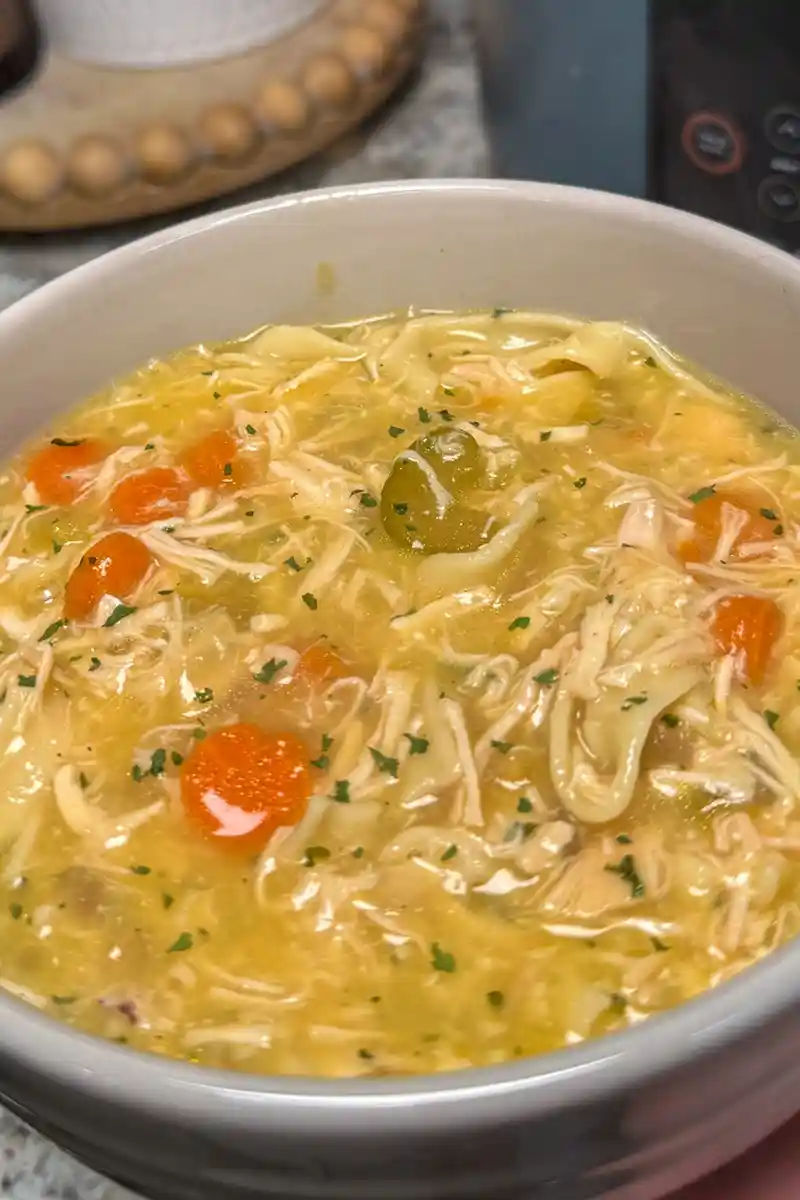
List of ingredients
- 2 Boneless Skinless Chicken Breasts – provides the lean main protein.
- 2 10 ounce Cream of Chicken Soup – creates the creamy, rich base.
- 6 cups Chicken Broth – forms the savory liquid foundation.
- 3 Celery Ribs (diced) – adds a mild savory flavor and texture.
- 1 cup Yellow Onion (diced) – provides aromatic sweetness.
- 1 cup Carrots (diced) – adds color and a hint of sweetness.
- 1 teaspoon Chicken Boullion Powder – intensifies the chicken flavor.
- 1 teaspoon Onion Powder – adds depth to the broth.
- 1 teaspoon Garlic Powder – provides a pungent aromatic quality.
- Black Pepper to taste – adds a subtle spicy note.
- 2 cups Egg Noodles – thick pasta that absorbs the creamy broth.
step-by-step instructions
- Combine Base: Stir together the cream of chicken soup, seasonings, chicken broth, carrots, onions, and celery in the crockpot. Place the chicken breasts directly into the mixture. Cook on high for 3–4 hours or on low for 6–8 hours.
- Shred Chicken: Once the chicken is fully cooked and tender, remove the breasts from the pot. Shred the meat using two forks and stir the shredded chicken back into the soup.
- Cook Noodles: Add the egg noodles to the crockpot. Cook on high for 30–45 minutes, until the noodles are tender but still slightly firm (al dente). Serve warm.
Optimizing Slow Cooker Settings
High vs Low Heat Settings
The low setting is ideal for a more tender chicken texture and a slower melding of flavors. Use the high setting if you are short on time, as it reduces the cooking window significantly. Ensure you check the internal temperature of the chicken regardless of the setting.
Maintaining the Lid Seal
Avoid opening the lid during the initial cooking phase to keep the heat trapped inside. Lifting the lid can release steam and drop the internal temperature by 20 degrees. This can extend the cooking time and potentially affect the tenderness of the meat.
Cooking Frozen Chicken Breasts
You can use frozen chicken breasts, but you must increase the cooking time. Add approximately 30 to 60 minutes on high or 1 to 2 hours on low. Ensure the chicken reaches a safe internal temperature of 165 degrees Fahrenheit before shredding.
Vegetable Preparation and Texture
Consistent Dicing for Even Cooking
Cut your carrots, celery, and onions into uniform, half-inch pieces. This ensures that all vegetables soften at the same rate throughout the long cooking process. Uneven pieces can lead to some vegetables becoming mushy while others remain hard.
Selecting Fresh Mirepoix Ingredients
Use fresh carrots and celery rather than frozen options for better structural integrity. Fresh vegetables maintain a slight bite even after hours in the slow cooker. Avoid using pre-cut frozen mixes as they often release excess water into the broth.
Adjusting Carrot Sizes for Firmness
If you prefer your carrots to be very firm, cut them into thicker rounds. If you prefer them to blend into the soup, mince them more finely. The slow cooker’s moist heat breaks down cellulose, so size directly impacts final texture.
Noodle Management Techniques
Avoiding Mushy Egg Noodles
Always add the noodles during the final stage of cooking rather than at the beginning. Egg noodles cook quickly and will disintegrate if left in the heat for 6 hours. Thirty to forty-five minutes on high is usually sufficient for the perfect texture.
Managing Starch Absorption
Noodles naturally absorb liquid as they sit, which can make the soup very thick. If you plan to store the soup for several days, consider undercooking the noodles slightly. They will continue to soften during the reheating process.
Alternative Pasta Options
Rotini or penne can be used if egg noodles are unavailable, though they require slightly longer cooking times. Small shells are also a great alternative for capturing the creamy broth inside the pasta. Avoid using very thin pastas like angel hair, as they overcook too rapidly.
Controlling Soup Consistency
Thickening with Cornstarch Slurry
If the soup is too thin for your preference, create a slurry with equal parts cornstarch and cold water. Stir the mixture into the bubbling soup during the last 30 minutes of cooking. This creates a glossy, thicker consistency without adding extra fat.
Thinning the Broth with Extra Liquid
The cream of chicken soup base can sometimes become too thick as it reduces. Stir in an additional half-cup of chicken broth or water to loosen the consistency. Do this gradually until the soup reaches your desired thickness.
Achieving a Velvety Texture
For an even smoother base, you can blend a small portion of the cooked vegetables before adding the noodles. This incorporates more vegetable solids into the broth, increasing the creaminess. Stir the blended mixture back into the main pot.
Ingredient Substitutions and Variations
Using Chicken Thighs for More Flavor
Boneless, skinless chicken thighs are a great substitute for breasts and often result in a richer flavor. Thighs are more resistant to overcooking, making them perfect for very long slow-cook cycles. They provide a more succulent texture after shredding.
Low-Sodium Broth Alternatives
To reduce the salt content, use low-sodium chicken broth and omit the bouillon powder. You can compensate for the lost salt by adding a squeeze of fresh lemon juice at the end. This adds brightness and enhances the existing savory notes.
Fresh Herb Substitutions
Replace the onion and garlic powders with finely minced fresh garlic and chopped yellow onions. For added aromatic depth, stir in fresh parsley or thyme during the last 30 minutes. Fresh herbs provide a more vibrant flavor profile than dried powders.
Serving and Presentation Ideas
Ideal Side Dish Pairings
Serve this creamy soup with a crusty sourdough baguette or warm garlic bread. The crunch of the bread provides a necessary contrast to the soft textures of the soup. A light side salad with a vinaigrette also helps balance the richness of the cream base.
Fresh Garnish Suggestions
Top each bowl with a sprinkle of freshly chopped parsley or chives for a pop of color. A crack of fresh black pepper on top adds a visual and flavor contrast. Some users enjoy a small dollop of sour cream for extra indulgence.
Temperature Control During Serving
Warm your bowls in the microwave or with hot water before ladling the soup. Creamy soups can cool down quickly once served in ceramic bowls. Pre-warming the dishes ensures the meal stays hot throughout the dining experience.
Storage and Preservation
Refrigeration Guidelines
Store leftovers in airtight containers in the refrigerator for up to three to four days. Ensure the soup is cooled slightly before sealing the lid to prevent condensation. Stir the soup well before reheating as the cream base may settle.
Freezing the Soup Base
It is recommended to freeze the soup base without the noodles to avoid a mealy texture. Freeze the chicken and vegetable mixture in freezer-safe bags or containers for up to three months. Cook fresh noodles separately when you are ready to serve the frozen base.
Selecting Airtight Storage Containers
Use glass containers with locking lids to prevent the soup from absorbing other refrigerator odors. Glass is also preferable for reheating in the microwave. Ensure there is a small amount of headspace in the container to allow for liquid expansion during freezing.
Reheating Guidelines
Stove-top Reheating Methods
Reheating on the stove over medium-low heat is the best way to maintain the emulsion of the cream base. Stir frequently to prevent the bottom from scorching. Add a splash of broth if the soup has thickened too much during storage.
Microwave Reheating Tips
Heat the soup in short intervals of 60 to 90 seconds, stirring in between. This prevents hot spots and ensures the chicken and noodles are heated evenly. Use a microwave-safe lid to keep moisture from evaporating.
Restoring Liquid Consistency
Because egg noodles absorb liquid over time, reheated soup often looks more like a stew. Stir in a tablespoon of water or chicken broth for every cup of soup. This restores the original creamy consistency without diluting the flavor.
Advance Preparation Strategies
Pre-chopping Vegetables
Dice your carrots, celery, and onions the night before and store them in a single container. This reduces the active prep time to almost zero on the morning of cooking. Keep the vegetables chilled to maintain their freshness.
Preparing the Base Ahead of Time
You can combine the broth, cream soup, and seasonings in a jar and store it in the fridge. On the day of cooking, simply pour the mixture over the chicken and vegetables in the crockpot. This streamlines the process for busy mornings.
Portioning for Meal Prep
Divide the finished soup into individual portions immediately after cooking. This makes it easy to grab a single serving for work or school lunches. Use containers that are microwave-safe for convenience during the week.
Troubleshooting Common Issues
Fixing an Overly Salty Broth
If the soup tastes too salty, add a peeled, halved potato and simmer it for 30 minutes. The potato acts as a sponge and absorbs some of the excess salt. Remove the potato before serving the soup.
Correcting Undercooked Chicken
If the chicken is not shredding easily, it may need more time. Return it to the crockpot on high for another 30 to 60 minutes. Always use a meat thermometer to confirm the center has reached 165 degrees Fahrenheit.
Handling Separated Cream Bases
If the soup looks curdled or separated, it may have been overheated. Stir in a small amount of cold broth or a teaspoon of cornstarch slurry to help re-emulsify the sauce. Avoid boiling the soup vigorously once the cream is added.
Frequently Asked Questions
Can I use frozen chicken in the crockpot?
Yes, you can use frozen chicken breasts. However, you must increase the cooking time by about 30-60 minutes on high or 1-2 hours on low to ensure the meat is safely cooked through.
Can I freeze chicken noodle soup?
You can freeze the soup, but it is best to freeze the broth, chicken, and vegetables only. Noodles tend to become mushy and lose their texture when frozen and thawed; it is better to add fresh noodles upon reheating.
How do I make the soup thicker?
To thicken the soup, mix a tablespoon of cornstarch with an equal amount of cold water to create a slurry. Stir this into the soup and cook for an additional 20-30 minutes on high.
Can I use gluten-free noodles?
Yes, gluten-free noodles can be used. Since they often have different cooking times and can break down faster, it is recommended to cook them separately on the stove and add them to the bowls just before serving.
What can I use instead of cream of chicken soup?
You can substitute the cream of chicken soup with a mixture of chicken broth and a roux made from butter and flour. Alternatively, stir in a half-cup of heavy cream or Greek yogurt at the end of the cooking process for creaminess.
Print
Slow Cooker Creamy Chicken Noodle Soup
- Total Time: 4 hours 5 minutes
- Yield: 6 servings
- Diet: General
Description
This Crockpot Creamy Chicken Noodle Soup combines tender chicken, carrots, celery, and onions in a rich, creamy broth, then finishes with soft, flavorful noodles for a hearty, comforting meal that’s easy to make.
Ingredients
- 2 Boneless Skinless Chicken Breasts
- 2 10 ounce Cream of Chicken Soup
- 6 cups Chicken Broth
- 3 Celery Ribs (diced)
- 1 cup Yellow Onion (diced)
- 1 cup Carrots (diced)
- 1 teaspoon Chicken Bouillon Powder
- 1 teaspoon Onion Powder
- 1 teaspoon Garlic Powder
- Black Pepper to taste
- 2 cups Egg Noodles
Instructions
- Step 1: Combine the cream of chicken soup, seasonings, chicken broth, carrots, onions, and celery in the crockpot, mixing well. Place the chicken breasts into the mixture. Cook on high for 3–4 hours or low for 6–8 hours.
- Step 2: When the chicken is fully cooked, take it out, shred it, and stir it back into the crockpot.
- Step 3: Add the noodles and cook on high for 30–45 minutes, until tender but still slightly firm. Serve warm and enjoy.
Notes
If soup is too thick, add a splash of chicken broth to loosen. To thicken the soup, mix 1–2 tablespoons of cornstarch with an equal amount of cold water.
- Prep Time: 5 minutes
- Cook Time: 4 hours
- Category: Main Course
- Method: Slow Cooking
- Cuisine: American
Nutrition
- Serving Size: 1 serving
- Calories: 165 kcal
- Sugar: 7 g
- Sodium: 1124 mg
- Fat: 3 g
- Saturated Fat: 1 g
- Unsaturated Fat: 2 g
- Trans Fat: 0.01 g
- Carbohydrates: 21 g
- Fiber: 2 g
- Protein: 13 g
- Cholesterol: 42 mg