
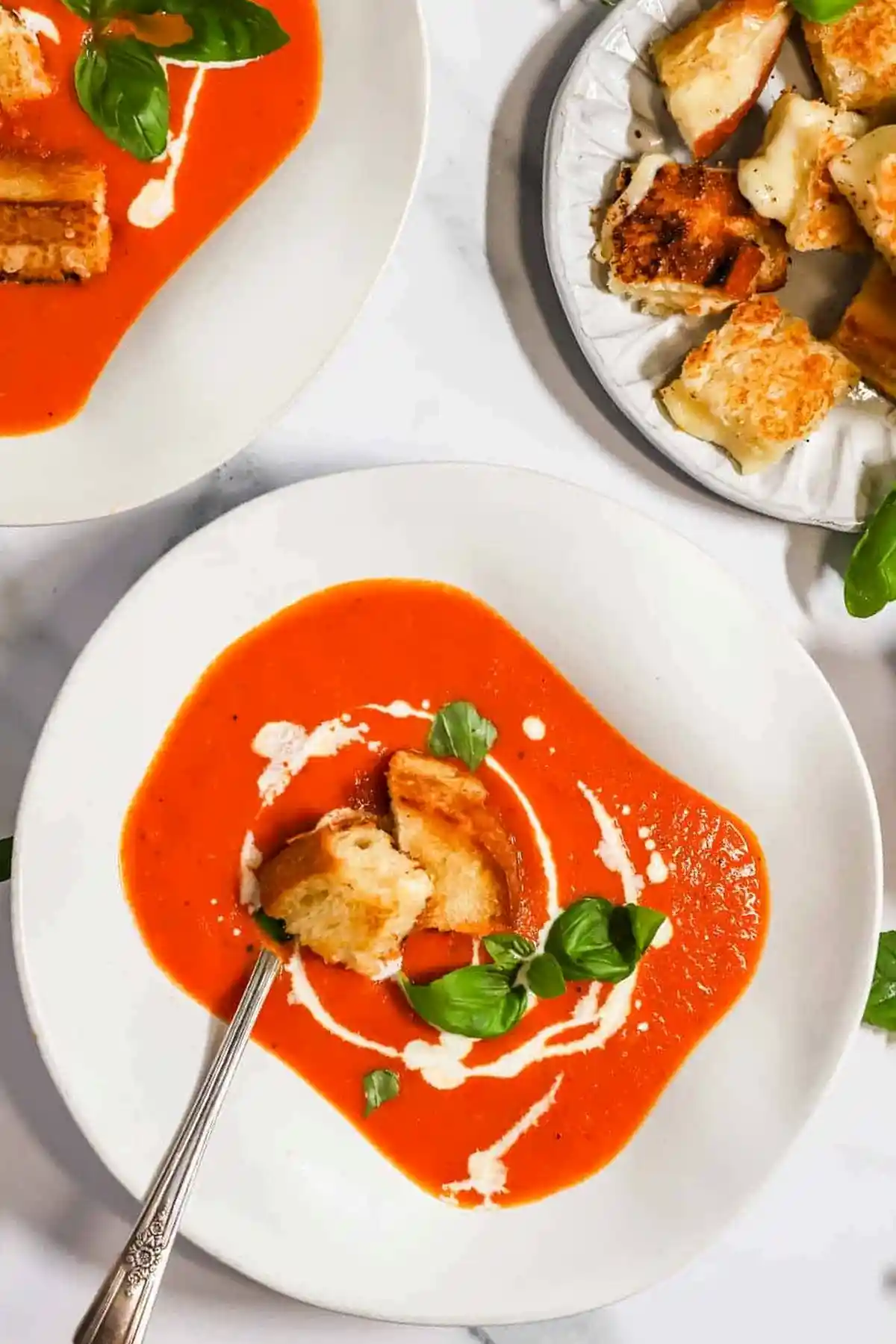
This soup utilizes roasting to concentrate the natural sugars in tomatoes and bell peppers for a deep, savory flavor. It is a nutrient-dense meal that pairs efficiently with crusty bread or grilled sandwiches.
List of ingredients
- 3 pounds tomatoes (freshly halved or two 28-ounce cans of San Marzano tomatoes) – provides the primary body and acidity.
- 2 red peppers (deseeded and cut into strips) – adds smokiness and subtle sweetness.
- 1/3 cup olive oil – used for roasting and adding healthy fats.
- 1 small onion (quartered) – adds aromatic depth.
- 1 head garlic (cut in half horizontally) – provides a mellow, roasted garlic flavor.
- 2 teaspoons kosher salt (or more to taste) – balances the sweetness of the roasted vegetables.
- 1 teaspoon oregano – adds an earthy, herbaceous note.
- 1 teaspoon smoked paprika – enhances the charred flavor of the peppers.
- 1/2 teaspoon red pepper flakes (optional) – adds a mild spicy kick.
- 1 cup vegetable broth (or chicken stock) – adjusts the consistency of the blended soup.
- 1/4 cup heavy cream (for serving) – creates a velvety texture.
- 1/2 cup fresh basil (torn for serving) – provides a fresh, aromatic finish.
step-by-step instructions
- Prepare the oven and vegetables: Preheat your oven to 475°F. Place the halved tomatoes, red pepper strips, quartered onion, and garlic halves into a 9×13 inch casserole dish.
- Season the mixture: Drizzle the olive oil evenly over the vegetables. Sprinkle with kosher salt, oregano, red pepper flakes, and smoked paprika, tossing gently to coat.
- Roast the vegetables: Bake for 35 to 40 minutes. Stir the vegetables halfway through the process to ensure they caramelize evenly on all sides.
- Combine and blend: Transfer the roasted vegetables and all the pan juices into a large pot. Pour in the vegetable broth and use an immersion blender to process until completely smooth.
- Final adjustments: Taste the soup and add more salt or pepper if necessary. Ladle the soup into bowls and garnish with a drizzle of heavy cream and torn basil leaves.
Vegetable Selection and Preparation
Choosing the Best Tomatoes
San Marzano tomatoes are highly recommended due to their low acidity and high sugar content. If using fresh tomatoes, Roma or vine-ripened varieties work best because they have more flesh and fewer seeds. Cherry tomatoes can be used for a sweeter, more concentrated flavor profile.
Selecting the Right Bell Peppers
Red bell peppers are the standard choice for this recipe because they are the sweetest of all pepper varieties. Yellow or orange peppers can be substituted if red ones are unavailable, though the color of the soup will be lighter. Ensure all seeds and white membranes are removed to avoid bitterness.
Preparing the Garlic Head
Cutting the garlic head in half horizontally allows the olive oil to penetrate the cloves. Roasting the garlic in its skin prevents the cloves from burning and transforms the sharp raw taste into a sweet, buttery flavor. This method makes it easy to squeeze the cloves out later.
Onion Varieties for Soup
Yellow onions provide a balanced, savory flavor that works well in most soups. White onions offer a sharper taste, while sweet onions like Vidalia add more sugar to the base. Quartering the onion ensures it roasts at a similar rate to the peppers.
Roasting Logic and Techniques
Achieving the Perfect Char
The high oven temperature of 475°F is essential for caramelization. This process, known as the Maillard reaction, creates new flavor compounds that make the soup taste rich and complex. Look for dark brown edges on the onions and peppers before removing the dish from the oven.
Avoiding Overcrowding the Pan
If the vegetables are piled too high, they will steam instead of roast. Leave a small amount of space between the pieces to allow hot air to circulate. If you have a very large batch, use two separate casserole dishes to maintain the roasting effect.
Oven Temperature Management
Ensure your oven is fully preheated before adding the vegetables. Placing the dish on the center rack provides the most even heat distribution. If the vegetables are browning too quickly, move the dish to a lower rack for the final ten minutes.
The Importance of Tossing Halfway
Stirring the vegetables halfway through the roasting time redistributes the olive oil. This prevents some pieces from drying out while others remain undercooked. It also ensures that the spices are evenly distributed across all the vegetables.
Blending and Texture Guides
Using an Immersion Blender
An immersion blender is the most efficient tool as it allows you to blend directly in the pot. This eliminates the need to transfer hot liquids and reduces cleanup. Move the blender up and down slowly to ensure no large chunks remain.
Safe Standalone Blender Techniques
When using a traditional blender, work in small batches to avoid overfilling the jar. Always leave the lid slightly open or remove the center cap and cover it with a towel to let steam escape. This prevents pressure from building up and blowing the lid off.
Straining for a Silky Texture
For a professional, restaurant-style finish, pass the blended soup through a fine-mesh sieve. This removes any remaining seeds from the tomatoes or small bits of garlic skin. This step is optional but results in a perfectly smooth consistency.
Adjusting the Final Thickness
If the soup is too thick, stir in additional vegetable broth one tablespoon at a time. If it is too thin, you can simmer it uncovered for several minutes to reduce the liquid. Avoid adding flour or cornstarch unless the soup is significantly too watery.
Customizing the Flavor Profile
Swapping Smoked Paprika for Sweet Paprika
Smoked paprika provides a distinct woody flavor that complements the roasted peppers. If you prefer a more neutral, classic tomato taste, use sweet or Hungarian paprika. This change reduces the smoky intensity while maintaining the bright red color.
Using Different Herbal Notes
While oregano is traditional, fresh thyme or rosemary can add a different earthy dimension. Dried basil can be added during the roasting phase for a deeper herbal flavor. Always add fresh basil at the very end to preserve its bright color and scent.
Adjusting the Heat Level
The red pepper flakes provide a subtle warmth that cuts through the richness of the cream. Increase the amount to a full teaspoon for a spicier soup. For a child-friendly version, omit the flakes entirely without affecting the core flavor.
Adding Umami Boosters
A teaspoon of soy sauce or a tablespoon of nutritional yeast can enhance the savory depth of the soup. A small amount of tomato paste added during the blending process can also intensify the tomato flavor. These additions provide a more complex taste without adding significant calories.
Dairy-Free and Vegan Alternatives
Coconut Milk for Creaminess
Full-fat canned coconut milk is an excellent substitute for heavy cream. It provides a similar richness and a velvety mouthfeel. Add it at the end of the cooking process to avoid any separation of the fats.
Cashew Cream Substitution
Blend soaked raw cashews with water and a pinch of salt until completely smooth. This creates a neutral-tasting, high-protein cream that mimics the thickness of dairy cream. It is an ideal choice for those avoiding both dairy and coconut flavors.
Using Almond Milk
Unsweetened almond milk is a lighter alternative to heavy cream. While it does not provide the same thickness, it adds a subtle creaminess. You may need to simmer the soup longer to achieve the desired consistency when using this option.
Avocado for Thickness
Blending a small amount of ripe avocado into the soup adds a creamy texture and healthy fats. This method results in a slightly thicker soup and a very subtle green tint. It is a great way to increase the nutrient density of the meal.
Serving and Pairing Suggestions
The Classic Grilled Cheese Pair
A grilled cheese sandwich made with sourdough and sharp cheddar is the traditional accompaniment. The acidity of the tomato soup cuts through the richness of the melted cheese. For a twist, add a slice of tomato or a leaf of spinach inside the sandwich.
Gourmet Bread Options
Warm ciabatta or a crusty French baguette are excellent for dipping. Garlic bread provides a complementary flavor that enhances the roasted garlic already present in the soup. Toasted focaccia with rosemary and sea salt is another high-end option.
Creative Garnish Ideas
Beyond cream and basil, try adding a swirl of pesto or a sprinkle of toasted pine nuts. A few drops of high-quality balsamic glaze can add a sweet and tangy contrast. Microgreens or chives provide a fresh, professional look to the presentation.
Side Salad Pairings
A simple arugula salad with lemon vinaigrette balances the richness of the soup. A Caesar salad with crisp romaine provides a crunchy texture that contrasts with the smooth soup. Keep the salad dressing light to avoid overwhelming the palate.
Storage, Freezing, and Reheating
Proper Refrigeration Steps
Allow the soup to cool completely before transferring it to an airtight container. This prevents condensation from forming, which can dilute the flavor. Store the soup in the refrigerator for up to four days.
Freezer-Safe Containers and Timing
Freeze the soup in portions using freezer-safe bags or containers. Leave about an inch of space at the top to allow for expansion during the freezing process. This soup can be stored in the freezer for up to three months.
Thawing Procedures
The safest way to thaw the soup is to move it from the freezer to the refrigerator 24 hours before use. Alternatively, you can place the sealed container in a bowl of cold water. Avoid thawing the soup at room temperature to prevent bacterial growth.
Reheating on the Stovetop
Heat the soup over medium-low heat in a pot, stirring occasionally. If the soup has thickened during storage, add a splash of water or vegetable broth to loosen it. Do not boil the soup vigorously, as this can cause the cream to separate.
Troubleshooting Common Issues
Fixing Overly Acidic Soup
If the tomatoes are too tart, stir in a small pinch of sugar or a teaspoon of honey. This neutralizes the acidity without making the soup taste sweet. A small amount of baking soda can also neutralize the acid, but use it sparingly to avoid affecting the taste.
Correcting a Too-Thin Consistency
Simmer the soup uncovered for 10 to 15 minutes to allow the liquid to evaporate. For a quicker fix, whisk in a cornstarch slurry (one tablespoon cornstarch mixed with two tablespoons cold water). Stir constantly until the soup thickens.
Handling Burnt Vegetable Bits
If some vegetables have charred too much, remove the largest burnt pieces before blending. A small amount of char adds a smoky flavor, but large burnt chunks can make the soup bitter. If the bitterness is too strong, add a small amount of cream or coconut milk to balance it.
Balancing Too Much Salt
If you accidentally over-salt the soup, add more unsalted vegetable broth or a peeled, halved potato. Simmering the potato in the soup for 10 minutes helps absorb excess salt. Alternatively, adding a splash of heavy cream can help mask the saltiness.
Frequently Asked Questions
Can I make this soup ahead of time?
Yes, you can roast the vegetables and store them in the refrigerator for up to three days. When you are ready to eat, simply transfer the roasted mix to a pot, add broth, and blend.
How can I thicken the soup if it is too thin?
The best method is to simmer the soup uncovered to reduce the liquid. You can also blend in a small amount of cooked potato or a cornstarch slurry for a thicker texture.
Can I use a regular blender instead of an immersion blender?
Yes, but you must work in batches and be careful with the hot liquid. Let the soup cool slightly and always leave a vent for steam to escape to prevent splattering.
Can I use frozen roasted peppers?
Yes, frozen roasted peppers are a great shortcut. Omit the fresh peppers and the roasting time for them, adding the frozen peppers directly to the pot with the roasted tomatoes and broth.
What is the best way to store the leftovers?
Store the soup in a glass airtight container in the fridge for up to four days. For longer storage, freeze in portions to maintain the freshest flavor and ease of reheating.
Print
Roasted Red Pepper and Tomato Soup
- Total Time: 45 minutes
- Yield: 6 servings
- Diet: Gluten Free, Vegetarian
Description
This Roasted Red Pepper and Tomato Soup is ultra-cozy, comforting, and warming! Featuring sweet roasted tomatoes, smoky red peppers, and savory seasonings, it’s the perfect grilled cheese pairing.
Ingredients
- 3 pounds tomatoes
- 2 red peppers, deseeded and cut into strips
- ⅓ cup olive oil
- 1 small onion, quartered
- 1 head garlic, cut in half
- 2 teaspoons kosher salt
- 1 teaspoon oregano
- 1 teaspoon smoked paprika
- ½ teaspoon red pepper flakes
- 1 cup vegetable broth
- ¼ cup heavy cream
- ½ cup fresh basil, torn
Instructions
- Roast the veggies: Heat the oven to 475°F. Cut the tomatoes in half and add to a 9×13 casserole dish along with the peppers, onion and garlic. Drizzle evenly with the olive oil and season with salt, oregano, red pepper flakes and smoked paprika. Bake for 35-40 minutes, tossing half way.
- Make the soup: Transfer the roasted veggies with their juices to a pot, then add the broth. Blend until smooth with an immersion blender or add to a blender and blend until smooth.
- Serve and enjoy: Taste the soup and adjust the seasoning to your liking. Ladle soup into a bowl, garnished with a drizzle of heavy cream and basil. Serve with grilled cheese or toast, and enjoy!
Notes
For a dairy-free version, coconut milk can be used instead of heavy cream. If the soup is too thin, simmer it uncovered to reduce or add a cornstarch slurry.
- Prep Time: 10 minutes
- Cook Time: 35 minutes
- Category: Main Course, Soup
- Method: Roasting
- Cuisine: American
Nutrition
- Serving Size: 1 serving
- Calories: 207 kcal
- Sugar: 9 g
- Sodium: 952 mg
- Fat: 16 g
- Saturated Fat: 4 g
- Unsaturated Fat: 12 g
- Trans Fat: 0 g
- Carbohydrates: 15 g
- Fiber: 4 g
- Protein: 3 g
- Cholesterol: 11 mg