
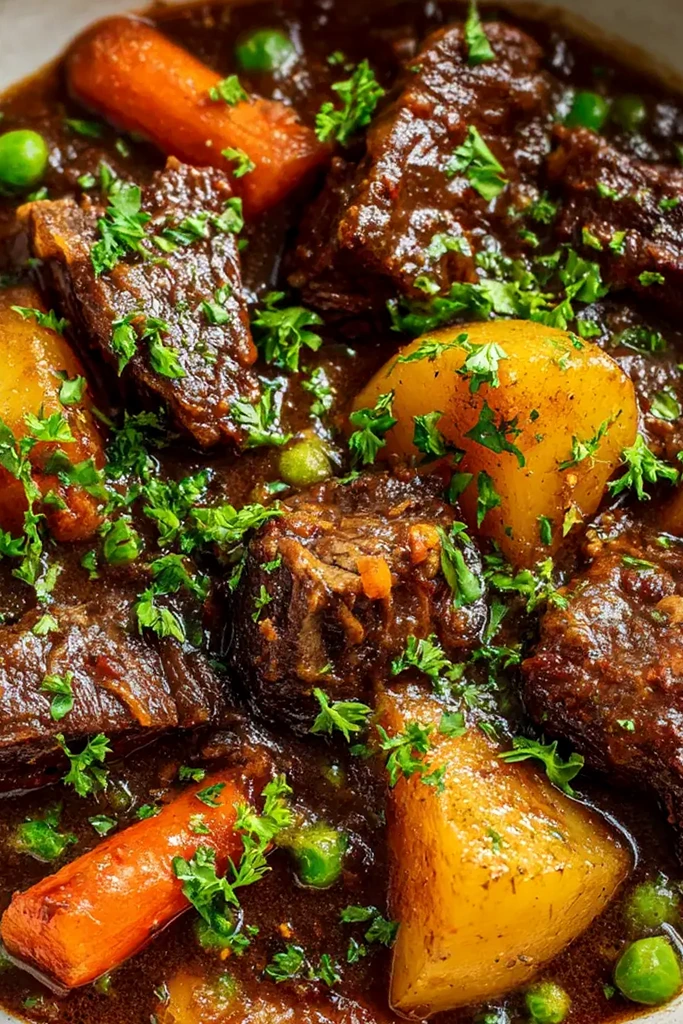
Experience the ultimate comfort food with this slow-cooked beef stew, featuring succulent chunks of beef, tender root vegetables, and a rich, velvety gravy. This recipe is designed for ease, allowing you to create a restaurant-quality meal by simply layering ingredients in your slow cooker for a hands-off, nourishing dinner. It is the perfect solution for busy weeknights when you desire a warm, savory, and filling meal that tastes like it spent all day in the oven.
List of ingredients
- 2 lbs Beef Chuck Roast (Cut into 1.5-inch cubes)
- 0.25 cup All-Purpose Flour
- 2 tbsp Olive Oil
- 1 large Yellow Onion (Diced)
- 3 cloves Garlic (Minced)
- 3 large Yukon Gold Potatoes (Peeled and cubed)
- 4 large Orange Carrots (Sliced into thick rounds)
- 3 cups Low-Sodium Beef Broth
- 2 tbsp Tomato Paste
- 1 tbsp Worcestershire Sauce
- 1 tsp Salt
- 0.5 tsp Black Pepper
- 2 tbsp Cornstarch
- 2 tbsp Cold Water
- 1 cup Frozen Green Peas
- 0.25 cup Fresh Parsley (Finely chopped)
step-by-step instructions
- Step: Pat the beef chunks completely dry with paper towels and toss them in the flour until evenly coated.
- Step: Heat the olive oil in a large skillet over medium-high heat and sear the beef in a single layer for 2-3 minutes per side until a deep, dark brown crust forms.
- Step: Transfer the beef to the slow cooker and deglaze the skillet with a splash of beef broth, scraping up the browned bits, then pour the liquid over the beef.
- Step: Layer the cubed potatoes, carrot rounds, onion, and minced garlic over the beef.
- Step: Whisk the remaining beef broth, tomato paste, Worcestershire sauce, salt, and black pepper together, then pour over the vegetables and beef in the slow cooker.
- Step: Cover and cook on LOW for 7-8 hours or HIGH for 4 hours until the beef is tender.
- Step: Whisk the cornstarch and cold water into a slurry and stir into the slow cooker with the frozen peas; cover and cook for an additional 30 minutes until the gravy is thick and glossy.
- Step: Garnish with fresh parsley before serving.
Practical Preparation Techniques
Achieving the Perfect Sear
The secret to a dark, restaurant-style gravy lies in the initial searing of the beef. By browning the meat before it enters the slow cooker, you initiate the Maillard reaction, which adds layers of roasted flavor that simply cannot be replicated by simmering alone. Always use a high-heat stable oil like olive oil and ensure your pan is truly hot before placing the beef inside for the best results.
Choosing the Right Beef Cut
Beef chuck roast is the gold standard for slow-cooked stews because it is well-marbled with fat and connective tissue. As the stew simmers for several hours, this connective tissue breaks down into gelatin, which contributes to the luxurious mouthfeel of the gravy. If you cannot find chuck roast, look for a bottom round or cross-rib roast, as these cuts also perform exceptionally well under long, moist-heat cooking conditions.
Refining Your Stew Profile
Strategic Vegetable Selection
Yukon Gold potatoes are preferred for this recipe because of their thin skin and creamy interior, which prevents them from disintegrating into the broth during the long cooking time. For carrots, aim for thick, uniform rounds to ensure they soften at the same rate as the potatoes. If you prefer to add other root vegetables like parsnips or celery root, keep the pieces similar in size to the potato cubes to maintain even cooking throughout the entire batch.
Balancing the Umami Depth
The combination of tomato paste and Worcestershire sauce provides a foundational savory flavor that balances the iron-rich taste of the beef. If you feel the stew needs more brightness, a teaspoon of Dijon mustard or a splash of apple cider vinegar can be whisked into the broth right before serving. These small adjustments can help cut through the richness of the beef if you are using a particularly fatty roast.
Serving and Presentation Ideas
Creating a Comforting Presentation
Because this stew has a deep brown color, serving it in white ceramic bowls creates a beautiful visual contrast that highlights the vibrant orange carrots and bright green peas. A dusting of finely chopped fresh parsley is not just for aesthetics; it provides a clean, herbaceous finish that cuts through the heavy, savory notes of the gravy. Serving this alongside a crusty loaf of sourdough bread allows guests to soak up every last drop of the liquid.
Accompaniments for a Complete Meal
This dish is incredibly filling on its own, but it pairs wonderfully with sides that do not compete with the bold flavors. A crisp side salad dressed with a simple vinaigrette provides a nice textural and temperature contrast to the hot, soft stew. Alternatively, serving a small portion of buttered egg noodles or a serving of mashed potatoes beneath the stew can turn it into an even more substantial meal for a large family gathering.
Frequently Asked Questions
How can I tell if my beef is fully tender?
The beef is ready when you can easily pierce a chunk with a fork and it shreds or pulls apart with very little resistance. If the meat still feels tough or firm, it likely needs another hour of cooking time on the LOW setting to allow the connective tissues to fully break down into tender proteins.
Is it necessary to use a cornstarch slurry?
While the flour used for dredging helps thicken the stew slightly, the cornstarch slurry is crucial for achieving that signature glossy, thick gravy. Without it, the broth may remain too thin. If you find your gravy is still too thin after adding the slurry, remove the lid and switch the slow cooker to HIGH for an additional 15 minutes to allow for further evaporation.
How do I prevent the potatoes from becoming mushy?
To avoid overcooked vegetables, ensure your potato cubes are at least 1.5 inches in size. Cutting them too small will result in them breaking apart during the 8-hour cooking cycle. If you are worried about their texture, you can add them to the slow cooker halfway through the cooking time instead of the beginning, though this will require slightly more attention to the process.
What should I do if my gravy tastes too salty?
If the broth becomes too concentrated, you can stir in a small amount of extra unsalted beef stock or a little water to thin it out. If the saltiness is only slightly off, adding a few extra peeled, raw potato chunks and cooking for an additional 30 minutes can help, as the starches will absorb some of the excess sodium. Always season cautiously with salt at the start, as the liquid will reduce and concentrate over the long cooking period.
Storage and Reheating Guidelines
Keeping Leftovers Fresh
Store any leftover stew in an airtight glass or plastic container in the refrigerator for up to 4 days. Because this stew contains potatoes and carrots, the texture may soften slightly upon reheating, which is common for slow-cooked root vegetables. Ensure the stew is completely cooled before covering it to prevent condensation from altering the consistency of the gravy.
Best Practices for Reheating
When reheating, it is best to use a small saucepan on the stove over medium-low heat. Stir occasionally to ensure the bottom does not scorch, and add a tablespoon of water or beef broth if the gravy has thickened too much in the fridge. Avoid using the microwave if possible, as it tends to heat the stew unevenly and can make the beef chunks tough while leaving the center of the larger vegetables cool.
Freezing for Future Meals
This stew is an excellent candidate for freezing, but it is best to leave out the potatoes if you intend to freeze it for a long period, as they can become grainy when thawed. To freeze the base, allow it to cool, portion it into freezer-safe bags, and remove as much air as possible. It will keep well for up to 3 months; simply thaw it overnight in the refrigerator before reheating on the stove and adding fresh potatoes or peas if desired.
Troubleshooting Common Issues
Gravy Separation
If the gravy appears slightly separated or oily, it is likely due to the rendered fat from the beef. You can skim off the excess fat from the surface of the stew with a large spoon before serving. If it remains separated, a quick stir with a whisk usually helps re-emulsify the sauce with the cornstarch slurry, restoring its smooth and glossy appearance.
Unevenly Cooked Vegetables
If you discover some vegetables are soft while others are hard, it is usually because they were unevenly distributed or varied in size. When layering your slow cooker, ensure that the densest ingredients like potatoes and carrots are placed toward the bottom or the sides where the heating elements are most active. Avoid lifting the lid frequently during the cooking process, as this releases heat and significantly increases the required cooking time, which often leads to uneven results.
Print
Crockpot Beef Stew: The Ultimate Rich and Hearty Comfort Dinner
- Total Time: 500 minutes
- Yield: 6 servings
- Diet: High Protein
Description
This easy Crockpot Beef Stew features tender braised beef chunks, cubed potatoes, and orange carrots simmered in a thick dark brown savory gravy. A comforting, classic slow-cooker dinner perfect for chilly evenings.
Ingredients
- 2 lbs Beef Chuck Roast (Cut into 1.5-inch cubes)
- 0.25 cup All-Purpose Flour
- 2 tbsp Olive Oil
- 1 large Yellow Onion (Diced)
- 3 cloves Garlic (Minced)
- 3 large Yukon Gold Potatoes (Peeled and cubed)
- 4 large Orange Carrots (Sliced into thick rounds)
- 3 cups Low-Sodium Beef Broth
- 2 tbsp Tomato Paste
- 1 tbsp Worcestershire Sauce
- 1 tsp Salt
- 0.5 tsp Black Pepper
- 2 tbsp Cornstarch
- 2 tbsp Cold Water
- 1 cup Frozen Green Peas
- 0.25 cup Fresh Parsley (Finely chopped)
Instructions
- Step: Pat the beef chunks completely dry with paper towels and toss them in the flour until evenly coated.
- Step: Heat the olive oil in a large skillet over medium-high heat and sear the beef in a single layer for 2-3 minutes per side until a deep, dark brown crust forms.
- Step: Transfer the beef to the slow cooker and deglaze the skillet with a splash of beef broth, scraping up the browned bits, then pour the liquid over the beef.
- Step: Layer the cubed potatoes, carrot rounds, onion, and minced garlic over the beef.
- Step: Whisk the remaining beef broth, tomato paste, Worcestershire sauce, salt, and black pepper together, then pour over the vegetables and beef in the slow cooker.
- Step: Cover and cook on LOW for 7-8 hours or HIGH for 4 hours until the beef is tender.
- Step: Whisk the cornstarch and cold water into a slurry and stir into the slow cooker with the frozen peas; cover and cook for an additional 30 minutes until the gravy is thick and glossy.
- Step: Garnish with fresh parsley before serving.
Notes
Do not skip searing the beef, as this is essential for a deeply flavored, dark brown gravy. Ensure vegetables are cut into uniform sizes for even cooking. Add frozen peas only during the final 30 minutes to preserve their color and texture.
- Prep Time: 20 minutes
- Cook Time: 480 minutes
- Category: Dinner
- Method: Slow Cooker
- Cuisine: American
Nutrition
- Serving Size: 1 serving
- Calories: 385 kcal
- Sugar: 6 g
- Sodium: 650 mg
- Fat: 18 g
- Saturated Fat: 6 g
- Unsaturated Fat: 10 g
- Trans Fat: 0 g
- Carbohydrates: 30 g
- Fiber: 5 g
- Protein: 32 g
- Cholesterol: 95 mg