
This slow-cooked creamy chicken noodle soup offers a heartwarming and robust meal that requires minimal active effort. By utilizing the gentle heat of a crockpot, the chicken becomes incredibly tender while the vegetables infuse the rich, savory broth with deep flavor. It is a perfect solution for busy weeknights when you desire a nutritious, homemade bowl of comfort without spending hours in the kitchen.
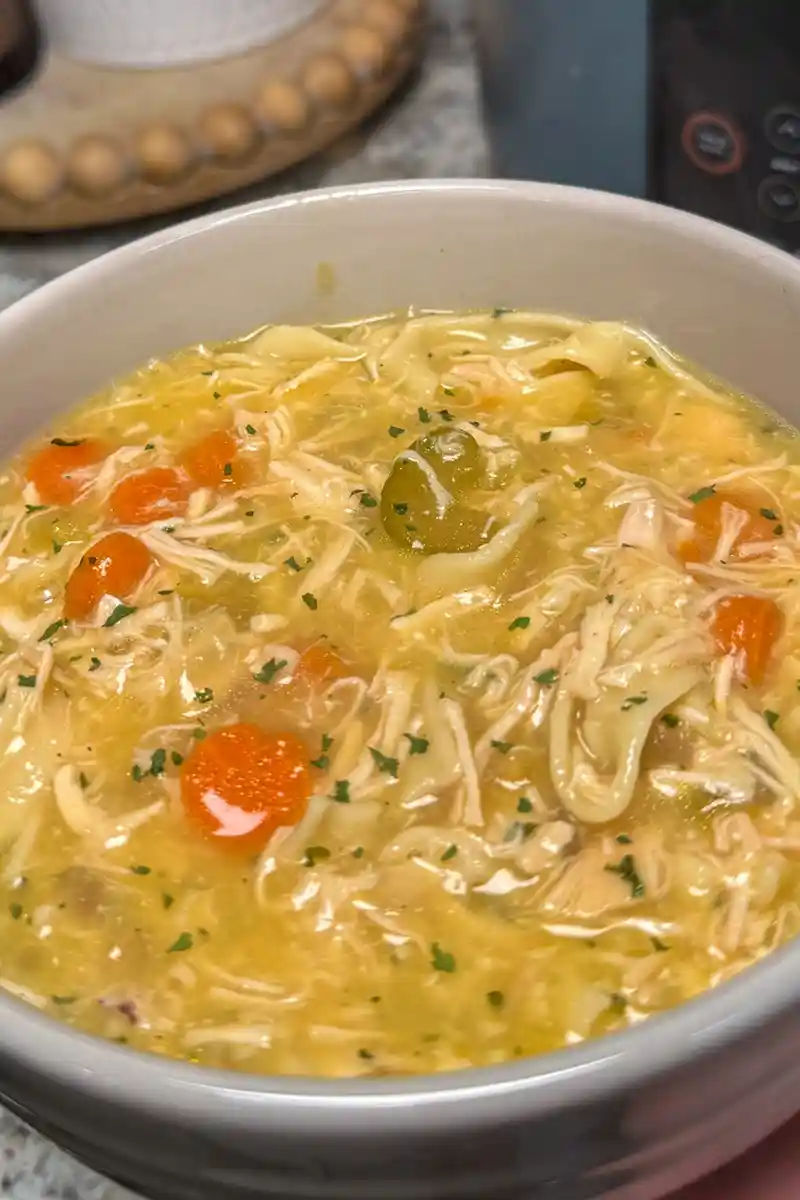
List of ingredients
- 2 Boneless Skinless Chicken Breasts
- 2 10 ounce Cream of Chicken Soup
- 6 cups Chicken Broth
- 3 Celery Ribs (diced)
- 1 cup Yellow Onion (diced)
- 1 cup Carrots (diced)
- 1 teaspoon Chicken Bouillon Powder
- 1 teaspoon Onion Powder
- 1 teaspoon Garlic Powder
- Black Pepper to taste
- 2 cups Egg Noodles
step-by-step instructions
- Step: Combine the cream of chicken soup, seasonings, chicken broth, carrots, onions, and celery in the crockpot, mixing well.
- Step: Place the chicken breasts into the mixture and cook on high for 3–4 hours or low for 6–8 hours.
- Step: Remove the chicken once cooked, shred it with forks, and return it to the crockpot.
- Step: Stir in the noodles and continue cooking on high for 30–45 minutes, or until the noodles reach an al dente texture.
Refining your slow cooker technique
Ensuring even vegetable cooking
To guarantee that your vegetables are tender throughout, aim to dice them into uniform pieces, ideally about half an inch in size. When the carrots and celery are similar in diameter, they reach the ideal texture at the same rate, preventing the frustration of having some pieces remain crunchy while others lose their shape. This consistency significantly improves the mouthfeel of every spoonful of soup.
Managing heat loss during cooking
The efficiency of a slow cooker depends entirely on its ability to trap heat and steam. Lifting the lid to check on the ingredients releases steam and drops the internal temperature, which can add significant time to your recipe. Trust the timing suggested in the instructions and resist the urge to peek unless you are approaching the final stage where you need to check the noodles for doneness.
Adjusting the consistency of your broth
If you find that your soup has become too thick, add a small splash of warm chicken broth to restore the desired silky texture. Conversely, if you prefer a thicker, almost stew-like consistency, whisk together one tablespoon of cornstarch with one tablespoon of cold water until smooth. Stir this slurry into the hot broth during the last fifteen minutes of cooking to gently thicken the base without affecting the flavor.
Effective ingredient swaps
Choosing alternative vegetables
While the classic combination of onion, celery, and carrots provides a traditional flavor base, you can easily substitute or add vegetables based on what is available in your pantry. Parsnips can replace carrots for a more earthy sweetness, or you can add sliced leeks in place of yellow onions for a milder, more sophisticated flavor. Ensure that any harder root vegetables are diced similarly to the carrots to maintain uniform cooking times.
Gluten-free noodle alternatives
If you are avoiding gluten, you can replace standard egg noodles with your favorite gluten-free pasta variety. Keep in mind that gluten-free pasta often requires shorter cooking times and can sometimes break down faster in hot liquid. It is best to cook gluten-free noodles separately according to the package directions and stir them into the soup just before serving to maintain the integrity of the pasta.
Strategies for storing and reheating
Optimal cooling before refrigeration
Proper storage is essential for maintaining food quality after the meal is finished. Allow the soup to cool down to room temperature for no more than one hour before transferring it into airtight containers. Dividing the soup into smaller portions helps it cool down much faster in the refrigerator, which minimizes the time it spends in the temperature danger zone.
Reheating for best texture
When you are ready to enjoy your leftovers, it is best to reheat the soup gently on the stove over medium-low heat. Because noodles tend to soak up liquid while sitting in the fridge, your soup will likely have thickened significantly overnight. Keep a little extra chicken broth or water on hand to stir in during the reheating process, which will loosen the noodles and return the soup to its original, velvety consistency.
Addressing common kitchen questions
How can I tell when the chicken is perfectly cooked?
The chicken breasts are done when they reach an internal temperature of 165°F (74°C) and can be easily shredded with two forks. If you find the chicken still resists pulling apart, it needs more time in the slow cooker. Using a meat thermometer is the most accurate way to ensure safety and tenderness without having to cut into the chicken and lose its juices.
Can this soup be prepared in advance?
Yes, this recipe is excellent for meal prep. You can prepare the broth, chicken, and vegetable base in the slow cooker and keep it refrigerated the night before, then simply turn the slow cooker on in the morning. However, it is highly recommended to add the noodles only when you are ready to cook the final stage, as they will turn mushy if added too early or left in the fridge inside the broth for extended periods.
Is it possible to use leftover roasted chicken?
If you have leftover cooked chicken, you can certainly use it to save time. Simply add the pre-cooked chicken to the broth and vegetables during the last thirty minutes of cooking, along with the noodles. This prevents the cooked meat from becoming dry or stringy during the longer slow-cooking process required for the raw vegetables to tenderize.
How long can I safely store this in the refrigerator?
When stored in an airtight, food-safe container, this soup will remain fresh for three to four days in the refrigerator. Always ensure the container is tightly sealed to prevent the soup from picking up other odors from the fridge. When reheating, ensure the entire batch reaches a gentle simmer throughout to ensure even heating.
Print
Slow-Cooked Creamy Chicken Noodle Soup
- Total Time: PT245M
- Yield: 6
- Diet: Comfort Food
Description
This Crockpot Creamy Chicken Noodle Soup combines tender chicken, carrots, celery, and onions in a rich, creamy broth, then finishes with soft, flavorful noodles for a hearty, comforting meal that’s easy to make.
Ingredients
- 2 Boneless Skinless Chicken Breasts
- 2 10 ounce Cream of Chicken Soup
- 6 cups Chicken Broth
- 3 Celery Ribs (diced)
- 1 cup Yellow Onion (diced)
- 1 cup Carrots (diced)
- 1 teaspoon Chicken Bouillon Powder
- 1 teaspoon Onion Powder
- 1 teaspoon Garlic Powder
- Black Pepper to taste
- 2 cups Egg Noodles
Instructions
- Step: Combine the cream of chicken soup, seasonings, chicken broth, carrots, onions, and celery in the crockpot, mixing well.
- Step: Place the chicken breasts into the mixture and cook on high for 3–4 hours or low for 6–8 hours.
- Step: Remove the chicken once cooked, shred it with forks, and return it to the crockpot.
- Step: Stir in the noodles and continue cooking on high for 30–45 minutes, or until the noodles reach an al dente texture.
Notes
If soup is too thick, add a splash of chicken broth to loosen. To thicken the soup, mix 1–2 tablespoons of cornstarch with an equal amount of cold water. Author: Lora Marie Bennett.
- Prep Time: PT5M
- Cook Time: PT240M
- Category: Main Course
- Method: Slow Cooker
- Cuisine: American
Nutrition
- Serving Size: 1 bowl
- Calories: 320 kcal
- Sugar: 6 g
- Sodium: 1250 mg
- Fat: 8 g
- Saturated Fat: 2 g
- Unsaturated Fat: 5 g
- Trans Fat: 0 g
- Carbohydrates: 38 g
- Fiber: 3 g
- Protein: 26 g
- Cholesterol: 85 mg