
I absolutely love whipping up something warm, comforting, and deeply satisfying after a long day.
This easy udon noodle recipe is your perfect solution for a hearty, stress-free family meal, delivering those wonderful aromatic and savory notes as it simmers. It’s incredibly convenient, bursting with flavor, and deeply nourishing for everyone at your table. This family favorite always gets rave reviews, especially for busy weeknights. Get ready to discover your new go-to udon noodle recipe that’s both quick to make and incredibly delicious.
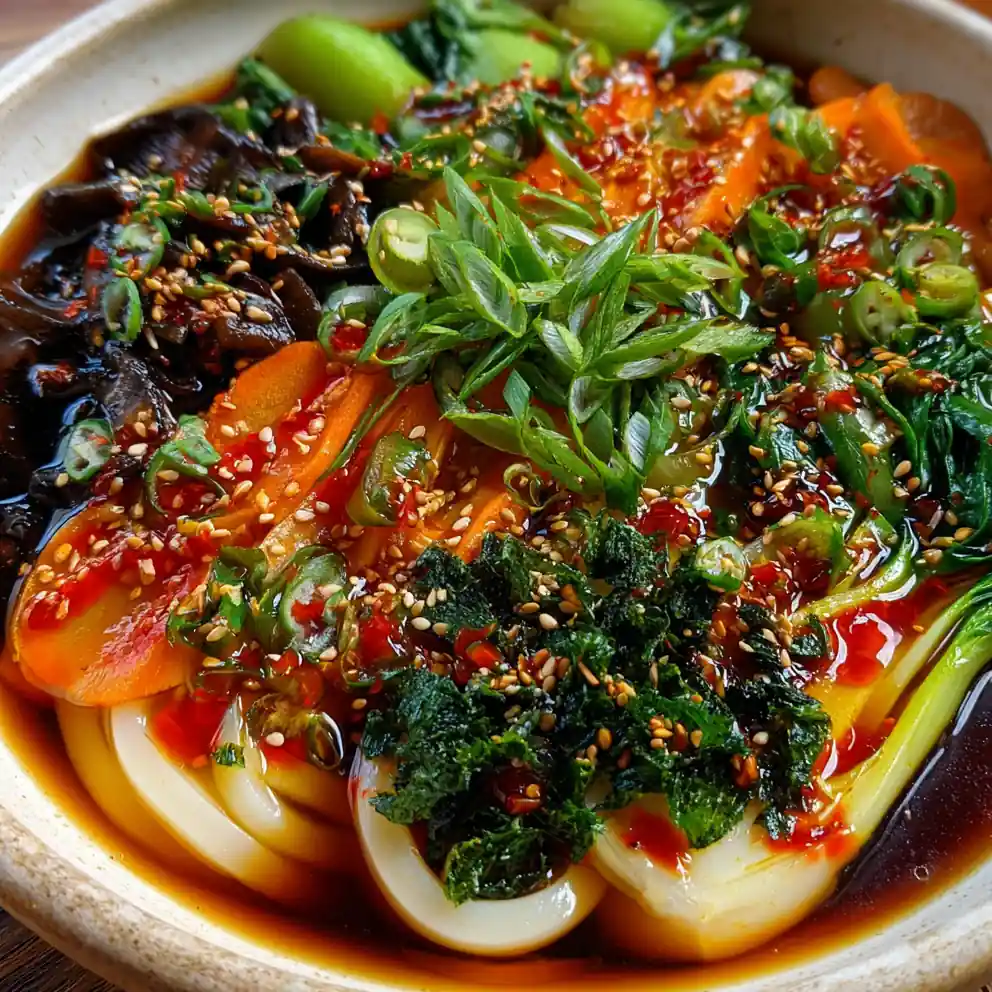
What You’ll Need (Ingredients & Why They Matter)
- 200 g (7 oz) dried udon noodles: The star of this udon noodle recipe, providing a delightfully chewy and satisfying texture. (Opt for whole wheat udon noodles for added fiber.)
- 2 tablespoons (30 mL) neutral cooking oil, divided: For frying the basil and sautéing aromatics, a mild oil like canola or grapeseed works best.
- 1 large shallot, thinly sliced: Adds a delicate oniony sweetness to the broth. (A small yellow onion can be substituted if you don’t have shallots.)
- 3 cloves garlic, minced: Essential for a fragrant, aromatic base.
- 1 tablespoon (15 mL) fresh ginger, grated: Provides a warming, zesty kick.
- 1 teaspoon (5 mL) smoked paprika: Delivers a unique smoky depth to the umami broth.
- 1 liter (4 cups) vegetable stock: Forms the savory, rich base of your soup. (Choose organic low-sodium vegetable stock for a cleaner taste.)
- 60 mL (1/4 cup) light soy sauce alternative (e.g., tamari or coconut aminos): Adds essential umami depth and seasoning, making this plant-based udon noodle recipe gluten-friendly. (Use tamari for a certified gluten-free option.)
- 2 tablespoons (30 mL) date syrup or maple syrup: A touch of natural sweetness that balances the savory and tangy notes. (Maple syrup is my personal go-to for convenience.)
- 1 tablespoon (15 mL) rice vinegar: Brightens the broth with a gentle tang.
- 4-5 dried shiitake mushrooms, rehydrated and thinly sliced (stems removed): Adds a ‘meaty’ texture and deep umami flavor.
- 200 g (7 oz) baby bok choy, trimmed and halved lengthwise: For vibrant color and a tender-crisp texture.
- 1 medium carrot, julienned: Adds natural sweetness and a lovely orange hue.
- 20-25 fresh basil leaves, washed and thoroughly dried: Transforms into crispy, fragrant garnish.
- 1 teaspoon (5 mL) sesame seeds, toasted: A nutty, textural finish.
- 1-2 tablespoons (15-30 mL) vegetable-based chili oil, for drizzling: Provides a beautiful swirl of color and a mild, warming heat.
Highlight premium or healthy versions:
Opt for organic low-sodium vegetable stock for a cleaner taste and better control of sodium. Choose whole wheat udon noodles for added fiber, making this a more wholesome meal. For the shiitake, selecting high-quality dried varieties ensures richer flavor.
Optional swaps for diet styles:
Gluten-free udon noodles or rice noodles work well for gluten sensitivities. You can add edamame or extra mushrooms for a fully plant-based udon noodle recipe. For a low-carb twist, consider shirataki noodles, though the authentic udon texture is lost for this udon noodle recipe.
Seasonal or budget-friendly notes:
In winter, add daikon radish slices for a subtle peppery bite. In spring, try fresh snap peas for a pop of green. To save on budget, utilize frozen stir-fry vegetable mixes, though texture may vary slightly.
Easy Step-by-Step Instructions
First, prepare the crispy basil: Heat 1 tablespoon (15 mL) of neutral cooking oil in a small pan over medium heat until shimmering. Carefully add the thoroughly dried basil leaves in a single layer. Fry for 15-30 seconds until crisp and bright green. Do not let them brown. Remove with a slotted spoon and place on a paper towel-lined plate to drain and cool. Set aside.
Prep ingredients:
Gather your ingredients. Thinly slice the shallot, mince garlic, grate fresh ginger, julienne the carrot, halve the baby bok choy, and rehydrate and thinly slice the shiitake mushrooms. This takes about 10-15 minutes.
Cook noodles:
Cook the dried udon noodles according to package instructions, typically in boiling water for 8-10 minutes until they are tender yet still delightfully chewy. Drain them thoroughly and rinse briefly under cold water to prevent sticking, then set aside.
Sauté aromatics:
In a large pot or Dutch oven, heat the remaining 1 tablespoon (15 mL) of neutral cooking oil over medium heat. Add the sliced shallot and cook for 2-3 minutes until softened. Stir in the minced garlic and grated ginger, cooking for another minute until truly fragrant.
Cook protein:
To build our robust broth, stir in the smoked paprika. Cook for 30 seconds, allowing its earthy aroma to develop and infuse the oil. This step creates a foundational depth of flavor for our plant-based udon noodle recipe.
Add liquids & veggies:
Pour in the vegetable stock, light soy sauce alternative, date syrup, and rice vinegar. Add the rehydrated, sliced shiitake mushrooms and julienned carrots. Bring the broth to a gentle simmer, then reduce heat to low, cover, and let it infuse for at least 10 minutes to meld the flavors beautifully. I often make a double batch of this savory broth on Sunday evenings; it’s a lifesaver for quick, healthy weeknight dinners.
Combine & finish:
Add the halved baby bok choy to the simmering broth and cook for 2-3 minutes, just until it’s vibrant green and slightly tender-crisp. If the broth seems too thick, a splash of hot water will thin it perfectly. Now, gently stir in the cooked udon noodles to warm them through.
Serve:
To assemble your bowls, divide the warm udon noodles among two deep serving bowls. Arrange the cooked bok choy and julienned carrots neatly over the noodles. Ladle the hot smoked umami broth generously over everything, ensuring an even distribution of shiitake mushrooms. Garnish each bowl with the crispy fried basil leaves, a sprinkle of toasted sesame seeds, and a decorative swirl of vegetable-based chili oil for a touch of heat and color.
Perfect Occasions and Storage Made Simple
Our udon noodle recipe is a lifesaver for busy weeknights when you need a quick, satisfying dinner. It’s perfect for comforting school lunches or work meals, easily packed in a thermos, and makes a great option for casual family gatherings or a cozy night in.
- Top with sliced green onions, a sprinkle of toasted sesame seeds, or a drizzle of chili oil.
- Add a soft-boiled egg or some pan-fried tofu for extra protein.
- Serve alongside a fresh green salad or crispy spring rolls.
- Pairs wonderfully with iced green tea or a light sparkling water.
Fridge: Store any leftover udon noodle recipe in airtight containers for up to 3-4 days.
Freezer: Not ideal for udon noodles as they can lose their chewy texture; best enjoyed fresh.
Reheating: Gently warm on the stovetop with a splash of extra broth, or microwave in intervals until heated through.

Why Udon Noodle Recipe Fits Today’s Lifestyle
This udon noodle recipe is a champion for healthy meals, customizable with lean proteins and abundant vegetables. It’s a truly budget-friendly option, using common and affordable pantry staples, and offers quick prep, delivering a hearty, satisfying meal in under 30 minutes.
- It’s an easy weeknight meal that saves precious time without sacrificing flavor or nutrition.
- A family-friendly dish that kids adore, packed with wholesome ingredients they’ll actually eat.
- One of the best healthy dinner recipes for a cozy, comforting, and fulfilling experience.
- A versatile meal prep favorite, perfect for nutritious and delicious grab-and-go lunches throughout the week.
Tips, Upgrades, and Variations with Udon Noodle Recipe
Here are ways to elevate your udon noodle recipe:
- Toast sesame seeds before sprinkling for a deeper, nuttier aroma.
- Marinate chicken or tofu in soy sauce and ginger for 15 minutes before cooking for extra flavor.
- Consider making homemade dashi (Japanese soup stock) for an even more authentic base.
Adjust the taste to your preference:
- Spice levels: Add a dash of Sriracha or a spoonful of gochujang for a pleasant kick.
- Seasoning: Experiment with a pinch of white pepper or a splash of fish sauce for extra depth.
- Richness: Swirl in a spoonful of white miso paste at the very end for an umami-packed creaminess.
Modify this recipe for various dietary needs:
- Low-sugar: Use unsweetened rice vinegar instead of mirin for sweetness.
- Dairy-free: This udon noodle recipe is naturally dairy-free.
- Allergy-friendly: Use tamari for gluten-free, and substitute proteins or skip if needed.
Common Questions Answered
Is this udon noodle recipe good for family meal prep?
Yes, absolutely! Cook a larger batch and portion it out. For best results, keep the cooked udon noodles separate from the broth until you’re ready to reheat and serve to maintain texture. Store this udon noodle recipe in airtight containers for up to 3 days in the fridge and reheat gently on the stovetop.
Where can I find organic udon noodle ingredients?
Most large grocery stores will carry organic broth and fresh produce. Look for organic udon noodles in the international foods aisle or a specialized health food store. It’s worth seeking out these premium ingredients for a noticeable difference in taste.
Can this udon noodle recipe be adapted for low-carb diets?
While traditional udon noodles are carb-rich, you can certainly swap them for shirataki noodles or even 2 cups of spiralized zucchini noodles to make a delicious low-carb version of this dish without losing much of its comforting appeal.
What makes this udon noodle recipe so easy?
It’s incredibly easy because it relies on simple, readily available pantry staples and a straightforward, quick cooking process. Minimal fuss means you get a delicious, healthy dinner recipe on the table fast, making it a truly family-friendly option for busy weeknights.
Can I add different vegetables to my udon noodle recipe?
Absolutely! This recipe is very adaptable. Feel free to include bell peppers, snap peas, spinach, or even broccoli florets. I often toss in whatever is left in my crisper drawer for a quick cleanup and an even healthier meal.
How do I make my udon noodle recipe spicier for adults?
For extra heat, simply add a drizzle of chili oil, a sprinkle of red pepper flakes, or a spoonful of Sriracha sauce to individual servings at the table, allowing everyone to customize their preferred spice level for this comforting udon noodle recipe.
This easy udon noodle recipe delivers comforting warmth, deep flavor, and a satisfying meal every time. I find it’s a lifesaver on busy nights; save this recipe on Pinterest for your next quick meal or explore other healthy dinner recipes!
Print
udon noodle recipe
- Total Time: 45 minutes
- Yield: 2 servings
- Diet: Vegetarian
Description
This easy udon noodle recipe offers a warm, comforting, and deeply satisfying meal, perfect for a hearty and stress-free family dinner with aromatic and savory notes. It’s bursting with flavor and nourishing, making it a quick and delicious weeknight go-to.
Ingredients
- 200 g dried udon noodles
- 2 tablespoons (30 mL) neutral cooking oil, divided
- 1 large shallot, thinly sliced
- 3 cloves garlic, minced
- 1 tablespoon (15 mL) fresh ginger, grated
- 1 teaspoon (5 mL) smoked paprika
- 1 liter (4 cups) vegetable stock
- 60 mL (0.25 cup) light soy sauce alternative (e.g., tamari or coconut aminos)
- 2 tablespoons (30 mL) date syrup or maple syrup
- 1 tablespoon (15 mL) rice vinegar
- 4–5 dried shiitake mushrooms, rehydrated and thinly sliced (stems removed)
- 200 g (7 oz) baby bok choy, trimmed and halved lengthwise
- 1 medium carrot, julienned
- 20–25 fresh basil leaves, washed and thoroughly dried
- 1 teaspoon (5 mL) sesame seeds, toasted
- 1–2 tablespoons (15–30 mL) vegetable-based chili oil, for drizzling
Instructions
- Prepare Crispy Basil: Heat 1 tablespoon (15 mL) of neutral cooking oil in a small pan over medium heat. Add thoroughly dried basil leaves in a single layer and fry for 15-30 seconds until crisp and bright green. Remove with a slotted spoon and drain on paper towel.
- Prep Ingredients: Gather and prepare all ingredients: slice shallot, mince garlic, grate ginger, julienne carrot, halve bok choy, and rehydrate and slice shiitake mushrooms.
- Cook Noodles: Cook dried udon noodles according to package instructions (typically 8-10 minutes). Drain, rinse briefly under cold water, and set aside.
- Sauté Aromatics: In a large pot or Dutch oven, heat the remaining 1 tablespoon (15 mL) of neutral cooking oil over medium heat. Add sliced shallot and cook for 2-3 minutes until softened. Stir in minced garlic and grated ginger, cooking for another minute until fragrant.
- Develop Broth Flavor: Stir in the smoked paprika and cook for 30 seconds to allow its aroma to develop and infuse the oil.
- Add Liquids & Veggies: Pour in vegetable stock, light soy sauce alternative, date syrup, and rice vinegar. Add rehydrated, sliced shiitake mushrooms and julienned carrots. Bring to a gentle simmer, then reduce heat to low, cover, and infuse for at least 10 minutes.
- Combine & Finish: Add halved baby bok choy to the simmering broth and cook for 2-3 minutes until vibrant green and tender-crisp. Stir in the cooked udon noodles to warm them through. (If broth is too thick, add a splash of hot water).
- Serve: Divide warm udon noodles among serving bowls. Arrange bok choy and carrots over noodles. Ladle hot broth generously over everything. Garnish with crispy fried basil, toasted sesame seeds, and a swirl of chili oil.
Notes
For a cleaner taste and better sodium control, opt for organic low-sodium vegetable stock. Use whole wheat udon noodles for added fiber. For gluten sensitivities, use gluten-free udon or rice noodles. Edamame or extra mushrooms can be added for a fully plant-based option. Store leftover broth in the refrigerator for quick future meals.
- Prep Time: 15 minutes
- Cook Time: 30 minutes
- Category: Main Course
- Method: Stovetop
- Cuisine: Asian
Nutrition
- Serving Size: 1 bowl (approx. 600g)
- Calories: 450 calories
- Sugar: 15 g
- Sodium: 900 mg
- Fat: 15 g
- Saturated Fat: 2 g
- Unsaturated Fat: 11 g
- Trans Fat: 0 g
- Carbohydrates: 65 g
- Fiber: 8 g
- Protein: 18 g
- Cholesterol: 0 mg
FREE PRINTABLE RECIPE
Get the Printable Recipe PDF (Free)
Enter your email and we’ll send you the ingredients + step-by-step instructions as a clean PDF you can save to your phone.
- ✅ Printable PDF (ingredients + steps)
- ✅ Save it to your phone (no long scrolling)
- ✅ Includes cook time + servings
- ✅ Easy to follow
FAQ
Where’s the full recipe?
It’s delivered as a printable PDF so you can save it and cook without scrolling.
I didn’t get the email.
Check Spam/Promotions and search your inbox for your site name. Then click Confirm to receive the PDF.