
I’ve been on a mission to find easy, vibrant meals that truly satisfy, and this is it! This tuna poke bowl recipe delivers a symphony of fresh flavors and delightful textures, from the silky tuna to the satisfying crunch of crispy shallots. It’s a healthy, family-friendly dinner idea that comes together quickly, perfect for those busy weeknights when you want something special without the fuss. My family absolutely loves it.
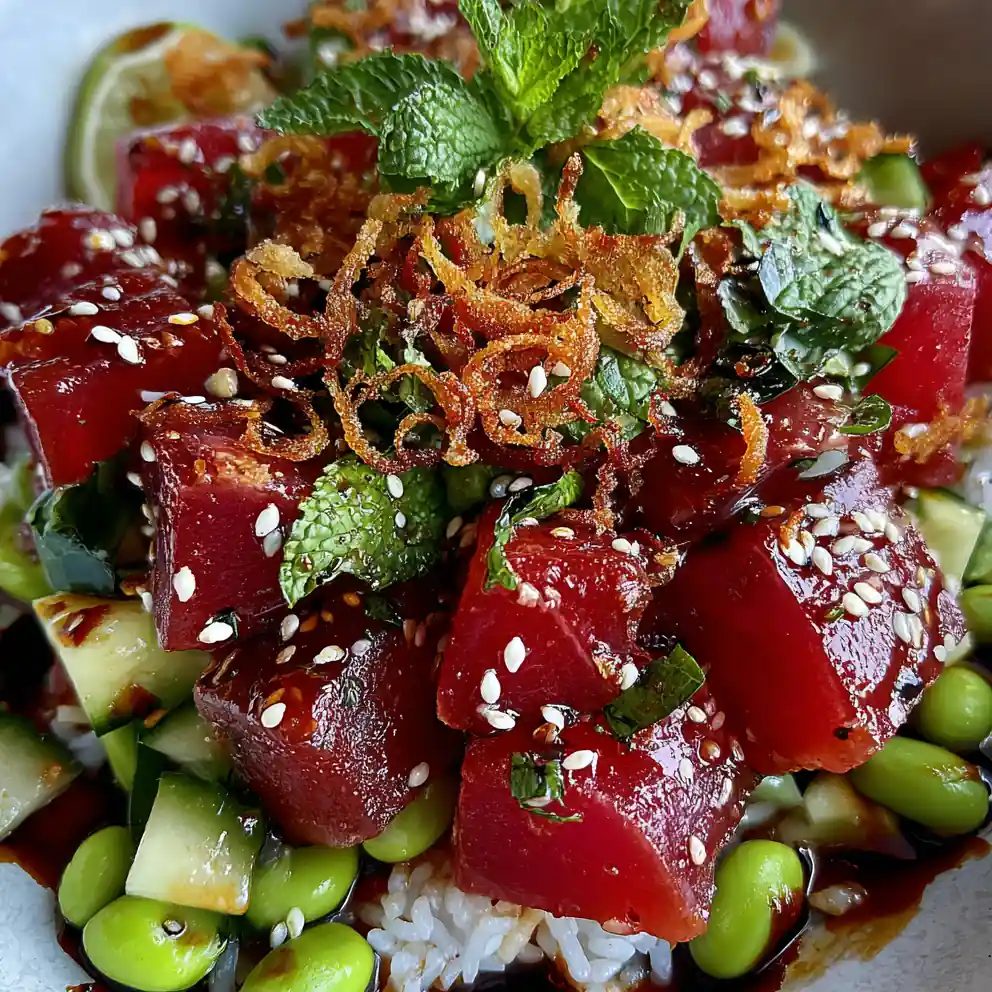
What You’ll Need (Ingredients & Why They Matter)
Gathering your ingredients is the first step to creating a truly spectacular tuna poke bowl recipe. I always focus on fresh, high-quality items for the best taste, especially for healthy eating. This recipe brings together a harmonious blend of textures and tastes, making it one of my favorite easy dinner ideas.
For the Perfect Poke
- Sushi-grade Ahi Tuna: 400 g (14 oz), cut into 1.5 cm (½-inch) cubes; this is the star of our tuna poke bowl recipe. Look for vibrant red color.
- Alcohol-Free Soy Sauce: 75 ml (5 tablespoons); forms an umami-rich base (use coconut aminos for a soy-free option).
- Fresh Lime Juice: 45 ml (3 tablespoons); brightens all the flavors.
- Extra Virgin Olive Oil: 15 ml (1 tablespoon); adds richness to the dressing.
- Toasted Sesame Oil: 15 ml (1 tablespoon); provides that essential nutty aroma.
- Garlic: 1 clove, minced; offers aromatic depth (pre-minced garlic works in a pinch for convenience).
- Fresh Ginger: 1 teaspoon, grated; gives a zesty kick.
- Agave Nectar: 1 teaspoon; a touch of subtle sweetness.
- Red Pepper Flakes: ¼ teaspoon (optional); for a gentle warmth.
- Ground Sumac: 1 tablespoon, divided; for a vibrant color and tangy note.
Building Your Bowl
- Sushi Rice: 200 g (1 cup) uncooked; the perfect canvas for your tuna poke bowl (or use brown rice for extra fiber).
- Filtered Water: 300 ml (1 ¼ cups); for cooking the rice perfectly.
- Rice Vinegar: 1 tablespoon; seasons the rice for authentic flavor.
- Agave Nectar: 1 teaspoon; balances the rice vinegar.
- Fine Sea Salt: ¼ teaspoon; enhances all the flavors in the rice.
- English Cucumber: 1 medium (approx. 200 g / 1.5 cups), finely diced; provides a refreshing crunch.
- Ripe Avocado: 1, peeled, pitted, and diced; adds creamy contrast and healthy fats.
- Cooked and Shelled Edamame: 150 g (1 cup); a protein-rich addition and vibrant color.
- Shallots: 4 medium (approx. 120 g), very thinly sliced into rings; for irresistible crispy texture.
- Vegetable Oil: 250 ml (1 cup); for frying the shallots.
Optional Toppings & Swaps
- For extra crunch: Try shredded carrots, radishes, or even store-bought crispy fried onions.
- For a kick: A drizzle of sriracha mayo or extra red pepper flakes.
- Dietary swaps: Use cauliflower rice for a low-carb meal option, or swap edamame for bell pepper strips.
- Budget-friendly tip: Buy frozen tuna in bulk when on sale; ensure it’s labeled sushi-grade for safe consumption.
- Garnishes: Fresh mint leaves, fresh cilantro leaves, toasted white sesame seeds, and fresh lime wedges for serving.
Easy Step-by-Step Instructions
- Prepare Rice: Rinse 200 g (1 cup) sushi rice until water runs clear. Combine rice and 300 ml (1 ¼ cups) water in a saucepan. Boil, then simmer 15 min, covered. Let stand 10 min. Whisk 1 tbsp rice vinegar, 1 tsp agave, ¼ tsp salt; fold into cooked rice. Cool.
- Crispy Shallots: Heat 250 ml (1 cup) oil in my 6-inch saucepan to 170°C (340°F). Fry sliced shallots in batches 3-5 min until deeply golden brown and crispy. Drain on paper towels. Season with sea salt and ½ tsp sumac. If not crisping, check oil temp; avoid overcrowding.
- Whisk Dressing: Whisk 75 ml (5 tbsp) alcohol-free soy sauce, 45 ml (3 tbsp) lime juice, 15 ml (1 tbsp) extra virgin olive oil, 15 ml (1 tbsp) toasted sesame oil, 1 minced garlic, 1 tsp grated ginger, 1 tsp agave, and ¼ tsp red pepper flakes (optional). Whisk until well combined.
- Marinate Tuna: Add 400 g (14 oz) cubed sushi-grade tuna to a bowl. Drizzle half the Sumac-Lime Dressing. Toss to coat. Marinate 5-7 min.
- Assemble Bowls: Divide sushi rice among four bowls. Arrange marinated tuna over rice. Place diced cucumber, avocado, and cooked edamame around, creating a colorful tuna poke bowl.
- Garnish & Serve: Drizzle remaining dressing in a swirl. Sprinkle crispy shallots. Dust tuna/rice with remaining ½ tbsp sumac. Scatter fresh mint and cilantro. Sprinkle toasted white sesame seeds. Garnish each tuna poke bowl recipe with lime. Serve.
Perfect Occasions and Storage Made Simple
This vibrant dish isn’t just a treat for your taste buds; it’s incredibly versatile for various mealtime scenarios. Whether you need an easy dinner idea or a fantastic way to impress, the tuna poke bowl recipe fits right in.
Serving Ideas
- Busy Weeknights: Enjoy a quick, healthy dinner in under 30 minutes, perfect for those hectic family evenings.
- School Lunches: Pack components separately in bento-style containers for a fresh, build-your-own lunch experience that kids love.
- Casual Gatherings: Create a fun ‘poke bar’ with various toppings, allowing guests to customize their own delicious bowls.
Make It a Meal
To round out your tuna poke bowl experience, consider these simple additions.
- Serve alongside a comforting side of miso soup or a light seaweed salad for added texture.
- Offer a choice of sauces, such as a creamy sriracha mayo or a sweet chili drizzle, for extra flavor.
- Pair this fresh dish with sparkling water or your favorite light beverage for a complete meal.
Storage & Reheating for Your Tuna Poke Bowl
For the best quality and food safety, the tuna poke bowl recipe is always best enjoyed fresh. If you happen to have any leftovers, proper storage is key.
- Refrigeration: Store the marinated tuna and cooked rice/toppings separately in airtight containers. They will keep for up to 1 day in the refrigerator.
- Freezing: Freezing is not recommended for tuna poke bowls due to texture changes in the fresh fish and cooked rice once thawed.
- Containers: Glass containers work wonderfully for keeping all components fresh and preventing flavors from mingling.
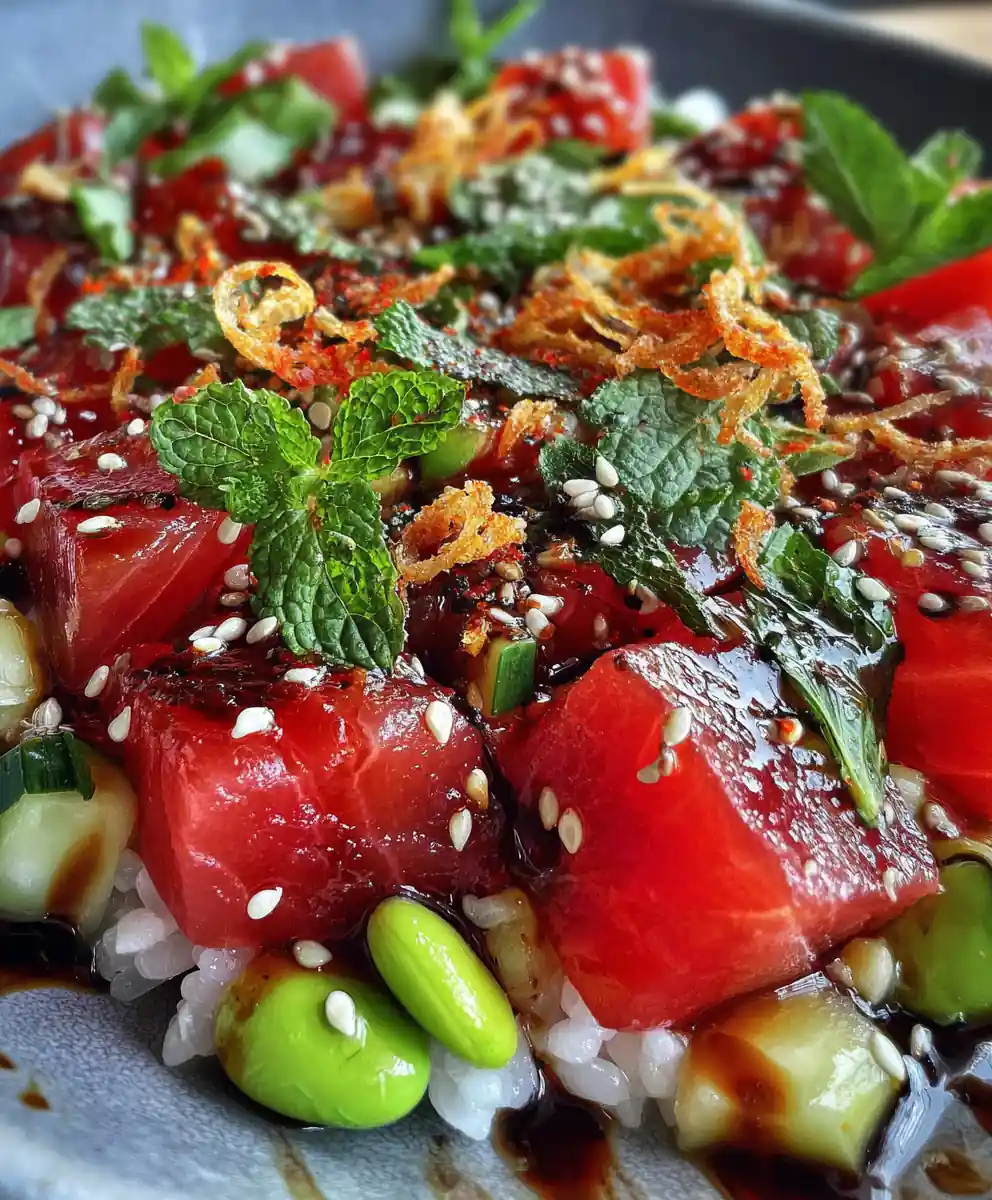
Why Tuna Poke Bowl Recipe Fits Today’s Lifestyle
Our tuna poke bowl recipe offers some of the best healthy dinner recipes with incredible convenience, making it a true mealtime hero. It’s an easy weeknight meal solution, generously packing high-protein tuna and fresh, vibrant veggies into every serving. This family-friendly dish is also a fantastic option for meal prep favorites, letting you combine delicious ingredients quickly for nourishing meals throughout the week. It’s a satisfying, wholesome choice that supports a balanced diet without compromising on flavor or requiring extensive kitchen time.
Tips, Upgrades, and Variations with Tuna Poke Bowl Recipe
Elevate your homemade poke experience with these smart tips and tasty variations. Making a tuna poke bowl is all about customization!
Flavor Boosters
- Add a pinch of red pepper flakes to the marinade for an extra touch of heat that awakens the palate.
- Incorporate a tablespoon of finely chopped mango or pineapple for a delightful sweet-tart note.
- For extra richness and creaminess, drizzle a little creamy avocado dressing over your finished bowl.
Technique & Texture
- Ensure your sushi-grade tuna is very cold before slicing; this helps achieve clean, precise cuts.
- For a slightly different texture or a healthier option, lightly sear the tuna for a few seconds on each side before cubing.
Dietary Adaptations
Easily tailor your tuna poke bowl to various dietary needs with these simple adjustments.
- Low-sugar: Use tamari instead of regular soy sauce and omit any added sugar from your sauces.
- Dairy-free: This recipe is naturally dairy-free as written, so no changes are needed.
- Allergy-friendly: Substitute soy sauce with coconut aminos for a delicious, soy-free tuna poke bowl.
- Make it vegetarian: Swap the tuna for marinated firm tofu cubes or even a plant-based watermelon “tuna” for a vibrant alternative.
Common Questions Answered
Q: Is tuna poke bowl recipe good for family meal prep?
Yes, it can be! For best results, prep all ingredients and keep the tuna separate from the rice and wet toppings. Assemble your tuna poke bowl just before eating to maintain optimal freshness. I find this tuna poke bowl recipe makes weekday lunches a breeze!
Q: Where can I find organic tuna poke bowl ingredients?
Look for sushi-grade tuna at specialty fish markets or reputable grocery stores with good seafood counters. Organic rice, fresh vegetables, and quality condiments are widely available in most supermarkets for your tuna poke bowl recipe.
Q: Can tuna poke bowl recipe be adapted for low-carb diets?
Absolutely! Replace traditional rice with cauliflower rice or finely shredded cabbage for a delicious low-carb tuna poke bowl. Boost nutrition with extra fresh veggies like cucumber and avocado, keeping your tuna poke bowl recipe adaptable for various diets.
Q: How do I choose the best tuna for this tuna poke bowl recipe?
Look for “sushi-grade” or “sashimi-grade” ahi tuna with a vibrant, deep red color and no strong fishy smell. If buying frozen, ensure it’s specifically labeled for raw consumption for the safest experience with your tuna poke bowl recipe.
Q: What are some kid-friendly additions to a tuna poke bowl?
Kids often enjoy corn, grated carrots, or a less spicy sauce like a mild teriyaki. Let them pick their own toppings to make it fun and encourage them to eat their delicious tuna poke bowl recipe. Sometimes, I add a few crunchy goldfish crackers for an extra treat!
Q: Can I use a different fish for this poke bowl recipe?
While ahi tuna is classic, salmon or even cooked shrimp can be used. Ensure any raw fish is sushi-grade and handled properly for safety when making your fresh poke bowl. My family loves it with smoked salmon, which offers a different, rich flavor profile.
This tuna poke bowl recipe creates an unbelievably satisfying, healthy meal perfect for busy family dinners. Save this fantastic recipe to your Pinterest board for more quick, easy weeknight inspiration!
Print
tuna poke bowl recipe
- Total Time: 70 minutes
- Yield: 4 servings
- Diet: General
Description
This tuna poke bowl recipe offers a vibrant and fresh symphony of flavors and textures, combining silky sushi-grade tuna with refreshing vegetables and crispy shallots over seasoned sushi rice. It’s a quick, healthy, and family-friendly dinner idea perfect for busy weeknights.
Ingredients
- 400 g (14 oz) sushi-grade Ahi Tuna, cut into 1.5 cm (0.5-inch) cubes
- 75 ml (5 tablespoons) Alcohol-Free Soy Sauce (use coconut aminos for a soy-free option)
- 45 ml (3 tablespoons) Fresh Lime Juice
- 15 ml (1 tablespoon) Extra Virgin Olive Oil
- 15 ml (1 tablespoon) Toasted Sesame Oil
- 1 clove Garlic, minced (pre-minced garlic works in a pinch for convenience)
- 1 teaspoon Fresh Ginger, grated
- 1 teaspoon Agave Nectar
- 0.25 teaspoon Red Pepper Flakes (optional)
- 1 tablespoon Ground Sumac, divided
- 200 g (1 cup) uncooked Sushi Rice (or use brown rice for extra fiber)
- 300 ml (1.25 cups) Filtered Water
- 1 tablespoon Rice Vinegar
- 1 teaspoon Agave Nectar
- 0.25 teaspoon Fine Sea Salt
- 1 medium English Cucumber (approx. 200 g / 1.5 cups), finely diced
- 1 Ripe Avocado, peeled, pitted, and diced
- 150 g (1 cup) Cooked and Shelled Edamame
- 4 medium Shallots (approx. 120 g), very thinly sliced into rings
- 250 ml (1 cup) Vegetable Oil, for frying the shallots
Instructions
- Prepare Rice: Rinse 200 g (1 cup) sushi rice until water runs clear. Combine rice and 300 ml (1.25 cups) water in a saucepan. Boil, then simmer, covered, for 15 minutes. Let stand for 10 minutes. Whisk 1 tablespoon rice vinegar, 1 teaspoon agave, and 0.25 teaspoon salt; fold into the cooked rice. Cool the rice.
- Crisp Shallots: Heat 250 ml (1 cup) vegetable oil in a 6-inch saucepan to 170 C (340 F). Fry sliced shallots in batches for 3-5 minutes until deeply golden brown and crispy. Drain on paper towels. Season with sea salt and 0.5 teaspoon sumac. (Tip: If not crisping, check oil temp; avoid overcrowding.)
- Whisk Dressing: Whisk 75 ml (5 tablespoons) alcohol-free soy sauce, 45 ml (3 tablespoons) lime juice, 15 ml (1 tablespoon) extra virgin olive oil, 15 ml (1 tablespoon) toasted sesame oil, 1 minced garlic clove, 1 teaspoon grated ginger, 1 teaspoon agave, and 0.25 teaspoon red pepper flakes (optional). Whisk until well combined.
- Marinate Tuna: Add 400 g (14 oz) cubed sushi-grade tuna to a bowl. Drizzle half of the prepared dressing over the tuna. Toss to coat and marinate for 5-7 minutes.
- Assemble Bowls: Divide the cooled sushi rice among four bowls. Arrange the marinated tuna over the rice. Place the diced cucumber, avocado, and cooked edamame around the tuna, creating a colorful bowl.
- Garnish and Serve: Drizzle the remaining dressing in a swirl over each bowl. Sprinkle with crispy shallots. Dust the tuna/rice with the remaining 0.5 tablespoon sumac. Scatter fresh mint and cilantro leaves, and toasted white sesame seeds. Garnish each bowl with a fresh lime wedge. Serve immediately.
Notes
For extra crunch, try shredded carrots, radishes, or store-bought crispy fried onions. For a kick, add sriracha mayo or extra red pepper flakes. Use cauliflower rice for a low-carb option, or bell pepper strips instead of edamame. Buy frozen sushi-grade tuna when on sale for a budget-friendly option. Garnish with fresh mint, cilantro, toasted sesame seeds, and lime wedges.
- Prep Time: 45 minutes
- Cook Time: 25 minutes
- Category: Main Course
- Method: Stovetop, Assembly
- Cuisine: Japanese, Hawaiian
Nutrition
- Serving Size: 1 bowl
- Calories: 560 calories
- Sugar: 10 g
- Sodium: 1000 mg
- Fat: 28 g
- Saturated Fat: 6 g
- Unsaturated Fat: 20 g
- Trans Fat: 0 g
- Carbohydrates: 45 g
- Fiber: 7 g
- Protein: 32 g
- Cholesterol: 50 mg
FREE PRINTABLE RECIPE
Get the Printable Recipe PDF (Free)
Enter your email and we’ll send you the ingredients + step-by-step instructions as a clean PDF you can save to your phone.
- ✅ Printable PDF (ingredients + steps)
- ✅ Save it to your phone (no long scrolling)
- ✅ Includes cook time + servings
- ✅ Easy to follow
FAQ
Where’s the full recipe?
It’s delivered as a printable PDF so you can save it and cook without scrolling.
I didn’t get the email.
Check Spam/Promotions and search your inbox for your site name. Then click Confirm to receive the PDF.