
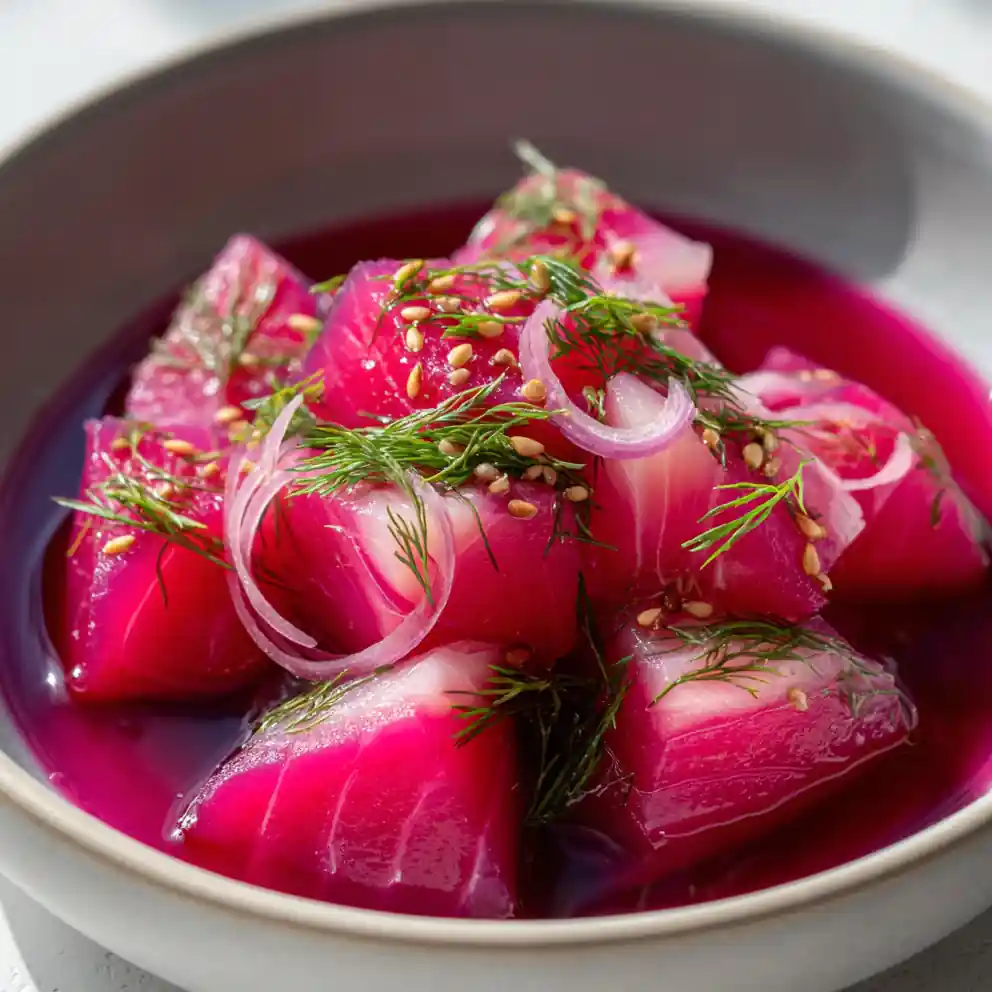
I’ve always loved how a simple pickled fish dish can feel like such a treat for healthy eating. This easy pickled northern recipe uses vibrant beetroot and caraway seeds to create a stunning magenta color and a complex, earthy flavor. The result is a healthy, high-protein snack that’s perfect for meal prep. The method uses vinegar to safely cure the fish, resulting in tender, firm pieces that are perfect for a family-friendly appetizer or light lunch. We’ll walk through preparing the northern fish and combining it with the brine for a delicious pickled northern recipe that’s ready in days. It’s perfect on crackers, salads, or served simply with fresh dill and caraway for an easy make-ahead dish.
Ingredients
- 500 g (1.1 lb) firm white fish fillets, skinless and boneless
Cod, haddock, or pollock are excellent choices for this recipe; avoid oily fish like salmon. Ensure the fillets are very fresh and firm before beginning. - 2 tablespoons fine sea salt, plus more for brining
The initial salting process firms up the fish and draws out moisture before pickling. Use fine sea salt or kosher salt for even coverage and quick dissolving. - 250 ml (1 cup) distilled white vinegar
The acid in the vinegar is crucial for curing the fish and creating the characteristic pickled flavor. Distilled white vinegar provides a clean flavor base. - 250 ml (1 cup) filtered water
Used to balance the acidity of the vinegar for a palatable brine. Use filtered water for the best flavor outcome. - 100 g (1/2 cup) granulated sugar
Balances the tartness of the vinegar and adds depth to the brine. You can slightly reduce this amount if you prefer less sweetness. - 1 medium red onion, thinly sliced into rings
Adds a sharp, pungent flavor to the brine that mellows during pickling. Keep the slices thin to maximize flavor release. - 2 cloves garlic, thinly sliced
Adds a foundational aromatic element to the brine base. Use fresh garlic for the most potent flavor. - 2 bay leaves
Provides a subtle, herbal note that complements the other spices. Use dried bay leaves; fresh ones can be overpowering here. - 1 teaspoon black peppercorns
Adds a classic sharp and pungent kick to the pickling liquid. Use whole peppercorns rather than ground pepper for a cleaner flavor. - 1 tablespoon caraway seeds, divided (2 teaspoons for brine, 1 teaspoon for garnish)
Caraway offers a distinct anise-like and earthy flavor that pairs perfectly with the beetroot and dill. If you don’t care for caraway, fennel seeds offer a similar licorice note. - 1 medium beetroot (approx. 150g / 5 oz), peeled and thinly sliced or julienned
This ingredient provides the stunning pink color and a subtle earthy sweetness. Be careful when handling the beetroot as it can stain surfaces and clothing. - 2 tablespoons fresh dill, chopped, for garnish
Dill is the traditional pairing for pickled fish; its fresh, feathery flavor brightens the final dish. Garnish immediately before serving for maximum freshness.
Instructions
Here’s how to prepare this delicious pickled northern recipe. Follow these steps carefully for the best results; the high-protein nature of this pickled northern recipe makes it a great addition to low-carb meals.
- Prepare the fish for pickling: Rinse the fish fillets under cold running water and pat them completely dry with paper towels. Cut the fillets into 2.5 cm (1-inch) thick pieces. In a non-reactive dish (like glass or ceramic), generously sprinkle the fish pieces with fine sea salt, ensuring all surfaces are lightly coated. Cover and refrigerate for 30 minutes to an hour to cure and firm up the fish.
- Make the vibrant beetroot and caraway brine: In a medium non-reactive saucepan, combine the distilled white vinegar, filtered water, granulated sugar, thinly sliced red onion, sliced garlic, bay leaves, 2 teaspoons of caraway seeds, and the thinly sliced or julienned beetroot. Bring the mixture to a gentle simmer over medium heat, stirring occasionally until the sugar dissolves. Reduce heat to low and continue to simmer for 10 minutes to allow the flavors to meld and the beetroot to release its color. I find that simmering it for the full 10 minutes helps deepen the color, which is essential for the striking magenta hue of this pickled northern recipe.
- Cool the brine: Remove the saucepan from the heat and allow the brine to cool completely to room temperature. This step is critical; adding hot brine will cook the fish instead of curing it. The brine will become more vibrant in color as it cools.
- Finish preparing the fish: Once the fish has cured, rinse it thoroughly under cold running water to remove excess salt. Pat the fish pieces very dry again with paper towels; the fish should now feel firmer. Arrange the dried fish pieces in a clean, sterilized 750 ml (quart-sized) glass jar or similar non-reactive container with a tight-fitting lid.
- Combine fish and brine: Strain the cooled brine, if desired, to remove the solid components, or leave the onion and beetroot slices in for added visual appeal and flavor intensity. Pour the vibrant brine over the fish pieces in the jar, ensuring they are completely submerged. Seal the jar tightly.
- Chill to develop flavors: Refrigerate the pickled fish for at least 24 hours, and preferably 2-3 days, to allow the flavors to fully develop. The fish will turn slightly pink from the beetroot brine as it cures. The pickled northern fish will keep in the refrigerator for up to 1 week. If you find the fish turns mushy during storage, it’s likely over-pickled; aim for a maximum of 7 days in the brine.
- Serve with garnish: To serve, arrange the chilled, pink-tinged pickled fish pieces in a shallow bowl. Ladle some of the vibrant brine around the fish. Garnish generously with the chopped fresh dill and sprinkle lightly with the remaining 1 teaspoon of caraway seeds for added aroma and texture.
Make-Ahead & Storage Tips for Pickled Northern
This easy pickled northern recipe is a fantastic make-ahead dish. It actually gets better after a couple of days in the refrigerator. The fish needs at least 24 hours of curing time before serving, but for the best flavor development, let it sit for 2-3 days.
- Once fully cured, the pickled northern fish will keep well in a sealed, non-reactive container in the refrigerator for up to one week. Ensure the fish pieces remain fully submerged in the brine during storage for both safety and texture.
- Avoid freezing pickled fish, as the texture will become soft and mushy upon thawing due to the curing process. The brine itself may also become cloudy after freezing.
How to Serve This Vibrant Pickled Fish
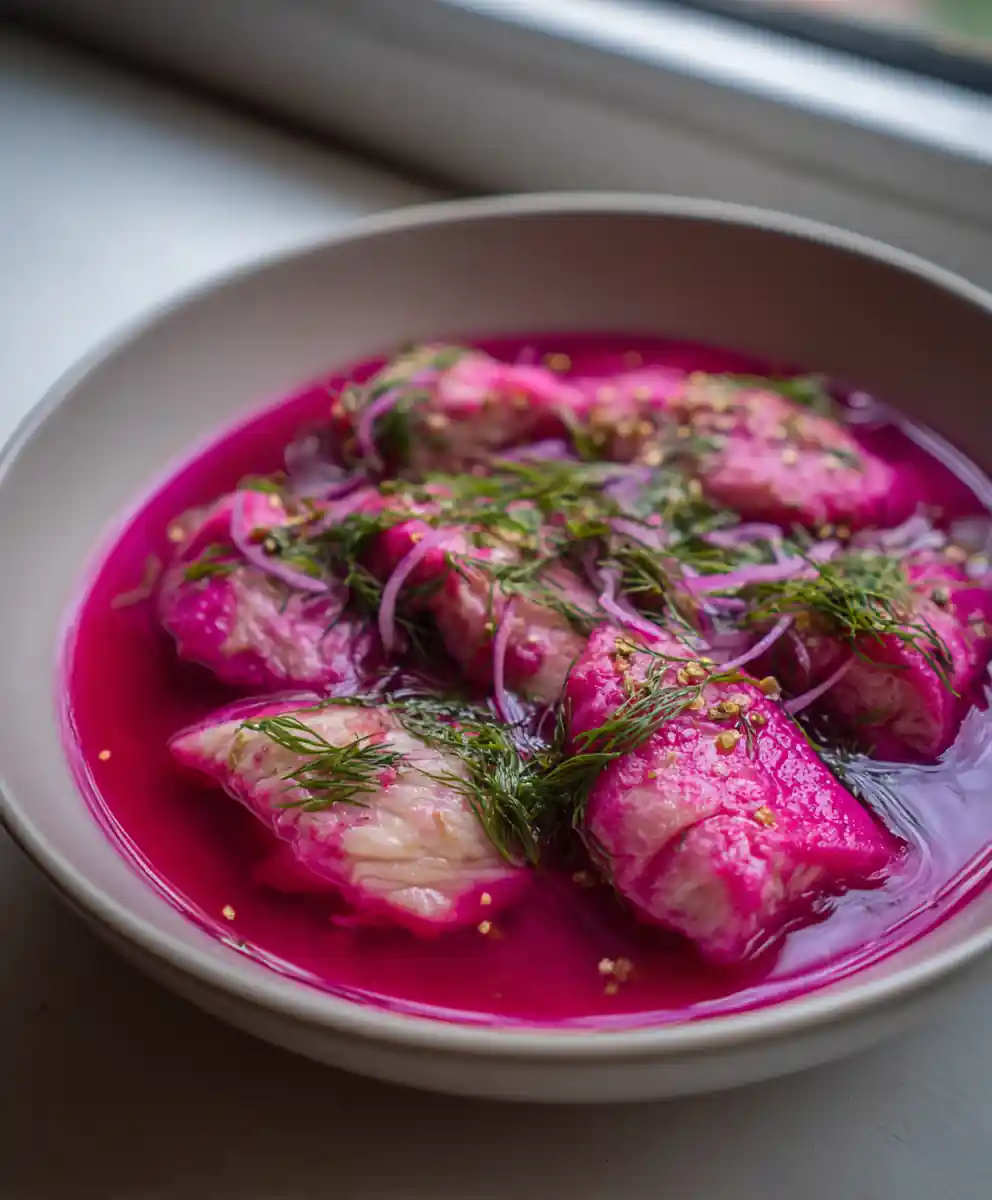
The classic way to enjoy a delicious pickled northern recipe is on crackers or toasted bread, especially rye bread. Serve it alongside fresh dill and a light sour cream or crème fraîche. The vibrant pink color makes it a stunning appetizer platter for entertaining or a healthy snack.
- Create a simple Scandinavian-style salad by adding pickled northern pieces to mixed greens, hard-boiled eggs, and a light vinaigrette. It’s also excellent in a potato salad, replacing traditional tuna.
- For a quick family snack, serve chilled pieces directly from the jar. The caraway and beetroot add a unique twist that even kids often enjoy. Garnish with extra dill before serving.
FAQs
What kind of fish is best for pickling?
Firm white fish like northern pike (which is excellent for this pickled northern recipe), cod, haddock, or pollock are ideal. The firm texture holds up well during the pickling process, ensuring the fish doesn’t turn mushy. Avoid fish that is too soft or oily.
Is it safe to eat raw fish that’s only pickled?
Yes, the fish is cured by the high acidity of the vinegar brine. This process, known as ceviche-style cooking, changes the fish’s texture and makes it safe to consume without heat. You must follow the curing time in the refrigerator exactly to ensure safety.
How long should I let the fish pickle?
The minimum time to allow the fish to cure safely is 24 hours. However, for the best flavor and texture development, allow 2-3 days in the refrigerator before serving. The fish will get firmer and absorb more flavor over this time.
Can I use less sugar in the brine?
Yes, you can reduce the sugar slightly if you prefer less sweetness. Be aware that sugar helps balance the intense sourness of the vinegar and contributes to the preservation process. I also find that reducing the sugar can make the beetroot flavor more prominent.
Why did my fish turn mushy after pickling?
This usually happens if you overcure the fish or if the fish was not fresh to begin with. Ensure you use firm, fresh fillets and adhere to the recommended pickling time (no more than 7 days in the brine) for this pickled northern recipe.
Can I make this gluten-free or low-carb?
This pickled northern recipe is already naturally gluten-free as written. For a low-carb version, simply omit the sugar or replace it with a sugar substitute like erythritol or monk fruit, using a 1:1 ratio. The sweetness balances the brine well, so a substitute works great here.
Conclusion
This easy pickled northern recipe is a fantastic way to prepare fish that offers a burst of flavor and color, making it a wonderful addition to your make-ahead repertoire for quick meals. The combination of beetroot, caraway, and fresh dill transforms simple fish into a vibrant and delicious meal or appetizer; I love having this ready in the fridge for a healthy high-protein snack during the week. Save this recipe for later on Pinterest so you can easily find it when you’re ready to make a batch.
Print
pickled northern recipe
- Total Time: 55 minutes
- Yield: 4 servings
- Diet: General
Description
This pickled northern recipe creates a vibrant magenta color with beetroot and caraway seeds, resulting in a complex, high-protein snack perfect for appetizers or light lunches. The vinegar safely cures the fish, yielding tender, firm pieces ideal for meal prep.
Ingredients
- 500 g firm white fish fillets (cod, haddock, or pollock)
- 2 tbsp fine sea salt, plus more for brining
- 250 ml distilled white vinegar
- 250 ml filtered water
- 100 g granulated sugar
- 1 medium red onion, thinly sliced
- 2 cloves garlic, thinly sliced
- 2 bay leaves
- 1 tsp black peppercorns
- 1 tbsp caraway seeds, divided
- 1 medium beetroot (approx. 150g), peeled and sliced
- 2 tbsp fresh dill, chopped, for garnish
Instructions
- Prepare Fish: Rinse fish fillets and pat dry. Cut into 2.5 cm pieces. Generously coat pieces with fine sea salt in a non-reactive dish. Refrigerate for 30 minutes to 1 hour to cure.
- Make Brine: Combine vinegar, water, sugar, red onion, garlic, bay leaves, 2 teaspoons caraway seeds, and sliced beetroot in a saucepan. Simmer over medium heat for 10 minutes, stirring until sugar dissolves and color deepens.
- Cool Brine: Remove from heat and allow the brine to cool completely to room temperature. This prevents cooking the fish instead of curing it.
- Rinse and Jar Fish: Thoroughly rinse excess salt off the cured fish pieces and pat very dry. Arrange the dried fish in a clean glass jar (approx. 750 ml).
- Combine Fish and Brine: Pour the cooled brine over the fish pieces, ensuring they are fully submerged. Seal the jar tightly.
- Cure and Chill: Refrigerate for at least 24 hours, preferably 2-3 days, to allow flavors to develop. The fish will turn pink during curing. Store for up to 1 week.
- Serve with Garnish: Serve the pickled fish chilled, garnished with fresh dill and the remaining 1 teaspoon of caraway seeds.
Notes
For the best flavor, allow the fish to pickle for 2-3 days before serving. Avoid freezing pickled fish, as the texture will become soft upon thawing. If fish turns mushy, it was likely over-pickled; aim for a maximum of 7 days in the brine.
- Prep Time: 45 minutes
- Cook Time: 10 minutes
- Category: Appetizer
- Method: Pickling
- Cuisine: Scandinavian
Nutrition
- Serving Size: 1 serving
- Calories: 240 kcal
- Sugar: 25 g
- Sodium: 1000 mg
- Fat: 2 g
- Saturated Fat: 0.5 g
- Unsaturated Fat: 1.5 g
- Trans Fat: 0 g
- Carbohydrates: 26 g
- Fiber: 1 g
- Protein: 25 g
- Cholesterol: 60 mg
FREE PRINTABLE RECIPE
Get the Printable Recipe PDF (Free)
Enter your email and we’ll send you the ingredients + step-by-step instructions as a clean PDF you can save to your phone.
- ✅ Printable PDF (ingredients + steps)
- ✅ Save it to your phone (no long scrolling)
- ✅ Includes cook time + servings
- ✅ Easy to follow
FAQ
Where’s the full recipe?
It’s delivered as a printable PDF so you can save it and cook without scrolling.
I didn’t get the email.
Check Spam/Promotions and search your inbox for your site name. Then click Confirm to receive the PDF.