
This moist peach cake combines a buttery crumb with the natural sweetness of fresh seasonal fruit. It is a practical dessert for summer gatherings that is easy to prepare and store.
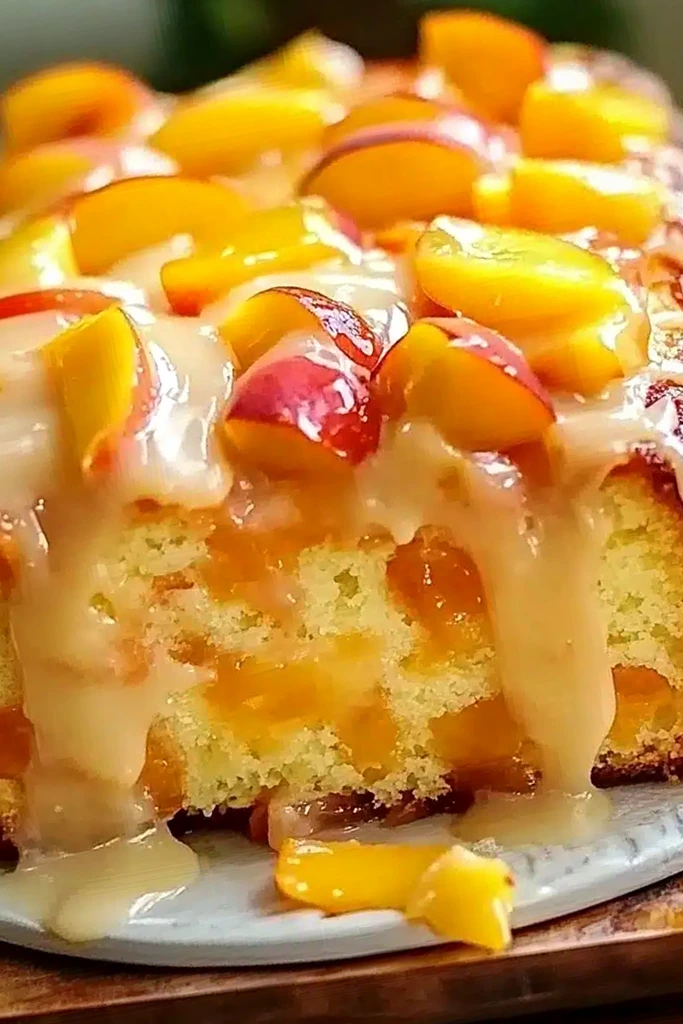
List of ingredients
- 2 cups all-purpose flour – provides the main structure for the cake.
- 1 1/2 teaspoons baking powder – helps the cake rise.
- 1/2 teaspoon baking soda – reacts with sour cream for additional lift.
- 1/4 teaspoon salt – balances the sweetness of the sugar.
- 1/2 cup unsalted butter, softened – creates a rich, tender crumb.
- 1 cup granulated sugar – provides sweetness and aids in creaming.
- 2 large eggs – binds the ingredients and adds stability.
- 1 teaspoon vanilla extract – enhances the overall flavor profile.
- 1/2 cup sour cream – adds moisture and a slight tang.
- 2 cups fresh peaches, peeled and diced – the primary fruit component (canned, drained is an alternative).
- 1/4 cup brown sugar – used for the sweet topping.
- 1/2 teaspoon ground cinnamon – adds warmth to the crust.
- 1 tablespoon butter, cut into small pieces – creates a golden, crisp finish on top.
step-by-step instructions
- Prepare the oven and pan: Preheat your oven to 350°F (175°C). Grease and flour a 9-inch round cake pan, or line the bottom with parchment paper to ensure easy removal.
- Prepare the fruit: Peel and dice the fresh peaches into uniform pieces. If you are using canned peaches, ensure they are thoroughly drained to prevent the batter from becoming too wet.
- Mix dry ingredients: In a medium mixing bowl, whisk together the all-purpose flour, baking powder, baking soda, and salt until well combined. Set this mixture aside.
- Cream butter and sugar: Using a hand mixer or stand mixer, beat the softened butter and granulated sugar together until the mixture is light and fluffy. Beat in the eggs one at a time, ensuring each is incorporated, then stir in the vanilla extract.
- Combine wet and dry components: Gradually add the flour mixture to the butter mixture, alternating with the sour cream. Begin and end with the dry ingredients, mixing only until the batter is just combined to avoid overworking the gluten.
- Incorporate the peaches: Gently fold the diced peaches into the batter using a spatula. Be careful not to overmix or crush the fruit pieces.
- Assemble the cake: Pour the batter into the prepared pan and smooth the top with a spatula. Sprinkle the brown sugar and cinnamon evenly over the surface, then dot the top with the small pieces of butter.
- Bake: Bake for 35–40 minutes. Test the center with a toothpick; it should come out clean. Allow the cake to cool in the pan for 10 minutes before transferring it to a wire rack.
- Serve: Once cooled slightly, slice the cake. It can be served warm or at room temperature.
Technical Tips for Baking Success
Select Fully Ripe Peaches for Optimal Flavor
Choose peaches that give slightly when pressed and have a strong, sweet aroma. Under-ripe peaches will not release enough juice during baking and may remain too firm or tart. If your peaches are not yet ripe, leave them on the counter for a day or two at room temperature.
Avoid Overmixing the Batter
Stop mixing as soon as the flour streaks disappear. Overmixing develops too much gluten in the flour, which leads to a tough, dense cake rather than a tender crumb. Using a spatula to fold in the fruit manually is the best way to maintain the air bubbles created during the creaming process.
Ensure Butter is Properly Softened
Butter should be soft enough that your finger leaves an indent but not so soft that it is melting. If the butter is too cold, it will not incorporate air during the creaming stage, resulting in a less fluffy cake. If it is too hot, the emulsion with the sugar and eggs may break.
Sift Dry Ingredients for Better Aeration
For a lighter texture, sift the flour, baking powder, baking soda, and salt together before mixing. Sifting removes lumps and incorporates air into the flour. This helps the leavening agents distribute evenly, ensuring a consistent rise across the entire cake.
Ingredient Substitutions and Variations
Replacing Sour Cream with Buttermilk
If you do not have sour cream, you can substitute it with an equal amount of full-fat buttermilk. Buttermilk provides a similar acidity that reacts with the baking soda to create lift. Note that buttermilk is thinner than sour cream, so the batter may be slightly more fluid.
Using Frozen Peaches Instead of Fresh
Frozen peaches can be used when fresh ones are out of season. Thaw them completely and drain any excess liquid before dicing them to prevent adding too much water to the batter. You may need to add an extra tablespoon of flour to the fruit to help them stay suspended in the cake.
Substituting Gluten-Free Flour Blends
To make this recipe gluten-free, use a high-quality 1:1 gluten-free baking flour blend that contains xanthan gum. Ensure the blend is designed for cakes to maintain the proper structure. You may need to bake the cake for an additional 5 minutes as gluten-free flours often absorb moisture differently.
Using Other Stone Fruits
This recipe works well with other stone fruits such as nectarines, plums, or apricots. Use the same quantity of diced fruit as specified for the peaches. Nectarines offer a similar sweetness, while plums provide a slightly more tart profile that contrasts well with the cinnamon sugar topping.
Serving and Presentation Ideas
Adding a Stabilized Whipped Cream
Serve each slice with a dollop of whipped cream for a creamy contrast. To stabilize the cream, whisk heavy cream with a small amount of powdered sugar and a pinch of cream of tartar. This prevents the cream from deflating quickly on the warm cake.
Serving with Vanilla Bean Ice Cream
For a more indulgent dessert, serve a warm slice of cake with a scoop of premium vanilla bean ice cream. The heat from the cake gently melts the ice cream, creating a rich sauce that complements the juicy peaches. This is ideal for summer dinner parties.
Preparing a Simple Powdered Sugar Glaze
If you prefer a sweeter finish, whisk together powdered sugar, a splash of milk, and a drop of vanilla extract. Drizzle this glaze over the cake once it has cooled completely. This adds a professional look and a boost of sweetness to the cinnamon crust.
Pairing with Fresh Berries
Complement the peach flavor by serving the cake with a side of fresh raspberries or blueberries. The acidity of the berries cuts through the richness of the butter and sour cream. Arrange the berries around the cake on a platter for an attractive presentation.
Storage and Preservation
Room Temperature Storage
Store leftover cake in an airtight container at room temperature for up to 3 days. Ensure the cake is completely cooled before sealing the container to prevent steam from making the crust soggy. Keep the container in a cool, dry place away from direct sunlight.
Refrigeration Guidelines
For longer storage, keep the cake in the refrigerator for up to 5 days. Wrap the slices individually in parchment paper before placing them in a container to prevent them from drying out. Cold cake is often denser and may be preferred by some for a more fudge-like consistency.
Freezing for Long Term Use
This cake freezes well for up to 3 months. Wrap the cake or individual slices tightly in plastic wrap and then a layer of aluminum foil to prevent freezer burn. Thaw the cake in the refrigerator overnight before serving or reheating.
Reheating Instructions
Using the Microwave for Quick Warming
Place a slice of cake on a microwave-safe plate and heat on medium power for 15 to 20 seconds. Be careful not to overheat, as the sugar in the topping can become extremely hot and the cake may dry out. This method is best for individual portions.
Oven Warming for Best Texture
To reheat the cake while maintaining the crispness of the topping, place it in a 350°F (175°C) oven for 5 to 10 minutes. Cover the cake loosely with aluminum foil to prevent the top from burning. This method is superior for reheating larger sections of the cake.
Baking Troubleshooting
Fixing a Dense Cake Texture
If the cake turns out too dense, it is likely due to overmixing or improperly creamed butter and sugar. Ensure that you beat the butter and sugar until the color lightens and the volume increases. In the future, use a folding motion when adding the fruit and flour.
Preventing Peaches from Sinking
If the fruit sinks to the bottom of the pan, try tossing the diced peaches in a tablespoon of the measured flour before folding them into the batter. The flour coating creates friction between the fruit and the batter, helping the peaches stay evenly distributed during the bake.
Managing an Underbaked Center
If the edges are brown but the center remains wet, lower the oven temperature by 25°F and bake for an additional 5 to 10 minutes. Covering the top with foil can prevent over-browning while the center finishes cooking. Always use a toothpick to verify the center is set.
Frequently Asked Questions
Can I use canned peaches instead of fresh?
Yes, canned peaches are a suitable alternative. Ensure you drain them very well and pat them dry with a paper towel before dicing. If they are packed in heavy syrup, you may want to slightly reduce the granulated sugar in the batter to balance the sweetness.
Can I make this cake a day in advance?
Yes, this cake stays moist due to the sour cream and fruit content. It can be baked a day ahead and stored at room temperature in an airtight container. In some cases, the flavors meld and improve after 24 hours.
How do I peel peaches easily?
Use the blanching method by scoring a small ‘X’ on the bottom of each peach. Drop them into boiling water for 30 to 60 seconds, then immediately transfer them to a bowl of ice water. The skins will slide off easily with your fingers.
Print
Moist Summer Peach Cake with Cinnamon Sugar Topping
- Total Time: 1 hour
- Yield: 8–10 servings
- Diet: Vegetarian
Description
Irresistible Summer Peach Cake is a moist, tender dessert filled with juicy peaches and topped with a sweet cinnamon-sugar finish. Perfect for summer gatherings, picnics, or a cozy afternoon treat.
Ingredients
- 2 cups all-purpose flour
- 1 1/2 teaspoons baking powder
- 1/2 teaspoon baking soda
- 1/4 teaspoon salt
- 1/2 cup unsalted butter, softened
- 1 cup granulated sugar
- 2 large eggs
- 1 teaspoon vanilla extract
- 1/2 cup sour cream
- 2 cups fresh peaches, peeled and diced (or canned, drained)
- 1/4 cup brown sugar
- 1/2 teaspoon ground cinnamon
- 1 tablespoon butter, cut into small pieces
Instructions
- Preheat: Preheat to 350°F (175°C). Grease and flour a 9-inch round cake pan or line with parchment.
- Prep Peaches: Peel and dice peaches. Drain well if using canned.
- Mix Dry Ingredients: In a bowl, whisk flour, baking powder, baking soda, and salt. Set aside.
- Cream Butter and Sugar: In a large bowl, beat butter and sugar until light and fluffy. Beat in eggs one at a time, then add vanilla.
- Combine: Gradually add dry ingredients alternating with sour cream, starting and ending with dry. Mix just until combined.
- Fold Peaches: Gently fold diced peaches into batter.
- Assemble: Pour batter into pan, smooth top, then sprinkle with brown sugar and cinnamon. Dot with butter pieces.
- Bake: Bake 35–40 minutes, until toothpick comes out clean. Cool 10 minutes in pan, then transfer to rack.
- Serve: Slice and enjoy warm or at room temperature.
Notes
Use ripe, fresh peaches for best flavor. Do not overmix batter to keep cake light and fluffy. Add streusel topping for extra crunch if desired. Store at room temp 3 days or refrigerate up to 5 days.
- Prep Time: 20 minutes
- Cook Time: 40 minutes
- Category: Dessert
- Method: Baked
- Cuisine: American
Nutrition
- Serving Size: 1 slice
- Calories: 290 kcal
- Sugar: 21 g
- Sodium: 180 mg
- Fat: 12 g
- Saturated Fat: 7 g
- Unsaturated Fat: 3 g
- Trans Fat: 0 g
- Carbohydrates: 41 g
- Fiber: 1 g
- Protein: 4 g
- Cholesterol: 55 mg