
This traditional peach cobbler combines juicy fruit with a buttery, golden-brown crust. It is a versatile dessert that can be made using either fresh seasonal peaches or convenient canned options.
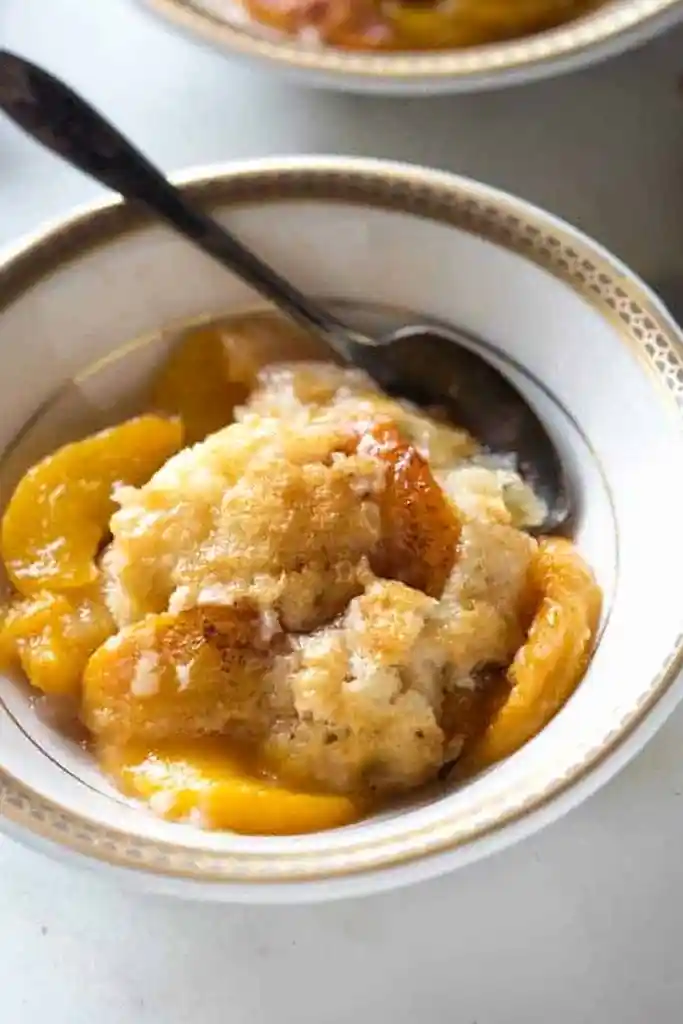
List of ingredients
- 5 peaches, peeled, cored, and sliced (about 4 cups or 600-700 g)
- 3/4 cup granulated sugar (150 g) – for the fruit filling
- 1/4 teaspoon salt – to balance the sweetness of the peaches
- 6 Tablespoons butter (85 g) – for the base of the pan
- 1 cup all-purpose flour (120 g) – for the cobbler batter
- 1 cup granulated sugar (200 g) – for the cobbler batter
- 2 teaspoons baking powder – to ensure the crust rises
- 1/4 teaspoon salt – for the batter seasoning
- 3/4 cup milk (180 ml) – for batter consistency
- ground cinnamon – for garnishing the top
step-by-step instructions
- Prepare the fruit: Add the sliced peaches, sugar, and salt to a saucepan and stir to combine. (If using canned peaches, skip steps 1 and 2 and begin at step 3).
- Simmer the peaches: Cook on medium heat for a few minutes until the sugar dissolves and the peaches release their natural juices. Remove the pan from the heat and set it aside.
- Melt the butter: Preheat your oven to 350 degrees F. Slice the butter into pieces, place them in a 9×13 inch baking dish, and put the dish in the oven while it preheats to melt the butter. Remove the pan once the butter is fully melted.
- Mix the batter: In a large bowl, whisk together the flour, sugar, baking powder, and salt. Stir in the milk just until the ingredients are combined.
- Layer the dish: Pour the batter directly over the melted butter in the baking dish and smooth it into an even layer. Spoon the prepared peaches and their juices (or undrained canned peaches) over the top of the batter. Sprinkle ground cinnamon generously over the fruit.
- Bake and serve: Bake at 350 degrees F for approximately 38-40 minutes. Serve the cobbler while warm, optionally with a scoop of vanilla ice cream.
Professional Fruit Preparation
Blanching Peaches for Effortless Peeling
To remove peach skins without a knife, lower 2-3 peaches into boiling water for 30 seconds. Immediately transfer them to an ice-water bath to stop the cooking process. The skin will slip off easily, leaving the flesh intact.
Selecting the Ideal Peach Variety
Yellow peaches provide a classic tart-sweet balance that stands up well to baking. White peaches are generally sweeter and more delicate, which can result in a softer filling. Ensure the fruit is ripe but still slightly firm to prevent the cobbler from becoming too watery.
Handling Canned Peaches Correctly
When using canned peaches, use one quart jar and do not drain the liquid. The syrup in the can acts as the sweetener and thickening agent, replacing the need to simmer fresh fruit with sugar. Spoon the fruit and syrup together over the batter.
Ingredient Customizations
Substituting Gluten-Free Flour
You can replace all-purpose flour with a high-quality 1:1 gluten-free flour blend. Measure-for-measure blends that include xanthan gum work best to mimic the structure of wheat flour. This ensures the crust remains stable and doesn’t crumble excessively.
Adjusting the Sweetener
If you prefer a deeper flavor, replace a portion of the granulated sugar with light brown sugar. This adds a hint of molasses that complements the cinnamon and peaches. Avoid using liquid sweeteners like honey as they may alter the batter consistency.
Using Dairy-Free Milk Alternatives
Unsweetened almond milk or soy milk can be used as a direct substitute for cow’s milk. These alternatives maintain the moisture level of the batter without significantly changing the taste. Coconut milk adds a subtle tropical note that pairs well with stone fruits.
Baking Success Strategies
Managing Oven Temperature
Ensure your oven is fully preheated to 350 degrees F before baking to get the correct rise. If the oven is too hot, the top may brown before the batter is cooked through. Use an oven thermometer if you suspect your appliance runs hot or cold.
Preventing Batter Overmixing
Stir the milk into the dry ingredients only until combined, leaving a few small lumps. Overmixing develops too much gluten, which can make the cobbler crust tough instead of tender. A light hand ensures a soft, cake-like texture.
Choosing the Correct Baking Dish
A 9×13 inch glass or ceramic dish is ideal for distributing heat evenly. Metal pans conduct heat faster, which may lead to quicker browning on the edges. Glass allows you to monitor the bottom crust’s progress during the baking process.
Serving and Presentation
Classic Ice Cream Pairings
Serving the cobbler warm with a scoop of high-quality vanilla bean ice cream creates a temperature contrast. The cold cream melts into the warm fruit juices, creating a rich sauce. For a twist, try buttermilk ice cream for a slight tang.
Adding Fresh Whipped Cream
Whip heavy cream with a small amount of powdered sugar until stiff peaks form. Dollop the cream on individual servings for a lighter alternative to ice cream. This adds a clean, milky flavor that balances the cinnamon.
Garnishing with Fresh Mint
Place a small sprig of fresh mint on top of each serving for a pop of color. The herbal note of the mint cuts through the sweetness of the peaches and sugar. This simple addition makes the dessert look professionally plated.
Storage and Freshness
Refrigeration Guidelines
Store leftover cobbler in an airtight container or cover the baking dish tightly with foil. Keep it in the refrigerator to maintain the quality of the fruit and crust. It will remain fresh and safe to eat for 4 to 5 days.
Using Airtight Containers
Using a glass container with a locking lid prevents the cobbler from absorbing odors from other foods in the fridge. It also stops the crust from drying out too quickly. Avoid loosely covering the dish with plastic wrap alone.
Maximum Storage Duration
While the cobbler lasts several days, the crust is most tender within the first 48 hours. After this, the starch in the flour may begin to firm up. Refrigerate immediately after the dish has cooled to room temperature.
Guidance for Reheating
Restoring Texture in the Oven
To reheat, allow the cobbler to reach room temperature before placing it in the oven. Bake at 350 degrees F for about 20 minutes until warmed through. Cover the top with aluminum foil if the crust begins to brown too quickly.
Quick Microwave Heating
For a single serving, place a piece of cobbler on a microwave-safe plate. Heat on medium power in 30-second intervals until warm. This method is faster but may result in a softer, less crisp crust.
Avoiding Overcooking During Reheat
Do not reheat the cobbler for too long, as the fruit can become overly mushy. Stop heating as soon as the center is warm to the touch. Overheating can cause the batter to dry out and lose its fluffiness.
Common Baking Challenges
Fixing a Soggy Bottom Crust
A soggy bottom usually occurs if the butter wasn’t fully melted or if the peaches were too watery. Ensure the butter is completely liquid before adding the batter. If using very juicy peaches, simmer them slightly longer to reduce the liquid.
Correcting Too Much Fruit Juice
If the peach mixture seems too thin, you can simmer it for an extra 5 minutes to evaporate excess water. Alternatively, stir in a small pinch of cornstarch to the fruit before adding it to the pan. This creates a thicker, jam-like consistency.
Dealing with Uneven Browning
If one side of the cobbler is browning faster than the other, rotate the pan 180 degrees halfway through baking. This ensures the heat is distributed evenly across the surface. Check that the pan is centered in the oven rack.
Frequently Asked Questions
Can I use frozen peaches?
Yes, you can use frozen peaches by thawing them completely first. Drain the excess liquid before adding them to the saucepan to prevent the batter from becoming too wet. Follow the same simmering steps as fresh peaches.
Should I peel the peaches?
Peeling is recommended for a smoother texture, as the skins can become tough during baking. However, if you prefer a more rustic style, you can leave the skins on. Blanching is the fastest way to remove them without losing fruit.
Can this be made in a cast iron skillet?
Yes, a cast iron skillet works well for cobblers. Preheat the skillet in the oven with the butter for a crispier edge. Adjust the batter and fruit quantities to fit the diameter of your specific skillet.
Print
Classic Homemade Peach Cobbler
- Total Time: 55 minutes
- Yield: 9 servings
- Diet: General
Description
This old fashioned Peach Cobbler recipe is not only extremely easy to make from scratch, but it’s made with fresh or canned peaches so you can enjoy it all year round!
Ingredients
- 5 peaches, peeled, cored and sliced
- 3/4 cup granulated sugar
- 1/4 teaspoon salt
- 6 Tablespoons butter
- 1 cup all-purpose flour
- 1 cup granulated sugar
- 2 teaspoons baking powder
- 1/4 teaspoon salt
- 3/4 cup milk
- ground cinnamon
Instructions
- Step 1: Add the sliced peaches, sugar and salt to a saucepan and stir to combine.
- Step 2: Cook on medium heat for just a few minutes, until the sugar is dissolved and helps to bring out juices from the peaches. Remove from heat and set aside.
- Step 3: Preheat oven to 350 degrees F. Slice butter into pieces and add to a 9×13 inch baking dish. Place the pan in the oven while it preheats, to allow the butter to melt. Once melted, remove the pan from the oven.
- Step 4: In a large bowl mix together the flour, sugar, baking powder, and salt. Stir in the milk, just until combined. Pour the mixture into the pan, over the melted butter and smooth it into an even layer.
- Step 5: Spoon the peaches and juice (or canned peaches, if using) over the batter. Sprinkle cinnamon generously over the top.
- Step 6: Bake at 350 degrees for about 38-40 minutes. Serve warm, with a scoop of ice cream, if desired.
Notes
To substitute canned peaches, use 1 quart jar, undrained. For gluten-free adaptations, use gluten-free flour.
- Prep Time: 15 minutes
- Cook Time: 40 minutes
- Category: Dessert
- Method: Baking
- Cuisine: American
Nutrition
- Serving Size: 1 serving
- Calories: 315 kcal
- Sugar: 47 g
- Sodium: 303 mg
- Fat: 9 g
- Saturated Fat: 5 g
- Unsaturated Fat: 2.4 g
- Trans Fat: 0.3 g
- Carbohydrates: 59 g
- Fiber: 2 g
- Protein: 3 g
- Cholesterol: 23 mg