
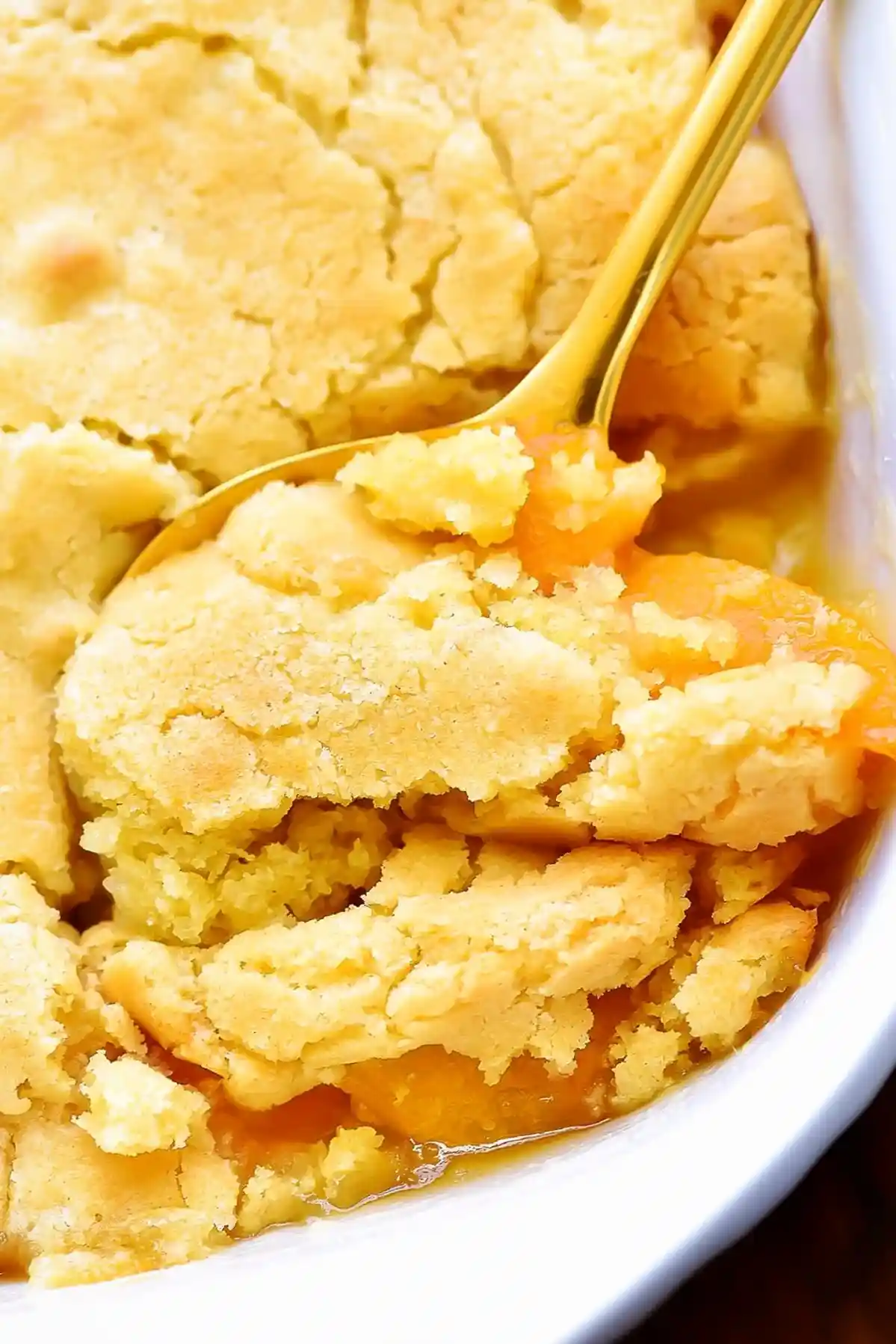
This peach cobbler combines succulent fruit with a buttery sugar-cookie topping for a classic summer treat. It is simple to assemble and works perfectly with either fresh seasonal peaches or convenient canned alternatives.
List of ingredients
- 4 cups freshly sliced peaches – drain juice first if using canned peaches.
- 2 Tablespoons granulated sugar – used for sprinkling over the fruit layer.
- 1 cup granulated sugar – incorporated into the cookie-style dough.
- 1/2 cup salted butter, softened – ensures a smooth, creamy batter.
- 1 cup all-purpose flour – provides the necessary structure for the crust.
- 1 teaspoon baking powder – helps the topping rise and stay light.
- Tiny pinch of salt – balances the sweetness of the sugar.
- Pinch of nutmeg, optional – adds a subtle warmth to the crust.
- 1 large egg – acts as a binder for the dough.
- 1 teaspoon vanilla extract – enhances the aromatic flavor profile.
step-by-step instructions
- Prep the oven and dish: Preheat your oven to 350 degrees F and grease a 2 quart baking dish with non-stick spray.
- Layer the fruit: Spread the sliced peaches in a single layer in the prepared dish and sprinkle the tops evenly with 2 Tablespoons of sugar.
- Cream butter and sugar: In a medium bowl, use an electric hand-mixer to beat 1 cup of sugar and the softened butter together until combined.
- Mix dry and wet ingredients: Add the flour, baking powder, salt, and optional nutmeg, then mix. Stir in the egg and vanilla extract until just combined, aiming for a cookie dough consistency.
- Apply the topping: Take small chunks of the dough, flatten them with your hand, and place them across the peaches, leaving some fruit visible.
- Bake and cool: Bake for 36 to 40 minutes until the crust is golden brown. Let the cobbler stand for 5 to 10 minutes before serving.
Professional Tips for Working with Peaches
Selecting the Ripe Fruit
Choose peaches that give slightly when pressed gently near the stem. Avoid fruit that is too mushy or has bruised skin, as this will affect the texture of the cobbler. Ripe peaches should have a fragrant, sweet aroma.
Blanching Peaches for Easy Peeling
To remove skins quickly, score a small X on the bottom of each peach. Drop them into boiling water for 30 seconds, then immediately plunge them into an ice bath. The skins will slip off easily without removing the fruit’s flesh.
Preparing Canned Peaches
When using canned peaches, choose slices packed in juice rather than heavy syrup to control the sweetness. Always drain the liquid thoroughly using a colander. This prevents the cobbler from becoming too watery during the baking process.
Maintaining Uniform Slice Thickness
Cut peaches into slices of approximately 1/4 to 1/2 inch thickness. Uniform slices ensure that the fruit cooks evenly throughout the dish. This prevents some pieces from becoming mushy while others remain too firm.
Optimizing the Cookie Crust
Achieving the Perfect Butter Temperature
Ensure the butter is softened to room temperature but not melted. If the butter is too cold, it will not cream properly with the sugar, resulting in lumps. If it is melted, the dough will be too runny to form chunks.
Preventing Overmixing of the Batter
Mix the flour and dry ingredients only until they are just incorporated. Overworking the dough develops too much gluten, which can make the crust tough rather than tender. Stop mixing as soon as no streaks of flour remain.
Strategic Dough Placement
Distribute the dough chunks unevenly across the top of the peaches. Leaving small gaps allows steam to escape from the fruit during baking. This helps the crust brown more effectively and prevents the fruit from boiling over.
Adjusting for Batter Consistency
The dough should feel like a thick cookie batter. If it feels too sticky to handle, chill it in the refrigerator for 15 minutes. If it is too dry, add a teaspoon of milk or cream to loosen the mixture.
Dietary Adjustments and Substitutions
Using Gluten-Free Flour Blends
Substitute the all-purpose flour with a high-quality 1:1 gluten-free baking flour. These blends usually contain xanthan gum, which mimics the binding properties of gluten. No other changes to the measurements are necessary for this substitution.
Substituting Unsalted Butter
If you only have unsalted butter, increase the pinch of salt in the dough to 1/4 teaspoon. This replaces the sodium found in salted butter and enhances the flavor of the sugar crust. The texture of the cobbler will remain the same.
Exploring Sugar Alternatives
For a deeper flavor, replace the 1 cup of granulated sugar in the dough with light brown sugar. Brown sugar adds a molasses note and creates a slightly chewier crust. Keep the 2 tablespoons of white sugar on top for a crisp finish.
Egg-Free Binding Methods
Replace the large egg with a flax egg, made from 1 tablespoon of ground flaxseed meal mixed with 3 tablespoons of water. Let the mixture sit for 5 minutes before adding it to the batter. This provides similar binding properties for a vegan-friendly option.
Flavor Variations and Enhancements
Integrating Ground Cinnamon
Mix 1/2 teaspoon of ground cinnamon with the flour and nutmeg for a more traditional spiced flavor. Cinnamon pairs naturally with peaches and adds a warm, aromatic quality to the crust. It complements the sweetness of the fruit perfectly.
Adding Almond Extract for Depth
Replace half of the vanilla extract with almond extract. Almond and peach are complementary flavors that create a more sophisticated taste profile. Use only a small amount, as almond extract is very potent.
Brightening the Fruit with Lemon Zest
Toss the sliced peaches with one teaspoon of fresh lemon zest before placing them in the baking dish. The acidity of the lemon cuts through the sugar and highlights the natural tartness of the peaches. This creates a more balanced dessert.
Using Nectarines or Apricots
Nectarines can be used as a direct 1:1 substitute for peaches since they have a similar texture. For apricots, reduce the amount of sugar sprinkled on top, as apricots are naturally more tart. These fruits provide a different but equally delicious flavor.
Serving and Presentation Ideas
Pairing with Vanilla Ice Cream
Serve a warm slice of cobbler with a large scoop of premium vanilla bean ice cream. The cold creaminess of the ice cream melts into the warm fruit and buttery crust. This creates a temperature contrast that is highly appealing.
Preparing Stabilized Whipped Cream
Beat heavy cream with a pinch of powdered sugar and a drop of vanilla until stiff peaks form. Dollop a generous amount on top of each serving for a light, airy finish. Stabilized cream holds its shape longer on warm desserts.
Using Tangy Greek Yogurt
For a less sweet option, serve the cobbler with a dollop of plain Greek yogurt. The tartness of the yogurt balances the rich sugar crust and sweet peaches. This adds a refreshing element to the overall dish.
Individual Plating Techniques
For a formal presentation, use a round biscuit cutter to scoop portions of the cobbler. Place the portion in the center of a shallow bowl and drizzle with extra peach syrup from the pan. Garnish with a fresh mint leaf for color.
Storage and Reheating Guide
Safe Refrigeration Methods
Allow the cobbler to cool completely to room temperature before covering it. Cover the baking dish tightly with aluminum foil or transfer slices to an airtight container. This prevents the crust from absorbing odors from the refrigerator.
Maximum Storage Duration
Store the peach cobbler in the refrigerator for up to 3 days. Beyond this window, the crust may lose its crispness and become overly soft. The fruit filling remains safe, but the texture of the dough degrades.
Restoring Crispness in the Oven
To reheat, place the cobbler in a 325 degree F oven for 10 to 15 minutes. This method is superior to the microwave as it crisps the sugar crust again. Avoid overcooking to prevent the peaches from drying out.
Quick Microwave Reheating
For a fast reheat, microwave a single slice on medium power for 30 to 60 seconds. Note that this will make the crust soft rather than crisp. This is the best method if you are serving with ice cream, which masks the texture change.
Troubleshooting Common Issues
Preventing a Soggy Bottom
If the bottom of your cobbler is too wet, ensure the peaches are drained well. You can also sprinkle a teaspoon of cornstarch over the fruit before adding the sugar. Cornstarch absorbs excess moisture and thickens the fruit juices into a syrup.
Avoiding a Burnt Crust
If the topping browns too quickly, cover the dish loosely with aluminum foil. This protects the crust from direct heat while allowing the center to finish cooking. Check the cobbler every 10 minutes during the final stages of baking.
Fixing Underbaked Batter
If the crust is golden but the dough chunks are still raw inside, bake for an additional 5 minutes. Ensure you are using a 2 quart dish; a dish that is too deep can trap moisture and slow down the cooking of the dough.
Managing Excess Liquid
If the cobbler is too runny after baking, let it stand for a full 15 minutes before serving. This allows the juices to set and thicken as they cool. Do not stir the cobbler, as this will break the crust and mix the syrup into the dough.
Frequently Asked Questions
Can I freeze the baked cobbler?
Yes, you can freeze slices of the baked cobbler for up to two months. Wrap each slice individually in plastic wrap and then place them in a freezer-safe bag. Thaw in the refrigerator overnight before reheating in the oven.
Which type of peach is best for cobbler?
Freestone peaches are preferred because the pit separates easily from the flesh. This makes slicing much faster and cleaner. Clingstone peaches can be used, but they require more effort to slice uniformly.
Do I need to peel the peaches?
Peeling is optional and depends on personal preference. The skins soften during baking and provide a bit of extra color and nutrients. For a smoother texture, use the blanching method to remove the skins.
Can I use a different size baking dish?
A 2 quart dish is ideal for this quantity of ingredients. If using a larger dish, the fruit layer will be thinner and may cook faster. If using a smaller dish, the dough may take longer to cook through.
Is it okay to use frozen peaches?
Yes, you can use frozen peaches, but thaw them completely first. Pat them dry with paper towels to remove excess moisture. This prevents the crust from becoming soggy during the baking process.
Can I substitute the vanilla extract?
Maple extract or almond extract are excellent substitutes for vanilla. Use the same measurement of 1 teaspoon. These alternatives add a different but complementary sweetness to the peach and butter flavors.
Print
Easy Sugar-Crust Peach Cobbler
- Total Time: 50 minutes
- Yield: 6 servings
- Diet: General
Description
The Best Peach Cobbler is a spring and summer dessert made with peaches, topped with a sugar-cookie-style crust that bakes up perfectly.
Ingredients
- 4 cups sliced peaches
- 2 Tablespoons granulated sugar
- 1 cup granulated sugar
- 1/2 cup salted butter, softened
- 1 cup all-purpose flour
- 1 teaspoon baking powder
- tiny pinch of salt
- pinch of nutmeg (optional)
- 1 large egg
- 1 teaspoon vanilla extract
Instructions
- Step 1: Preheat oven to 350 degrees F. Grease a 2 quart baking dish with non-stick spray.
- Step 2: Spread sliced peaches out in a single layer in prepared dish. Sprinkle tops of peaches with 2 Tablespoons sugar.
- Step 3: In a medium bowl, with an electric hand-mixer, beat 1 cup sugar and softened butter together until combined. Add flour, baking powder, salt (and nutmeg if using). Mix. Then add in egg and vanilla. Continue to beat and mix together until just combined.
- Step 4: Take chunks of dough and flatten them with your hand. Carefully place batter all over the tops of peaches.
- Step 5: Bake in preheated oven for 36 to 40 minutes or until crust is golden brown and cooked through. Remove from oven and let stand 5 to 10 minutes before serving.
Notes
Fresh peaches are recommended, but canned peaches (drained) work well. For a gluten-free version, substitute all-purpose flour with a gluten-free alternative. Refrigerate leftovers for up to 3 days and reheat in the oven. Serve with vanilla ice cream, whipped cream, or Greek yogurt.
- Prep Time: 10 minutes
- Cook Time: 40 minutes
- Category: Dessert
- Method: Baking
- Cuisine: American
Nutrition
- Serving Size: 1 serving
- Calories: 415 kcal
- Sugar: 40 g
- Sodium: 250 mg
- Fat: 18 g
- Saturated Fat: 11 g
- Unsaturated Fat: 7 g
- Trans Fat: 0 g
- Carbohydrates: 55 g
- Fiber: 2 g
- Protein: 5 g
- Cholesterol: 60 mg