
This method for canning peach pie filling allows you to preserve the flavor of summer peaches for year-round use. It produces a thick, consistent filling that is ideal for pies, cobblers, and other baked desserts.
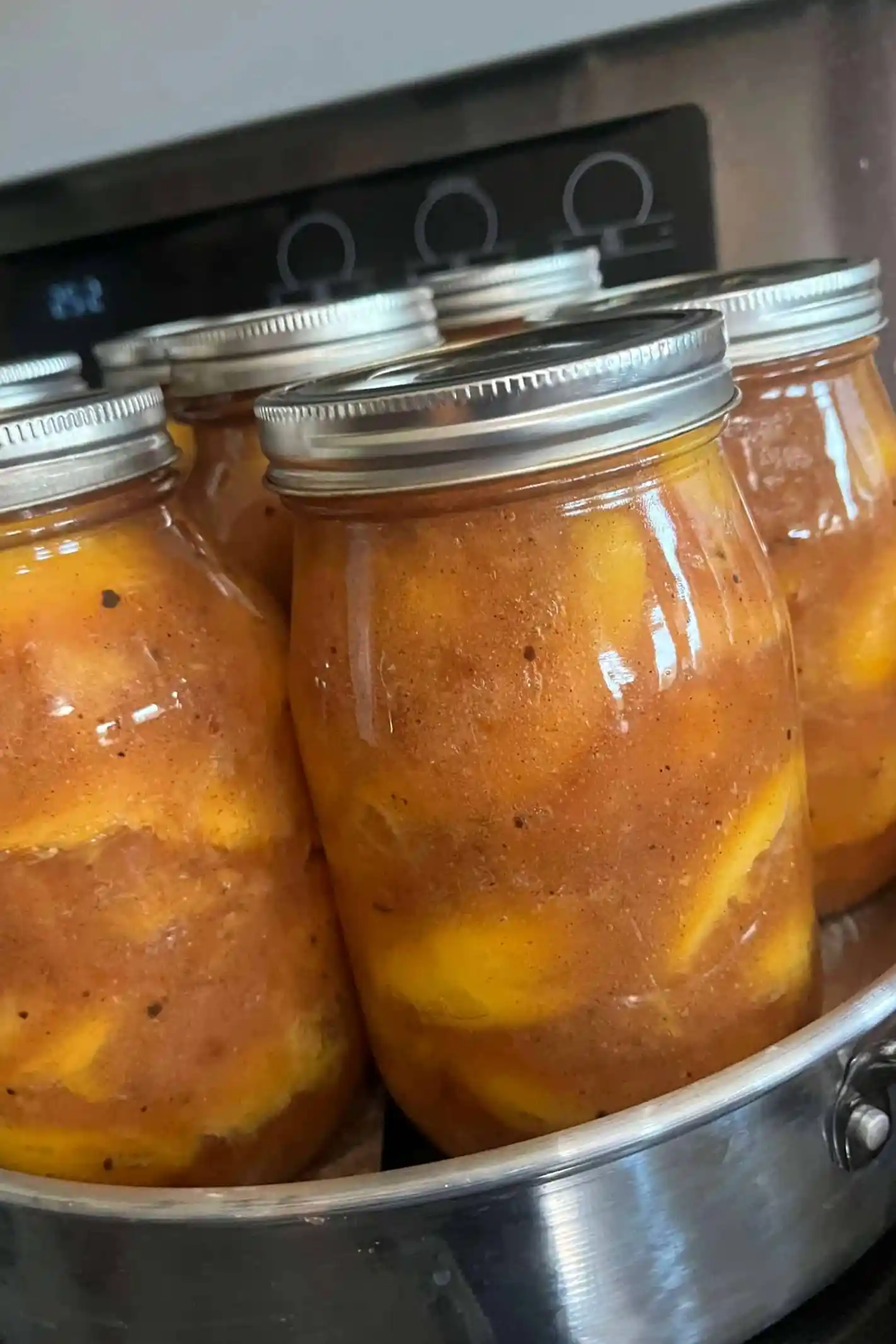
List of ingredients
- 18 lbs of peaches – ripe and fresh.
- 2 cups lemon juice – bottled for consistent acidity.
- 3 cups raw unrefined sugar – adjust quantity based on peach sweetness.
- 2 cups brown sugar – provides a deep, caramelized flavor.
- 2 1/4 cups clear jel – modified cornstarch for canning stability.
- 5 1/4 cups water – used for the thickening base.
- 2 tsp cinnamon – adds a warm, aromatic spice.
- 1 tsp vanilla powder – provides a concentrated vanilla essence.
step-by-step instructions
- Prepare the peaches: Wash the peaches thoroughly in cold water. Bring a large pot of water to a boil and prepare a separate large bowl filled with ice and cold water.
- Peel the fruit: Make a small X in the bottom of each peach. Blanch them in boiling water for 30 seconds to 1 minute until the skin curls. Immediately plunge the peaches into the ice bath, then slip the peels off with your fingers.
- Slice and protect: Remove the pits and slice the peaches. Place the slices in a large bowl and toss them with 2 cups of lemon juice to prevent oxidative browning.
- Create the thickener: In a large stockpot, combine the raw sugar, brown sugar, clear jel, water, cinnamon, and vanilla powder. Whisk these ingredients together over medium heat.
- Thicken the mixture: Continue whisking almost constantly until the liquid becomes bubbly and has thickened significantly.
- Combine filling: Remove the pot from the heat. Gently fold in the sliced peaches and the lemon juice mixture using a spatula to avoid crushing the fruit.
- Fill the jars: Ladle the hot filling into sterilized pint or quart jars. Leave exactly 1 1/4 inch of headspace at the top.
- Remove air bubbles: Use a bubble remover or clean utensil to release trapped air. Add more filling if the level drops below the required headspace.
- Seal the jars: Wipe the rims of the jars to ensure they are clean. Apply the lids and secure the screw bands firmly.
- Process the jars: Place the jars in a water bath canner or steam canner. Process pint and quart jars for 30 minutes, adjusting the time based on your local elevation.
- Initial cooling phase: Turn off the heat and let the jars sit in the canner for 10 minutes. Remove the lid or crack the steam canner lid and let them sit for another 10 minutes.
- Final cooling: Carefully move the jars to a heat-proof surface lined with a clean towel. Let them sit undisturbed for 18 to 24 hours to prevent siphoning.
- Storage: Remove the rings and test the seals. Wash the jars, label them, and store them in a cool, dark place away from direct sunlight.
Precise Headspace Management for Canning
Preventing Siphoning with Correct Headspace
Leaving 1 1/4 to 1 1/2 inches of headspace is critical for this specific recipe. Because the thickener expands during the heating process, insufficient space can push the filling out of the jar. This leads to siphoning, which can prevent a proper seal.
Avoiding Lid Failure and Messes
If the jar is overfilled, the pressure from the expanding contents can push the lid off entirely during processing. This creates a significant mess in the canner and wastes ingredients. Maintaining a generous gap ensures the vacuum seal forms correctly as the jar cools.
Managing Air Bubbles for Safety
Trapped air bubbles can interfere with the vacuum sealing process and may lead to spoilage. Always use a plastic bubble remover or a clean knife to release air before applying the lid. This ensures the filling is dense and the headspace remains accurate.
Understanding Thickening Agents for Preservation
The Role of Clear Jel in Canning
Clear jel is a modified cornstarch specifically designed to withstand the high heat of canning without breaking down. Unlike standard cornstarch, it keeps the filling transparent rather than cloudy. This allows the natural color of the peaches to remain vibrant in the jar.
Differentiating Cook-Type and Instant Clear Jel
It is essential to use the cook-type clear jel for this recipe. Instant clear jel thickens without heat and will not provide the necessary structure during the boiling process. Using the wrong type can result in a thin, watery filling after the jars are processed.
Risks of Using Non-Approved Thickeners
Standard cornstarch or flour can separate or become unstable during long-term storage. While some home cooks use them, they are not the industry standard for shelf-stable canning. Clear jel provides the most consistent results and ensures the filling does not weep over time.
Advanced Peach Preparation Techniques
Selecting the Right Peach Variety
Freestone peaches are highly recommended for canning because the pit separates easily from the flesh. Clingstone peaches require more effort to pit and can result in more fruit waste. Ensure the peaches are ripe but still firm to maintain their shape during the cooking process.
The Science of the Blanching Method
The X-cut and blanching method uses a quick burst of heat to loosen the bond between the skin and the flesh. Moving the fruit immediately to an ice bath stops the cooking process instantly. This prevents the peaches from becoming mushy while making the peels slip off effortlessly.
Preventing Oxidation with Acid
Peaches brown quickly once sliced due to exposure to oxygen. Tossing the slices in bottled lemon juice provides the necessary acidity to stop this enzyme reaction. This keeps the fruit looking bright and yellow rather than brown or grey.
Essential Canning Equipment Guide
Water Bath vs Steam Canning
A water bath canner submerges jars in boiling water to kill microorganisms and create a vacuum. A steam canner uses high-pressure steam to achieve the same result with less water. Both are suitable for high-acid foods like peach filling, provided processing times are followed.
The Importance of a Jar Lifter
Lifting hot jars out of boiling water by hand is dangerous and can lead to burns. A dedicated jar lifter provides a secure grip and allows you to move jars steadily. This reduces the risk of dropping glass or splashing hot liquid.
Using a Jar Funnel for Clean Rims
A wide-mouth jar funnel helps direct the thick filling into the jar without spilling on the rim. Any residue left on the rim can prevent the lid from sealing properly. Using a funnel keeps the workspace clean and ensures a safer seal.
Strategies for Baking with Canned Filling
Determining the Correct Filling Ratio
For a standard pie pan, use between 1 and 2 quarts of canned filling. A lattice crust generally requires 1 quart, as there is less top coverage. A solid top crust typically needs 2 quarts to create a full, mounded appearance that looks professional.
Baking Temperatures and Timing
Preheat your oven to 375F for the best results. Bake the pie for approximately 45 minutes or until the crust is golden brown. Because the filling is already cooked and thickened, you are primarily focusing on cooking the pastry.
Enhancing the Crust Appearance
Apply an egg wash or a brush of milk to the top crust before baking. Dusting the surface with granulated sugar adds a sweet crunch and a professional glisten. Cut several slits in a solid crust to allow steam to escape, preventing a soggy bottom.
Long-Term Storage and Maintenance
Optimizing Storage Environment
Store your sealed jars in a cool, dark area such as a pantry or basement. Avoid areas with extreme temperature fluctuations, as this can affect the quality of the fruit. Keep the jars away from direct sunlight to prevent the colors from fading.
Testing the Vacuum Seal
After the 24-hour cooling period, remove the screw bands and press the center of the lid. If the lid does not pop back, the seal is successful. If it clicks or moves, the jar must be refrigerated and consumed immediately.
Evaluating Shelf Life and Quality
While canned goods can last several years, the best nutritional value and flavor are found within the first 2 years. Label each jar with the date of production to track freshness. Store them in a first-in, first-out system to ensure you use the oldest jars first.
Troubleshooting Common Canning Issues
Handling Unsealed Jars
If a jar fails the seal test, do not attempt to re-process it unless you have fresh lids. Instead, move the jar directly to the refrigerator. These unsealed jars should be used as a fresh topping or in a pie within a week.
Correcting Watery Filling
If the filling appears too thin after opening, it may be due to using the wrong type of thickener. You can thicken it further by simmering it in a pan on the stove before adding it to a crust. This evaporates excess moisture and concentrates the sugars.
Managing Siphoning During Processing
Siphoning occurs when liquid is pulled out of the jar during the cooling process. This is usually caused by too little headspace or removing jars from the canner too quickly. Following the gradual cooling steps helps prevent this issue.
Frequently Asked Questions
Can I substitute the sugar in this recipe?
You can adjust the amount of raw unrefined sugar to suit your preference, but do not replace it entirely with artificial sweeteners. Sugar plays a role in the preservation and texture of the filling. If you reduce the sugar, do so with the raw sugar rather than the brown sugar.
How do I adjust processing time for high altitudes?
At elevations above 1,000 feet, you must increase the processing time to compensate for the lower boiling point of water. Check a standard canning guide for your specific elevation to determine the exact additional minutes required.
Is bottled lemon juice better than fresh?
Bottled lemon juice is recommended for canning because it has a consistent pH level. Fresh lemons vary in acidity, which can affect the safety and shelf-stability of the preserve. Consistency is key when following a tested canning recipe.
Can this filling be used for other desserts?
Yes, this filling is versatile and works well for peach cobblers, crisps, and clafoutis. It can also be served warm over vanilla ice cream or used as a topping for cheesecake and pancakes.
What should I do if I cannot find Clear Jel?
Clear jel can be difficult to find in some local stores but is available online. If you use a substitute like cornstarch, be aware that it may cloud the filling and may not be as stable for long-term room temperature storage.
Print
Preserving Homemade Peach Pie Filling for Canning
- Total Time: 105 minutes
- Yield: 10 quarts
- Diet: Vegetarian
Description
A delicious and preserve-friendly homemade peach pie filling, perfect for year-round baking and preserving the flavor of fresh peaches.
Ingredients
- 18 lbs peaches
- 2 cups lemon juice
- 3 cups raw unrefined sugar
- 2 cups brown sugar
- 2 1/4 cups clear jel
- 5 1/4 cups water
- 2 tsp cinnamon
- 1 tsp vanilla powder
Instructions
- Step: Wash peaches in cold water, rinsing well.
- Step: Bring a large pot of water to a boil.
- Step: Fill a large bowl with ice and cold water.
- Step: Blanch peaches in boiling water for 30 seconds to 1 minute until skin curls, then plunge into the ice water bath.
- Step: Peel, pit, and slice peaches, then toss them in a large bowl with 2 cups of bottled lemon juice.
- Step: In a large stockpot, combine raw sugar, brown sugar, clear jel, water, cinnamon, and vanilla powder.
- Step: Whisk ingredients over medium heat until the mixture has thickened and is bubbly.
- Step: Remove from heat and gently fold in the peach slices and lemon juice mixture.
- Step: Ladle hot filling into prepared pint or quart canning jars, leaving 1 1/4 inch headspace, and remove air bubbles.
- Step: Wipe rims, add lids, and secure with screw bands.
- Step: Process jars in a water bath canning pot or steam canner for 30 minutes, adjusting for elevation.
- Step: Allow jars to cool in the canner for 10 minutes, remove the lid to cool for another 10 minutes, then move to a towel-lined surface to cool for 18-24 hours.
- Step: Remove rings, test seals, wash, label, and store in a cool dark place.
Notes
For baking: Use 1-2 quarts of filling per pie pan. Bake at 375F for about 45 minutes or until the crust is browned. Filling can also be used for cobbler, clafoutis, or peach crisp.
- Prep Time: 60 minutes
- Cook Time: 15 minutes
- Category: Dessert
- Method: Canning
- Cuisine: American
Nutrition
- Serving Size: 1/2 cup
- Calories: 160 kcal
- Sugar: 32 g
- Sodium: 15 mg
- Fat: 0 g
- Saturated Fat: 0 g
- Unsaturated Fat: 0 g
- Trans Fat: 0 g
- Carbohydrates: 40 g
- Fiber: 2 g
- Protein: 1 g
- Cholesterol: 0 mg