
These bakery-style peach scones are incredibly tender and filled with juicy summer fruit. They are finished with a sweet honey-vanilla glaze that makes them a perfect treat for brunch or weekend breakfast.
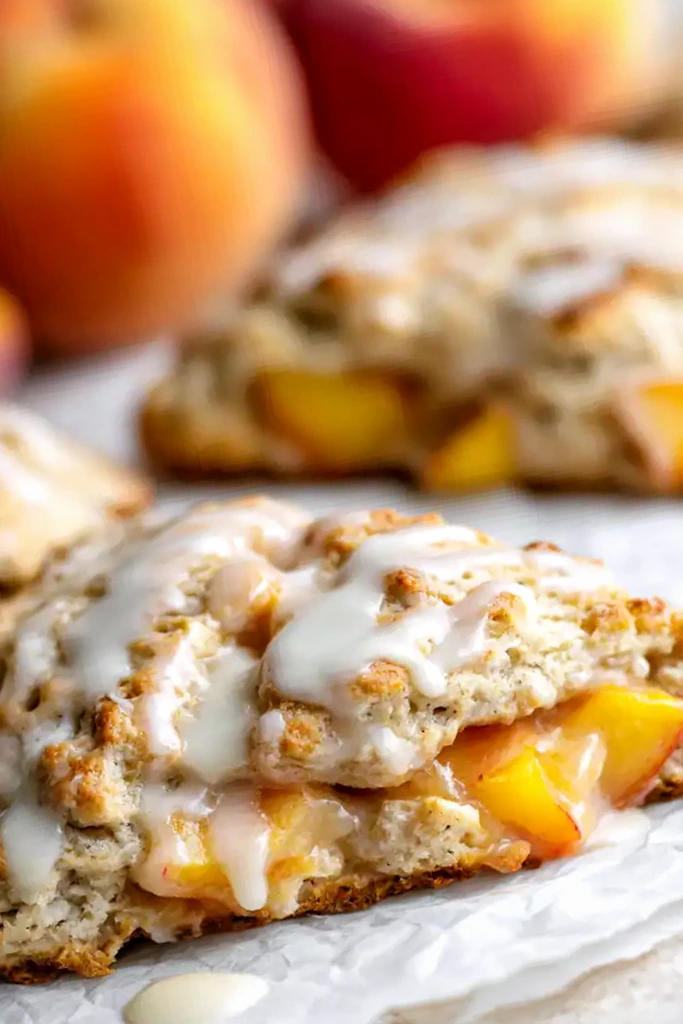
List of ingredients
- 2 cups All-purpose flour – provides the main structure of the scone.
- 3 tablespoons Granulated sugar – adds a hint of sweetness to the dough.
- 1 tablespoon Baking powder – ensures a high rise and light texture.
- 1/2 teaspoon Ground cinnamon – adds warmth and complements the peaches.
- 1/2 teaspoon Salt – balances the sweetness of the fruit and glaze.
- 6 tablespoons Cold unsalted butter, cubed – critical for creating flaky layers.
- 1 cup Heavy cream, plus 1 tbsp for brushing – adds richness and moisture.
- 1/2 teaspoon Pure vanilla extract – enhances the overall aromatic profile.
- 1 cup Fresh peeled peaches, diced – the star ingredient for juicy flavor.
- 1 cup Confectioners’ sugar – used for the smooth glaze base.
- 1 tablespoon Honey – provides a floral sweetness to the topping.
- 1/2 teaspoon Pure vanilla extract, for glaze – adds depth to the icing.
- 2 tablespoons Milk – adjusts the glaze consistency.
step-by-step instructions
- Prepare the Oven: Preheat your oven to 400°F and line a baking sheet with parchment paper for easy removal.
- Mix Dry Components: In a large mixing bowl, whisk together the flour, granulated sugar, baking powder, cinnamon, and salt until well combined.
- Cut in the Butter: Use a pastry blender to cut the cold cubed butter into the flour mixture until it resembles coarse crumbs.
- Add Wet Ingredients: Whisk the heavy cream and vanilla together, then stir the mixture into the flour. Gently fold in the diced peaches without overmixing.
- Shape the Dough: Turn the dough onto a floured surface and knead gently a few times. Pat it into a disc roughly 1 inch thick.
- Cut into Wedges: Use a sharp knife to cut the disc into 8 equal wedges and place them on the baking sheet.
- The Freezer Chill: Place the scones in the freezer for 15-20 minutes to re-chill the butter, which ensures a better rise.
- Bake: Brush the tops of the scones with heavy cream and bake for 18-23 minutes until golden brown.
- Create the Glaze: Whisk the confectioners’ sugar, honey, vanilla, and milk together until the glaze is smooth.
- Finish: Drizzle the glaze over the cooled scones and serve immediately.
Optimal Temperature Control for Flakiness
Keep Butter Ice-Cold
The secret to a flaky scone is ensuring the butter remains in solid chunks until it hits the oven. When the cold butter melts rapidly during baking, it releases steam that pushes the dough layers apart. If the butter softens too much before baking, the scones will be dense and greasy rather than light.
Use Chilled Heavy Cream
Similar to the butter, the heavy cream should be taken directly from the refrigerator. Cold liquids help maintain the temperature of the butter pieces within the dough. This prevents the fats from blending entirely into the flour, which is essential for achieving a professional pastry texture.
The Purpose of the Freezer Flash
Freezing the shaped scones for 15-20 minutes is a critical step for structural integrity. This process relaxes the gluten developed during kneading and ensures the butter is fully chilled. The result is a towering rise and sharp edges that do not spread across the baking sheet during the bake.
Fruit Selection and Preparation Tips
Selecting the Right Peaches
Choose peaches that are fragrant and slightly soft to the touch, but not mushy. Overripe peaches release too much moisture, which can make the dough soggy. Ideally, use peaches at the peak of their season for the best balance of natural sweetness and acidity.
Peeling for a Smoother Texture
Peeling the peaches ensures a consistent mouthfeel throughout the scone. While the skin is edible, it can toughen during the baking process and create an uneven texture. Removing the peel allows the juicy fruit to blend more seamlessly with the tender crumb of the pastry.
Using Frozen Peach Substitutes
If fresh peaches are unavailable, you can use frozen diced peaches. It is important to add them to the dough while they are still frozen; do not thaw them first. Thawing releases excess water, which can disrupt the flour-to-fat ratio and lead to a gummy interior.
Working with Canned Peaches
Canned peaches can be used if they are well-drained and patted dry with paper towels. Be aware that canned fruit is often softer than fresh, which may result in more blended fruit pockets. Avoid using peaches in heavy syrup, as the extra sugar can cause the scones to brown too quickly.
Professional Dough Handling Techniques
Avoid Overworking the Gluten
Knead the dough only a few times—just enough to bring it together. Over-mixing or excessive kneading develops too much gluten, which turns a tender scone into a tough, bread-like pastry. It is perfectly fine to have a few streaks of flour remaining in the dough before baking.
The Spoon and Level Flour Method
To avoid adding too much flour, use a spoon to scoop flour into your measuring cup and level it off with a flat edge. Packing flour directly with the cup often compresses the powder, leading to a dense scone. Proper measurement ensures the pastry remains light and pillowy.
Cutting Wedges Efficiently
When dividing the dough disc, push the knife straight down rather than using a sawing motion. Sawing can compress the edges of the dough and seal the layers. A clean, vertical cut allows the steam to lift the layers upward, creating a more attractive and flaky side profile.
Glaze Customization and Topping Ideas
Experimenting with Different Honey Types
The choice of honey can subtly change the flavor of the glaze. Clover honey offers a mild, classic sweetness, while wildflower honey provides a more complex, floral note. For a bolder taste, a darker buckwheat honey can be used, though it may slightly alter the color of the glaze.
Adding a Crunchy Exterior
For added texture, sprinkle coarse turbinado sugar on top of the scones after brushing them with cream. The large sugar crystals do not melt completely in the oven, creating a crisp, caramelized crust. This provides a satisfying contrast to the soft interior and smooth glaze.
Dairy-Free Glaze Alternatives
You can make a dairy-free version of the glaze by replacing the milk with a small amount of coconut milk or almond milk. The flavor remains very similar, as the honey and vanilla are the dominant notes. Ensure the substitute is unsweetened to maintain the correct balance of sugar.
Storage and Reheating Guide
Room Temperature Storage
Store leftover scones in an airtight container at room temperature for up to two days. Keeping them sealed prevents the edges from drying out and preserves the moisture of the peaches. If the glaze becomes sticky, keep the container in a cool, dry place.
Freezing Unbaked Scones
You can prepare the scone wedges and freeze them raw for up to three months. Place them on a tray to freeze individually before transferring them to a freezer bag. When you are ready to eat, bake them directly from the freezer, adding 2-3 minutes to the total baking time.
Best Practices for Reheating
To restore the bakery-fresh crispness, reheat the scones in a 350°F oven for about 5 minutes. Avoid using a microwave, as this can make the pastry rubbery and cause the glaze to melt completely. A quick oven toast brings back the buttery aroma and flaky texture.
Serving and Pairing Recommendations
Optimal Serving Temperature
These scones are best served slightly warm, roughly 10 to 15 minutes after they come out of the oven. This temperature allows the buttery flavors to be more pronounced and the glaze to set without running. Warm peaches provide a more comforting and aromatic experience.
Beverage Pairings
Pair these scones with a cup of Earl Grey tea, as the bergamot notes complement the floral honey glaze. A robust cold-brew coffee or a creamy latte also works well to balance the sweetness. For a non-caffeinated option, a chilled glass of sparkling water with lemon is refreshing.
Accompanying Side Dishes
For a complete brunch spread, serve the scones alongside a savory quiche or a fresh arugula salad. The saltiness of a quiche or the peppery bite of arugula cuts through the richness of the buttery dough. This creates a balanced meal that satisfies both sweet and savory cravings.
Extra Topping Ideas
While the glaze is delicious, you can serve these scones with a side of whipped mascarpone cheese for extra creaminess. A small jar of high-quality peach preserves is another great addition, doubling down on the fruit flavor. A dollop of clotted cream also provides a traditional touch.
Baking Troubleshooting and Fixes
Fixing Dense or Flat Scones
If your scones do not rise, check the expiration date of your baking powder. Old leaveners lose their potency and cannot lift the heavy dough. Additionally, ensure your butter was ice-cold; warm butter will melt too quickly and fail to create the necessary steam pockets for lift.
Preventing Burnt Bottoms
To prevent the bottoms from browning too quickly, use a double layer of parchment paper or a silicone baking mat. This provides extra insulation between the dough and the hot baking sheet. Also, ensure your oven rack is positioned in the center to allow for even heat circulation.
Adjusting for Mini Scones
To make mini scones, divide the dough into two smaller discs and cut each into 8 wedges. This results in 16 bite-sized treats. Reduce the baking time to approximately 12-15 minutes, as the smaller surface area cooks through much faster than the full-sized wedges.
Frequently Asked Questions
Can I use canned peaches?
Yes, you can use canned peaches if they are thoroughly drained and patted dry with paper towels. Be mindful that they are softer than fresh peaches, which may change the interior texture. Avoid using peaches packed in heavy syrup to prevent excess sugar.
Why did my scones turn out tough?
Toughness is usually caused by over-mixing the dough, which develops too much gluten. To prevent this, stir the ingredients until they are just combined and knead the dough only a few times. A slightly shaggy dough leads to a more tender final product.
Can I substitute the heavy cream?
Full-fat canned coconut milk is a suitable dairy-free alternative for heavy cream. While the flavor will have a slight coconut hint, the fat content is high enough to maintain the required moisture. You may need to adjust the flour slightly if the coconut milk is thinner than cream.
How do I keep the scones from spreading?
The most effective way to prevent spreading is the freezer chill step. By ensuring the butter is frozen before it hits the oven, the scone maintains its height and shape. If you skip this step, the butter may melt before the structure sets, causing the scones to flatten.
Is it possible to glaze the scones while hot?
It is better to wait until the scones have cooled slightly before applying the glaze. If the scones are too hot, the glaze will melt and soak into the pastry rather than sitting on top. Waiting a few minutes ensures a clean, professional-looking finish.
Print
Honey Vanilla Glazed Peach Scones
- Total Time: 48 minutes
- Yield: 8 scones
- Diet: General
Description
Fluffy, buttery scones dotted with fresh peaches and finished with a sweet honey vanilla glaze. These homemade scones are going to become your new favorite breakfast treat.
Ingredients
- 2 cups all-purpose flour
- 3 tablespoons granulated sugar
- 1 tablespoon baking powder
- 1/2 teaspoon ground cinnamon
- 1/2 teaspoon salt
- 6 tablespoons cold unsalted butter, cubed
- 1 cup heavy cream (plus 1 tablespoon for brushing)
- 1/2 teaspoon pure vanilla extract
- 1 cup fresh peeled peaches, diced
- 1 cup confectioners’ sugar
- 1 tablespoon honey
- 1/2 teaspoon pure vanilla extract (for glaze)
- 2 tablespoons milk
Instructions
- Step 1: Preheat oven to 400°F and line a baking sheet with parchment paper.
- Step 2: Whisk flour, sugar, baking powder, cinnamon, and salt in a large bowl.
- Step 3: Cut cold butter into the flour using a pastry blender until coarse crumbs form.
- Step 4: Whisk cream and vanilla; stir into flour mixture. Fold in peaches.
- Step 5: Knead dough gently on a floured surface. Shape into a 1-inch thick disc.
- Step 6: Cut into 8 wedges and place on the baking sheet.
- Step 7: Freeze for 15-20 minutes to ensure a better rise.
- Step 8: Brush with cream and bake for 18-23 minutes until golden brown.
- Step 9: Whisk glaze ingredients (sugar, honey, vanilla, milk) until smooth.
- Step 10: Drizzle over cooled scones and serve.
Notes
Use very cold butter for the flakiest layers. Don’t overmix the dough or the scones will be tough. You can substitute frozen peaches; do not thaw them before adding to the dough.
- Prep Time: 30 minutes
- Cook Time: 18 minutes
- Category: Breakfast
- Method: Baking
- Cuisine: American
Nutrition
- Serving Size: 1 scone
- Calories: 372 kcal
- Sugar: 24 g
- Sodium: 280 mg
- Fat: 18 g
- Saturated Fat: 11 g
- Unsaturated Fat: 7 g
- Trans Fat: 0 g
- Carbohydrates: 42 g
- Fiber: 2 g
- Protein: 5 g
- Cholesterol: 65 mg