
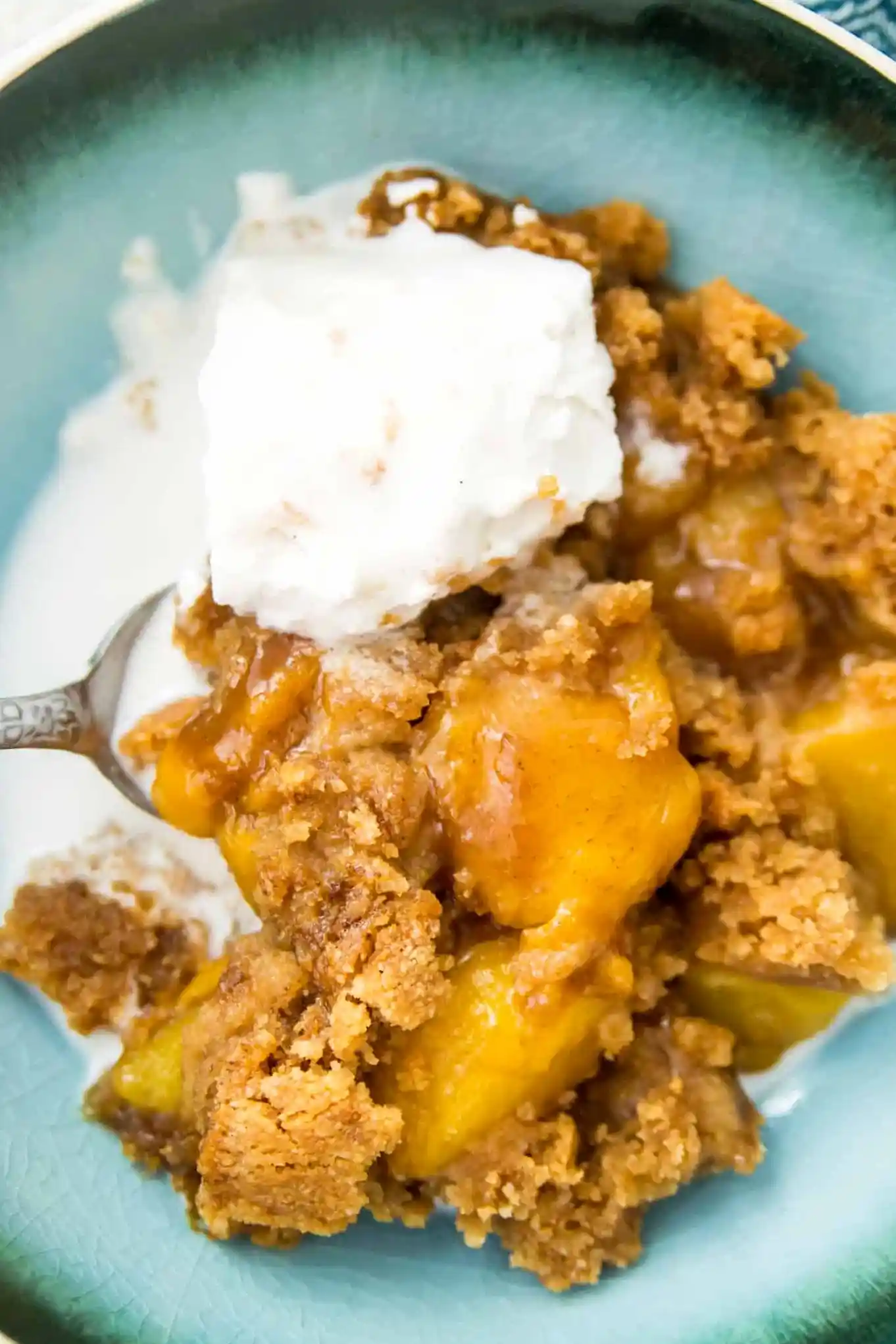
This healthy paleo peach cobbler is a grain-free dessert that balances juicy fruit with a crisp, buttery crust. It is vegan, dairy-free, and gluten-free, making it an excellent choice for various dietary preferences.
List of ingredients
- 6 peaches, peeled and chopped – use fresh, ripe fruit for best flavor.
- 1/4 cup tapioca starch – acts as the thickener for the fruit filling.
- 1/4 cup coconut sugar – provides a caramel-like sweetness to the peaches.
- 1 tsp ground cinnamon – adds warmth and spice to the fruit layer.
- 1 cup almond flour – creates the base structure of the crust.
- 1/4 cup tapioca flour – helps the crust bind without gluten.
- 1/4 cup coconut sugar – sweetens the topping.
- 2 tbsp coconut flour – absorbs moisture for a better crumb.
- 1/2 tsp baking soda – provides a slight lift to the crust.
- pinch sea salt – balances the sweetness of the sugar.
- 1/4 cup melted coconut oil – adds richness and a buttery texture.
- 1/4 cup full fat coconut milk – provides moisture and creaminess to the dough.
- 1 tsp vanilla extract – enhances the overall flavor profile.
step-by-step instructions
- Preheat the oven: Set your oven to 375F to ensure it is fully heated before the cobbler goes in.
- Prepare the fruit layer: Add the chopped peaches, tapioca starch, coconut sugar, and cinnamon directly into an 8″ x 8″ glass baking dish and blend well until combined.
- Initial bake: Place the peach mixture in the oven and bake for 10 minutes to start the thickening process.
- Mix the crust: While the peaches are in the oven, combine the almond flour, tapioca flour, coconut sugar, coconut flour, baking soda, sea salt, melted coconut oil, coconut milk, and vanilla extract in a bowl and stir until a dough forms.
- Apply the topping: Remove the peach layer from the oven, form the crust into several flat shapes, and place them on top of the peaches, leaving a few open spots for the fruit to bubble through.
- Final bake: Return the dish to the oven and cook for an additional 25-30 minutes until the crust is golden brown and the filling is bubbling.
- Cool and serve: Allow the cobbler to cool for a few minutes to set before serving.
Fruit Preparation and Selection
Choosing the Right Peaches
Select peaches that are fragrant and yield slightly when pressed near the stem. Avoid fruit that is too mushy, as it will release too much water and make the filling runny. Firm but ripe peaches hold their shape better during the baking process.
The Quick Blanching Method for Peeling
To remove skins easily, cut a small X into the bottom of each peach. Drop them into boiling water for 30 to 60 seconds, then immediately plunge them into an ice bath. The skins will slip off effortlessly without removing the fruit’s flesh.
Consistent Chopping for Even Cooking
Cut the peaches into uniform 1-inch chunks. This ensures that every piece of fruit cooks at the same rate and prevents some pieces from turning into mush while others remain hard.
Crust Texture and Component Guide
The Role of Almond Flour
Use fine-ground almond flour rather than almond meal for this recipe. Almond meal contains larger pieces of nut skin and grit, which can create an uneven texture in the delicate cobbler crust.
Using Tapioca Flour for Binding
Tapioca flour is essential here because it provides the stretch and binding properties that gluten normally offers. It helps the crust hold together when you form it into shapes, preventing it from crumbling too much during baking.
Managing Coconut Oil Consistency
Ensure your coconut oil is melted but not boiling hot when adding it to the dry ingredients. If the oil is too hot, it can over-melt the other fats and alter the rise provided by the baking soda.
Baking Mastery and Tips
Preventing a Soggy Bottom
The initial 10-minute bake for the peaches is a critical step. It allows the tapioca starch to activate and the fruit to begin reducing, which prevents the crust from absorbing too much liquid and becoming soggy.
Achieving a Golden Brown Top
If the crust is not browning sufficiently by the 25-minute mark, you can turn on the broiler for 1 to 2 minutes. Keep a very close eye on it, as grain-free flours can burn quickly under direct high heat.
Creating Proper Venting
Avoid covering the entire surface of the peaches with the dough. Leaving gaps allows steam to escape from the fruit layer, which concentrates the flavor and prevents the topping from sliding off a layer of steam.
Ingredient Substitutions and Variations
Using Nectarines Instead of Peaches
Nectarines are an excellent substitute because they have a similar flavor profile and texture. Since they have smooth skin, you can skip the peeling process and simply chop them into pieces.
Alternative Dairy-Free Milk Options
While full-fat coconut milk is recommended for richness, you can use unsweetened cashew milk or almond milk. Note that thinner milks may require you to add an extra teaspoon of coconut flour to maintain the dough’s consistency.
Substituting the Sweetener
Coconut sugar provides a deep, caramel flavor that complements peaches perfectly. If you prefer a lighter taste, you can use maple syrup, though you will need to reduce the amount of coconut milk slightly to compensate for the added liquid.
Serving and Presentation Ideas
Topping with Coconut Whipped Cream
For a rich addition, whip chilled full-fat coconut cream with a touch of vanilla and maple syrup. Dollop a generous spoonful over a warm slice of cobbler for a creamy contrast to the tart peaches.
Pairing with Vanilla Bean Yogurt
A scoop of thick, dairy-free vanilla yogurt adds a probiotic element and a tangy flavor. This is a great option for those who want a healthier alternative to traditional ice cream.
Adding a Scoop of Dairy-Free Ice Cream
For a traditional dessert experience, serve the cobbler warm with a scoop of coconut or cashew-based vanilla ice cream. The melting ice cream creates a sauce that seeps into the crust.
Storage and Preservation
Refrigeration Guidelines
Store leftover cobbler in an airtight container in the refrigerator for up to 7 days. The fruit filling stays stable, though the crust may soften slightly over time due to the moisture from the peaches.
Freezing the Cobbler
This dessert freezes well for up to 3 months. Slice the cobbler into individual portions and wrap them tightly in parchment paper and foil before placing them in a freezer-safe container.
Best Reheating Practices
To maintain the crust’s texture, reheat portions in the oven or toaster oven at 325F until warmed through. Avoid the microwave if possible, as it can make the grain-free crust rubbery.
Troubleshooting Common Issues
Dealing with Runny Filling
If your filling is too liquid, it is likely due to overripe peaches or a lack of starch. Next time, ensure you use the full amount of tapioca starch and ensure the filling is bubbling vigorously before removing it from the oven.
Fixing a Crumbly Crust
If the dough is too dry to form into shapes, add coconut milk one teaspoon at a time. Stir gently until the dough holds together without being sticky to the touch.
Managing Overcooked Fruit
If the peaches become too soft, you may have baked the initial layer for too long. Stick strictly to the 10-minute pre-bake to preserve the integrity of the fruit chunks.
Frequently Asked Questions
What is the difference between peach crisp and cobbler?
Cobblers feature a dense, biscuit-like dough topping that is often dropped or rolled onto the fruit. Crisps use a streusel-style topping typically made with oats, butter, and sugar, resulting in a grainier, lighter texture.
How do you thicken fruit for cobbler?
A thickening agent like tapioca starch or cornstarch is mixed with the fruit and sugar. As the cobbler bakes, the starch granules swell and trap the fruit juices, turning them into a thick syrup.
Are frozen or canned peaches better for this paleo peach cobbler?
Fresh peaches are the best choice for flavor and texture. If using frozen peaches, thaw them completely and drain the excess liquid first. Canned peaches should be drained well and are typically sweeter, so you may want to reduce the added coconut sugar.
Is this a keto peach cobbler?
No, this recipe is not keto-friendly. Peaches and coconut sugar contain natural sugars and carbohydrates that exceed the limits of a strict ketogenic diet.
Is this paleo peach cobbler vegan?
Yes, this recipe is entirely vegan. It uses coconut oil and coconut milk instead of butter and dairy, and it contains no eggs or honey.
Print
Healthy Paleo Peach Cobbler
- Total Time: 45 minutes
- Yield: 6 servings
- Diet: Paleo, Vegan, Gluten-Free
Description
This paleo peach cobbler is the absolute best! With fresh peaches, hints of cinnamon and the perfect crust you are going to love how easy it is to make.
Ingredients
- 6 peaches, peeled and chopped
- 1/4 cup tapioca starch
- 1/4 cup coconut sugar
- 1 tsp ground cinnamon
- 1 cup almond flour
- 1/4 cup tapioca flour
- 1/4 cup coconut sugar
- 2 tbsp coconut flour
- 1/2 tsp baking soda
- pinch sea salt
- 1/4 cup melted coconut oil
- 1/4 cup full fat coconut milk
- 1 tsp vanilla extract
Instructions
- Step 1: Preheat your oven to 375F.
- Step 2: Add all the ingredients for the peach layer into an 8″ x 8″ glass baking dish and blend well until combined.
- Step 3: Place the peach mixture in the oven and bake for 10 minutes.
- Step 4: Place all the crust ingredients into a bowl and stir well to combine.
- Step 5: Form the crust into multiple flat shapes and place on top of the peach layer, leaving a few spots uncovered to let the peach layer bubble.
- Step 6: Place it back in the oven and cook for an additional 25-30 minutes, until the crust is golden brown and the peaches are bubbling.
- Step 7: Let it cool for a few minutes, and then serve and enjoy!
Notes
Do not try swapping the flours for the crust as it may affect the result. This cobbler stores well in the fridge for up to a week.
- Prep Time: 10 minutes
- Cook Time: 35 minutes
- Category: Dessert
- Method: Baking
- Cuisine: American
Nutrition
- Serving Size: 1 serving
- Calories: 350 kcal
- Sugar: 22 g
- Sodium: 137 mg
- Fat: 21 g
- Saturated Fat: 11 g
- Unsaturated Fat: 10 g
- Trans Fat: 0 g
- Carbohydrates: 41 g
- Fiber: 5 g
- Protein: 6 g
- Cholesterol: 0 mg