
This rich and velvety potato soup is the ultimate comfort meal for cold evenings. By using a slow cooker, you can achieve a deeply flavorful base with very little active effort.
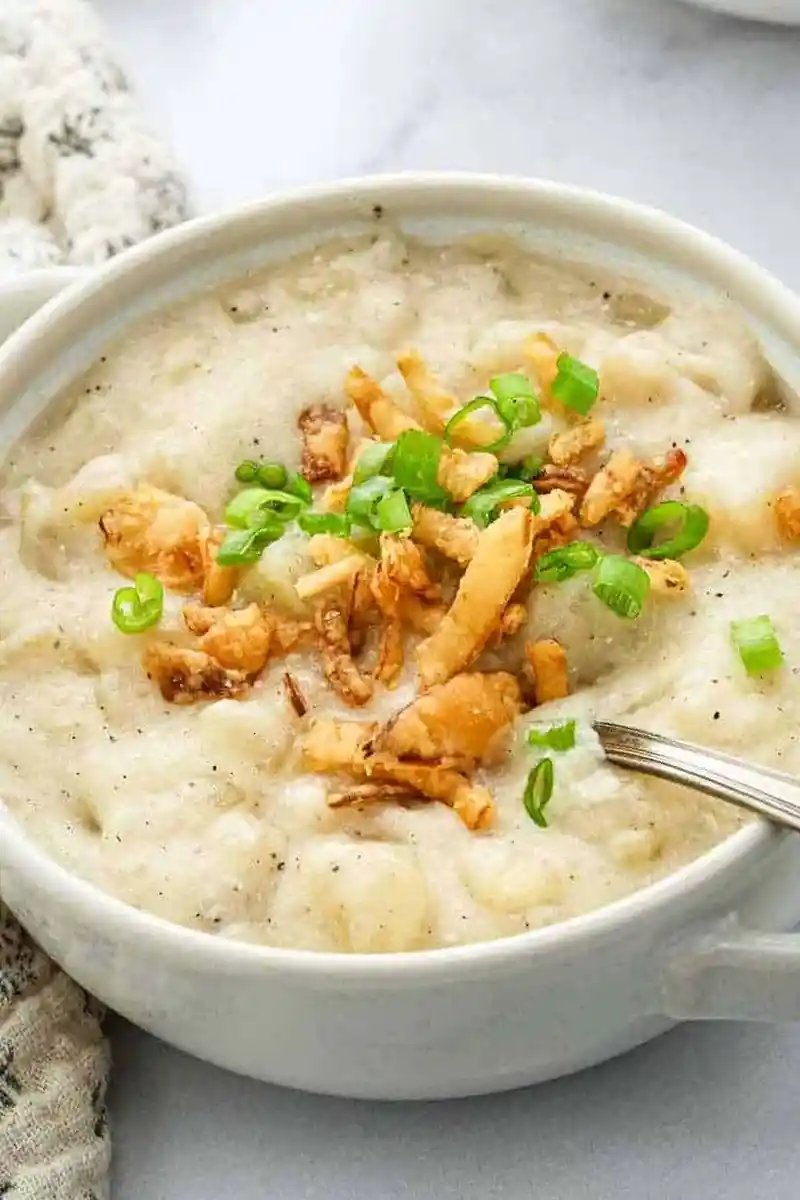
List of ingredients
- 5 large russet potatoes (peeled and diced) – provides the hearty, starchy body.
- 1 small onion (diced) – adds a layer of savory aromatic flavor.
- 4 cups chicken broth – creates a rich, salty liquid base.
- 4 tablespoons butter – enhances the creaminess and adds depth.
- 1 teaspoon minced garlic – gives the soup a pungent, savory kick.
- 1 teaspoon salt – balances and heightens all other flavors.
- 1 teaspoon pepper – adds a mild, warming spice.
- 1 cup heavy cream – ensures a thick and luxurious consistency.
- 1/3 cup sour cream – provides a necessary tangy contrast.
- 1 tablespoon Xanthan Gum – acts as the primary thickening agent.
step-by-step instructions
- Combine Base Ingredients: Place 6 cups of diced russet potatoes, one diced medium onion, 3 cloves of minced garlic, 1 teaspoon salt, ½ teaspoon black pepper, ½ teaspoon paprika, and 4 cups of chicken broth into the crockpot. (Tip: Cut potatoes into uniform sizes for even cooking).
- Slow Cook: Set the crockpot to cook on low for 4 to 6 hours, or on high for 3 to 4 hours, until the potatoes are completely soft. (Tip: Use a fork to check for tenderness).
- Prepare Thickening Mixture: In a small separate bowl, whisk together ½ cup of heavy whipping cream and 2 tablespoons of cornstarch (or the xanthan gum) until the mixture is entirely smooth. (Tip: Whisk thoroughly to avoid lumps).
- Incorporate Dairy: Stir the cream mixture, 1 cup of shredded cheddar cheese, and ½ cup of sour cream into the crockpot. (Tip: Stir gently until the cheese is fully melted).
- Final Thickening: Cook the soup on high for an additional 20 to 30 minutes until the soup thickens slightly to your preference. (Tip: Stir occasionally to prevent scorching).
Expert Cooking Tips
Maintain Uniform Potato Size
When dicing your russet potatoes, aim for cubes of approximately half an inch. This ensures that every piece cooks through at the same rate. Uneven pieces can lead to some potatoes turning to mush while others remain undercooked.
Grate Your Own Cheese
Avoid using pre-shredded cheese from a bag whenever possible. Pre-shredded varieties are coated in potato starch or cellulose to prevent clumping in the bag. Freshly grated cheese melts more smoothly and prevents the soup from becoming grainy.
Adjusting the Heat Setting
Cooking on the low setting for a longer period generally allows for a more integrated flavor profile. However, the high setting is a reliable option for tighter schedules. Both methods result in tender potatoes as long as the time is adjusted correctly.
Testing for Perfect Doneness
Do not rely solely on the clock to determine when the soup is ready. Use a fork to press against a few different potato chunks. The potato should offer zero resistance and slide off the fork easily.
Ingredient Substitutions
Using Yukon Gold Potatoes
You can easily replace russet potatoes with Yukon Gold varieties for a different texture. Yukon Golds are naturally creamier and have a buttery flavor. They also hold their shape slightly better during the long cooking process.
Vegetable Broth Alternatives
For those avoiding chicken products, low-sodium vegetable broth is an excellent substitute. It maintains the savory depth of the soup without changing the core flavor profile. This makes the recipe more versatile for different dietary needs.
Dairy-Free Cream Options
To create a dairy-free version, use full-fat coconut cream or cashew cream. These alternatives provide the same rich mouthfeel as heavy cream. You may need to add a pinch more salt to balance the sweetness of coconut.
Cornstarch as a Thickener
If you do not have xanthan gum on hand, 2 tablespoons of cornstarch work effectively. Be sure to mix the cornstarch with a small amount of cold liquid first to create a slurry. This prevents the starch from clumping when it hits the hot soup.
Greek Yogurt for Sour Cream
Plain Greek yogurt is a great alternative to sour cream for a slightly higher protein count. It provides the same acidic tang that cuts through the richness of the potatoes. Use full-fat Greek yogurt for the smoothest consistency.
Flavor Variations
Adding Hearty Vegetables
Enhance the nutritional value by adding diced carrots or celery at the start of the cooking process. For a bit of color, stir in chopped broccoli florets during the final 30 minutes of cooking. This keeps the vegetables from becoming overcooked.
Using Smoked Paprika for Depth
To achieve a smoky, savory flavor similar to cured meats, increase the amount of smoked paprika. This adds a woody aroma and a deep red tint to the broth. It is an excellent way to add complexity without adding meat.
Incorporating Plant-Based Proteins
For a more filling meal, stir in cooked ground turkey or plant-based sausage crumbles. Brown the protein in a skillet first to ensure a caramelized flavor. Add the meat during the final heating stage to keep the texture firm.
Experimenting with Cheese Blends
While sharp cheddar is traditional, you can blend it with Monterey Jack or Pepper Jack cheese. Pepper Jack adds a subtle spicy kick that complements the creaminess of the potatoes. Try a 50/50 split for a balanced flavor.
Adding Fresh Finishing Herbs
Stir in fresh chopped chives, parsley, or scallions just before serving. These herbs provide a bright, fresh contrast to the heavy dairy components. Avoid cooking the herbs for too long to preserve their vibrant green color.
Creative Serving Ideas
Building a Custom Topping Bar
Set out small bowls containing shredded cheese, sour cream, chives, and crispy plant-based bacon bits. This allows every family member to customize their bowl to their liking. It turns a simple dinner into an interactive experience.
Pairing with Crisp Garden Salads
A fresh salad with a sharp vinaigrette is the perfect accompaniment to this rich soup. The acidity of the vinegar helps cleanse the palate between bites of creamy potato. Use mixed greens, cucumbers, and cherry tomatoes for the best result.
Serving in Sourdough Bread Bowls
Hollow out a round sourdough loaf to create an edible bowl for the soup. The bread absorbs the creamy broth, making the meal even more satisfying. This presentation is especially impressive for dinner parties or gatherings.
Accompanying with Garlic Bread
Serve the soup alongside toasted garlic baguette slices or cheesy breadsticks. The crunch of the toasted bread provides a necessary textural contrast to the soft potatoes. This is a classic pairing that satisfies most appetites.
Using Saltine Crackers
For a simple and traditional touch, serve the soup with a side of saltine crackers. The salty, crisp nature of the crackers pairs perfectly with the velvety soup base. They are an affordable and quick way to add texture.
Storage and Reheating
Refrigeration Guidelines
Store leftover soup in an airtight glass or plastic container in the refrigerator. It will remain fresh and safe to eat for up to five days. Ensure the soup is cooled slightly before sealing to prevent excessive condensation.
Freezing Methods
This soup can be frozen for up to three months in freezer-safe containers. Leave about an inch of space at the top of the container to allow for expansion during freezing. Thaw the soup in the refrigerator overnight before reheating.
Stovetop Reheating Process
Reheating on the stovetop over medium-low heat is the best way to maintain the texture. Stir frequently to prevent the bottom from burning. Add a splash of milk or broth if the soup has thickened too much during storage.
Microwave Reheating Tips
Heat the soup in a microwave-safe bowl in 30-second intervals. Stir the soup thoroughly between each interval to ensure the heat is distributed evenly. Use a lid to prevent the cream from splattering inside the microwave.
Make-Ahead Advice
Prepping Ingredients in Advance
You can peel and dice your potatoes and onions a day before you plan to cook. Store them in separate airtight containers in the fridge. This significantly reduces the active preparation time on the day of the meal.
Advance Cooking and Chilling
The soup can be fully prepared up to two days before serving and kept in the fridge. Many find that the flavors marinate and improve overnight. Simply reheat the soup in the slow cooker on low for two hours before serving.
Troubleshooting Common Issues
Solving a Thin Consistency
If your soup is too thin after the final cook time, stir in a small amount of additional xanthan gum or a cornstarch slurry. Let it simmer on high for another 20 minutes to allow the thickener to activate. Avoid adding too much at once.
Fixing Overly Thick Soup
It is common for potato soup to thicken significantly after it cools. To fix this, stir in warm chicken or vegetable broth one tablespoon at a time. Continue stirring until the soup reaches your desired pourable consistency.
Dealing with Mushy Potatoes
If the potatoes have overcooked and become too soft, you can lean into the texture. Use an immersion blender to puree a portion of the soup. This creates a smooth, thick base while leaving some small chunks for variety.
Preventing Cheese Clumps
Cheese can clump if added to a boiling liquid or if pre-shredded cheese is used. Add the cheese when the soup is hot but not boiling, and stir constantly. Hand-grated cheese will always melt more uniformly.
Frequently Asked Questions
Can I use frozen hash browns?
Yes, you can replace the fresh diced potatoes with a bag of frozen shredded hash browns. This eliminates the peeling and dicing process entirely. The resulting soup will be more uniform and naturally creamier.
How do I make the soup smoother?
To achieve a smoother consistency, use a potato masher directly in the slow cooker. Mash about half of the potato chunks into the broth. Alternatively, an immersion blender can be used to puree the soup to your preference.
Can I make this on a stove?
Yes, this recipe can be adapted for the stovetop. Simmer the potatoes and aromatics in a Dutch oven over medium heat until tender. Follow the remaining steps for adding the cream and cheese as listed.
What is the best potato for this recipe?
Russet potatoes are ideal for those who prefer a classic, chunky potato soup. Yukon Golds are the best choice for those who want a naturally buttery, silkier texture. Both work well depending on your taste.
Print
Creamy Slow Cooker Potato Soup
- Total Time: 6 hours 50 minutes
- Yield: 6 servings
- Diet: General
Description
Learn how to make this Easy Crock Pot Potato Soup for the absolute best comfort food. The slow cooker does all the work to make the creamiest potato soup that will impress the entire family.
Ingredients
- 5 large russet potatoes (peeled and diced)
- 1 small onion (diced)
- 4 cups chicken broth
- 4 tablespoons butter
- 1 teaspoon minced garlic
- 1 teaspoon salt
- 1 teaspoon pepper
- 1 cup heavy cream
- 1/3 cup sour cream
- 1 tablespoon Xanthan Gum
Instructions
- Step 1: Place 6 cups diced russet potatoes (about 2 pounds), 1 medium onion diced, 3 cloves minced garlic, 1 teaspoon salt, ½ teaspoon black pepper, ½ teaspoon paprika, and 4 cups chicken broth in the crockpot.
- Step 2: Cook on low 4 to 6 hours, or on high 3-4 hours – until potatoes are soft.
- Step 3: In a small bowl, whisk together ½ cup heavy whipping cream and 2 tablespoons cornstarch until the mixture is smooth. Stir the cream mixture into the crockpot.
- Step 4: Add 1 cup shredded cheddar cheese and ½ cup sour cream to the crockpot and stir until the cheese is melted and well combined.
- Step 5: Cook the soup on high for 20 to 30 minutes until the soup thickens slightly.
Notes
Serve with your favorite toppings such as cheddar cheese, sour cream, chives, and plant-based bacon bits. You can substitute 2 tablespoons of corn starch instead of the Xanthan gum to help thicken the soup.
- Prep Time: 20 minutes
- Cook Time: 6 hours 30 minutes
- Category: Main
- Method: Slow Cooker
- Cuisine: American
Nutrition
- Serving Size: 1 serving
- Calories: 408 kcal
- Sugar: 2 g
- Sodium: 584 mg
- Fat: 25 g
- Saturated Fat: 15 g
- Unsaturated Fat: 10 g
- Trans Fat: 0 g
- Carbohydrates: 38 g
- Fiber: 3 g
- Protein: 8 g
- Cholesterol: 81 mg