
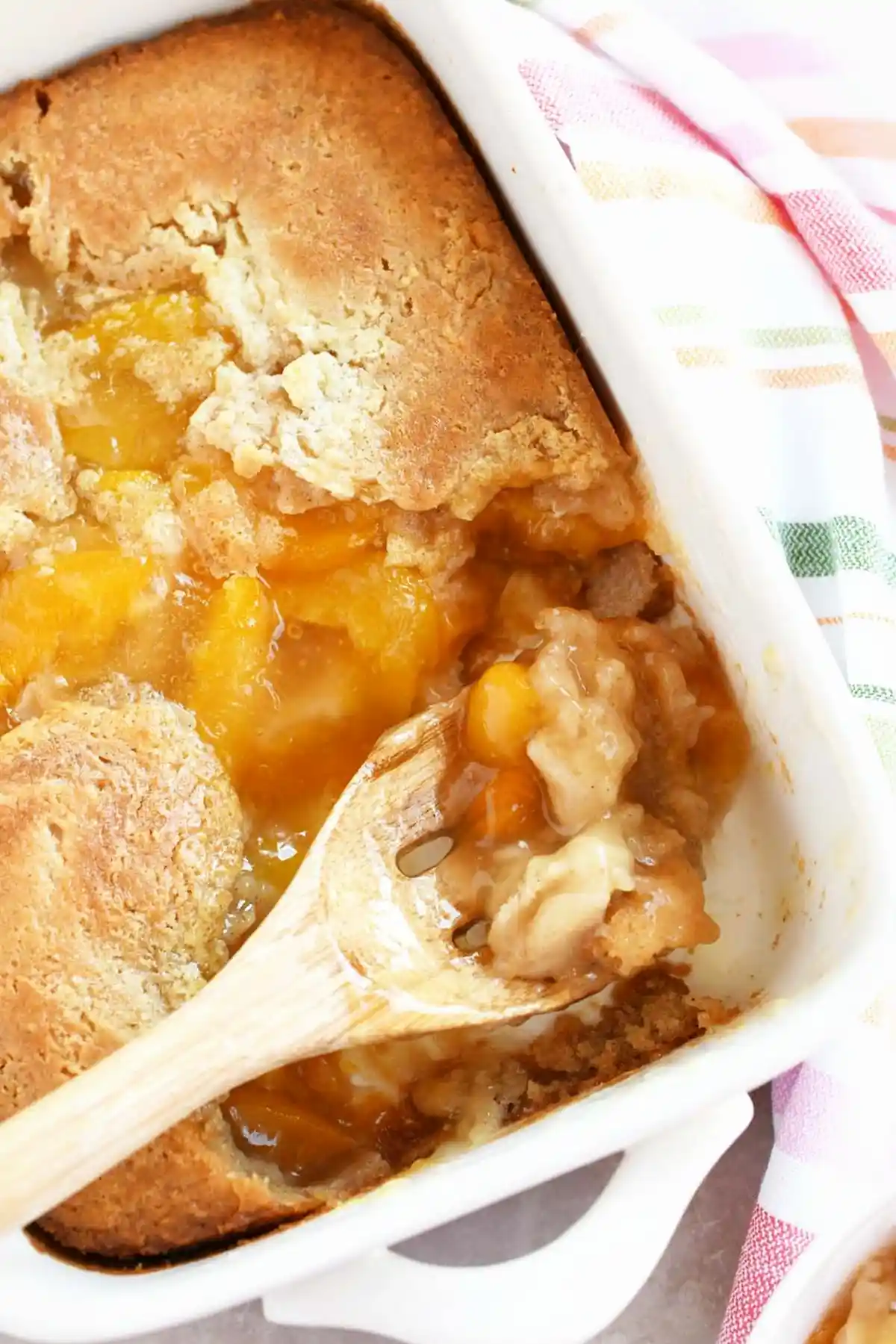
This quick dessert combines syrupy peaches with a buttery, golden crust for a comforting treat. It is a beginner-friendly recipe that uses common pantry staples to achieve a professional result.
List of ingredients
- 1/2 cup unsalted butter – used to create a rich, buttery base in the pan.
- 1 cup all-purpose flour – provides the necessary structure for the fluffy topping.
- 1 cup whole milk – adds moisture and richness to the batter.
- 2 teaspoons baking powder – ensures the crust rises and remains light.
- 1/2 cup light brown sugar – adds a deep, molasses-like sweetness.
- 1/2 cup granulated sugar – provides a clean sweetness and helps with browning.
- 1 teaspoon vanilla extract – enhances the overall flavor profile of the crust.
- 1/2 teaspoon cinnamon – adds a warm, aromatic spice that complements the peaches.
- 21 ounces peach pie filling – the primary fruit base for a syrupy consistency.
step-by-step instructions
- Prepare the Oven: Preheat your oven to 350°F to ensure an even heat distribution.
- Melt the Butter: Place the unsalted butter in the bottom of a baking dish and put it in the oven for about 5 minutes until fully melted.
- Combine Batter Ingredients: In a large mixing bowl, stir together the flour, light brown sugar, granulated sugar, cinnamon, baking powder, vanilla extract, and whole milk until smooth.
- Layer the Batter: Carefully remove the pan with melted butter from the oven using mitts. Pour the batter directly on top of the butter, but do not stir the two layers together.
- Add the Fruit: Use a rubber spatula to spread the peach pie filling evenly across the top of the batter.
- Bake the Cobbler: Return the dish to the oven and bake for 50 to 60 minutes. The crust should be deep golden brown and firm, while the peaches are bubbling.
- Serve: Remove from the oven and serve while warm for the best texture.
Maximizing Ingredient Quality
Choosing the Best Butter
Using unsalted butter allows you to control the salt levels in the dessert. The butter serves as a frying agent for the bottom of the batter, creating a caramelized crust. Ensure the butter is completely melted before adding the batter to prevent clumps.
Measuring Flour Accurately
To avoid a dense or dry crust, measure your flour by spooning it into the measuring cup rather than packing it. Packing the flour can lead to using too much, which makes the topping heavy. Sifting the flour beforehand can also help incorporate more air.
Whole Milk for Texture
Whole milk is preferred over skim or low-fat versions because the fat content contributes to a tender crumb. The lipids in the milk interfere with gluten development, resulting in a softer topping. If you need a substitute, heavy cream can be used for an even richer result.
Baking Powder Freshness
Since this recipe relies on baking powder for lift, ensure your leavening agent is fresh. Expired baking powder can result in a flat, gummy crust that doesn’t rise properly. You can test it by adding a pinch to hot water; it should bubble immediately.
Fruit Base Variations
Utilizing Fresh Peaches
If you prefer fresh fruit over canned filling, use approximately 5 large, peeled peaches sliced into 1/4-inch pieces. Toss the slices with 3/4 cup granulated sugar, 1 teaspoon lemon juice, 1/8 teaspoon salt, and 1/4 teaspoon cinnamon. This creates a fresh syrup that mimics the canned version.
Working with Canned Sliced Peaches
If you only have canned peaches in syrup, you will need to thicken the liquid to prevent the crust from becoming soggy. Mix the drained peaches with a small amount of cornstarch slurry or a homemade peach glaze. This ensures the fruit stays in place and doesn’t soak into the batter.
Incorporating Frozen Peaches
Frozen peaches can be used by thawing them slightly and draining excess water. It is helpful to toss them with a bit of extra cornstarch to absorb the moisture released during baking. Ensure the peaches are not ice-cold when adding them to the batter to avoid dropping the oven temperature.
Equipment and Pan Selection
Using Ceramic Baking Dishes
A 9×11 inch ceramic dish is ideal because it distributes heat evenly and retains warmth. Ceramic prevents the edges from burning before the center is fully cooked. It also provides a professional presentation for serving directly from the oven.
Metal Pan Considerations
If using a metal baking pan, be aware that metal conducts heat faster than ceramic. You may need to reduce the baking time by 5-10 minutes to prevent the bottom from scorching. Greasing the sides of a metal pan is highly recommended.
The Importance of Oven Rack Position
Place the oven rack in the center position to ensure the top and bottom receive equal heat. Placing the dish too high can burn the crust, while placing it too low can leave the topping undercooked. This balance is key to the ‘deep golden brown’ finish.
Serving and Presentation
Pairing with Vanilla Ice Cream
The contrast between the hot cobbler and cold vanilla ice cream is a classic combination. The creaminess of the ice cream cuts through the sweetness of the peach syrup. Place a large scoop directly on top of a warm slice.
Adding Freshly Whipped Cream
For a lighter alternative to ice cream, use homemade whipped cream with a touch of vanilla. The airy texture complements the fluffy biscuit-style topping. A dollop of cream adds a professional touch to each serving.
Using Powdered Sugar for Garnish
A light dusting of powdered sugar through a fine-mesh sieve adds visual appeal. This is especially effective if the crust is a very deep brown. It provides a hint of extra sweetness without overwhelming the peaches.
Storage and Preservation
Refrigerating Leftovers
Once the cobbler has cooled completely, store it in an airtight container in the refrigerator. This prevents the topping from absorbing too much moisture from the fruit. It will remain fresh and tasty for up to 3 days.
Freezing for Later
You can freeze slices of the cobbler by wrapping them individually in plastic wrap and placing them in a freezer bag. This preserves the flavor for several weeks. Be sure to thaw them slowly in the fridge before reheating.
Optimal Reheating Methods
To maintain the crispness of the crust, reheat portions in the oven at 300°F for 10-15 minutes. Avoid using a microwave if possible, as it can make the topping rubbery. If using a microwave, heat in short 30-second bursts.
Troubleshooting Common Issues
Fixing a Soggy Bottom
A soggy bottom usually occurs if the butter wasn’t fully melted or if too much liquid was in the fruit filling. Ensure the butter is shimmering before adding the batter. If using fresh fruit, ensure you cook down the juices slightly before layering.
Preventing Over-Browning
If the top of the cobbler is browning too quickly but the center is still raw, cover it loosely with aluminum foil. This reflects some of the heat and allows the inside to finish cooking. Check the crust every 10 minutes once it reaches a golden hue.
Addressing a Flat Crust
If the batter does not rise, it is often due to over-mixing the flour, which develops too much gluten. Mix the batter only until the ingredients are combined. Avoid whisking vigorously for long periods of time.
Frequently Asked Questions
Can I use margarine instead of butter?
Yes, you can substitute margarine in a 1:1 ratio. However, the flavor will be less rich, and the crust may have a slightly different texture. Stick to unsalted margarine for the best taste results.
Is there a gluten-free alternative for the flour?
You can use a 1:1 gluten-free all-purpose flour blend that contains xanthan gum. The texture may be slightly more crumbly than the original version. Be sure the blend is specifically designed for baking.
Why shouldn’t I stir the batter into the butter?
Leaving the batter on top of the melted butter allows the topping to rise through the fat. This process creates a fried, golden underside on the crust. Stirring them would result in a more cake-like consistency rather than a cobbler texture.
Can I add other fruits to this recipe?
This method works well with apple pie filling or a mix of peaches and blueberries. Keep the quantities the same as the peach filling for consistent baking times. Adjust the cinnamon amount based on the fruit used.
Print
Simple Peach Cobbler with Canned Filling
- Total Time: 60 minutes
- Yield: 6 servings
- Diet: General
Description
Sweet, syrupy peaches are paired with a buttery, crispy, fluffy topping that just gets our taste buds tingling.
Ingredients
- ½ cup unsalted butter
- 1 cup all-purpose flour
- 1 cup whole milk
- 2 teaspoons baking powder
- ½ cup light brown sugar
- ½ cup granulated sugar
- 1 teaspoon vanilla extract
- ½ teaspoon cinnamon
- 21 ounces peach pie filling
Instructions
- Preheat: Preheat the oven to 350°F.
- Melt Butter: Add the butter to the bottom of the baking dish and place it in the oven until melted.
- Mix Batter: In a large bowl, mix the flour, sugars, cinnamon, baking powder, extract, and milk.
- Combine: With oven mitts, remove the pan from the oven with the melted butter. Add the batter mixture into the pan; do not mix.
- Top with Fruit: Using a rubber spatula, spread the pie filling evenly over the batter and butter mixture.
- Bake: Return pan to the oven and bake for 50-60 minutes.
- Serve: Serve warm and enjoy!
Notes
You can substitute the pie filling with 5 fresh, peeled and sliced peaches tossed with 3/4 cup granulated sugar, 1 teaspoon lemon juice, 1/8 teaspoon salt, and 1/4 teaspoon cinnamon.
- Prep Time: 10 minutes
- Cook Time: 50 minutes
- Category: Dessert
- Method: Baking
- Cuisine: American
Nutrition
- Serving Size: 1 serving
- Calories: 447 kcal
- Sugar: 48 g
- Sodium: 187 mg
- Fat: 16 g
- Saturated Fat: 10 g
- Unsaturated Fat: 5 g
- Trans Fat: 1 g
- Carbohydrates: 77 g
- Fiber: 2 g
- Protein: 2 g
- Cholesterol: 41 mg