
I have been looking for ways to elevate simple vegetables into something truly special for weeknight meals.
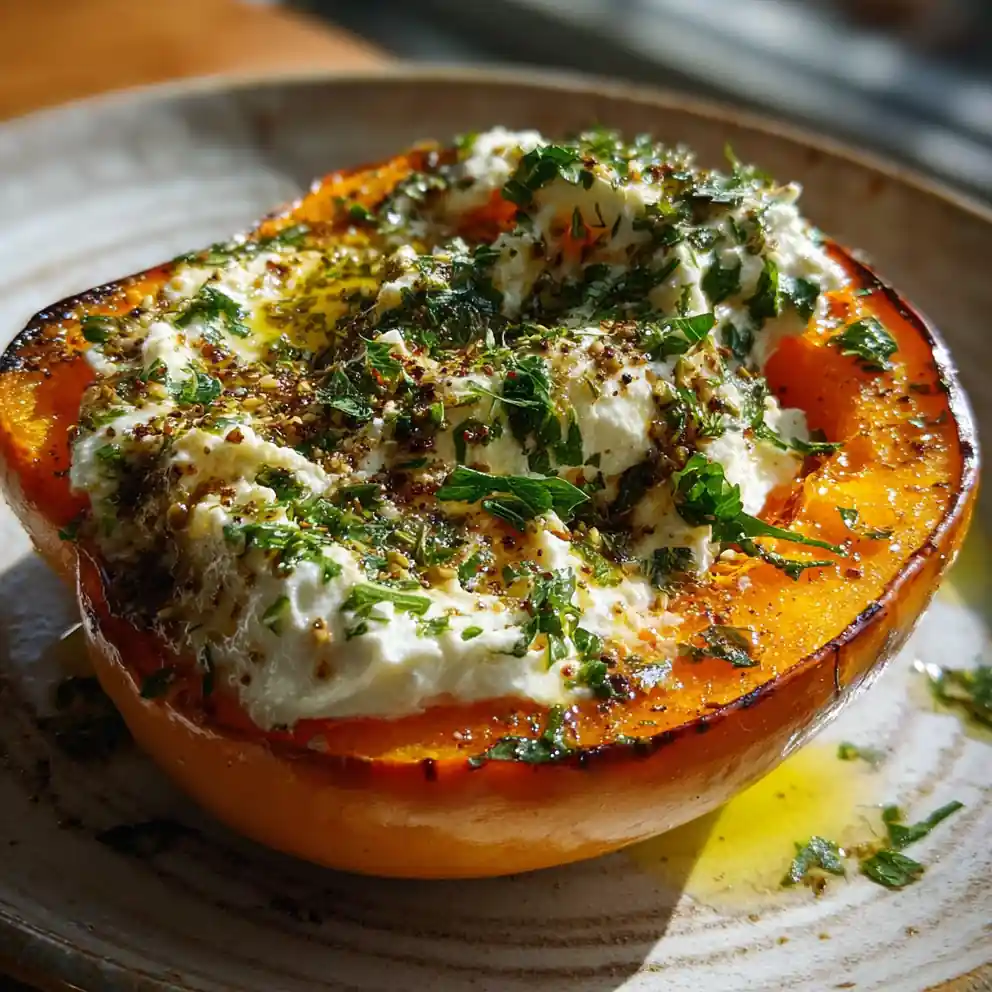
This butternut squash baked recipe combines the sweet, tender flavor of roasted butternut squash with a tangy, herbaceous filling of creamy labneh and aromatic za’atar spice, creating a dish with crispy edges and a creamy center. This recipe offers big flavor with minimal fuss, transforming a simple ingredient into an impressive dish that everyone loves. It’s designed for real-life home cooks, focusing on simple techniques and high-impact flavors. I’ll guide you through perfectly roasting the squash, preparing the filling, and finishing with an elegant presentation.
Ingredients
- 1 medium butternut squash (approximately 1.2 kg / 2.6 lbs): Choose a squash that feels firm and heavy for its size, without any soft spots or blemishes. The size specified ensures easy handling and proper roasting time for two large halves.
- 2 tablespoons olive oil, divided (1 tbsp for roasting, 1 tbsp for garnishing): Use a quality extra virgin olive oil for both roasting and finishing to enhance flavor. The first tablespoon helps caramelize the cut side of the squash during initial roasting.
- 1/2 teaspoon fine sea salt, plus more to taste: Use fine sea salt for seasoning the squash evenly and adjusting the final flavor of the filling. This amount ensures the squash flesh is properly seasoned and balances the sweetness.
- 1/4 teaspoon freshly ground black pepper, plus more to taste: Freshly ground pepper offers a sharper, more aromatic flavor than pre-ground pepper. A small amount is used on the squash before roasting, with additional added to the filling for a subtle kick.
- 200 g (7 oz) labneh (strained yogurt): Select full-fat labneh for the creamiest texture and richest flavor in the filling. If unavailable, use full-fat Greek yogurt that has been strained overnight to remove excess whey.
- 2 tablespoons za’atar, plus 1 teaspoon for garnish: Za’atar is a key ingredient here; choose a high-quality blend of oregano, thyme, sesame seeds, and sumac. This blend provides a complex, savory, and slightly tangy flavor that complements the sweet squash.
- 1 clove garlic, minced: Finely mince or press one fresh garlic clove to infuse the filling with aromatic depth. Fresh garlic is essential; avoid pre-minced jarred garlic for the best flavor.
- 1 teaspoon lemon zest: Use a fine grater or microplane to zest one fresh lemon, ensuring you only get the yellow part. The bright citrus notes cut through the richness of the labneh and sweet squash.
- 2 tablespoons fresh parsley, finely chopped, plus extra leaves for garnish: Fresh parsley provides a vibrant green color and clean, herbaceous note to the filling. Reserve additional leaves to garnish for a professional finish.
- 1/4 teaspoon red pepper flakes (optional): Add a pinch of red pepper flakes to introduce a subtle heat that enhances the overall flavor profile. Omit if serving to those sensitive to spice, or add a pinch to individual portions at the end.
- 1 tablespoon extra virgin olive oil, for drizzling garnish: A final drizzle of high-quality finishing oil adds shine and richness just before serving. This step enhances the visual appeal and rounds out the flavors.
Instructions
Step 1: Preheat and prepare the butternut squash for roasting.
Preheat your oven to 200°C (400°F). Line a large baking sheet with parchment paper for easy cleanup.
Carefully cut the butternut squash in half lengthwise using a sharp, sturdy knife; scoop out the seeds and stringy bits. Place the halves cut-side up on the prepared baking sheet. Brush the cut surfaces with 1 tablespoon of olive oil and season generously with 1/4 teaspoon of salt and 1/8 teaspoon of black pepper.
Step 2: Roast the butternut squash until tender.
Flip the squash halves cut-side down on the baking sheet. Roasting this way helps trap moisture and create a soft, tender interior.
Roast for 30-35 minutes, or until the squash is tender when pierced with a fork but still holds its shape. Remove from the oven and let cool slightly while you prepare the filling.
Step 3: Prepare the creamy za’atar labneh filling.
In a medium bowl, combine the labneh, 2 tablespoons of za’atar, minced garlic, lemon zest, finely chopped parsley, remaining 1/4 teaspoon of salt, remaining 1/8 teaspoon of black pepper, and red pepper flakes (if using). Mix well until thoroughly combined and the mixture is smooth and evenly colored. I keep a small tub of labneh in the fridge for quick high-protein snacks; it’s perfect here.
Step 4: Create a cavity and fill the squash halves.
Once the roasted butternut squash is cool enough to handle, flip the halves cut-side up on the baking sheet.
Using a spoon, carefully scoop out a small amount of the cooked squash flesh from the center of each half, creating a slight cavity, leaving a 1.5-2 cm (about 0.6-0.8 inch) border around the edges. You can save the scooped-out squash flesh for another use (like soup or puree) or discard it. Spoon the creamy za’atar labneh filling generously into the cavities of the butternut squash halves, spreading it evenly across the cavity.
Step 5: Bake a second time to heat the filling.
Return the filled squash halves to the oven and bake for another 15-20 minutes, or until the filling is heated through, slightly bubbly, and the edges are lightly golden. The filling should appear warm and gently set. If the edges look like they might burn during the second bake, shield them loosely with aluminum foil.
Step 6: Garnish and serve immediately.
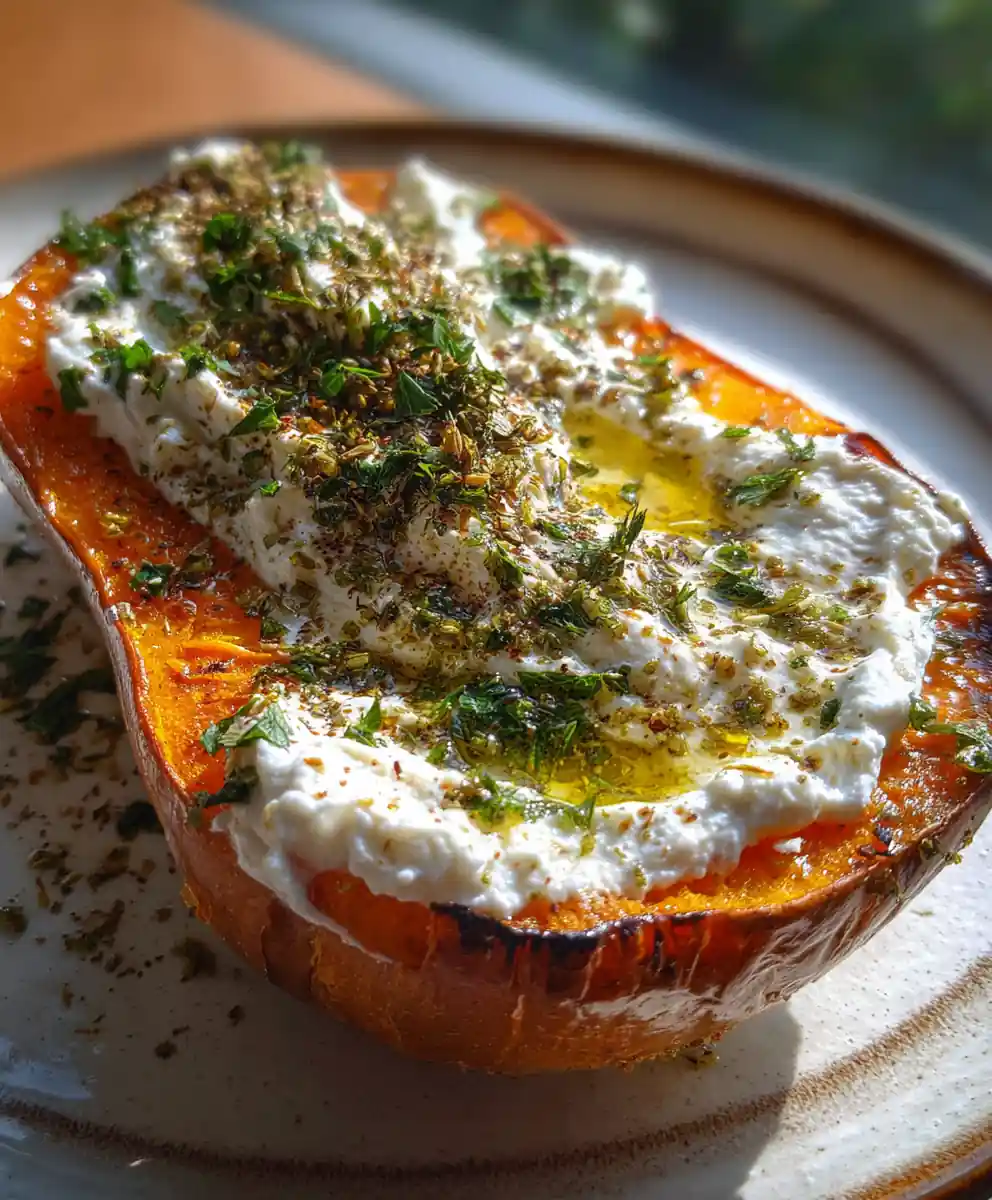
Carefully remove the baked butternut squash from the oven and transfer to individual serving plates or a large platter. Drizzle generously with extra virgin olive oil over the warm, creamy filling. Sprinkle the reserved 1 teaspoon of za’atar directly over the filling for added aroma and texture. Finish with a scatter of fresh parsley leaves for a final burst of color and freshness against the bright orange squash.
Easy Substitutions and Recipe Variations
Make it Dairy-Free
For a dairy-free alternative to labneh, use a thick plant-based yogurt (such as coconut or almond-based) that has been strained overnight to remove excess water. This versatile butternut squash baked recipe holds up well to these simple swaps for healthy eating.
Add Different Toppings
Enhance the texture and visual appeal by adding toppings like toasted pine nuts, chopped pistachios, or pomegranate seeds before serving. A sprinkle of crumbled feta cheese also adds a nice salty bite to this delicious butternut squash baked recipe.
Use Different Squash Varieties
This technique works well with other winter squash types. Acorn squash or delicata squash can be substituted, though cooking times may vary slightly based on size.
Change the Filling Profile
If you don’t have za’atar, try substituting a different spice blend like herbes de Provence, or use a combination of dried oregano and toasted sesame seeds for a similar effect.
Make-Ahead Tips and Serving Suggestions
Meal Prep
Roast the butternut squash halves completely and prepare the labneh filling up to two days in advance. Store separately in airtight containers in the refrigerator.
Reheating
When ready to serve, fill the squash halves as directed in Step 4, then bake for 15-20 minutes until hot. The dish is best served warm from the oven for optimal flavor and texture.
Serving Ideas
This recipe is hearty enough to serve as a vegetarian main course alongside a crisp green salad or a grain like quinoa. It also makes an excellent side dish for roasted chicken, or a holiday feast.
Leftovers
Store leftover squash halves in an airtight container in the refrigerator for up to 3 days. Reheat gently in the oven at a lower temperature (180°C / 350°F) or in the microwave for a few minutes.
FAQs
What is za’atar and where can I buy it?
Za’atar is a popular Middle Eastern spice blend typically containing thyme, oregano, marjoram, toasted sesame seeds, and sumac. It’s available in many large grocery stores in the spice aisle or online, often in specialty food sections.
Can I use Greek yogurt instead of labneh?
Yes, you can use full-fat Greek yogurt, but it should be strained first. Spoon the Greek yogurt into a cheesecloth-lined sieve over a bowl and let it drain in the refrigerator for at least 4 hours (preferably overnight) to thicken significantly for this specific butternut squash baked recipe.
Can I peel the squash before roasting?
It is much easier and safer to roast the squash halves with the skin on. The skin protects the flesh from overcooking and helps the squash hold its shape, making it perfect for this butternut squash baked recipe. The skin will peel away easily once the squash is cooked and soft.
How do I store leftovers?
Leftovers should be stored in an airtight container in the refrigerator for up to 3 days. For this specific butternut squash baked recipe, I prefer reheating in the oven at a lower temperature (180°C / 350°F) to keep the filling creamy and prevent the squash from drying out.
Why roast the squash cut-side down first?
Roasting cut-side down creates a steaming effect, ensuring the squash flesh becomes very soft and tender. This prevents the cut edges from burning during the initial roasting period, guaranteeing the perfect texture for the final dish.
Can I make this ahead of time?
Yes, you can roast the squash fully and make the filling separately up to two days in advance. This butternut squash baked recipe is highly adaptable for quick meals; simply assemble and heat when you are ready to serve.
Conclusion
This butternut squash baked recipe proves that simple ingredients can create truly impressive results. Pin this recipe now and give it a try for your next meal—you won’t be disappointed by this simple take on baked butternut squash.
Print
butternut squash baked recipe
- Total Time: 65 minutes
- Yield: 4 servings
- Diet: Vegetarian
Description
Roasted butternut squash halves are filled with a creamy, tangy labneh and za’atar mixture, creating a dish with a tender interior and crisp edges. This recipe transforms a simple vegetable into an impressive vegetarian main course or side dish with minimal fuss.
Ingredients
- 1 medium butternut squash (approx. 1.2 kg)
- 2 tbsp olive oil (divided)
- 1/2 tsp fine sea salt, plus more to taste
- 1/4 tsp fresh ground black pepper, plus more to taste
- 200 g labneh (full-fat Greek yogurt, strained)
- 2 tbsp za’atar, plus 1 tsp for garnish
- 1 clove garlic, minced
- 1 tsp lemon zest
- 2 tbsp fresh parsley, finely chopped, plus extra for garnish
- 1/4 tsp red pepper flakes (optional)
- 1 tbsp extra virgin olive oil (for drizzling garnish)
Instructions
- Preheat Oven and Prepare Squash: Preheat oven to 400°F (200°C) and line a baking sheet with parchment paper. Cut the butternut squash lengthwise and scoop out the seeds. Brush the cut surfaces with 1 tablespoon of olive oil and season with salt and pepper.
- Roast Squash: Flip the squash halves cut-side down on the baking sheet. Roast for 30-35 minutes, or until the squash is tender when pierced with a fork. Remove from oven and let cool slightly.
- Prepare Labneh Filling: In a medium bowl, combine the labneh, 2 tablespoons of za’atar, minced garlic, lemon zest, finely chopped parsley, remaining salt and pepper, and red pepper flakes (if using). Mix well until smooth and thoroughly combined.
- Create Cavity and Fill Squash: Once the roasted squash is cool enough to handle, flip the halves cut-side up. Using a spoon, create a slight cavity by carefully scooping out a small amount of the cooked flesh from the center of each half, leaving a border around the edges. Generously spoon the prepared labneh filling into the cavities.
- Bake Filled Squash: Return the filled squash halves to the oven and bake for another 15-20 minutes, or until the filling is heated through, slightly bubbly, and the edges are lightly golden.
- Garnish and Serve: Carefully remove the baked squash from the oven and transfer to serving plates. Drizzle generously with extra virgin olive oil, sprinkle with the reserved 1 teaspoon of za’atar, and garnish with fresh parsley leaves before serving immediately.
Notes
To achieve the best texture for the filling, use full-fat labneh or strain full-fat Greek yogurt overnight to thicken it. Roasting the squash cut-side down initially helps lock in moisture and ensures a tender interior.
- Prep Time: 15 minutes
- Cook Time: 50 minutes
- Category: Main Dish
- Method: Roasting, Baking
- Cuisine: Middle Eastern
Nutrition
- Serving Size: 1 serving (half squash)
- Calories: 310 kcal
- Sugar: 15 g
- Sodium: 350 mg
- Fat: 20 g
- Saturated Fat: 7 g
- Unsaturated Fat: 13 g
- Trans Fat: 0 g
- Carbohydrates: 25 g
- Fiber: 5 g
- Protein: 5 g
- Cholesterol: 20 mg
FREE PRINTABLE RECIPE
Get the Printable Recipe PDF (Free)
Enter your email and we’ll send you the ingredients + step-by-step instructions as a clean PDF you can save to your phone.
- ✅ Printable PDF (ingredients + steps)
- ✅ Save it to your phone (no long scrolling)
- ✅ Includes cook time + servings
- ✅ Easy to follow
FAQ
Where’s the full recipe?
It’s delivered as a printable PDF so you can save it and cook without scrolling.
I didn’t get the email.
Check Spam/Promotions and search your inbox for your site name. Then click Confirm to receive the PDF.