
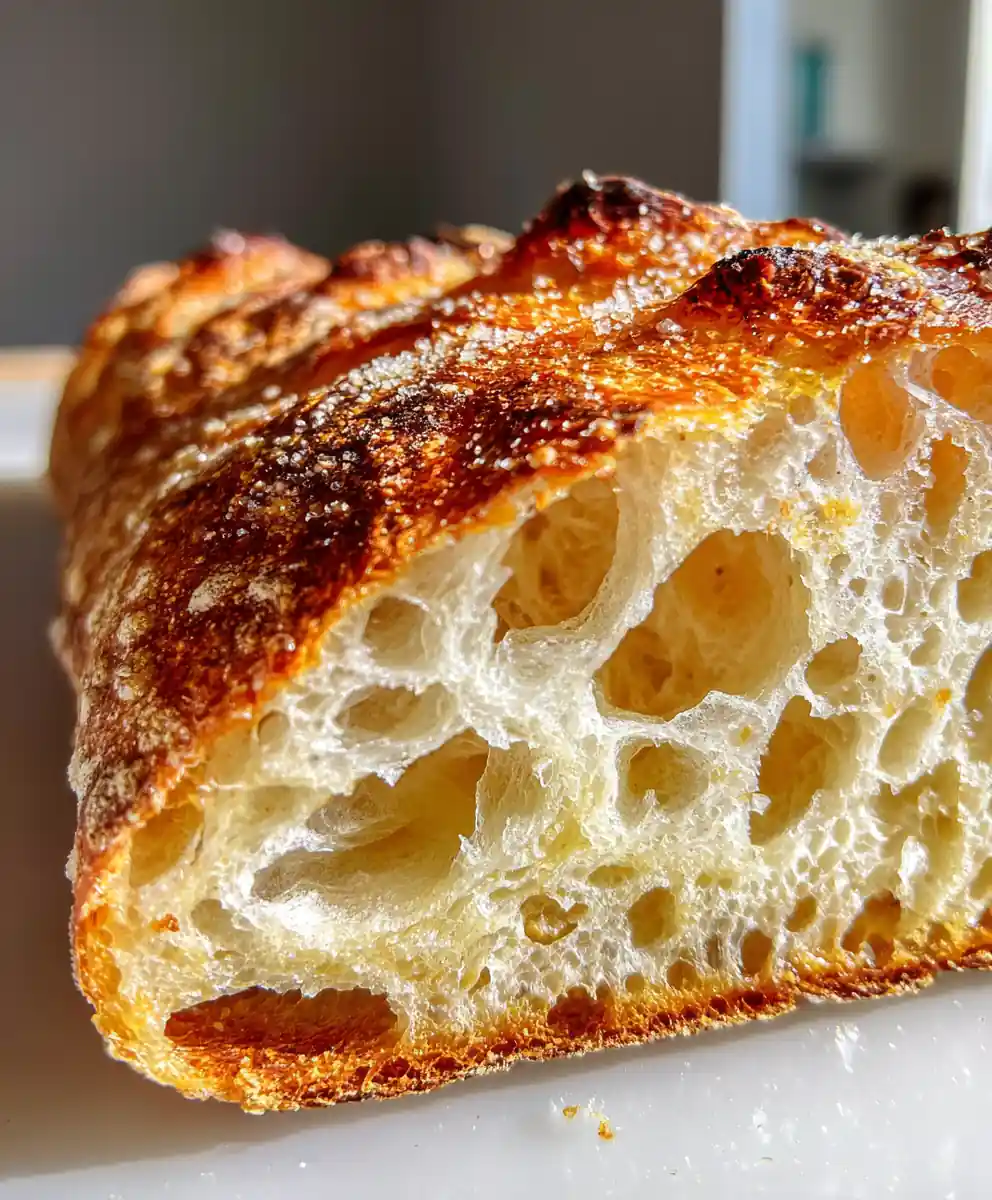
I’ve always loved the idea of baking my own rustic bread at home, and this Ciabatta Bread Recipe with Big Bubbles makes it so simple. Imagine pulling a warm, crusty loaf, fragrant with olive oil, straight from your own oven, its interior boasting those irresistible big bubbles and a soft, chewy texture. This easy ciabatta bread recipe is a simple path to bakery-quality bread right in your kitchen, perfect for a family dinner or healthy meals at home. We’ve perfected a straightforward method that demystifies yeast and dough, ensuring success even for beginner bakers.
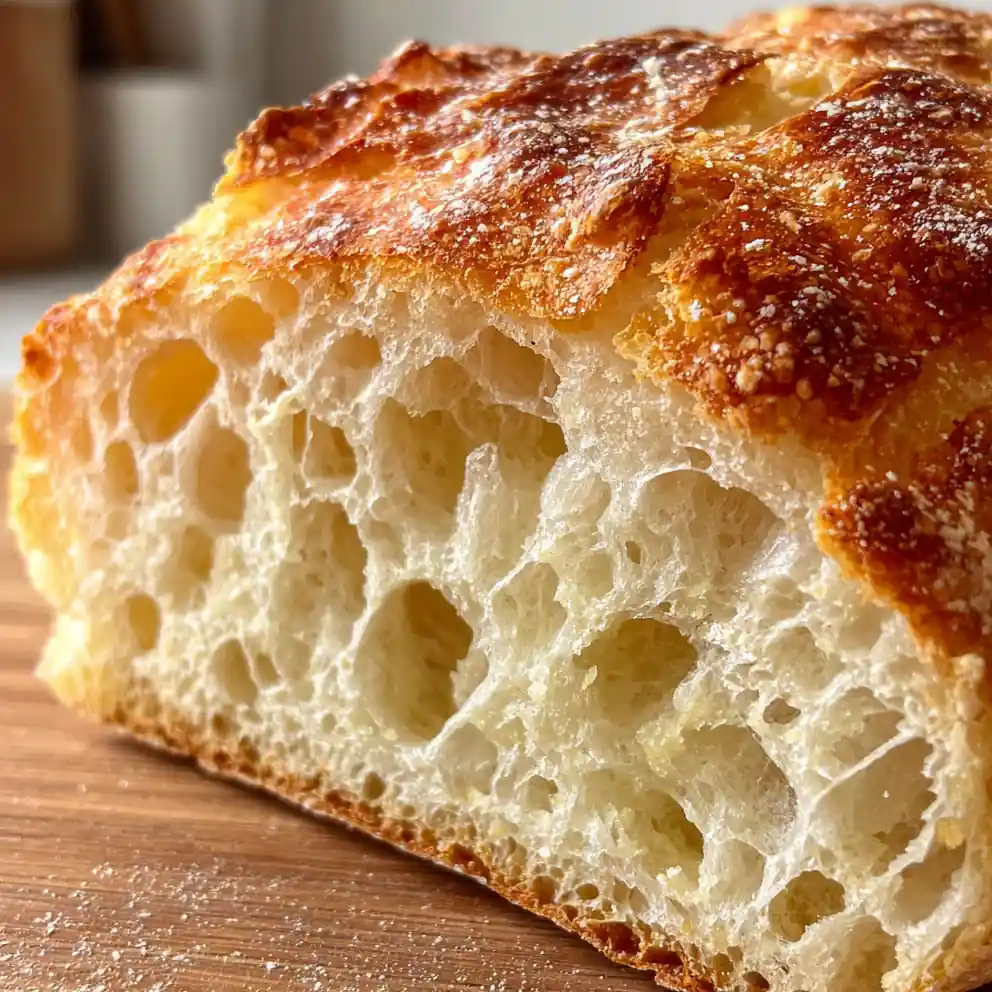
What You’ll Need for Ciabatta (Ingredients and Why They Matter)
- All-Purpose Flour: 3 ½ cups (420g) — The base for structure and chew. (Consider organic unbleached flour for best flavor; for gluten-free needs, a high-quality GF bread flour blend can be used, though bubble size may vary slightly.)
- Active Dry Yeast: 2 ¼ teaspoons (7g) — For that signature airy texture and those essential big bubbles, bringing the dough to life.
- Warm Water: 1 ¾ cups (420ml) — Activates the yeast and creates a pliable, very wet dough. (Ideally between 105-115°F or 40-46°C; filtered is best, but tap works great too.)
- Fine Sea Salt: 2 teaspoons (10g) — Essential for flavor and controlling yeast activity.
- Extra Virgin Olive Oil: 2 tablespoons (30ml) — Adds richness, helps with crust development, and prevents sticking. (A good quality extra virgin olive oil makes a noticeable difference in flavor.)
- Optional Flavor Boosters: A ½ teaspoon garlic powder or 1 teaspoon dried rosemary mixed into the flour for an herby twist.
Easy Step-by-Step Ciabatta Cooking Guide
- Activate the Yeast (5-7 minutes): In a large mixing bowl, combine the warm water, active dry yeast, and a small pinch of sugar. Let this mixture sit for 5-7 minutes until it becomes visibly foamy on top, indicating the yeast is active and ready.
- Mix the Dough (10 minutes): Add the all-purpose flour, fine sea salt, and extra virgin olive oil to the yeast mixture. Stir thoroughly with a sturdy wooden spoon or a strong spatula until just combined. The dough will look very wet, sticky, and shaggy — this high hydration is crucial for those big bubbles.
- First Rise (90-120 minutes): Cover the bowl tightly with plastic wrap or a damp kitchen towel. Let the dough rise in a warm spot in your kitchen until it has clearly doubled in size, feeling light and airy. This slow first rise is absolutely key to developing the famous big bubbles in your ciabatta bread.
- Fold the Dough (3 x 15 minutes): Gently fold the dough onto itself three times, waiting 15 minutes between each fold. To do this, moisten your hands lightly with water to prevent sticking. Reach under the dough, lift a section, and fold it over to the center. Rotate the bowl and repeat until you’ve folded all four sides. This builds strength without needing to knead. If your dough feels too sticky to handle even with wet hands, chill it for 10-15 minutes — I often do this for an easier fold!
- Second Rise (60 minutes): After the final fold, let the dough rest, still covered, for another hour in a warm spot. It should noticeably puff up again.
- Shape the Loaves (10 minutes): Generously flour your work surface, using a blend of all-purpose and a little semolina flour for extra crispiness if you have it. Gently turn out the risen dough onto the floured surface. Divide the dough into two roughly rectangular portions. Carefully stretch and shape each portion into a ciabatta loaf, avoiding excessive handling to keep the precious big bubbles intact.
- Final Proof (20-30 minutes): Transfer the shaped loaves onto baking sheets lined with parchment paper. Lightly cover them with a loose sheet of plastic wrap or a kitchen towel and let them proof for another 20-30 minutes. They will puff up slightly more, feeling very airy.
- Bake to Golden Perfection (20-25 minutes): Preheat your oven to 450°F (230°C) with a shallow pan of water on the bottom rack (this creates steam for a crisp crust). Bake the ciabatta loaves for 20-25 minutes, or until they are beautifully golden brown and crusty on the outside, and sound hollow when tapped on the bottom. For an extra crisp crust, I sometimes spritz the oven walls with water after putting the bread in, just be quick!
Serving Ideas, Pairings, and Make-Ahead Uses for Your Ciabatta
This Ciabatta Bread Recipe with Big Bubbles is incredibly versatile, perfect for elevating everyday meals or enhancing special occasions. Its light, airy texture and savory crust make it a fantastic companion to many dishes.
- Perfect moments to serve: Enjoy it fresh alongside a rich pasta dish, a comforting bowl of soup, for crafting gourmet sandwiches, or as a star on a family cheese board. It’s also delicious simply for dipping into olive oil and balsamic vinegar.
- Pair with sides, sauces, or drinks: This bread excels with hearty minestrone, a vibrant caprese salad, or even just high-quality olive oil with a sprinkle of herbs.
- Prep in advance: Once baked and fully cooled, store your ciabatta in an airtight bag or container at room temperature for 2-3 days. For longer convenience, freeze whole or sliced loaves for up to 3 months, wrapped tightly in plastic wrap, then foil. Thaw frozen bread, then refresh in a 350°F (175°C) oven for 5-7 minutes to bring back that delightful crusty finish.
Wellness and Lifestyle Benefits with Homemade Ciabatta Bread
Embracing this easy Ciabatta Bread Recipe with Big Bubbles allows you to enjoy fresh, balanced eating, aligning perfectly with healthy meal prep and family-friendly home cooking. You control the ingredients, ensuring no unwanted preservatives. It’s also a fantastic way to introduce kids to baking.
This recipe emphasizes quick prep (mostly hands-off rising time), making it an ideal easy recipe for busy nights. Using simple, wholesome ingredients means you’re creating a nutrient-rich addition to your meals, transforming healthy eating at home into a gourmet experience with minimal effort.
Everyday Value and Flexibility of Ciabatta
Making your own ciabatta bread at home is a smart choice for both your wallet and your meal planning. This Ciabatta Bread Recipe with Big Bubbles offers significant value and enhances meal prep for busy families.
- Cost-Effective: Basic ingredients like flour and yeast are quite inexpensive.
- Convenience: The process is mostly hands-off, letting you multitask around the house.
- Versatility: Perfect for sophisticated sandwiches, quick bruschetta, delightful dipping, or simply as a satisfying side dish.
- Waste Reduction: You can bake smaller batches or freeze portions, reducing food waste and ensuring fresh bread whenever you want it.
Chef’s Notes and Customization Options for Ciabatta
Beyond the basic Ciabatta Bread Recipe with Big Bubbles, there are many ways to make it your own. For a deeper, more complex flavor, I’ve sometimes added a small amount of sourdough starter discard to the dough along with the yeast; it really adds a unique tang.
- Spice and seasoning variations: Incorporate 1-2 teaspoons of dried oregano, a quarter cup of chopped sun-dried tomatoes, or 1/2 cup of pitted olives into the dough during the mixing stage for a savory twist.
- Substitutions for diet restrictions: If you’re looking for more fiber, try substituting up to 25% of the all-purpose flour with whole wheat flour (you may need to add a touch more water as whole wheat absorbs more liquid). This will slightly alter the bubble structure but still yields a delicious, healthier loaf.
Common Questions Answered about Ciabatta
Is Ciabatta Bread suitable for low-carb diets?
Ciabatta is traditionally made with wheat flour, so it’s not a low-carb option. While you can find recipes using almond or coconut flour to mimic bread, the characteristic texture and those sought-after big bubbles are very difficult to achieve without traditional wheat flour.
Can I order Ciabatta ingredients online?
Absolutely! Most standard ingredients for this Ciabatta Bread Recipe with Big Bubbles, such as flour, yeast, salt, and olive oil, are readily available from online grocery retailers or specialty baking suppliers. It’s a convenient way to stock up on quality items for your baking.
What’s the best way to store leftovers of Ciabatta Bread?
Once completely cooled, store ciabatta in an airtight plastic bag or container at room temperature for up to 2-3 days. For longer storage, slice and freeze for up to 3 months. I personally find that wrapping individual slices before freezing makes for super easy meal prep and reheating.
Why are my Ciabatta bubbles not big?
Big bubbles in ciabatta come from several factors: a very wet dough (high hydration), gentle handling to avoid deflating the air, and sufficient rising time. Ensure your yeast is active, avoid over-kneading, and allow the dough to proof fully for the best results in your Ciabatta Bread Recipe with Big Bubbles.
Can I make Ciabatta dough ahead of time?
Yes, you can refrigerate the dough after the initial rises for up to 24 hours. Just let it come to room temperature for about an hour before shaping and the final proofing. This extended cold fermentation can actually enhance the flavor and texture of your bread.
What temperature should the water be for yeast?
For activating active dry yeast, water should ideally be between 105-115°F (40-46°C). Water that’s too hot will kill the yeast, while water that’s too cold won’t activate it properly, both of which will negatively impact the rise and those desired big bubbles in your Ciabatta Bread Recipe with Big Bubbles.
Conclusion
This easy Ciabatta Bread Recipe with Big Bubbles truly delivers that authentic bakery experience right in your home, making delicious, crusty bread accessible for healthy eating and family dinners. Don’t wait! Save this recipe to your Pinterest board for future meal inspiration and truly satisfying homemade bread.
Print
Ciabatta Bread Recipe with Big Bubbles
- Total Time: 284 minutes
- Yield: 2 loaves
- Diet: General
Description
This easy ciabatta bread recipe helps you bake bakery-quality bread at home, creating warm, crusty loaves with signature big bubbles and a soft, chewy texture. It uses a straightforward method that demystifies yeast and dough for beginner bakers.
Ingredients
- 3.5 cups (420g) all-purpose flour, (consider organic unbleached flour for best flavor; for gluten-free needs, a high-quality GF bread flour blend can be used, though bubble size may vary slightly)
- 2.25 teaspoons (7g) active dry yeast
- 1.75 cups (420ml) warm water, (ideally between 105-115°F or 40-46°C; filtered is best, but tap works great too)
- a small pinch sugar
- 2 teaspoons (10g) fine sea salt
- 2 tablespoons (30ml) extra virgin olive oil, (a good quality extra virgin olive oil makes a noticeable difference in flavor)
- 0.5 teaspoon garlic powder or 1 teaspoon dried rosemary, (optional, for an herby twist)
Instructions
- Activate Yeast: In a large mixing bowl, combine warm water, active dry yeast, and a small pinch of sugar. Let this mixture sit for 5-7 minutes until it becomes visibly foamy on top.
- Mix Dough: Add the all-purpose flour, fine sea salt, and extra virgin olive oil to the yeast mixture. Stir thoroughly with a sturdy wooden spoon or spatula until just combined. The dough will be very wet, sticky, and shaggy.
- First Rise: Cover the bowl tightly with plastic wrap or a damp kitchen towel. Let the dough rise in a warm spot until it has clearly doubled in size, feeling light and airy (90-120 minutes).
- Fold Dough: Moisten your hands lightly with water. Gently fold the dough onto itself, lifting a section and folding it to the center. Rotate the bowl and repeat until you have folded all four sides. Repeat this process three times, waiting 15 minutes between each fold. (If dough is too sticky, chill it for 10-15 minutes).
- Second Rise: After the final fold, let the covered dough rest for another hour in a warm spot. It should noticeably puff up again.
- Shape Loaves: Generously flour your work surface, (optionally using a blend of all-purpose and a little semolina flour for extra crispiness). Gently turn out the risen dough. Divide the dough into two roughly rectangular portions. Carefully stretch and shape each portion into a ciabatta loaf, avoiding excessive handling to keep the big bubbles intact.
- Final Proof: Transfer the shaped loaves onto baking sheets lined with parchment paper. Lightly cover them and let them proof for another 20-30 minutes. They will puff up slightly more, feeling very airy.
- Bake: Preheat your oven to 450°F (230°C) with a shallow pan of water on the bottom rack (this creates steam for a crisp crust). Bake the ciabatta loaves for 20-25 minutes, or until they are beautifully golden brown and crusty on the outside, and sound hollow when tapped on the bottom. (For an extra crisp crust, you can spritz the oven walls with water after putting the bread in, but be quick).
Notes
For best flavor, consider organic unbleached flour and good quality olive oil. Ensure warm water is 105-115°F to activate yeast effectively. The slow first rise is crucial for developing (big bubbles). If dough is sticky when folding, chill it briefly. Create steam in the oven for a crisp crust by using a water pan or spritzing walls.
- Prep Time: 31 minutes
- Cook Time: 23 minutes
- Category: Bread
- Method: Baking
- Cuisine: Italian
Nutrition
- Serving Size: 1 slice (approx 55g)
- Calories: 130 calories
- Sugar: 1 g
- Sodium: 250 mg
- Fat: 2 g
- Saturated Fat: 0 g
- Unsaturated Fat: 2 g
- Trans Fat: 0 g
- Carbohydrates: 24 g
- Fiber: 1 g
- Protein: 4 g
- Cholesterol: 0 mg
FREE PRINTABLE RECIPE
Get the Printable Recipe PDF (Free)
Enter your email and we’ll send you the ingredients + step-by-step instructions as a clean PDF you can save to your phone.
- ✅ Printable PDF (ingredients + steps)
- ✅ Save it to your phone (no long scrolling)
- ✅ Includes cook time + servings
- ✅ Easy to follow
FAQ
Where’s the full recipe?
It’s delivered as a printable PDF so you can save it and cook without scrolling.
I didn’t get the email.
Check Spam/Promotions and search your inbox for your site name. Then click Confirm to receive the PDF.