
These fried hand pies combine a buttery, flaky pastry with a vibrant tropical fruit center. They are an ideal portable dessert for any occasion, offering a satisfying crunch and a sweet, jammy interior.
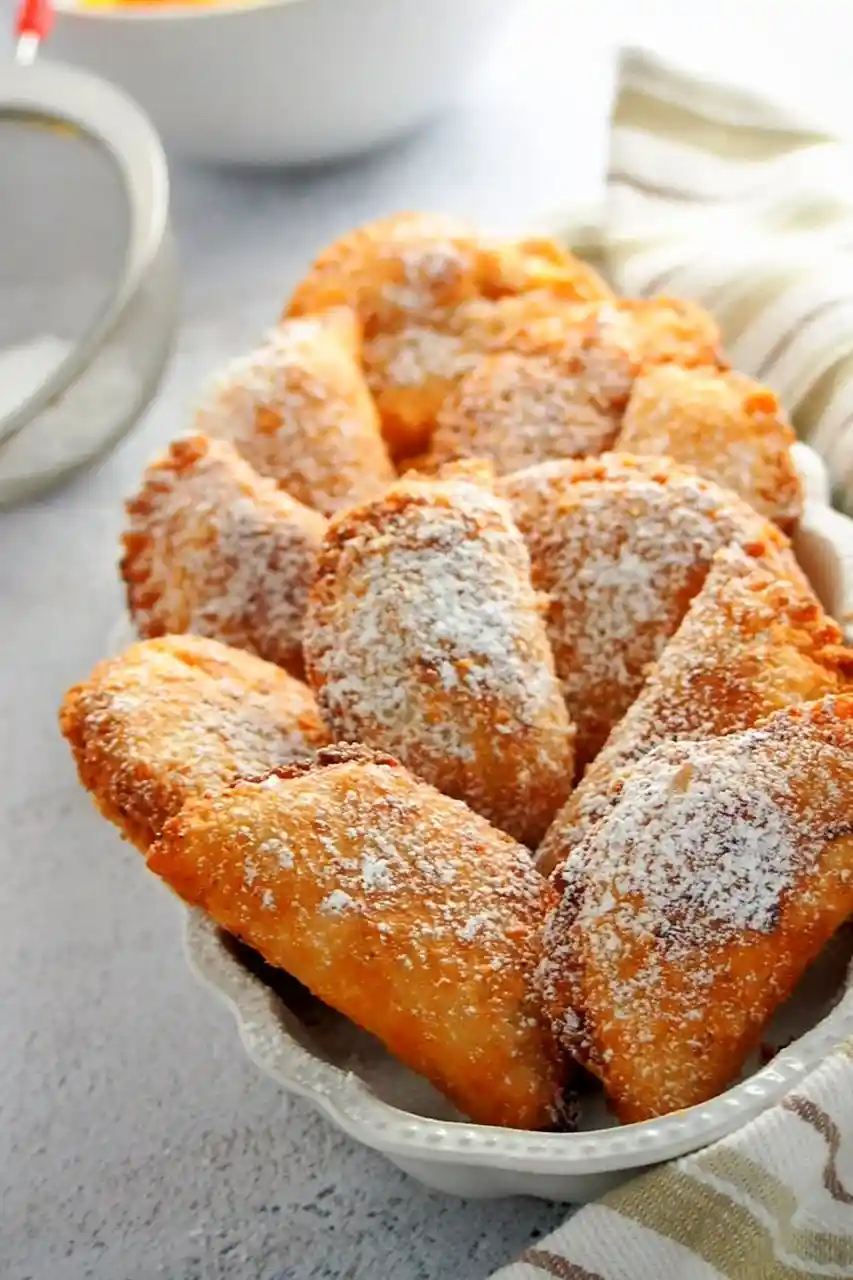
List of ingredients
- 3 cups all purpose flour – provides the base structure for the crust.
- 1 tsp salt – enhances the overall flavor of the pastry.
- 2 tbsp sugar – adds a subtle sweetness to the dough.
- 1/2 cup unsalted butter – chilled and cut into cubes for flakiness.
- 1/2 cup vegetable shortening – chilled to ensure a tender crust.
- 1 tsp apple cider vinegar – helps tenderize the gluten in the flour.
- 6-7 tbsp ice water – binds the dough while keeping the fats cold.
- 2 cups cubed mangoes (about 4 mangoes) – the primary tropical filling.
- 2 cups cubed peaches (about 3 peaches) – adds a stone-fruit sweetness.
- 1/2 cup sugar – sweetens the fruit filling.
- 2 tbsp cornstarch – thickens the fruit juices into a gel.
- 1 to 1 and 1/2 cups shortening – used for deep frying the pies.
- powdered sugar – for dusting the finished pies.
step-by-step instructions
- Prepare the pastry mix: Whisk together the flour, sugar, and salt in a large mixing bowl.
- Incorporate the fats: Add the chilled butter cubes and chilled shortening. Use a pastry blender to cut the fats into the flour until the mixture looks like coarse meal.
- Bind the dough: Stir in the apple cider vinegar and ice water. Mix until the dough is almost combined and clings together when pressed.
- Knead and chill: Turn the dough onto a floured surface and knead just until it comes together. Form it into a ball, flatten it into a disc, wrap it in plastic, and refrigerate for 2 hours or overnight.
- Cook the filling: Combine the cubed mangoes, peaches, sugar, and cornstarch in a medium saucepan. Bring to a boil over medium heat, stirring frequently until the fruit is soft and the liquid is thick and gel-like. Allow the filling to cool completely.
- Roll the dough: Let the chilled dough sit at room temperature for 5 minutes. Roll it out on a floured board to a 1/4 inch thickness.
- Cut the shapes: Use a 3.5-inch diameter cookie cutter to create circles. Gently roll over each circle with a rolling pin to elongate the shape slightly.
- Fill and seal: Place one tablespoon of cooled filling in the center of each dough circle. Fold the dough over to cover the filling, seal the edges tightly, and press with the tines of a fork for decoration.
- Pre-fry chill: Place the assembled pies on a parchment-lined baking sheet and refrigerate them while heating the frying oil.
- Heat the oil: Melt shortening in a heavy-bottomed saucepan over medium heat until it is 3-4 inches deep. Wait until the oil reaches 365 F.
- Fry the pies: Carefully place 3-4 pies in the oil. Fry for 2-3 minutes or until they are lightly golden brown.
- Drain and finish: Remove pies and drain on paper towels. Dust with powdered sugar before serving warm.
Mastering the Pastry Crust
Keep Your Fats Ice Cold
The secret to a flaky crust is ensuring the butter and shortening remain cold throughout the mixing process. When cold fat hits hot oil, it creates steam pockets that lift the dough, resulting in distinct layers. If the fats melt before frying, the crust will be dense and greasy.
Avoid Over-Kneading the Dough
Kneading the dough too much develops excess gluten, which makes the pastry tough instead of tender. Stop kneading as soon as the ingredients hold together in a cohesive ball. Handle the dough as little as possible to maintain a delicate texture.
The Importance of Dough Resting
Allowing the dough to chill for several hours allows the gluten to relax and the moisture to distribute evenly. This prevents the dough from shrinking when you roll it out. It also ensures the fats are firm, which is critical for the final flake.
Preventing Dough Sticking
Regularly flour your work surface and rolling pin to prevent the dough from adhering to the board. If the dough sticks, you may be tempted to press harder, which can flatten the air pockets. A lightly floured surface allows the dough to glide and maintain its thickness.
Optimizing the Fruit Filling
Ensuring Uniform Fruit Cubes
Cut your mangoes and peaches into small, consistent cubes. Uniform pieces cook at the same rate, ensuring that no pieces remain hard while others turn into mush. Small cubes also make it easier to seal the pies without the fruit poking through the dough.
Controlling the Filling Consistency
Cornstarch is essential for binding the fruit juices into a thick gel. If your fruit is exceptionally juicy, you may need an extra teaspoon of cornstarch to prevent the filling from leaking during frying. The filling should be thick enough to hold its shape when spooned.
Cooling the Filling Completely
Never put hot filling onto raw dough. Hot fruit will melt the fats in the pastry instantly, causing the dough to become soggy and lose its structural integrity. Let the filling cool to room temperature or refrigerate it before assembling the pies.
Adjusting Fruit Sweetness
Depending on the ripeness of your mangoes and peaches, you may need to adjust the sugar. Taste a small piece of the cooked filling before cooling it. If the fruit is very tart, add an extra tablespoon of sugar to balance the flavor.
Deep Frying Techniques for Best Results
Maintaining Precise Oil Temperature
Use a kitchen thermometer to ensure the oil stays at 365 F. If the oil is too cool, the pastry will absorb too much fat and become oily. If the oil is too hot, the exterior will burn before the interior is heated through.
Managing Batch Sizes
Avoid overcrowding the saucepan by frying only 3-4 pies at a time. Adding too many pies at once drops the oil temperature significantly. This leads to uneven cooking and can result in a greasy crust.
Choosing the Right Frying Fat
Shortening is used here for its high smoke point and neutral flavor, which helps the fruit flavors shine. You can substitute this with canola or peanut oil if preferred. Ensure the fat is deep enough to allow the pies to float and cook evenly on all sides.
Efficient Draining Process
Immediately move fried pies to a plate lined with paper towels. Pat the bottoms gently to remove excess oil. This prevents the bottom of the pie from becoming soggy as it cools, keeping the crust crisp.
Customizing Your Fruit Pies
Adding Warm Spices
Incorporate a pinch of ground cinnamon or a grating of fresh ginger into the fruit filling. These spices complement the natural sweetness of peaches and mangoes. Add them during the cooking phase to allow the flavors to meld.
Exploring Different Fruit Pairs
While peach and mango are the primary fruits, you can substitute them with other stone fruits. Apricots, nectarines, or plums work well in this format. Keep the ratio of fruit to cornstarch the same to ensure the correct thickness.
Using Canned Fruit Alternatives
If fresh fruit is unavailable, you can use canned peaches or mangoes. Drain the syrup thoroughly and pat the fruit dry with a paper towel before cubing. Reduce the added sugar in the recipe since canned fruits are often pre-sweetened.
Creating a Baked Version
For those who prefer not to fry, these pies can be baked. Place them on a baking sheet, brush the tops with an egg wash, and bake at 375 F for 15-20 minutes. Note that the texture will be more like a traditional pastry than a fried hand pie.
Storage and Preservation
Using Breathable Containers
Store leftover pies in a paper bag or a cardboard box rather than an airtight plastic container. Plastic traps steam, which softens the crust and makes the pies soggy. Breathable packaging helps maintain the crispness of the fried dough.
Long-Term Freezing Method
You can freeze the assembled, un-fried pies for later use. Place them on a tray and freeze until solid before transferring them to a freezer bag. Fry them directly from frozen, adding an extra minute to the cooking time.
Proper Reheating Instructions
To restore the crispness of a day-old pie, use an oven or air fryer. Heat at 350 F for 3-5 minutes until the exterior is crisp again. Avoid using a microwave, as this will make the pastry rubbery and soft.
Refrigeration Guidelines
If you choose to refrigerate the pies, keep them in a sealed container for up to three days. Be aware that refrigeration significantly reduces the crispness of the crust. Reheating is mandatory for the best experience.
Troubleshooting Common Issues
Handling Leaking Fillings
If the filling leaks during frying, it is usually due to a poor seal or too much filling. Use a fork to press the edges firmly and ensure there are no gaps. Stick to one tablespoon of filling per pie to leave enough room for a secure seal.
Fixing Sticky Dough
If the dough is too sticky to handle, it may be due to high humidity or too much water. Lightly dust your hands and the work surface with more all-purpose flour. Avoid adding too much flour into the dough itself, as this can make the crust tough.
Preventing Over-Browned Crusts
If the pies are browning too quickly, lower the heat of the burner immediately. Check the oil temperature with your thermometer. If the oil is above 375 F, remove the pan from the heat for a minute before adding the next batch.
Dealing with Greasy Pastry
Greasiness occurs when the oil temperature drops too low. Ensure you are not adding too many pies at once and that the oil has returned to 365 F between batches. Always use chilled dough to ensure the pastry sears quickly.
Frequently Asked Questions
Can I use frozen fruit for the filling?
Yes, you can use frozen peaches and mangoes. Thaw them completely and drain any excess liquid before cooking them with the sugar and cornstarch. You may need to simmer the filling slightly longer to achieve the correct thickness.
How long do these pies last at room temperature?
These pies can be stored at room temperature in a paper bag for up to two days. Because they are fried and contain fruit, they are best consumed fresh. If your kitchen is very warm, refrigeration is recommended.
What is the best way to cut the fruit?
Use a sharp chef’s knife to create small cubes of approximately 1/4 inch. This size ensures the fruit breaks down slightly during cooking to create a jammy texture while still providing distinct bites of fruit.
Can I substitute the shortening in the crust?
You can replace the shortening in the crust with chilled butter for a richer flavor. However, shortening provides a higher melting point, which contributes to a more tender and flaky result when deep frying.
} Print
Crispy Fried Peach Mango Hand Pies
- Total Time: 55 minutes
- Yield: 12 pies
- Diet: Vegetarian
Description
Buttery pie crust plus sweet and bright fruit filling, these peach mango pies are delicious pocket-sized desserts that you can eat anytime.
Ingredients
- 3 cups all purpose flour
- 1 tsp salt
- 2 tbsp sugar
- 1/2 cup unsalted butter (cut into cubes and chilled)
- 1/2 cup vegetable shortening (chilled)
- 1 tsp apple cider vinegar
- 6–7 tbsp ice water
- 2 cups cubed mangoes
- 2 cups cubed peaches
- 1/2 cup sugar
- 2 tbsp cornstarch
- 1 to 1 and 1/2 cups shortening (for frying the pies)
- powdered sugar (for sprinkling the top of the pies)
Instructions
- Step: Whisk together flour, sugar, and salt in a large bowl.
- Step: Add in the chilled butter cubes and the shortening and cut them into the flour mixture using a pastry blender until the mixture resembles a coarse meal.
- Step: Add the apple cider vinegar and water, then stir everything until dough is almost coming together.
- Step: Turn it out into a floured board, knead just until the dough comes together, gather it into a ball, flatten into a disc and wrap with plastic.
- Step: Refrigerate dough for about 2 hours or overnight.
- Step: Combine mangoes, peaches, sugar, and cornstarch in a medium saucepan.
- Step: Cook the mixture over medium heat and bring to a boil, stirring often until the fruits are soft and covered with a thick gel-like liquid.
- Step: Set the filling aside to cool.
- Step: Let the dough sit at room temperature for 5 minutes.
- Step: On a floured board, roll the dough out to 1/4 inch thickness.
- Step: Use a cookie cutter that is 3.5 inches in diameter to cut as many circles as you can from the dough.
- Step: Gently roll over one circle to elongate it slightly, spoon about a tablespoon of filling into the center, fold the dough over to cover the filling, and seal the ends with the tines of a fork.
- Step: Repeat with the rest of the circles and arrange assembled pies on a baking sheet lined with parchment paper.
- Step: Chill the pies in the fridge while heating the shortening in a heavy-bottomed saucepan over medium heat.
- Step: Once the oil reaches 365 F, gently place 3-4 pies in the saucepan.
- Step: Cook until the pies are lightly golden, about 2-3 minutes or less.
- Step: Drain the cooked pies on a plate lined with paper towels and repeat with the remaining pies.
- Step: Dust pies with powdered sugar and serve warm.
Notes
Flour the board and rolling pin often to prevent sticking. You can also make circle-shaped pies by topping one circle with another and sealing the edges. Oil temperature must be maintained at 365 F for the best result. Store leftover pies in a paper box or bakery paper bags at room temperature for up to 2 days.
- Prep Time: 30 minutes
- Cook Time: 25 minutes
- Category: Dessert
- Method: Deep Frying
- Cuisine: Asian, Western
Nutrition
- Serving Size: 1 pie
- Calories: 328 kcal
- Sugar: 16 g
- Sodium: 196 mg
- Fat: 16 g
- Saturated Fat: 7 g
- Unsaturated Fat: 9 g
- Trans Fat: 0 g
- Carbohydrates: 41 g
- Fiber: 1 g
- Protein: 3 g
- Cholesterol: 20 mg