
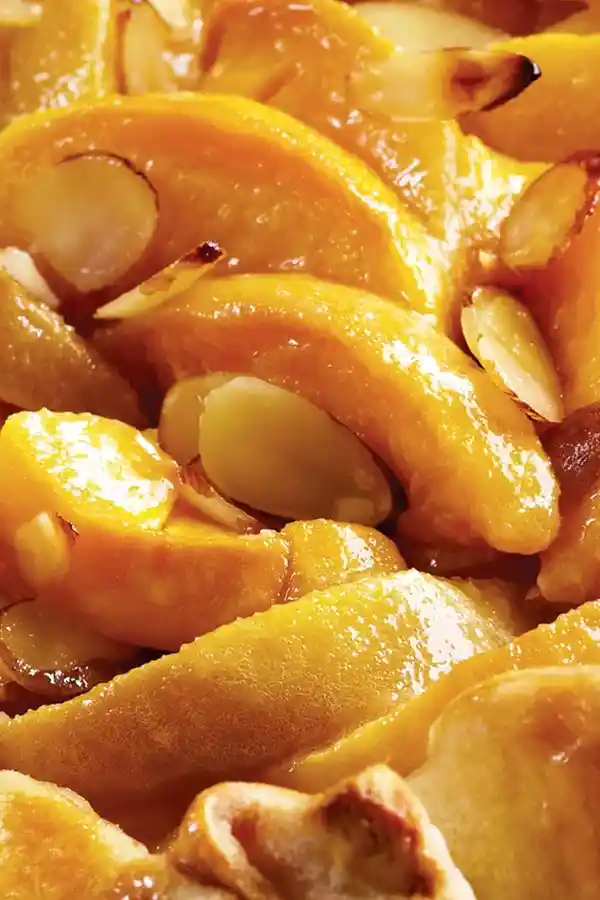
This rustic peach crostata is a simple, sheet-pan alternative to traditional pies. It features fresh, sliced peaches nestled in a buttery, flaky crust for a perfect summer treat.
List of ingredients
- 3 medium (or 2 large) ripe peaches – peeled and sliced
- 3 tablespoons sugar – used for macerating the peaches
- 5 tablespoons sugar – combined with flour for the topping
- 1/4 cup all-purpose flour – plus extra for dusting the work surface
- 3 tablespoons Earth Balance – softened to room temperature
- 1/4 teaspoon nutmeg – adds a warm, aromatic spice
- 1 teaspoon almond extract – enhances the natural flavor of the stone fruit
- 1/2 recipe Flaky Pastry Dough – chilled and ready for rolling
- 2 tablespoons sliced almonds – optional for added texture and crunch
step-by-step instructions
- Prepare the peaches: Preheat your oven to 325°F. Bring a small pot of water to a boil, cut a small ‘x’ into the skin at the bottom of each peach, boil them for 20 seconds, and then immediately rinse under cool running water to peel the skins easily. Slice the peaches and toss them in a bowl with 3 tablespoons of sugar.
- Create the crumble filling: In a medium bowl, combine the remaining 5 tablespoons of sugar, 1/4 cup of flour, 3 tablespoons of room-temperature Earth Balance, nutmeg, and almond extract. Use your fingers to rub the ingredients together until a crumbly, uniform mixture forms.
- Assemble the pastry: Dust your workspace with flour and roll the pastry dough into a 13-inch circle, trimming the edges to ensure they are even. Transfer the dough to parchment paper, spread two-thirds of the crumble mixture over the center leaving a 2-inch border, layer two-thirds of the peaches on top, sprinkle with the remaining crumble, and top with the remaining peaches. Fold the pastry edges over the filling and pinch the dough to secure it.
- Bake and cool: Transfer the parchment and crostata to a baking sheet and sprinkle with sliced almonds. Bake for approximately 50 minutes until the crust is golden brown and the fruit is bubbly. Allow the dessert to cool on a wire rack for at least 10 minutes before serving.
Selecting and Preparing Your Peaches
Identifying Peak Ripeness
Look for peaches that have a deep golden-yellow hue with very little green remaining near the stem. Gently press the fruit; it should give slightly under your thumb but not feel mushy or bruised. A fragrant, sweet aroma is the best indicator that the sugars are fully developed for baking.
The Science of Blanching
Cutting a small ‘x’ allows the boiling water to penetrate the skin without splitting the fruit. The sudden shift from boiling water to a cool rinse causes the skin to contract and pull away from the flesh. This method is far more efficient than peeling raw fruit and prevents you from removing too much of the actual fruit.
Managing Fruit Moisture
Tossing the sliced peaches in sugar helps draw out excess moisture through osmosis. If your peaches are exceptionally juicy, you may want to let them sit in the sugar for 10 minutes and then drain a small amount of the liquid. This prevents the bottom crust from becoming soggy during the long bake time.
Mastering the Pastry Crust
Maintaining Cold Temperatures
The secret to a flaky crust is keeping the fat in the dough cold until it hits the oven. If the dough becomes too soft or sticky while rolling, place it in the refrigerator for 15 minutes to firm up. Work quickly to ensure the Earth Balance does not melt into the flour, which would result in a denser crust.
Rolling Techniques for Uniformity
Roll your dough from the center outward to maintain an even thickness across the entire circle. Use a light touch with the rolling pin to avoid compressing the layers of fat. If the dough resists rolling, let it rest for a few minutes to relax the gluten before trying again.
Managing the Folded Edge
When folding the edges of the pastry over the filling, avoid pulling the dough too tightly. Simply gently push and fold the outer 2 inches of the crust inward. Pinch the overlapping areas firmly to ensure the filling does not leak out during the baking process.
Flavor Enhancements and Variations
Incorporating Fresh Herbs
Fresh thyme or basil can add a sophisticated, savory note that complements the sweetness of the peaches. Finely mince a teaspoon of these herbs and mix them directly into the crumble topping. This creates a complex flavor profile that balances the richness of the pastry.
Using Different Stone Fruits
You can replace the peaches with nectarines, apricots, or a combination of different stone fruits. Nectarines provide a similar texture but a slightly more tart flavor. Apricots are more acidic and may require an extra tablespoon of sugar in the fruit mix to balance the tartness.
Adding a Final Glaze
For a professional, glossy finish, warm a tablespoon of apricot jam with a teaspoon of water. Brush this mixture over the baked peaches immediately after removing the crostata from the oven. This adds an extra layer of shine and intensifies the fruit flavor.
Baking for Optimal Results
Recognizing the Golden Brown Finish
The crust is done when the edges are a deep golden brown and the pastry feels firm to the touch. If the edges are browning too quickly while the center is still pale, cover the edges with small strips of aluminum foil. This allows the center to continue baking without burning the outer rim.
Ensuring a Bubbly Center
The filling is fully cooked when the peach juices are bubbling vigorously around the edges of the crust. This bubbling indicates that the flour in the crumble mixture has thickened the juices into a syrup. If the filling looks watery, bake it for an additional 5 to 10 minutes.
Preventing a Soggy Bottom
Using parchment paper is essential for airflow and easy transfer to the baking sheet. To further protect the bottom, ensure the oven is fully preheated to 325°F before the crostata goes in. This immediate heat helps sear the bottom of the crust and prevents the juices from soaking in.
Storage and Shelf Life
Proper Room Temperature Storage
Store leftovers in an airtight container at room temperature for up to 24 hours. To maintain the crispiness of the crust, place a piece of parchment paper between layers if stacking slices. Keep the container in a cool, dry place away from direct sunlight.
Refrigeration Guidelines
For longer storage, keep the crostata in the refrigerator for up to 4 days. The crust may soften slightly due to the moisture in the fridge, but the fruit will stay fresh. Always use an airtight container to prevent the pastry from absorbing other odors from the refrigerator.
Freezing the Unbaked Crust
You can prepare the pastry dough in advance and freeze it for up to three months. Wrap the dough tightly in plastic wrap and then place it in a freezer-safe bag. Thaw the dough in the refrigerator overnight before rolling and assembling your crostata.
Reheating Instructions
Restoring Crispiness in the Oven
The best way to reheat a slice is in a 325°F oven for about 5 to 8 minutes. Place the slice on a baking sheet to allow the bottom to crisp up. This method restores the original texture of the flaky pastry and warms the fruit through.
Fast Warming in the Microwave
For a quicker option, microwave a slice on medium power for 20 to 30 seconds. Be aware that this will make the crust softer and less flaky than oven reheating. This method is best for those who prefer a softer, more cake-like texture.
Common Baking Troubleshooting
Managing Leaking Fruit Juices
If juices leak onto the baking sheet, it is usually because the peaches were too ripe or the crust was folded too loosely. To fix this, ensure you use the crumble mixture as a barrier between the dough and the fruit. You can also use a slightly higher-walled baking sheet to catch any drips.
Fixing a Pale Crust
If your crust is not browning, you can brush the edges with a little bit of melted Earth Balance or a splash of plant-based milk before baking. This encourages the Maillard reaction and produces a deeper color. Ensure you do this only on the edges to avoid burning the fruit.
Dealing with Overcooked Fruit
Overcooked peaches can become mushy and lose their distinct shape. If you notice the fruit breaking down too quickly, reduce your oven temperature by 25°F and increase the bake time slightly. This gentler heat preserves the structure of the fruit slices.
Frequently Asked Questions
Can I use frozen peaches?
Yes, you can use frozen peaches, but they must be completely thawed and drained of excess liquid first. Pat the slices dry with a paper towel before tossing them with sugar to prevent the crust from becoming soggy.
What is a good substitute for Earth Balance?
You can use any high-quality vegan butter or chilled coconut oil (solid state) as a substitute. If using coconut oil, be mindful that it may add a slight coconut flavor to the pastry. Ensure the substitute is at the temperature specified in the recipe for the best texture.
How do I stop the dough from shrinking?
Shrinkage usually happens when the gluten in the dough is too tight. After rolling the dough and before adding the filling, let it rest on the parchment paper for 10 minutes. This relaxes the gluten and helps the crust hold its shape during baking.
Print
Easy Fresh Peach Crostata
- Total Time: 80 minutes
- Yield: 1 (9-inch) crostata
- Diet: Vegan
Description
No pie plate or tart pan? Fold fresh peaches into a flaky pastry dough and bake on a sheet pan for an easy, no-fuss summer dessert.
Ingredients
- 3 medium (or 2 large) ripe peaches
- 3 tablespoons plus 5 tablespoons sugar
- 1/4 cup all-purpose flour, plus more for dusting
- 3 tablespoons Earth Balance, at room temperature
- 1/4 teaspoon nutmeg
- 1 teaspoon almond extract
- 1/2 recipe Flaky Pastry Dough
- 2 tablespoons sliced almonds (optional)
Instructions
- Step: Preheat the oven to 325°F. Bring a small pot of water to a boil over high heat. Using a small, sharp knife, cut a small “x” into the skin at the bottom of each peach. Place the peaches in boiling water for 20 seconds. Pour into a colander and rinse under cool running water. Starting at the “x,” peel the skin from the peaches and discard. Slice the peaches and place in a small bowl, sprinkling with the 3 tablespoons sugar and set aside.
- Step: In a medium bowl, combine the remaining 5 tablespoons sugar with the flour, Earth Balance, nutmeg, and almond extract. Using your fingers, rub the mixture together until incorporated and set aside.
- Step: Dust a clean work surface with flour. Roll the pastry dough out into a circle about 13 inches across, trimming the edges so they are even. Transfer the dough to a sheet of parchment paper. Spread two-thirds of the sugar-flour mixture on the bottom of the crust, leaving a 2-inch border around the edge. Place two-thirds of the peaches over the flour mixture. Sprinkle the remaining flour mixture over the peaches. Add the remaining peaches on top. Fold the outer edge of the pastry dough in over the crostata to create a crust, pinching excess dough to secure.
- Step: Leaving the crostata on the parchment paper, transfer to a baking sheet. Sprinkle the sliced almonds on top and bake until the crust is golden brown and the filling is bubbly, about 50 minutes. Remove from the oven and allow to cool on a wire rack for at least 10 minutes before serving. Serve hot, warm, or at room temperature.
Notes
Adapted from Skinny Bitch Bakery by Kim Barnouin. This recipe is vegan and dairy-free.
- Prep Time: 30 minutes
- Cook Time: 50 minutes
- Category: Dessert
- Method: Baking
- Cuisine: Italian
Nutrition
- Serving Size: 1 slice
- Calories: 340 kcal
- Sugar: 22 g
- Sodium: 140 mg
- Fat: 16 g
- Saturated Fat: 6 g
- Unsaturated Fat: 10 g
- Trans Fat: 0 g
- Carbohydrates: 44 g
- Fiber: 3 g
- Protein: 4 g
- Cholesterol: 0 mg