
Experience the ultimate comfort of a fork-tender pot roast, perfectly seasoned with a savory blend of onion soup and creamy mushroom sauce. This straightforward method transforms simple ingredients into a rich, melt-in-your-mouth meal with minimal effort required. Whether you prefer the slow, steady heat of the oven or the convenience of a slow cooker, this classic recipe ensures a flavorful result every time.
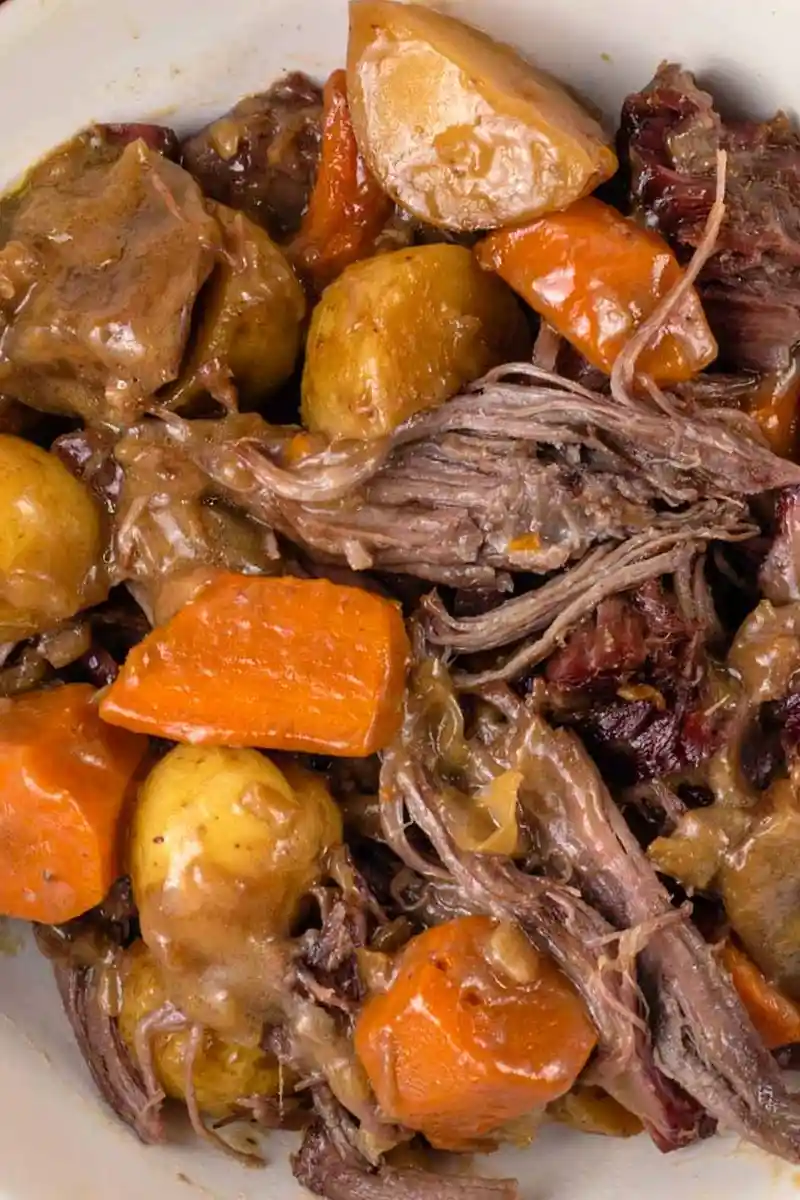
List of ingredients
- 3 lb beef roast (chuck roast, brisket, round roast, or stew meat chunks)
- 1 package dry onion soup mix
- 1 can cream of mushroom soup (undiluted)
- 1-2 tablespoons soy sauce
- 1 onion (halved and sliced)
- 1 lb medium or baby potatoes (Yukon gold, red, or multicolored, cut into 1-inch chunks)
- 1 lb carrots (peeled and cut into 1-inch chunks)
- 1/2 can beef broth (if necessary)
step-by-step instructions
- Step: Preheat oven to 325 degrees F (163 degrees C).
- Step: Place onion slices in the bottom of a Dutch oven or roasting pan and top with meat.
- Step: Sprinkle the dry onion soup mix over the meat, cover with undiluted cream of mushroom soup, and drizzle with soy sauce.
- Step: Cover tightly with an oven-safe lid or aluminum foil and bake for 1 hour.
- Step: Remove from the oven, uncover, and add potatoes and carrots around the meat. Add beef broth if the pan looks dry.
- Step: Re-cover the pan and return to the oven for 2-3 hours, or until meat and vegetables are fork-tender.
- Step: For the slow cooker method: Layer onions, meat, onion soup mix, cream of mushroom soup, and soy sauce. Cook on high for 1 hour or low for 2 hours. Add vegetables and continue cooking for 3 hours on high or 6 hours on low.
Refining the Cooking Process
Selecting the Best Beef Cut
When choosing meat, prioritize pieces with significant marbling and visible connective tissue, such as a traditional chuck roast. These cuts are designed to break down under long, moist heat, transforming tough fibers into succulent bites that yield easily to a fork. Leaner cuts may dry out before reaching the required internal temperature for tenderness, so do not shy away from the fat content.
Ensuring Consistent Vegetable Doneness
To avoid mushy or disintegrated vegetables, prioritize cutting your carrots and potatoes into uniform 1-inch pieces. Smaller pieces will absorb flavor faster but risk turning into puree if cooked too long, while larger pieces maintain their integrity throughout the duration of the braising process. Staggering the addition of these ingredients as described in the steps ensures they are perfectly cooked at the same moment the roast is ready.
Managing the Internal Temperature for Maximum Tenderness
The goal for a successful pot roast is reaching an internal temperature between 195 and 205 degrees F. At this stage, the collagen within the muscle fibers fully converts into gelatin, which is what gives the meat its characteristic melt-in-your-mouth texture. Relying on a reliable meat thermometer is the most accurate way to judge progress rather than relying solely on the clock, especially if your roast varies in thickness.
Practical Adjustments and Flavor Variations
Managing Salt Content
Because the onion soup mix and canned mushroom soup are inherently salty, consider tasting the gravy before adding any extra salt. If the sodium level seems too high for your preference, dilute the gravy slightly with a splash of water or low-sodium beef broth. The soy sauce serves as a salty flavoring agent, so it can be reduced if you prefer a milder profile.
Enhancing the Savory Base
If you desire a deeper flavor profile, consider adding a tablespoon of Worcestershire sauce or a teaspoon of smoked paprika alongside the soup mix. You might also include a few sprigs of fresh herbs like thyme or rosemary during the final hour of cooking for a fragrant, aromatic finish. These additions complement the onion base without overpowering the natural beefiness of the chuck roast.
Exploring Root Vegetable Alternatives
While potatoes and carrots are the traditional choices, you can incorporate other hearty vegetables like parsnips or celery root for a change in texture and flavor. These vegetables handle the long, slow-cooking environment exceptionally well and will absorb the savory mushroom gravy just as effectively as the carrots. Ensure they are cut into similar 1-inch sizes to maintain consistent cooking times across all ingredients.
Serving and Presentation Strategies
Creating a Restaurant-Style Presentation
To serve this dish with a more refined aesthetic, carefully remove the roast from the cooking liquid and let it rest on a warm carving board for 10 minutes before slicing. Arrange the tender meat slices in the center of a wide platter, surrounding them with the colorful carrots and potatoes. Spoon a generous amount of the thickened gravy from the pot over the meat just before serving to add shine and flavor.
Choosing Ideal Accompaniments
The rich gravy generated by the soups is best enjoyed with starchy sides that can soak up the liquid. Consider serving the roast alongside creamy mashed potatoes, soft egg noodles, or thick slices of toasted sourdough bread. These options balance the savory intensity of the meat and provide a comforting foundation for the meal.
Storage and Reheating Methods
Managing Leftovers Safely
Store any remaining portions in an airtight container within the refrigerator for up to 4 days. If you have a large amount of leftover gravy, it can be kept separately or stored with the meat to keep it moist during the reheating process. For optimal quality, ensure the container is sealed tightly to prevent the meat from absorbing other odors in your refrigerator.
Reheating for Retained Moisture
The best way to reheat pot roast is in a low-temperature oven or a covered saucepan on the stovetop. Add a small splash of beef broth or water to the pan to create steam, which prevents the beef from drying out while the center warms through. Avoid high-heat microwave settings, as they can cause the edges of the meat to become tough and chewy.
Common Queries Addressed
Can I make this dish without using mushroom soup?
If you prefer to avoid mushrooms, you can substitute the cream of mushroom soup with an equal amount of cream of celery or a simple homemade white sauce thickened with cornstarch. Keep in mind that these alternatives will slightly alter the flavor profile of the final gravy, so you may want to increase your seasoning with a bit of black pepper or dried herbs.
Why are my potatoes disintegrating in the pan?
Potatoes often fall apart if they are cooked for too long or if you use a high-starch variety like a Russet. Stick to waxier potatoes like Yukon Gold or red varieties, which contain less starch and are better suited for long-duration braising. If you find your potatoes are consistently getting too soft, try adding them to the cooking vessel later in the process rather than at the very beginning.
Is it necessary to sear the meat beforehand?
While searing the roast in a hot pan before adding the liquid can develop deeper, complex flavors through the Maillard reaction, it is entirely optional. If you are short on time, skipping this step still yields a delicious and tender result, as the soup mix and long cook time provide more than enough flavor and moisture to satisfy the palate.
Can I double the recipe for a larger group?
You can certainly scale the recipe for a larger gathering by using a larger cut of beef, such as a 5-6 lb roast. Ensure your pot or slow cooker is large enough to accommodate the meat and vegetables comfortably without overcrowding, as adequate space is needed for the heat to circulate properly. Increase the cooking time according to the guidelines provided to ensure the center of the larger roast reaches the appropriate temperature for tenderness.
Print
Easy Pot Roast with Onion Soup Mix (Oven or Slow Cooker)
- Total Time: 225 minutes
- Yield: 4 servings
- Diet: High Protein
Description
Nothing is as comforting as a flavorful, fork-tender pot roast with onion soup mix. This easy recipe is ready for the oven or slow cooker with only 15 minutes of prep time, and uses simple ingredients you likely have in your pantry.
Ingredients
- 3 lb beef roast (chuck roast, brisket, round roast, or stew meat chunks)
- 1 package dry onion soup mix
- 1 can cream of mushroom soup (undiluted)
- 1–2 tablespoons soy sauce
- 1 onion (halved and sliced)
- 1 lb medium or baby potatoes (Yukon gold, red, or multicolored, cut into 1-inch chunks)
- 1 lb carrots (peeled and cut into 1-inch chunks)
- 1/2 can beef broth (if necessary)
Instructions
- Step: Preheat oven to 325 degrees F (163 degrees C).
- Step: Place onion slices in the bottom of a Dutch oven or roasting pan and top with meat.
- Step: Sprinkle the dry onion soup mix over the meat, cover with undiluted cream of mushroom soup, and drizzle with soy sauce.
- Step: Cover tightly with an oven-safe lid or aluminum foil and bake for 1 hour.
- Step: Remove from the oven, uncover, and add potatoes and carrots around the meat. Add beef broth if the pan looks dry.
- Step: Re-cover the pan and return to the oven for 2-3 hours, or until meat and vegetables are fork-tender.
- Step: For the slow cooker method: Layer onions, meat, onion soup mix, cream of mushroom soup, and soy sauce. Cook on high for 1 hour or low for 2 hours. Add vegetables and continue cooking for 3 hours on high or 6 hours on low.
Notes
If not available to add vegetables mid-way through, you may add all ingredients at the beginning and cook for 4 hours on high or 8 hours on low. For larger roasts, adjust cooking time accordingly.
- Prep Time: 15 minutes
- Cook Time: 210 minutes
- Category: Main Course
- Method: Braising
- Cuisine: American
Nutrition
- Serving Size: 1 serving
- Calories: 752 kcal
- Sugar: 9 g
- Sodium: 2418 mg
- Fat: 19 g
- Saturated Fat: 7 g
- Unsaturated Fat: 10 g
- Trans Fat: 0 g
- Carbohydrates: 55 g
- Fiber: 8 g
- Protein: 86 g
- Cholesterol: 215 mg