
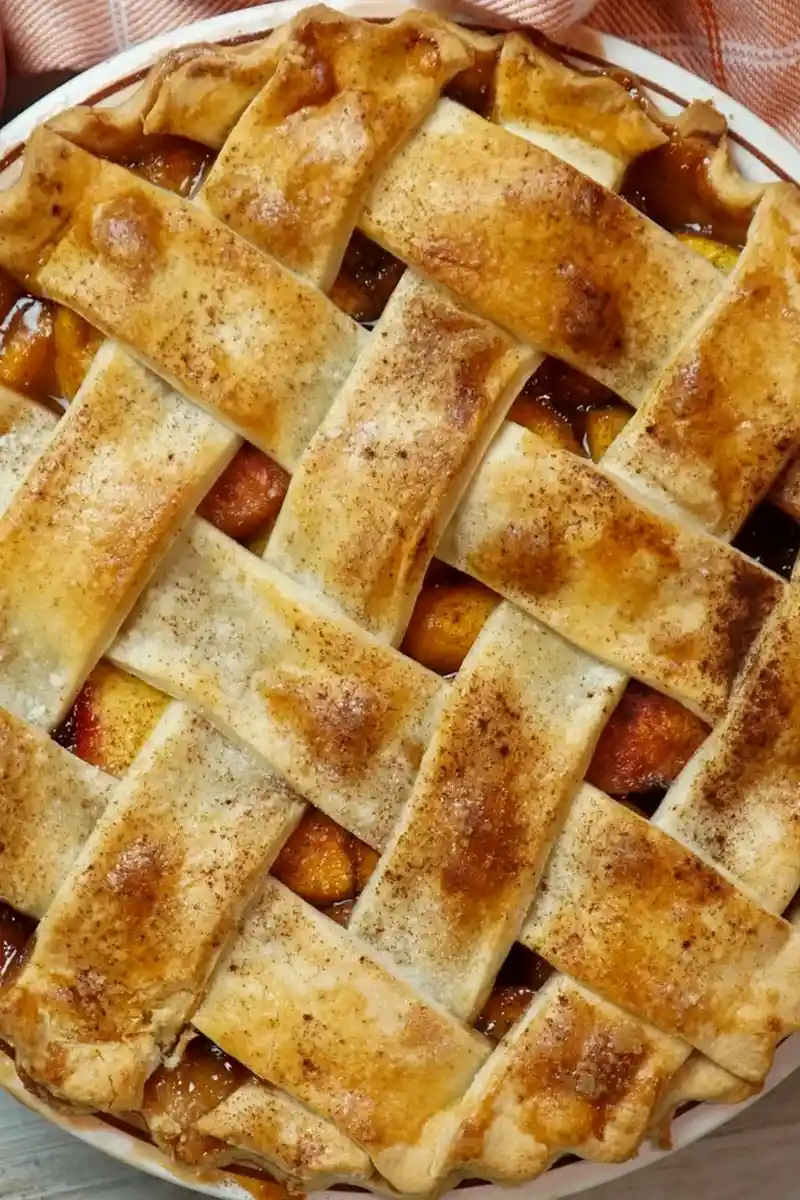
This recipe produces a classic peach pie with a flaky butter crust and a sweet, spiced filling. It is an ideal dessert for summer when peaches are at their peak ripeness.
List of ingredients
- 3 cups all-purpose flour – used for the crust structure.
- 16 tbsp butter (cut into ¼ slices and freeze) – ensures a flaky texture.
- 1 tsp salt – enhances the overall flavor.
- 1½ tsp sugar – adds subtle sweetness to the crust.
- ½ cup ice cold water – binds the dough without melting the fat.
- 3 lbs fresh peaches (peeled, pitted, and sliced ¼ thick) – the primary filling.
- 1 cup brown sugar – provides a rich, caramel-like sweetness.
- 2 tbsp cornstarch – thickens the fruit juices.
- 1 tbsp lemon juice – balances sweetness and prevents browning.
- ½ tsp ground cinnamon – adds warm aromatic flavor.
- 1 tbsp vanilla – enhances the fruit profile.
- ½ tsp ground nutmeg – adds depth to the spice mix.
- 1 egg white (lightly beaten) – used for the glaze.
- 1 tbsp sugar – for topping garnish.
- 1 tbsp cinnamon – for topping garnish.
step-by-step instructions
- Prepare the dough: In a food processor, combine all-purpose flour, sugar, and salt. Mix until well combined. Add half the butter and mix for 20 seconds, then add the remaining butter and mix until incorporated. Slowly add water to the dough and mix, repeating 5-6 times until combined. Divide dough into two tight balls, flatten slightly, wrap in plastic wrap, and refrigerate for 1 hour.
- Prepare the filling: In a large mixing bowl, add peaches, brown sugar, cornstarch, lemon juice, cinnamon, vanilla, and nutmeg. Coat the peaches completely and let them marinate for 1 hour. Scoop out ¼ cup of the juices and set aside. Drain the remaining excess liquid from the peaches, then stir the reserved ¼ cup of juice back into them. Set the peaches aside.
- Preheat oven: Set the oven to 425 degrees Fahrenheit.
- Form the bottom crust: Remove one dough ball from the refrigerator and place it on a lightly floured surface. Roll the dough out into a circle. Place an empty pie plate upside down on the dough and cut 2 inches around the plate. Fold the dough into quarters, place them in the pie plate, softly press the dough into the plate, and trim any extra edges.
- Prepare the lattice strips: Remove the remaining dough ball from the refrigerator and roll it out on a floured surface into a rectangle. Transfer the dough to parchment paper and cut it into 8 even strips.
- Assemble the pie: Scoop the peach filling into the prepared pie plate. Lay 4 strips of the lattice crust across the top, then weave the remaining strips perpendicularly in an over-under pattern. Trim excess dough with a sharp knife and crimp the edges with your fingers to create a decorative seal.
- Glaze and bake: Brush the lattice crust with the beaten egg white. Sprinkle the sugar and cinnamon evenly over the top. Place the pie on the middle rack of the oven with a baking sheet on the lower rack to catch any spillage. Bake for 25 minutes, then reduce the heat to 375 degrees and bake for an additional 30-35 minutes until the crust is golden brown.
- Cool and serve: Remove the pie from the oven and allow it to cool for 15-20 minutes before serving.
Secrets for a Flaky Crust
Keep the Butter Frozen
Using butter that has been sliced and frozen prevents it from melting into the flour during mixing. This creates small pockets of fat that turn into steam during baking, which is the key to a flaky texture.
Avoid Overworking the Dough
Mix the dough only until the ingredients are just combined. Over-mixing develops too much gluten, which can result in a tough, bread-like crust rather than a tender pastry.
The Role of Ice Cold Water
Adding water very slowly and ensuring it is ice cold keeps the fat from melting before the pie enters the oven. This temperature control is essential for maintaining the structural integrity of the crust.
Essential Chilling Time
Refrigerating the dough for at least one hour allows the gluten to relax and the fats to firm up. This prevents the crust from shrinking down the sides of the pie plate during the baking process.
Choosing and Preparing Your Peaches
Yellow vs. White Peaches
Yellow peaches provide the traditional tartness and vibrant orange color expected in a classic pie. White peaches are generally sweeter and milder, offering a more delicate flavor profile.
Efficient Peeling Methods
Blanch peaches in boiling water for 30 seconds and then plunge them into an ice bath. This allows the skins to slip off easily without removing too much of the fruit’s flesh.
Identifying Proper Ripeness
Select peaches that give slightly when pressed but are not mushy. Overripe fruit can break down too much during baking, leading to a filling that lacks texture and becomes too watery.
Slicing for Uniformity
Cut the peaches into consistent 1/4-inch thick slices. Uniform thickness ensures that all pieces of fruit cook at the same rate, preventing some slices from being mushy while others remain hard.
Optimizing the Fruit Filling
Managing Excess Moisture
Draining the marinated peaches while reserving a small amount of juice is critical. Using too much liquid in the pie will likely result in a soggy bottom crust that does not bake through.
The Function of Cornstarch
Cornstarch acts as a thickening agent that binds the fruit juices into a stable gel. This prevents the filling from running out across the plate when the pie is sliced and served.
Balancing Flavor with Lemon Juice
Lemon juice prevents the peaches from oxidizing and adds a bright acidity to the filling. This brightness balances the heavy sweetness of the brown sugar and enhances the natural fruit flavor.
Integrating Warm Spices
Cinnamon and nutmeg provide warm notes that complement the sweetness of the peaches. Ensure these spices are stirred in thoroughly to avoid concentrated clumps of flavor in certain slices.
Mastering the Lattice Top
Rolling the Dough Rectangle
Roll the second dough ball into a wide rectangle on a floured surface rather than a circle. This shape provides the necessary length to create strips that span the entire diameter of the pie.
Weaving the Over-Under Pattern
Lay half the strips across the filling, then weave the remaining strips perpendicularly. Lift and drop the strips in an alternating sequence to create the professional crisscross look.
Trimming for a Clean Edge
Use a sharp knife to cut away any dough that extends beyond the rim of the pie plate. This prevents the lattice from overlapping the edges too much and ensures a neat appearance.
Crimping for a Professional Seal
Use your fingers or a fork to press the edge of the bottom crust over the ends of the lattice strips. This seals the filling inside and creates a decorative, scalloped border.
Achieving the Perfect Bake
Using a Catch Pan for Drips
Place a baking sheet on the oven rack directly below the pie. This catches any bubbling fruit juices that may leak, preventing them from burning on the oven floor and creating smoke.
Monitoring the Crust Color
Watch for the crust to reach a golden brown hue. If the edges of the crust begin to brown too quickly, cover them with thin strips of aluminum foil to prevent burning.
Temperature Transition Logic
Starting at 425°F sets the crust structure and helps prevent shrinkage. Reducing the heat to 375°F allows the filling to cook through and thicken without over-browning the top crust.
The Necessity of Cooling
Allow the pie to rest for 20 minutes after removing it from the oven. This time is necessary for the cornstarch to fully set the filling, which ensures clean slices.
Ingredient Substitutions and Variations
Using Frozen Peaches
Thaw frozen peaches completely in the refrigerator before using them. Drain them thoroughly to remove excess water to prevent the filling from becoming too liquid.
Using Canned Peaches
Drain canned peaches and pat them dry with a clean towel before adding other ingredients. Skip the one-hour marinating step, as canned peaches are already softened from the canning process.
Butter Alternatives for the Crust
Use chilled vegetable shortening for a more tender, melt-in-your-mouth crust. A 50/50 mix of butter and shortening can provide both a rich flavor and a superior flaky texture.
Brown Sugar Options
Light brown sugar offers a subtle sweetness, while dark brown sugar adds a deeper, molasses-like flavor. Either variety can be used depending on your preference for richness.
Preservation and Serving
Room Temperature Storage
Store the pie in a cool, dry place for up to two days. Cover it loosely with foil to prevent the crust from absorbing moisture and becoming soft.
Refrigeration Guidelines
Keep leftovers in an airtight container in the refrigerator for up to five days. This helps maintain the freshness of the fruit and prevents the growth of mold.
Freezing the Unbaked Pie
Wrap the assembled, unbaked pie tightly in plastic wrap and then aluminum foil. Bake it directly from the freezer, adding about 10-15 minutes to the initial high-heat baking phase.
Reheating for Maximum Crispiness
Warm individual slices in an oven or toaster oven at 350°F. This method restores the flaky texture of the butter crust much more effectively than using a microwave.
Common Peach Pie Issues
Fixing a Soggy Bottom
Ensure the fruit is well-drained and the oven is fully preheated before the pie goes in. You can also lightly brush the bottom crust with beaten egg white to create a moisture barrier.
Preventing Over-Browned Edges
If the crust edges brown too fast, lower the oven temperature slightly. Applying a pie shield or aluminum foil strips to the edges early in the process is also effective.
Correcting Runny Filling
Increase the cornstarch slightly if you are using exceptionally juicy peaches. Always ensure the pie cools completely before cutting to allow the thickener to work.
Preventing a Tough Crust
Avoid over-handling the dough to keep gluten development to a minimum. Ensure that all components, including the butter and water, remain as cold as possible during preparation.
Frequently Asked Questions
Can I use a store-bought crust?
Yes, you can use pre-made refrigerated dough. Be mindful that store-bought dough may bake faster than homemade, so check the crust color more frequently during the process.
Do I need to peel the peaches?
Peeling is recommended for a smoother, more professional texture. However, you can leave the skins on if you prefer a more rustic style and want to save preparation time.
How do I know when the pie is fully cooked?
The crust should be golden brown and the filling should be bubbling in the center. The bubbles should appear thick and syrupy rather than watery.
Can I make this pie vegan?
Replace the butter with chilled vegan butter and use a plant-based egg substitute or a mixture of maple syrup and soy milk for the glaze.
Print
Homemade Lattice Peach Pie
- Total Time: 135 minutes
- Yield: 10 servings
- Diet: General
Description
Homemade peach pie recipe, just like grandma used to make! Made with a double lattice crust and filled with the most amazing peach pie filling.
Ingredients
- 3 cups all-purpose flour
- 16 tbsp butter (cut into ¼ slices and freeze)
- 1 tsp salt
- 1½ tsp sugar
- ½ cup ice cold water
- 3 lbs fresh peaches (peeled, pitted, and sliced ¼ thick)
- 1 cup brown sugar
- 2 tbsp cornstarch
- 1 tbsp lemon juice
- ½ tsp ground cinnamon
- 1 tbsp vanilla
- ½ tsp ground nutmeg
- 1 egg white (lightly beaten)
- 1 tbsp sugar
- 1 tbsp cinnamon
Instructions
- Step: In a food processor combine all-purpose flour, sugar, and salt. Mix until well combined. Add half the butter and mix for 20 seconds. Then add remaining butter and mix until incorporated. Slowly add water to the dough and mix. Repeat 5-6 times until combined. Divide dough into two tight balls and flatten slightly. Wrap in plastic wrap and refrigerate for 1 hour.
- Step: In a large mixing bowl add peaches, brown sugar, cornstarch lemon juice, cinnamon, vanilla, and nutmeg. Completely coat peaches and let marinate for 1 hour. Scoop out ¼ cup of juices and set aside. Drain remaining excess liquid from peaches and add reserved ¼ cup of juice back into them peaches and mix. Set peaches aside.
- Step: Preheat oven to 425 degrees.
- Step: Remove dough from the refrigerator. Place one dough ball on a lightly floured surface. Using a rolling pin, roll dough out in all directions forming a circle. Place an empty pie plate upside down on the dough and cut 2 inches around the pie plate. Fold the dough into quarters and place them in the pie plate. Softly press dough into plate and cut extra edges off.
- Step: Remove remaining dough from the refrigerator. Place one dough ball on a lightly floured surface. Using a rolling pin, roll dough out in all directions forming a rectangle. Transfer dough to a sheet of parchment paper and cut into 8 even strips.
- Step: Scoop pie filling into prepared pie plate with dough. Then, lay 4 strips of lattice crust across the top. Then weave the remaining strips perpendicular. Creating an over-under look to form the lattice crust. Trim the excess dough off with a sharp knife and create a decorative edge by crimping edges with fingers.
- Step: Brush the lattice crust with the egg wash. Then sprinkle sugar and cinnamon over the top evenly. Place pie in the preheated oven on the middle rack and place a baking sheet on the lower rack to catch spillage. bake for 25 minutes. Then reduce the heat to 375 degrees and bake for an additional 30-35 minutes until the crust is a golden brown.
- Step: Remove peach pie from the oven and allow to cool for 15-20 minutes before serving. Enjoy!
Notes
You can use frozen or canned peaches as a substitute for fresh peaches. If using a store-bought crust, you may need to cover the edges during baking as it cooks faster than homemade dough.
- Prep Time: 75 minutes
- Cook Time: 60 minutes
- Category: Dessert
- Method: Baking
- Cuisine: American
Nutrition
- Serving Size: 1 slice
- Calories: 488 kcal
- Sugar: 37 g
- Sodium: 359 mg
- Fat: 24 g
- Saturated Fat: 11 g
- Unsaturated Fat: 13 g
- Trans Fat: 0 g
- Carbohydrates: 63 g
- Fiber: 2 g
- Protein: 4 g
- Cholesterol: 36 mg