
This simple dessert combines juicy peaches with a tender, buttery crust for a classic treat. It is versatile enough to be made with either fresh seasonal peaches or convenient canned versions.
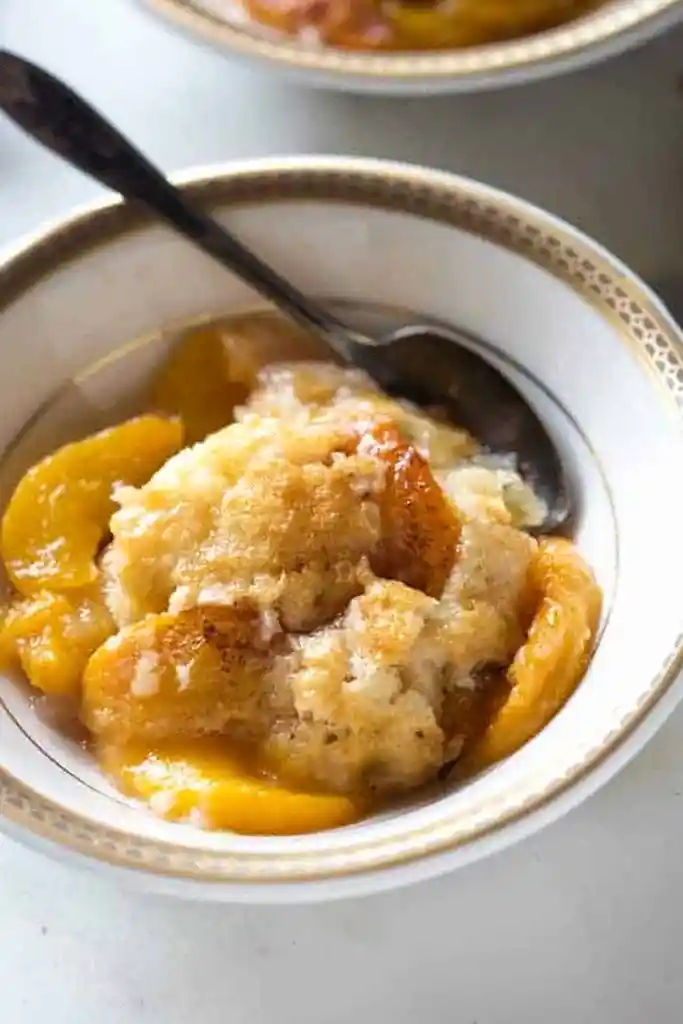
List of ingredients
- 5 peaches, peeled, cored and sliced (about 4 cups/600-700 g) – ensures a fruit-heavy filling.
- 3/4 cup granulated sugar (150 g) – used to macerate the fruit.
- 1/4 teaspoon salt – balances the sweetness of the peaches.
- 6 Tablespoons butter (85 g) – melted in the pan to create a rich base.
- 1 cup all-purpose flour (120 g) – provides the structure for the cobbler topping.
- 1 cup granulated sugar (200 g) – sweetens the batter layer.
- 2 teaspoons baking powder – helps the crust rise and become fluffy.
- 1/4 teaspoon salt – enhances the overall flavor of the batter.
- 3/4 cup milk (180 ml) – binds the dry ingredients into a smooth batter.
- ground cinnamon – sprinkled on top for warmth and aroma.
step-by-step instructions
- Prepare the fruit: Add the sliced peaches, sugar, and salt to a saucepan and stir. Cook on medium heat for a few minutes until the sugar dissolves and the peaches release their juices, then remove from heat.
- Melt the butter: Preheat your oven to 350 degrees F. Slice the butter into pieces, place them in a 9×13 inch baking dish, and put the dish in the oven during preheating until the butter is fully melted.
- Create the batter: In a large mixing bowl, combine the flour, sugar, baking powder, and salt. Stir in the milk just until the ingredients are combined.
- Layer the dish: Pour the batter directly over the melted butter in the baking pan and smooth it into an even layer.
- Add the topping: Spoon the cooked peaches and their juices (or undrained canned peaches) over the top of the batter. Generously sprinkle ground cinnamon over the surface.
- Bake and serve: Bake at 350 degrees F for 38-40 minutes. Serve the cobbler while warm, optionally with a scoop of vanilla ice cream.
Fruit Preparation Techniques
Blanching Peaches for Easy Peeling
To remove skins without a knife, lower peaches into boiling water for 30 seconds. Immediately transfer them to an ice-water bath to stop the cooking process. The skins will then slide off easily by hand.
Selecting Ripe Peaches
Choose peaches that give slightly when pressed gently near the stem. They should have a strong, fragrant aroma and a consistent golden-yellow color. Avoid fruit with deep bruises or excessively soft spots.
Using Canned Peaches
When using canned peaches, a 1-quart jar is the ideal substitute. Do not drain the syrup, as the liquid adds flavor and moisture to the batter during the baking process.
Slicing for Uniformity
Cut peaches into consistent 1/2-inch slices to ensure they cook evenly. Uniform slices prevent some pieces from turning to mush while others remain too firm.
Batter and Crust Optimization
Accurate Flour Measurement
Use the spoon-and-level method to measure flour to avoid packing it down. Packing flour into the measuring cup can lead to a dry, dense crust. Level the top with a flat edge for precision.
Preventing Overmixing
Stir the milk into the dry ingredients only until combined. Overmixing develops too much gluten, which can make the cobbler topping tough rather than tender. A few small lumps are acceptable.
The Role of Melted Butter
Melting the butter directly in the baking dish creates a fried-bottom effect for the batter. This prevents the crust from sticking and adds a rich, buttery flavor to the base of the dessert.
Adjusting Batter Consistency
The batter should be thick but pourable. If it seems too stiff, add a tablespoon of milk at a time until it reaches a smooth consistency that can be spread easily across the pan.
Flavor Variations and Add-ins
Integrating Warm Spices
Add a pinch of ground nutmeg or allspice to the flour mixture for more complexity. These spices complement the cinnamon and enhance the natural sweetness of the peaches.
Adding Mixed Berries
Replace one cup of peaches with fresh blueberries or raspberries. The acidity of the berries balances the sugar and creates a visually appealing multi-colored filling.
Enhancing with Vanilla Extract
Stir one teaspoon of pure vanilla extract into the milk before adding it to the dry ingredients. This adds a floral depth to the crust that pairs well with the fruit.
Using Brown Sugar
Substitute half of the granulated sugar in the batter with light brown sugar. This introduces a molasses flavor and results in a deeper golden-brown color on the crust.
Dietary-Friendly Substitutions
Gluten-Free Flour Alternatives
Use a high-quality 1:1 gluten-free flour blend that includes xanthan gum. Measure-for-measure blends typically work best to maintain the lift and structure of the cobbler.
Dairy-Free Milk Options
Unsweetened almond milk or soy milk can be used as a direct replacement for cow’s milk. These alternatives maintain the moisture levels without significantly altering the taste.
Plant-Based Butter Substitutes
Use a plant-based butter stick rather than a spreadable tub margarine. Sticks have a higher fat content and a lower water content, which ensures the crust browns correctly.
Alternative Sweeteners
Monk fruit sweetener or erythritol can be used in a 1:1 ratio for a lower-sugar version. Note that these may affect the caramelization of the crust slightly.
Serving and Presentation
Pairing with Vanilla Ice Cream
Place a cold scoop of vanilla ice cream on a warm slice of cobbler. The temperature contrast creates a creamy sauce as the ice cream melts into the fruit.
Adding Fresh Whipped Cream
Beat heavy cream with a small amount of sugar to soft peaks. Spoon a dollop of cream onto each serving for a lighter, airier accompaniment than ice cream.
Dusting with Powdered Sugar
Sift a light layer of powdered sugar over the finished cobbler before serving. This provides a professional look and a hint of extra sweetness on the surface.
Adding a Mint Garnish
Place a small sprig of fresh mint on top of each serving. The bright green color contrasts with the orange peaches, and the scent adds a fresh element to the dessert.
Storage and Reheating Guide
Refrigeration Parameters
Store leftover cobbler in an airtight container in the refrigerator for 4 to 5 days. Keep the container sealed tightly to prevent the crust from absorbing other food odors.
Oven Reheating Method
Allow the cobbler to reach room temperature before reheating. Bake at 350 degrees F for approximately 20 minutes, covering with foil if the top begins to brown too quickly.
Microwave Reheating Tips
Heat individual portions in 30-second intervals. This prevents the batter from becoming rubbery and ensures the fruit is warmed through without overcooking the crust.
Freezing Instructions
Wrap cooled slices tightly in plastic wrap and place them in a freezer-safe bag. These can be stored for up to three months and thawed in the refrigerator overnight.
Troubleshooting Common Issues
Fixing a Soggy Crust
Ensure the butter is fully melted and the batter is spread evenly across the pan. If the fruit is too watery, simmer it longer in the saucepan to reduce the liquid before adding it to the batter.
Addressing a Lack of Rise
Check the expiration date of your baking powder to ensure it is still active. You can test it by adding a pinch to hot water; it should bubble immediately if it is still effective.
Preventing a Burnt Top
If the topping browns too quickly before the center is set, tent the pan with aluminum foil. This shields the crust from direct heat while allowing the internal temperature to rise.
Managing Excessive Sweetness
If the peaches are naturally very sweet, reduce the amount of sugar used in the saucepan. This allows the natural tartness of the fruit to shine through more clearly.
Pan Selection and Preparation
Glass vs. Metal Baking Dishes
Glass dishes retain heat longer and may brown the edges more. Metal pans heat more quickly and evenly, which can result in a slightly more consistent crust texture.
Cast Iron Skillet Usage
A 10-inch cast iron skillet can be used for a deeper, more rustic cobbler. Be aware that the smaller surface area will make the layers thicker, which may require an extra 5-10 minutes of bake time.
Using Individual Ramekins
Divide the melted butter, batter, and fruit into small ramekins for single-serve portions. Reduce the baking time to 20-25 minutes as smaller volumes cook faster.
Importance of Pan Size
Using a pan larger than 9×13 inches will result in a very thin layer of batter. This can lead to overcooking or a crust that is too crisp rather than fluffy.
Frequently Asked Questions
Can I use frozen peaches?
Yes, you can use frozen peaches. Thaw them completely and drain the excess liquid before cooking them with sugar and salt to prevent the batter from becoming too wet.
Should I peel the peaches?
Peeling is recommended for a smoother texture. However, if you prefer a more rustic style or are using very young peaches with thin skins, you can leave them on.
Can I make this without a saucepan?
You can toss the fresh peaches with sugar and salt in a bowl and place them directly on the batter. However, pre-cooking them ensures the sugar is dissolved and the juices are concentrated.
Why is my cobbler not bubbling?
Bubbling usually occurs when the fruit juices reach a boil. Ensure your oven is fully preheated to 350 degrees F to ensure the filling reaches the necessary temperature.
Print
Homemade Old Fashioned Peach Cobbler
- Total Time: 55 minutes
- Yield: 9 servings
- Diet: General
Description
This old fashioned Peach Cobbler recipe is not only extremely easy to make from scratch, but it’s made with fresh or canned peaches so you can enjoy it all year round!
Ingredients
- 5 peaches, peeled, cored and sliced (about 4 cups)
- 3/4 cup granulated sugar (150 g)
- 1/4 teaspoon salt
- 6 Tablespoons butter (85 g)
- 1 cup all-purpose flour (120 g)
- 1 cup granulated sugar (200 g)
- 2 teaspoons baking powder
- 1/4 teaspoon salt
- 3/4 cup milk (180 ml)
- ground cinnamon
Instructions
- Step: Add the sliced peaches, sugar and salt to a saucepan and stir to combine; cook on medium heat for just a few minutes until the sugar is dissolved and helps to bring out juices from the peaches, then remove from heat and set aside.
- Step: Preheat oven to 350 degrees F, slice butter into pieces, add to a 9×13 inch baking dish, place the pan in the oven while it preheats to allow the butter to melt, then remove the pan from the oven.
- Step: In a large bowl mix together the flour, sugar, baking powder, and salt, stir in the milk just until combined, and pour the mixture into the pan over the melted butter and smooth it into an even layer.
- Step: Spoon the peaches and juice (or canned peaches, if using) over the batter and sprinkle cinnamon generously over the top.
- Step: Bake at 350 degrees for about 38-40 minutes and serve warm.
Notes
To substitute canned peaches, use 1 quart jar, undrained. For gluten-free adaptations, use gluten-free flour such as Cup4Cup or King Arthur Measure for Measure brands.
- Prep Time: 15 minutes
- Cook Time: 40 minutes
- Category: Dessert
- Method: Baking
- Cuisine: American
Nutrition
- Serving Size: 1 serving
- Calories: 315 kcal
- Sugar: 47 g
- Sodium: 303 mg
- Fat: 9 g
- Saturated Fat: 5 g
- Unsaturated Fat: 2.4 g
- Trans Fat: 0.3 g
- Carbohydrates: 59 g
- Fiber: 2 g
- Protein: 3 g
- Cholesterol: 23 mg