
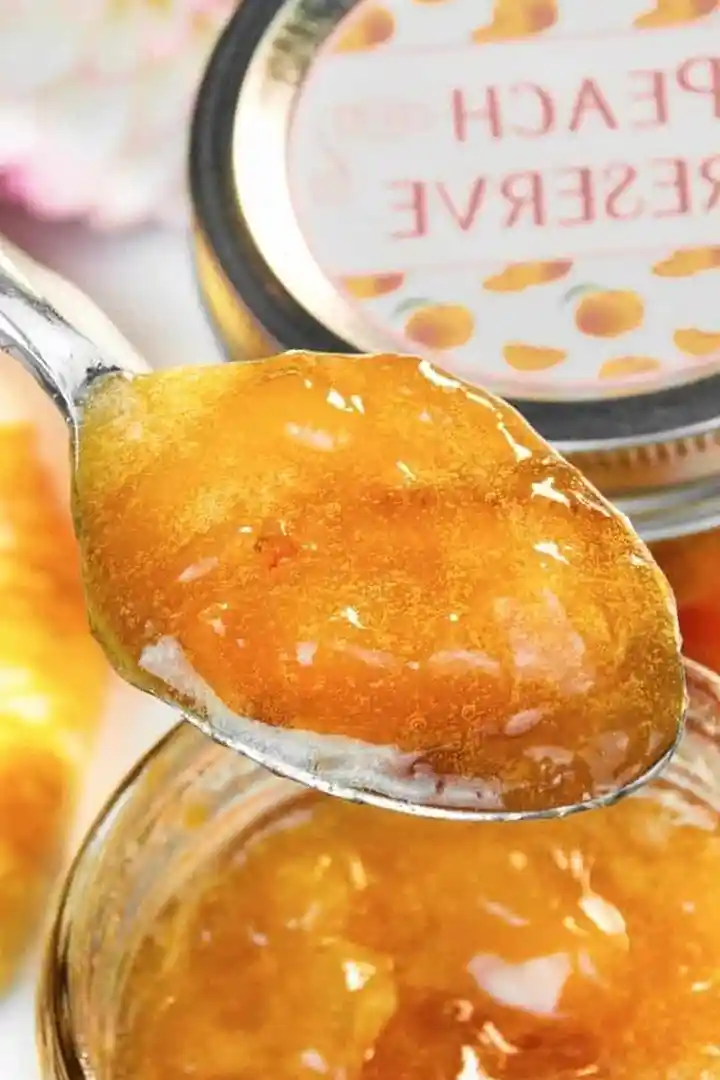
This recipe creates a syrupy, soft-set peach jam with visible fruit chunks throughout. It is an ideal preserve for spreading on toast or using as a filling for cakes and pastries.
List of ingredients
- 1 kg (2.2 lb) ripe peaches (8–10 fruits) – ensure they are ripe but not mushy.
- 1 kg (5 cups) jam sugar – contains added pectin for a better set.
- the juice of 1 large lemon – provides necessary acidity.
- 20g (1 tbsp) butter – used to clear foam and add shine.
- 5 to 6 jam/preserve jars with lids – must be sterilized before use.
step-by-step instructions
- Blanch the peaches: Fill a large bowl with ice cold water. Cut an x-shape into the bottom of each peach. Boil water in a large saucepan, submerge fruits for 2–3 minutes until skins loosen, then transfer to cold water with a slotted spoon.
- Peel and cut: Peel away the skin starting from the scored ends. Divide peaches in half, remove the pits, and cut the fruit into thin slices.
- Marinade the peaches: In a large non-metallic bowl, alternate layers of peach slices and jam sugar, then add lemon juice. Cover and refrigerate for several hours or overnight. Shortcut: Cook peaches and lemon juice over medium-high heat for 2 to 3 minutes before adding sugar.
- Prep spoon and saucers: Place several teaspoons and small saucers in the freezer to prepare for the setting point test.
- Sterilize the jars: Wash jars and lids in soapy water and rinse. Place them on a baking tray and heat in the oven at 100°C (225°F) for 15 minutes.
- Cook the peach preserve: Pour the mixture into a tall saucepan and bring to a rolling boil. Stir constantly for 4 to 5 minutes. Use a wet pastry brush to push any sugar crystals off the sides of the pot.
- Test the preserves: Place a small amount of jam on a frozen saucer. After a few minutes, run a finger through it; if it wrinkles, it is done. If it is runny, cook for another 2 minutes and re-test.
- Add butter: Stir in a knob of butter to dissolve foam and improve flavor. Skim off any remaining foam with a spoon.
- Jar the preserves: Remove from heat and let sit for 15 minutes for even fruit distribution. Ladle into sterilized jars using a funnel, leaving 1 cm (0.5 in) of headspace. Wipe rims and screw on lids.
- Process the jam: Sterilize the filled jars by processing them in boiling water for 20 minutes to ensure long-term safety.
- Label the peach preserves: Allow jars to cool for several hours before adding labels with the preparation date.
Selecting the Right Peaches
Prioritize Yellow Peaches for Flavor
Yellow peaches are generally tarter and more aromatic than white peaches. This tartness provides a necessary balance to the high sugar content in the jam, resulting in a more complex flavor profile.
Avoid Overripe or Mushy Fruit
Choose peaches that are ripe and soft to the touch but still hold their structure. Avoid fruits with brown spots or mushy areas, as these can introduce off-flavors and cause the fruit chunks to break down too much during cooking.
Using White Peaches for a Sweeter Profile
White peaches can be used interchangeably with yellow ones. Since they are naturally sweeter and milder, the resulting jam will have a softer, less acidic taste, which is often preferred for children or very sweet desserts.
Understanding Jam Sugar and Pectin
The Role of Jam Sugar
Jam sugar is standard granulated sugar blended with pectin, a natural gelling agent. Because peaches are naturally low in pectin, standard sugar often results in a runny syrup rather than a jam.
Substituting Granulated Sugar and Pectin
If jam sugar is unavailable, use 1 kg of granulated sugar combined with one 2 oz package of dry pectin. This ensures the jam reaches the correct consistency without requiring excessive boiling time.
Importance of Lemon Juice
Lemon juice provides the acidity required for pectin to bond and create a gel. Without this acid, the jam may fail to set regardless of the amount of sugar or pectin used.
Mastering the Setting Point
Using the Cold Plate Method
The most reliable way to check the set is by using saucers chilled in the freezer. A small drop of jam should form a skin that wrinkles when pushed, indicating the pectin has bonded.
Adjusting Cooking Time for Texture
A shorter cooking time of about 4 minutes results in a softer, more syrupy preserve. Cooking for 6 minutes or longer creates a firmer, more spreadable jam that holds its shape better on toast.
Preventing Overcooking
Overcooking the jam can cause the fruit to lose its vibrant color and the sugar to caramelize. This can lead to a darker, burnt taste and a texture that is too rubbery or hard.
Flavor Variations and Additions
Adding Vanilla Extract for Warmth
Stirring in 1 tablespoon of vanilla extract after the jam has finished cooking adds a creamy, aromatic depth. This variation pairs exceptionally well with the natural sweetness of the peaches.
Incorporating Slivered Almonds
Adding 1/2 cup of slivered almonds provides a crunchy texture that contrasts with the soft peach chunks. Stir them in at the very end of the cooking process to keep the nuts crisp.
Adding Ground Cinnamon
A half teaspoon of ground cinnamon added during the boiling process creates a warm, spiced preserve. This version is particularly suited for autumn breakfasts or as a filling for apple-peach tarts.
Infusing Fresh Ginger
Adding finely grated fresh ginger provides a zesty, spicy kick that cuts through the sugar. This variation transforms the jam into a sophisticated condiment for savory cheese pairings.
Sterilization and Safety Procedures
Oven Sterilization for Glassware
Heating jars at 100°C (225°F) eliminates bacteria and prevents the glass from cracking due to thermal shock when the hot jam is added. Ensure lids are sterilized but not overheated to avoid damaging the rubber seal.
The Boiling Water Bath Process
Processing sealed jars in boiling water for 20 minutes creates a vacuum seal that prevents spoilage. This step is essential for storing the jam in a pantry rather than the refrigerator.
Ensuring a Clean Rim Seal
Always wipe the rim of the jar with a clean, damp paper towel before screwing on the lid. Any stray jam or sugar on the rim can prevent a proper vacuum seal, increasing the risk of mold.
Storage and Shelf Life
Long-Term Pantry Storage
Unopened, processed jars should be stored in a cool, dark place away from direct sunlight. Under these conditions, the preserves can remain safe for consumption for up to one year.
Refrigeration After Opening
Once a jar is opened, the vacuum seal is broken and the jam is exposed to air. Store opened jars in the refrigerator and consume the contents within two weeks to maintain freshness.
Identifying Signs of Spoilage
Check for mold growth on the surface or a fermented, alcoholic smell before using the jam. If the lid is bulging or the seal has popped, discard the contents immediately.
Serving and Pairing Ideas
Pairing with Fresh Scones
Serve the peach jam with warm, homemade scones and a dollop of clotted cream. The tartness of the preserve cuts through the richness of the cream perfectly.
Topping for Greek Yogurt
Stir a few spoonfuls of the preserve into plain Greek yogurt and top with granola. This creates a healthy breakfast with a natural sweetness and fruity texture.
Filling for Cakes and Pastries
Use the jam as a layer between sponge cakes or as a filling for thumbprint cookies. Because it is soft-set, it spreads easily without tearing the cake surface.
Serving on Cheese Platters
Pair the peach preserves with soft cheeses like brie or goat cheese. The contrast between the salty cheese and the sweet, syrupy fruit is excellent for appetizers.
Troubleshooting Common Issues
Managing Runny Jam
If the jam is too runny after cooling, it can be returned to the pan. Re-boil it with a small amount of additional pectin or lemon juice until it reaches the desired setting point.
Reducing Excessive Foam
Foam is caused by air bubbles and pectin reacting during the boil. Adding a small amount of butter breaks the surface tension and dissolves the foam for a clearer finish.
Preventing Sugar Crystallization
Crystallization occurs when sugar is not fully dissolved. Stirring constantly and using a wet pastry brush to clear the sides of the pot ensures the sugar integrates fully into the syrup.
Frequently Asked Questions
Can I use frozen peaches for this recipe?
Yes, you can use frozen peaches. Thaw them completely and drain some of the excess liquid before proceeding with the marinade and cooking steps.
Why did my jam fail to set?
Failure to set is usually due to a lack of pectin or insufficient acidity. Ensure you use jam sugar or add dry pectin, and do not skip the lemon juice.
How long do these preserves last?
Processed jars last up to one year in a cool pantry. Once opened, they must be refrigerated and used within two weeks.
Can I reduce the amount of sugar?
Reducing sugar may affect the set and the shelf life of the jam. If you reduce the sugar, you must increase the amount of added pectin to ensure the jam gels correctly.
Print
Homemade Peach Jam Recipe
- Total Time: 1 day 40 minutes
- Yield: 4-6 jars
- Diet: Vegetarian
Description
This fragrant jam is syrupy and soft-set with juicy peach chunks throughout.
Ingredients
- 1 kg (2.2 lb) ripe peaches (8 – 10 fruits)
- 1 kg (5 cups) jam sugar
- juice of 1 large lemon
- 20g (1 tbsp) butter
Instructions
- Blanch the peaches: Fill a large bowl with ice cold water and set aside. Using a sharp paring knife, cut an x-shape into the bottom of each peach. Then fill a large saucepan with water and bring to a rolling boil. Submerge the fruits for 2 – 3 minutes, until the skin around the cut bottoms starts to loosen. Use a slotted spoon to transfer the peaches to the bowl of cold water and let sit until cool enough to handle.
- Peel and cut the peaches: Starting at the scored ends, peel away the skin with a knife. Next, divide the peaches in half, remove the pits and cut into thin slice.
- Marinade the peaches: Alternate layers of peach slices and jam sugar in a large non-metallic bowl and add the lemon juice. Cover with a lid or cling film and put in the fridge for several hours or overnight.
- Prep spoon & saucers: Put a few teaspoons and saucers into the freezer.
- Sterilize the jars: Wash the jars and lids in soapy water and rinse well. To dry, lay the jars and lids on a baking tray and sterilize them in the oven at 100°C (225° F / gas mark 4) for 15 minutes.
- Cook the peach preserve: Pour the peach-sugar-mixture into a tall saucepan and bring to a rolling boil. Once the jam starts bubbling, cook for 4 to 5 minutes and stir constantly.
- Test the preserves: Drop a small amount on a cold saucer and allow to cool for a couple of minutes. If a skin forms, which wrinkles when you run your finger trough, it’s perfect.
- Add butter: Stir a knob of butter into the peach preserve. Skim and discard any excess foam with a spoon.
- Jar the preserves: After taking the pot off the heat, let it sit for 15 minutes so the fruits will be evenly distributed in the jars. Using a jam funnel, ladle into the sterilized jars, filling 1 cm (0.5 in) below the rim. Clean the rim with a wet paper towel and screw on the lid.
- Process the jam: Sterilize the canned peach preserves by processing the jars in boiling water for 20 minutes.
- Label the peach preserves: After the jars have cooled for several hours, label them and make a note on the label indicating when the jam was prepared.
Notes
Store the unopened jars in a dark and cool place for up to a year. Once opened, keep the preserve in the fridge and consume within two weeks.
- Prep Time: 30 minutes
- Cook Time: 10 minutes
- Category: Cooking
- Method: Preserving
- Cuisine: British, American
Nutrition
- Serving Size: 1 jar
- Calories: 880 kcal
- Sugar: 200 g
- Sodium: 10 mg
- Fat: 4 g
- Saturated Fat: 2.5 g
- Unsaturated Fat: 1.5 g
- Trans Fat: 0 g
- Carbohydrates: 210 g
- Fiber: 3 g
- Protein: 2 g
- Cholesterol: 10 mg