
Preserving fresh peaches allows you to enjoy the flavor of summer throughout the winter months. This guide uses a standard water bath canning method to ensure the fruit remains safe and delicious for up to two years.
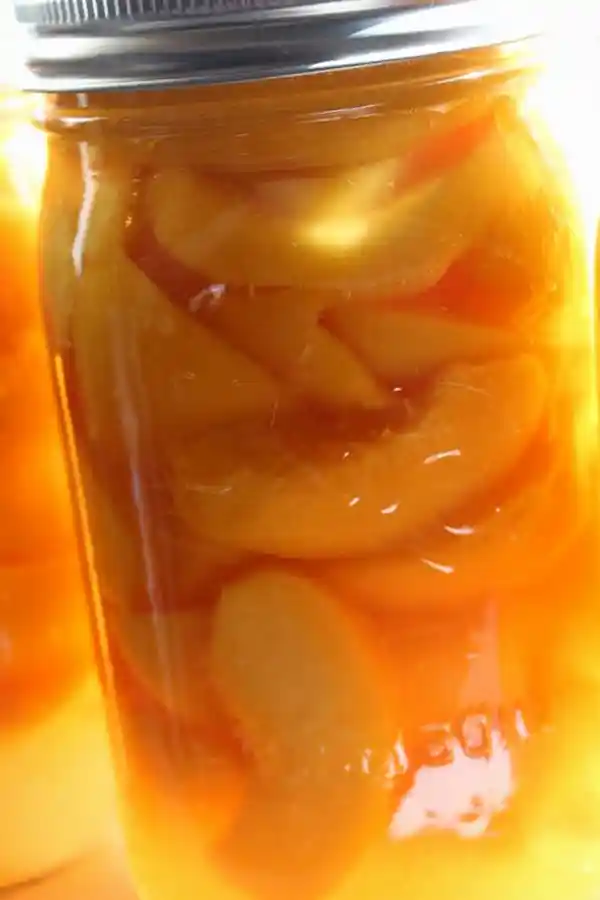
List of ingredients
- 11 – 12 lbs of peaches – ensure they are ripe and firm.
- Ice water – used for the blanching process to stop cooking.
- 2 batches of syrup – choose from light, medium, or heavy options.
- Light Syrup: 2 cups sugar to 1 quart water.
- Medium Syrup: 3 cups sugar to 1 quart water.
- Heavy Syrup: 4 cups sugar to 1 quart water.
step-by-step instructions
- Set up equipment: Prepare your water bath canner and clean all jars. Start boiling the water in the canner; if it finishes early, you can turn it off and bring it back to a boil later.
- Prepare the syrup: Combine the chosen amount of sugar and water in a saucepan. Heat the mixture until the sugar is completely dissolved, then set it aside.
- Blanch the peaches: Dip peaches into boiling water for 30 seconds to 1 minute. Use a fat skimmer to handle 5 peaches at a time for efficiency.
- Stop the cooking: Immediately transfer the blanched peaches into a sink or bowl filled with ice water to prevent the fruit from cooking further.
- Fill jars: Work with one jar at a time to prevent the peaches from browning. Slip the skin off, slice the fruit away from the pit, and place slices into the jar.
- Add syrup: Once the jar is full of fruit, pour in the hot syrup. Leave exactly 1/2 inch of headspace at the top of the jar.
- Remove air: Shake the jar, tap it on the counter, or use a plastic spatula to release any trapped air bubbles from the fruit.
- Seal the jars: Wipe the rim of the jar with a damp rag to remove residue. Place the lid on and tighten the ring.
- Process in canner: Load 7 quart jars into the boiling water bath. Ensure the water covers the tops of the jars by at least 2 inches.
- Boil: Bring the canner back to a boil with the jars inside and process for 30 minutes.
- Adjust for altitude: If you live above 1,000 feet, add 5 minutes for 1,001-3,000 ft, 10 minutes for 3,001-6,000 ft, 15 minutes for 6,001-8,000 ft, and 20 minutes for 8,001-10,000 ft.
- Cool the jars: Use a jar lifter to remove the jars and place them on a towel or wooden cutting board. Let them cool to room temperature.
- Test the seal: After 12 hours, check the lids. If the lid stays down when pressed, it is sealed; if it pops up, refrigerate the jar and eat it within a week.
- Store: Wash any sticky residue off the jars. Label them and store them in a cool, dark place.
Selecting the Right Peaches
Prioritize Freestone Varieties
When buying peaches for canning, specifically request freestone varieties. In these peaches, the pit separates easily from the flesh, which makes slicing much faster and prevents the fruit from bruising.
Identify Peak Ripeness
The ideal canning peach is very ripe but still firm enough to hold its shape. Ripe peaches will have a strong fragrance and can be slightly bruised just by picking them up gently.
Coordinate with Local Farms
If ordering from a farm, schedule your pickup for a window of several days. This flexibility allows you to pick up the fruit exactly when it reaches peak ripeness rather than when it is too green.
Syrup Selection and Flavor
Heavy Syrup for Traditional Taste
Heavy syrup uses 4 cups of sugar per quart of water. This is the most traditional canning method and provides a very sweet result that preserves the fruit’s texture well.
Medium Syrup for Balanced Sweetness
Medium syrup uses 3 cups of sugar per quart of water. This option provides a balance between the natural acidity of the peach and the sweetness of the added sugar.
Light Syrup for Natural Flavor
Light syrup uses 2 cups of sugar per quart of water. This is recommended for high-quality, tree-ripe peaches that are already naturally very sweet.
Preparation and Peeling Techniques
Efficient Blanching Process
Blanching involves dipping fruit in boiling water for a very short time. This loosens the skin without cooking the flesh, allowing the peel to slip off easily with your fingers.
Preventing Oxidation and Browning
Peaches can brown quickly once sliced. To prevent this, fill your jars one by one and cover the fruit with hot syrup immediately after slicing.
Slices Versus Peach Halves
Slicing the peaches allows you to fit more fruit into each jar, which saves on storage space and jar costs. However, canning them in halves provides a more aesthetic presentation for desserts.
Canning Safety and Processing
Managing Altitude Adjustments
Water boils at lower temperatures at higher altitudes, which means processing times must increase. Always check your elevation and add the required extra minutes to ensure the jars are safe.
Removing Trapped Air Bubbles
Air trapped inside the fruit or under the slices can interfere with the sealing process. Use a plastic spatula to gently release these bubbles before adding the lid.
Maintaining Proper Headspace
Leaving a 1/2 inch gap of air at the top of the jar is critical for a proper vacuum seal. Too much or too little headspace can cause the lid to fail during cooling.
Handling Syrup Leakage
It is normal for a small amount of syrup to bubble out during boiling. However, if more than half of the liquid leaks out, the jar must be refrigerated and eaten immediately.
Storage and Long-Term Care
Optimal Storage Conditions
Store your sealed jars in a cool, dry environment away from direct sunlight. Extreme temperature fluctuations can compromise the seal and affect the quality of the fruit.
Labeling and Organizing
Clearly label each jar with the date of canning and the type of syrup used. This helps with inventory management and ensures you use the oldest jars first.
Shelf Life Expectations
Properly processed and sealed peaches can be stored for up to two years. After this period, the color and texture may begin to degrade, though they may still be safe.
Troubleshooting Common Issues
Handling Underripe Peaches
If your peaches are too green, spread them out on newspaper in a sunny area for 2-3 days. If you must can them while slightly green, increase blanching time to 45 seconds.
Managing Bruised Fruit
Do not can heavily bruised peaches in slices as they will lose their structure. Instead, use these peaches to make peach jam or preserves.
Correcting Seal Failures
Check your seals 12 hours after processing. Any jar that did not seal properly must be moved to the refrigerator and consumed within seven days.
Frequently Asked Questions
How many jars does a bushel of peaches yield?
A 50-pound bushel of peaches typically yields between 20 and 25 quarts if you can them as halves. If you slice them, you can often fit more into fewer jars.
Can I use pint jars for this recipe?
Yes, pint jars are perfectly acceptable. For raw pack peaches in pint jars, the processing time is 25 minutes, plus any necessary altitude adjustments.
What is the difference between raw pack and hot pack?
Raw packing involves filling jars with raw fruit and adding boiling syrup. Hot packing involves boiling the fruit in syrup first, which prevents the fruit from floating in the jar.
How long does the entire canning process take?
While the boiling process takes about 30 minutes, the preparation takes much longer. Processing 50 pounds of peaches typically takes about 8 hours of total labor.
Can I leave the skins on the peaches?
Yes, leaving the skins on is safe from a canning perspective. It is purely a matter of personal preference regarding the texture of the final product.
Print
How to Can Fresh Peaches for Long-Term Storage
- Total Time: 120 minutes
- Yield: 7 quarts
- Diet: Vegetarian
Description
An easy method for canning fresh peaches using a water bath canner, producing 7 quarts of sunny, tree-ripe peaches that taste better than store-bought.
Ingredients
- 11–12 lbs peaches
- Ice water for blanching
- 2 batches of syrup (Light: 2 cups sugar to 1 quart water; Medium: 3 cups sugar to 1 quart water; Heavy: 4 cups sugar to 1 quart water)
Instructions
- Prepare: Prepare water bath canner and clean jars, then bring the canner to a boil.
- Syrup: Heat water and sugar in a saucepan until sugar is dissolved and set aside.
- Blanch: Dip peaches in boiling water for 30 seconds to 1 minute.
- Cool: Immediately remove peaches and place in a sink or bowl of ice water to stop cooking.
- Fill: Slip skins off, slice peaches, and fill jars.
- Add Syrup: Cover fruit with hot syrup leaving a 1/2 inch head space.
- Degas: Remove all air bubbles by shaking, tapping, or using a plastic spatula.
- Seal: Wipe the rim of the jar clean and secure the lid and ring.
- Process: Load jars into the boiling water bath canner, ensure they are covered by 2 inches of water, and boil for 30 minutes.
- Finish: Remove jars with a lifter, place on a towel to cool, and store sealed jars in a cool, dark place.
Notes
For pint jars, processing time is 25 minutes. Adjust for altitude: 1,001-3,000ft (+5 min), 3,001-6,000ft (+10 min), 6,001-8,000ft (+15 min), 8,001-10,000ft (+20 min).
- Prep Time: 90 minutes
- Cook Time: 30 minutes
- Category: canning
- Method: Water Bath Canning
- Cuisine: American
Nutrition
- Serving Size: 1 serving
- Calories: 205 kcal
- Sugar: 35 g
- Sodium: 15 mg
- Fat: 0.5 g
- Saturated Fat: 0 g
- Unsaturated Fat: 0.5 g
- Trans Fat: 0 g
- Carbohydrates: 52 g
- Fiber: 3 g
- Protein: 2 g
- Cholesterol: 0 mg