
This one-pot meal provides a low-carb alternative to traditional cabbage rolls without the tedious wrapping process. It combines lean protein and nutrient-dense vegetables for a hearty family dinner.
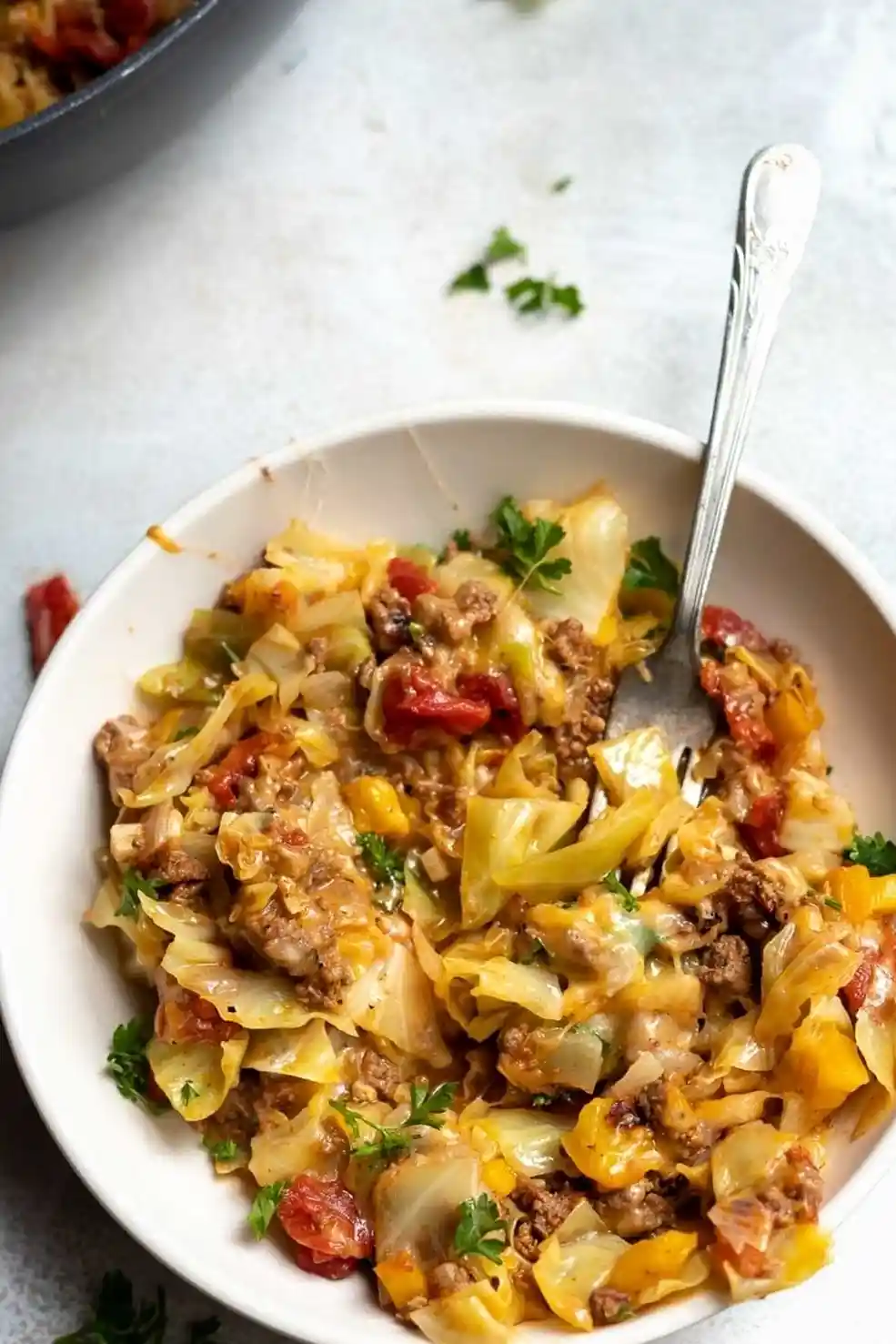
List of ingredients
- 3 Tablespoons Oil – used for sautéing the base vegetables and beef.
- 1 Lb Ground Beef – provides the main protein and rich flavor.
- 1 Sweet Onion (chopped) – adds a mild sweetness to the sauce.
- 1 Orange Bell Pepper (seeded, chopped) – adds color and a slight peppery taste.
- 3 Garlic Cloves (chopped) – provides a pungent, aromatic base.
- 14 oz Can Fire Roasted Diced Tomatoes – creates a smoky, acidic sauce base.
- 1/2 teaspoon Smoked Paprika – adds a deep, woody flavor.
- 1/2 teaspoon Dried Oregano – brings an earthy, herbal note.
- 1/2 teaspoon Garlic Powder – reinforces the garlic profile.
- 1/2 teaspoon Onion Powder – adds depth to the savory flavor.
- Salt/Pepper (to taste) – essential for balancing all other seasonings.
- 1 Small Head Green Cabbage (cored, chopped) – the main vegetable and bulk of the dish.
- 2 Cups Shredded Cheddar/Jack Cheese – adds a creamy, melted finish.
step-by-step instructions
- Sauté the Base: Heat the oil in a large pan with high sides or a dutch oven over medium-high heat. Add the ground beef, chopped onion, and orange bell pepper, cooking until the beef is thoroughly browned and the onions become translucent.
- Add Aromatics: Stir in the chopped garlic and sauté for approximately 1 more minute until fragrant, being careful not to burn the garlic.
- Simmer with Cabbage: Mix in the fire roasted diced tomatoes and all specified spices, salt, and pepper. Layer the chopped cabbage on top of the mixture, cover the pan with a lid, and cook for 15-20 minutes until the cabbage reaches your desired tenderness.
- Melt the Cheese: Sprinkle the shredded Cheddar/Jack cheese evenly over the top of the cabbage. Cover the pan again for a few minutes until the cheese is completely melted, then serve immediately.
Optimizing Your Protein Selection
Choosing the Right Ground Beef Fat Percentage
Using an 80/20 lean-to-fat ratio provides the most flavor, but it may release excess grease. If you use this ratio, drain the fat after browning the beef but before adding the tomatoes. For a leaner option, 90/10 beef works well and requires less cleanup.
Substituting with Ground Turkey or Chicken
Ground turkey or chicken is an excellent alternative for those seeking a leaner protein. Since poultry is less fatty than beef, you may need to add an extra tablespoon of oil to prevent sticking. Lean poultry absorbs the smoked paprika and oregano very well.
Using Plant-Based Meat Alternatives
Plant-based ground crumbles can replace beef for a vegetarian-friendly version. Most plant-based meats have a higher moisture content, so sauté them longer to achieve a browned texture. Ensure the substitute is seasoned minimally to avoid clashing with the recipe spices.
Preparing the Cabbage for Best Texture
Selecting a Small Green Cabbage
Choose a cabbage head that feels heavy for its size and has tight, pale green leaves. Avoid heads with brown spots or soft patches. A small head ensures the cabbage-to-meat ratio remains balanced in the pan.
Achieving a Uniform Chop for Even Cooking
Cut the cabbage into bite-sized squares roughly one inch in size. This ensures that every piece cooks at the same rate. If the pieces are too large, the bottom layer may overcook before the top layer softens.
Trying Savoy Cabbage for a Softer Texture
Savoy cabbage has crinkled leaves that are more tender than standard green cabbage. It absorbs the tomato sauce more efficiently due to its texture. If using Savoy, reduce the steaming time by 3-5 minutes to avoid mushiness.
Enhancing the Flavor Profile
Using Fire Roasted Tomatoes for Depth
Fire roasted tomatoes provide a charred, smoky flavor that mimics a slow-cooked stew. Regular diced tomatoes work, but they lack the depth of the roasted variety. If you cannot find fire roasted, add a pinch more smoked paprika to compensate.
Adjusting Smoked Paprika for Heat
The smoked paprika in this recipe is primarily for aroma and color. For a spicier version, you can replace half of the smoked paprika with hot paprika or add a pinch of cayenne pepper. This adds a subtle heat that cuts through the richness of the cheese.
Adding a Splash of Vinegar for Acidity
To brighten the flavors, stir in one teaspoon of apple cider vinegar or lemon juice during the final simmering stage. The acidity helps balance the sweetness of the onion and the richness of the beef. This mimics the traditional tang found in authentic cabbage rolls.
Equipment and Cooking Methods
Benefits of Using a Dutch Oven
A dutch oven is ideal because its thick walls distribute heat evenly and prevent the bottom from scorching. The heavy lid creates a tight seal, which is essential for steaming the cabbage efficiently. This reduces the need to add extra water to the pan.
Adapting the Recipe for a Large Skillet
If using a skillet, ensure it has high sides to accommodate the volume of the cabbage. You will need a tight-fitting lid to trap the steam, otherwise the cabbage will roast rather than soften. Check the cabbage tenderness more frequently in a skillet.
Finishing the Dish in the Oven
For a browned cheese crust, transfer the pan to a preheated oven at 400 degrees Fahrenheit. After the cabbage is cooked on the stove, add the cheese and broil for 3-5 minutes. This creates a bubbly, golden-brown topping that adds a different textural element.
Serving and Pairing Options
Low Carb Side Pairings like Cauliflower Rice
Cauliflower rice is the best low-carb accompaniment to this casserole. Sauté it with a bit of garlic and parsley to complement the beef and cabbage. It provides a rice-like experience while keeping the meal keto-friendly.
Traditional Pairings with White or Brown Rice
For those not following a low-carb diet, serving this over a bed of steamed basmati or brown rice is traditional. The rice absorbs the tomato-based sauce, making the meal more filling. This is a great way to serve the dish to children or guests.
Adding a Side of Sautéed Spinach
Fresh spinach sautéed with lemon and garlic provides a bright, nutrient-dense contrast to the heavy casserole. The bitterness of the greens balances the richness of the melted cheese. It also adds more volume to the plate without adding many calories.
Storage and Preservation
Refrigeration Guidelines for Leftovers
Store leftovers in an airtight glass container in the refrigerator for up to four days. Keep the portions shallow to ensure they cool quickly and stay fresh. The flavors often deepen and improve after a night in the fridge.
Freezing the Casserole for Later
To freeze, allow the casserole to cool completely before placing it in a freezer-safe container. It is recommended to freeze the dish before adding the cheese to prevent the cheese from becoming grainy. It can be stored in the freezer for up to three months.
Thawing and Reheating Frozen Portions
Thaw frozen portions in the refrigerator overnight before reheating. If reheating from frozen, add a tablespoon of water to the container to provide moisture. This prevents the beef from drying out during the heating process.
Reheating for Maximum Freshness
Using the Stovetop for Even Heating
Reheat the casserole in a small pan over medium-low heat. Add a splash of water or beef broth to loosen the sauce and restore the moisture. Stir gently to avoid breaking the cabbage pieces.
Quick Microwave Reheating Tips
Place the casserole in a microwave-safe dish and cover it with a damp paper towel. Heat in 1-minute intervals, stirring in between. The paper towel traps steam, which prevents the cabbage from becoming rubbery.
Preventing Cheese from Burning
When reheating in the oven or microwave, keep the heat moderate. Excessive heat can cause the cheese to separate and become oily. If the cheese has already hardened, adding a tiny bit of butter on top before reheating helps it remelt smoothly.
Common Troubleshooting Solutions
Fixing a Too-Watery Sauce
If the sauce is too thin after cooking the cabbage, remove the lid and simmer for an additional 5 minutes. This allows the excess moisture to evaporate and thickens the tomato base. You can also stir in a teaspoon of tomato paste for more thickness.
Dealing with Undercooked Cabbage
If the cabbage is still too crunchy after the allotted time, add 1/4 cup of water to the pan. Replace the lid and continue steaming for 5 more minutes. Cabbage density varies, so always test the center pieces with a fork.
Balancing Excessive Saltiness
If the dish tastes too salty due to the canned tomatoes or cheese, add a small amount of unsalted diced tomatoes. A teaspoon of sugar or a squeeze of lime juice can also mask the saltiness. Always taste the sauce before adding salt during the initial steps.
Frequently Asked Questions
Can I use frozen cabbage?
Frozen cabbage can be used, but it has a higher water content and a softer texture. Do not sauté it with the beef; instead, add it during the tomato stage. Reduce the cooking time by half, as frozen cabbage softens much faster than fresh.
Which cheese blends work best?
A mix of Cheddar and Monterey Jack is ideal because Cheddar provides flavor while Jack provides a superior melt. Mozzarella is a good alternative for a milder taste. Provolone can also be used for a slightly sharper, smokier profile.
How can I make this spicy?
Add diced jalapeños or red chili flakes when sautéing the onions and peppers. You can also stir in a teaspoon of Sriracha or chipotle paste into the tomato sauce. For a finishing touch, sprinkle red pepper flakes over the melted cheese.
Is this recipe suitable for meal prep?
Yes, this casserole is excellent for meal prep because it retains its structure and flavor. It is a nutrient-dense meal that is easy to portion into containers. It reheats well without losing its nutritional value or taste.
Print
Low Carb Unstuffed Cabbage Casserole
- Total Time: 30 minutes
- Yield: 6 servings
- Diet: Keto
Description
This Low Carb Unstuffed Cabbage Casserole Recipe is a great family dinner idea. Full of healthy vegetables and lean protein. This one-pot casserole is made low carb and can be served alongside rice for those that want it. Keto friendly recipes like this cabbage roll casserole make eating low carb easy!
Ingredients
- 3 Tablespoons Oil
- 1 Lb Ground Beef
- 1 Sweet Onion (chopped)
- 1 Orange Bell Pepper (seeded, chopped)
- 3 Garlic Cloves (chopped)
- 14 oz Can Fire Roasted Diced Tomatoes
- 1/2 teaspoon Smoked Paprika
- 1/2 teaspoon Dried Oregano
- 1/2 teaspoon Garlic Powder
- 1/2 teaspoon Onion Powder
- Salt/Pepper (to taste)
- 1 Small Head Green Cabbage (cored, chopped)
- 2 Cups Shredded Cheddar/Jack Cheese
Instructions
- Step: Saute oil, beef, onion and orange pepper over medium/high in large pan with high sides or a dutch oven. Cook until beef is browned and onions are translucent.
- Step: Add garlic and saute 1 more minute.
- Step: Stir in tomatoes, spices, salt and pepper. Top with cabbage. Cover and cook 15-20 minutes or until cabbage is tender.
- Step: Top with cheese, cover until melted then serve.
Notes
Add 1/4 cup water if the cabbage doesn’t seem to be releasing enough liquid.
- Prep Time: 5 minutes
- Cook Time: 25 minutes
- Category: Dinner
- Method: One-pot
- Cuisine: American
Nutrition
- Serving Size: 1 serving
- Calories: 474 kcal
- Sugar: 6 g
- Sodium: 418 mg
- Fat: 34 g
- Saturated Fat: 13 g
- Unsaturated Fat: 17 g
- Trans Fat: 1 g
- Carbohydrates: 11 g
- Fiber: 2 g
- Protein: 31 g
- Cholesterol: 108 mg