
This aromatic summer dessert blends the natural sweetness of ripe peaches with the sophisticated notes of culinary lavender and fresh thyme. A touch of honey enhances the filling, while a specialized almond meal base prevents a soggy crust.
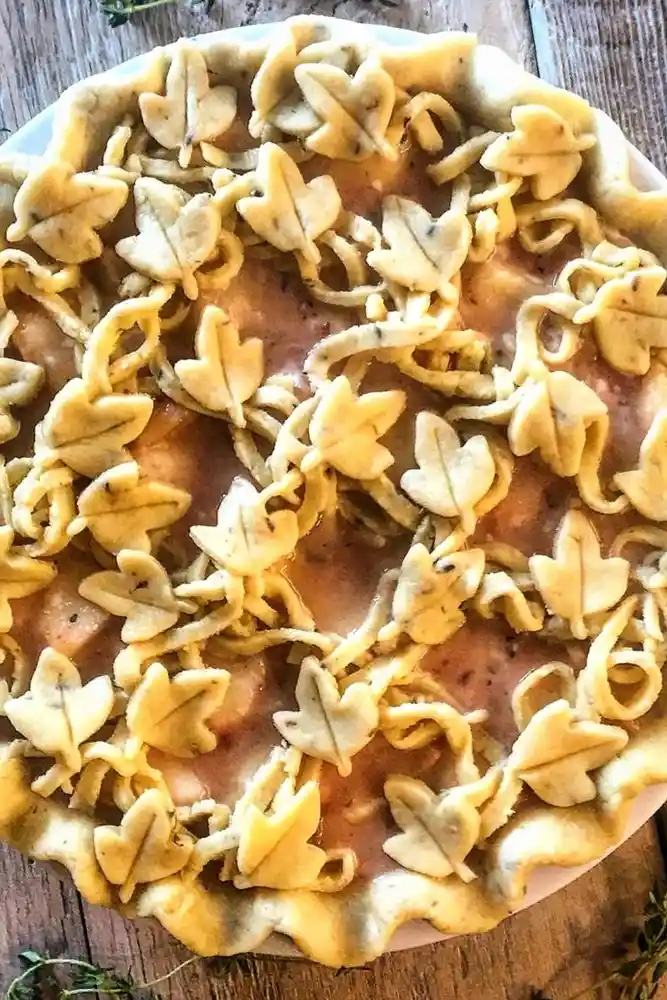
List of ingredients
- 1 recipe Perfect Pie Crust (incorporate 1.5 tbsp lightly chopped dried culinary grade lavender buds into the flour, sugar, and salt before blending)
- 6-7 white or yellow peaches (enough to yield 5 cups of slices)
- 1 tbsp lemon juice – prevents browning and adds acidity
- 1/3 cup granulated sugar – provides sweetness and helps release juices
- 3 tbsp runny honey – adds a rich, floral sweetness
- 1 tsp culinary grade lavender buds – adds a subtle floral aroma
- 1 tsp fresh thyme, chopped – provides an earthy, lemony contrast
- 1/4 tsp kosher salt – balances the sugars
- 2 1/2 tbsp cornstarch – primary thickening agent
- 1 tbsp all-purpose flour – secondary thickener for stability
- 2 tbsp almond meal – acts as a moisture barrier for the bottom crust
- 1 egg – for the golden egg wash
step-by-step instructions
- Prepare the Crust: Make the pie dough according to your recipe, ensuring the lavender is blended with the dry ingredients. Divide into two disks and chill.
- Preheat and Prep Pan: Preheat your oven to 425°F. Roll out the larger dough disk to fit a 9-inch pie plate, crimp the edges, and return it to the fridge to set.
- Process Peaches: Wipe the fuzz off the peaches with a tea towel or peel them by simmering in boiling water for 30 seconds, then shocking in ice water and slipping the skins off. Cut each peach in half and slice each half into 5-6 pieces.
- Acidulate Fruit: Place the sliced peaches in a large bowl and drizzle with lemon juice to maintain color and brightness.
- Mix Sweeteners and Herbs: In a small bowl, combine the granulated sugar, honey, lavender buds, and chopped thyme. Gently stir this mixture into the peaches using a rubber spatula.
- Add Thickeners: Combine the cornstarch and all-purpose flour, then toss gently into the peach mixture, taking care not to bruise the fruit.
- Assemble Base: Remove the chilled pie plate and sprinkle the almond meal evenly across the bottom of the dough shell. Pour the peach filling and any remaining juices over the almond meal.
- Create Top Crust: Roll out the smaller dough disk. Cover the pie using a trellis pattern (long strips strewn over the top), a lattice weave, or a flat top with vents.
- Final Chill: Place the assembled pie back in the refrigerator for 15 minutes to ensure the fats are cold before baking.
- Apply Glaze: Whisk one egg with a small amount of water. Brush the egg wash over the crust and optionally sprinkle with turbinado sugar.
- Initial Bake: Place the pie on a baking sheet in the lower third of the oven. Bake at 425°F for 25 minutes until the crust begins to turn golden.
- Final Bake: Move the pie to the middle rack and reduce the oven temperature to 375°F. Bake for another 25-30 minutes until the juices are bubbling and the crust is fully golden brown.
- Protect Crust: If the crust browns too quickly before the filling bubbles, cover the edges with a pie guard or aluminum foil.
- Cooling Period: Transfer the pie to a cooling rack. Let it set for 3-4 hours to allow the thickened juices to stabilize.
- Serving: Serve slices with a side of vanilla ice cream or fresh whipping cream.
Technical Tips for the Perfect Crust
Maintain Cold Temperatures
Keep your butter and water ice-cold to ensure a flaky texture. If the dough becomes too soft during rolling, return it to the refrigerator for 10 minutes to prevent the fat from melting before it hits the oven.
Avoid Overworking the Flour
Mix the dough only until the ingredients are just combined. Overmixing develops too much gluten, which results in a tough, bread-like crust rather than a tender, flaky pastry.
Allow Proper Resting Time
Chilling the dough for at least 30 minutes before rolling allows the flour to fully hydrate and the gluten to relax. This step prevents the crust from shrinking during the baking process.
Peach Selection and Preparation
Comparing White and Yellow Peaches
White peaches offer a more delicate, floral sweetness and lower acidity, which pairs exceptionally well with lavender. Yellow peaches provide a tangier, more traditional peach flavor that creates a sharper contrast with the honey.
Executing the Blanching Method
When peeling, ensure the ice water bath is truly freezing to stop the cooking process immediately. This prevents the peaches from becoming mushy and ensures the skin slips off without removing too much fruit flesh.
Managing Excess Moisture
If your peaches are exceptionally juicy, you can let the sliced fruit sit in a colander for 10 minutes before mixing with the thickeners. This prevents the filling from becoming overly watery during the bake.
Working with Culinary Herbs
Sourcing Culinary Lavender
Always use lavender specifically labeled as ‘culinary grade’ to avoid the high camphor levels found in ornamental varieties. Too much lavender can taste like soap, so stick strictly to the measured amount.
Properly Prepping Fresh Thyme
Strip the leaves from the woody stems and chop them finely to distribute the flavor evenly. Fresh thyme provides an earthy, lemony undertone that cuts through the sugar and honey.
Balancing Floral and Earthy Notes
The combination of lavender and thyme is designed to create a complex profile. The woody nature of the thyme prevents the lavender from becoming too perfumy or overwhelming.
Filling Stability and Texture
The Purpose of Almond Meal
Sprinkling almond meal on the bottom crust creates a physical barrier between the juicy peaches and the pastry. This absorbs excess moisture and prevents the common issue of a ‘soggy bottom’.
Using a Dual Thickening Agent
The combination of cornstarch and flour provides both stability and clarity. Cornstarch creates a thick, glossy gel, while flour provides a more cohesive structure that holds the fruit in place when sliced.
The Role of Honey in the Filling
Honey acts as both a sweetener and a humectant, helping the filling retain a lush, moist texture. It also complements the floral notes of the lavender more effectively than sugar alone.
Advanced Crust Techniques
Constructing a Trellis Top
Cut the rolled dough into strips of equal width using a sharp knife. Lay the strips across the filling in a random or structured overlapping pattern to create a rustic, airy look.
Weaving a Classic Lattice
Lay half the strips vertically across the pie. Fold back every other strip and weave the remaining strips horizontally through the gaps. This provides a professional look and allows steam to escape efficiently.
Creating Decorative Cutouts
Use small cookie cutters to create leaf or flower shapes. Keep these cutouts on a parchment-lined sheet in the fridge until the moment they are placed on the pie to maintain their shape.
Temperature and Baking Management
The Logic of Two-Stage Baking
Starting at 425°F sets the crust quickly and activates the leavening, ensuring a high rise and flaky layers. Dropping to 375°F allows the fruit to cook through and the thickeners to activate without burning the exterior.
Optimizing Oven Rack Placement
Baking the first stage on the lower rack ensures the bottom crust receives direct heat. Moving to the middle rack for the second stage ensures an even brown on the top and sides.
Indications of a Fully Baked Filling
Look for thick, slow-bubbling juices around the edges of the crust. If the juices are thin and splashing, the cornstarch has not yet reached its full thickening temperature.
Storage and Reheating Advice
Room Temperature Shelf Life
This pie can be kept at room temperature for up to 24 hours if stored in a cool, dry place. Ensure it is completely cooled before covering to prevent steam from softening the crust.
Refrigeration Guidelines
Store the pie in the refrigerator for up to three days. Cover it loosely with foil or plastic wrap to prevent the crust from absorbing other odors in the fridge.
Best Reheating Methods
To maintain the crust’s crispness, reheat individual slices in a 350°F oven for 5-10 minutes. Avoid the microwave, as it can make the pastry rubbery and the filling overly soft.
Troubleshooting Common Issues
Preventing Crust Shrinkage
If your crust pulls away from the edges, it is usually due to over-stretching the dough or insufficient resting. Always let the crimped shell chill before adding the filling.
Correcting Over-Browning
If the edges of the crust turn dark brown too quickly, immediately cover them with a pie shield or a ring of aluminum foil. This allows the center to continue baking without burning the edges.
Handling Watery Filling
If the filling is too runny after cooling, it may be due to under-baking or using overly ripe fruit. Ensure the filling reaches a bubbling state in the oven to fully activate the cornstarch.
Frequently Asked Questions
Can I use frozen peaches instead of fresh?
Yes, but you must thaw them completely and drain the excess liquid before measuring. You may need to increase the cornstarch by an additional teaspoon to compensate for the extra moisture.
What is a good substitute for almond meal?
If almond meal is unavailable, you can use finely ground blanched almonds or a thin layer of crushed digestive biscuits or breadcrumbs to act as the moisture barrier.
Should I peel the peaches every time?
Peeling is optional; leaving the skins on adds a bit of texture and color. If you leave the skins, be sure to rub off the fuzz with a clean towel for a smoother mouthfeel.
Can I use dried thyme instead of fresh?
You can use dried thyme, but use only one-third of the amount called for in the recipe. Fresh thyme is preferred for its brighter, more citrusy flavor profile.
How do I stop the top crust from sticking to the cutouts?
Dust your rolling pin and work surface generously with flour. Use a sharp knife or cutter and move the shapes immediately to a chilled baking sheet to keep them from merging.
Print
Peach, Lavender, Thyme and Honey Pie
- Total Time: 85 minutes
- Yield: 8 servings
- Diet: General
Description
A summery sweet peach pie, with the contrasts of lavender and thyme.
Ingredients
- 1 recipe Perfect Pie Crust (with 1.5 tbsp dried culinary lavender buds)
- 6–7 white or yellow peaches (enough for 5 cups sliced)
- 1 tbsp lemon juice
- 1/3 cup granulated sugar
- 3 tbsp runny honey
- 1 tsp culinary grade lavender buds
- 1 tsp chopped fresh thyme
- 1/4 tsp kosher salt
- 2 1/2 tbsp cornstarch
- 1 tbsp AP flour
- 2 tbsp almond meal
- 1 egg (for wash)
Instructions
- Step 1: Prepare the Pie Dough.
- Step 2: Slice peaches into 5-6 slices per half, leaving them unpeeled (rub off fuzz) or peeling them using the blanching method.
- Step 3: Preheat the oven to 425F.
- Step 4: Roll the larger disk of dough to fill a 9″ pie plate, crimp, and return to the fridge to set.
- Step 5: Place sliced peaches in a bowl and drizzle with lemon juice.
- Step 6: Mix sugar, honey, lavender, and thyme together in a small bowl, then stir gently into the peaches to coat.
- Step 7: Mix cornstarch and flour together and toss gently with the peaches.
- Step 8: Smooth almond meal evenly into the bottom of the pie shell and pour the peach filling over it.
- Step 9: Roll out the smaller disk of dough and cover the filling using a trellis, lattice, or flat top with vents.
- Step 10: Return the decorated pie to the fridge for 15 minutes.
- Step 11: Apply a light egg wash (1 egg mixed with a touch of water) to the crust.
- Step 12: Place on a baking sheet in the lower third of the oven and bake for 25 minutes until the crust starts to turn golden brown.
- Step 13: Move the pie to the middle rack, reduce temperature to 375F, and bake another 25-30 minutes until juices are bubbling and the crust is golden brown.
- Step 14: Remove to a cooling rack and let set for 3-4 hours.
Notes
Store at room temperature for 1 day or in the fridge for up to 3 days. If using cut outs for the upper crust, store them on a parchment-lined baking sheet in the fridge or freezer until ready to place on the filling.
- Prep Time: 25 minutes
- Cook Time: 60 minutes
- Category: Dessert
- Method: Baking
- Cuisine: American
Nutrition
- Serving Size: 1 slice
- Calories: 420 kcal
- Sugar: 28 g
- Sodium: 180 mg
- Fat: 18 g
- Saturated Fat: 7 g
- Unsaturated Fat: 11 g
- Trans Fat: 0 g
- Carbohydrates: 42 g
- Fiber: 3 g
- Protein: 5 g
- Cholesterol: 55 mg