
This comprehensive guide shows you how to create a thick, flavorful peach pie filling that can be safely preserved for year-round use. By using a water bath or steam canner, you can lock in the peak flavor of fresh summer peaches for future desserts.
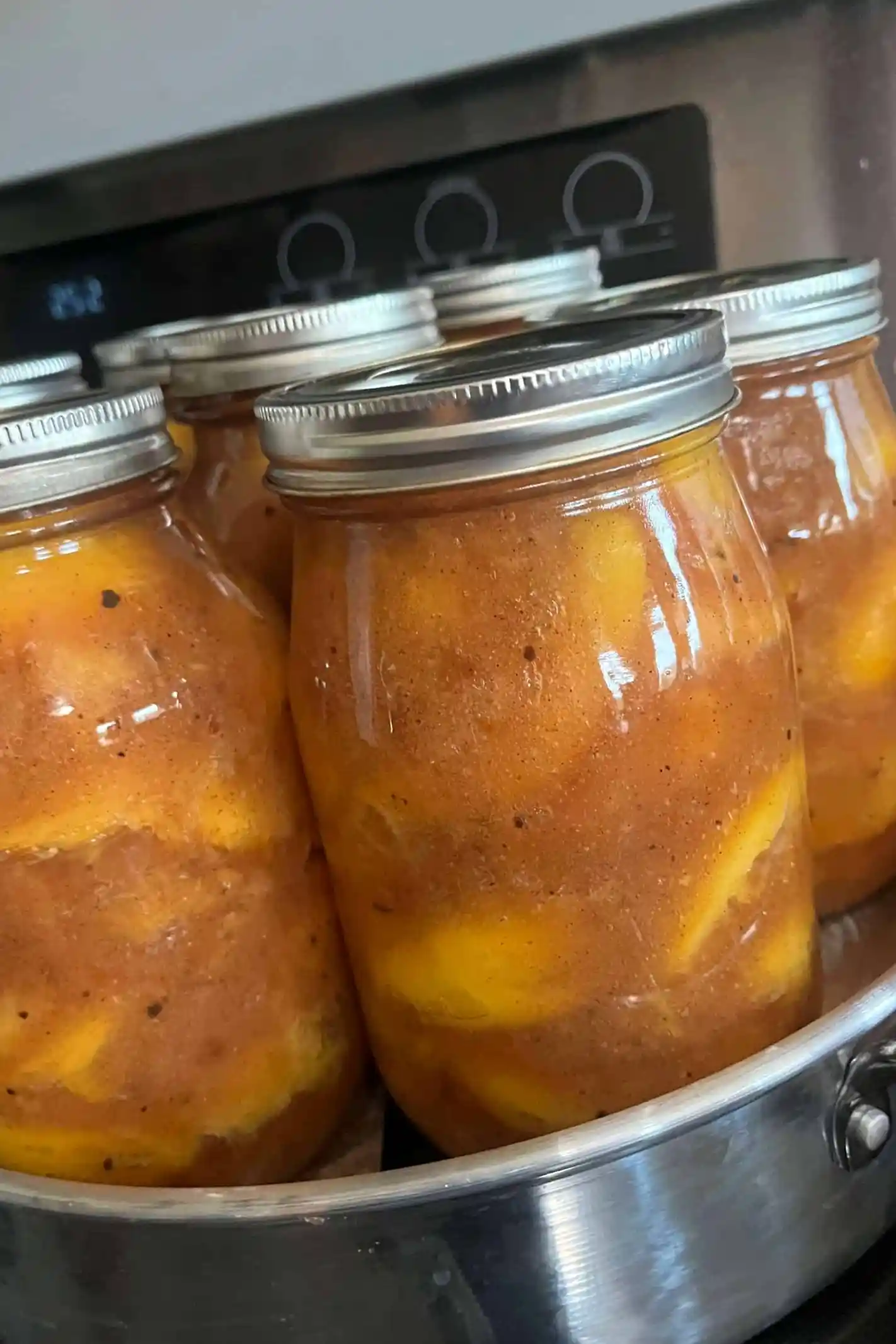
List of ingredients
- 18 lbs of peaches – fresh and ripe
- 2 cups lemon juice – bottled for consistent acidity
- 3 cups raw unrefined sugar – can be adjusted based on peach sweetness
- 2 cups brown sugar – adds a deep, molasses-like richness
- 2 1/4 cups clear jel – use the cook-type modified cornstarch
- 5 1/4 cups water – filtered or reserved blanching water
- 2 tsp cinnamon – ground for warmth
- 1 tsp vanilla powder – provides concentrated vanilla flavor
step-by-step instructions
- Prepare Peaches: Wash peaches in cold water, rinsing well. Bring a large pot of water to a boil and simultaneously fill a large bowl with ice and cold water.
- Peel Peaches: Working in batches, make an X in the bottom of each peach and blanch in boiling water for 30 seconds to 1 minute, or until the skin curls. Remove with a slotted spoon and immediately plunge into the ice water bath; the peels should slip off easily.
- Slice and Protect: Remove pits, slice the peaches, and place them in a large bowl with 2 cups of bottled lemon juice. Toss frequently to prevent the fruit from browning.
- Mix Base: In a large stockpot, combine the raw sugar, brown sugar, clear jel, water, cinnamon, and vanilla powder.
- Thicken Mixture: Place the stockpot over medium heat and whisk almost constantly until the mixture thickens and begins to bubble.
- Combine: Remove the thickened mixture from the heat and gently fold in the sliced peaches and lemon juice mixture using a spatula.
- Fill Jars: Ladle the hot filling into prepared pint or quart canning jars, leaving a generous 1 1/4 inch headspace. Remove air bubbles and add more filling if necessary to maintain the headspace.
- Seal: Wipe the rims of the jars clean, add the lids, and secure them with screw bands.
- Process: Place jars in a water bath canning pot or steam canner and process for 30 minutes, adjusting for elevation if required.
- Cool Down: Shut off the heat and let jars sit in the canner for 10 minutes. Remove the lid or cock the steam canner lid and wait another 10 minutes before moving jars to a heat-proof surface lined with a clean towel.
- Set: Let the jars cool undisturbed for 18-24 hours to prevent siphoning.
- Store: Remove rings, test seals, wash jars, and label them. Store in a cool, dark place away from direct sunlight.
- Handle Unsealed Jars: Any jars that did not seal properly must be refrigerated and consumed quickly.
Selection and Preparation of Fruit
Choosing Freestone Peaches
Freestone peaches are highly recommended for this canning recipe because the pit separates easily from the flesh. This makes the slicing process much faster and reduces the amount of fruit wasted during pitting. Clingstone peaches can be used, but they require more effort to remove the pit cleanly.
Identifying Optimal Ripeness
Select peaches that are fragrant and give slightly when pressed gently. Avoid fruit that is overripe or mushy, as these peaches will break down too much during the cooking and canning process. Firm but ripe peaches maintain their shape and texture in the final pie filling.
The Importance of the Ice Bath
The ice water bath is essential for stopping the cooking process immediately after blanching. If the peaches stay warm, they may overcook, leading to a mushy consistency. The rapid temperature change also helps the skins release more efficiently from the fruit.
Canning Safety and Technical Details
Maintaining Precise Headspace
Leaving 1 1/4 to 1 1/2 inches of headspace is critical because Clear Jel is a thickener that expands during the heating process. Insufficient space can lead to siphoning, where liquid is forced out of the jar, or in extreme cases, it can cause lids to fail or blow off. Fill jars to the shoulders or the freezer-safe line on wide-mouth pints.
Water Bath vs Steam Canning
Both water bath canning and steam canning are effective for this high-acid recipe. Water bath canning requires the jars to be completely submerged in boiling water. Steam canning uses saturated steam to achieve the same temperature, which often requires less water and can be faster to heat up.
Preventing Siphoning During Cooling
Siphoning occurs when the contents of the jar flow out under the lid during the cooling phase. To prevent this, follow a gradual cooling process. By leaving the jars in the pot for 10 minutes and then resting them on a towel for 24 hours, you stabilize the internal pressure.
Understanding Thickening Agents
Using Cook-Type Clear Jel
Clear Jel is a modified cornstarch specifically designed for canning because it remains stable during heat processing. It is important to use the cook-type version rather than the instant variety. Cook-type Clear Jel requires heat to activate its thickening properties, ensuring the filling doesn’t separate after canning.
Avoiding Regular Cornstarch
While regular cornstarch is a common kitchen thickener, it is not recommended for canning. It can break down during the processing time, resulting in a watery filling. Additionally, regular cornstarch often leaves the filling looking cloudy rather than clear and glossy.
Achieving the Right Consistency
The filling should be whisked almost constantly over medium heat until it is bubbly and thick before the fruit is added. This ensures there are no lumps of starch in the final product. Folding in the peaches gently at the end prevents the fruit from being crushed.
Flavor Enhancements and Adjustments
Managing Sweetness Levels
The amount of raw unrefined sugar can be adjusted based on the natural sweetness of your peach crop. If your peaches are exceptionally sweet, you can reduce the raw sugar portion. It is advised to keep the brown sugar amount constant to maintain the depth of flavor.
The Role of Vanilla Powder
Vanilla powder provides a concentrated essence and visible vanilla flecks without adding extra liquid. This keeps the filling thick and ensures the vanilla flavor complements rather than overpowers the fresh taste of the peaches.
Adding Acid for Safety
Bottled lemon juice is used instead of fresh lemon juice to ensure a consistent level of acidity. Acidification is necessary for safe water bath canning to prevent the growth of harmful bacteria. Bottled juice has a standardized pH level that provides a safety margin.
Serving and Usage Suggestions
Baking a Traditional Peach Pie
To use the filling, line a pie pan with one homemade crust. A standard pie usually requires 1 to 2 quarts of filling depending on the desired height. For a lattice top, one quart is typically sufficient, whereas a solid top crust may require two quarts to create a mounded look.
Baking Temperatures and Times
Bake your peach pie at 375F for approximately 45 minutes. The pie is done when the crust is golden brown and the filling is bubbling. For a professional finish, apply an egg wash or milk to the top crust and dust it with granulated sugar before baking.
Alternative Dessert Ideas
This canned filling is versatile beyond pies. It can be spooned into a baking dish for peach cobbler, clafoutis, or a peach crisp. It also serves as an excellent topping for vanilla ice cream or Greek yogurt.
Storage and Longevity
Optimal Storage Conditions
Store your finished jars in a cool, dark environment, such as a pantry or cellar. Keep them away from extreme temperature fluctuations, as excessive heat or cold can compromise the vacuum seal of the lids.
Monitoring Seal Integrity
After the 24-hour cooling period, remove the screw bands and press the center of the lid. If the lid does not pop up and down, the seal is successful. Any jars that fail the seal test must be stored in the refrigerator and eaten within a few days.
Expected Shelf Life
While properly canned goods can last a long time, it is best to use them within two years. This timeframe ensures the best nutritional value and the most vibrant peach flavor. Always label your jars with the date of canning for easy tracking.
Troubleshooting Common Issues
Dealing with Cloudy Filling
If your filling appears cloudy, it is likely due to the type of thickener used. Using a modified cornstarch like Clear Jel prevents this. If you used standard cornstarch, the cloudiness is a normal result of the starch reacting to the high heat of the canning process.
Handling Liquid Separation
If you notice a layer of liquid on top of the filling after opening, simply stir the contents before using. This occasionally happens if the filling was not brought to a full bubble before the fruit was added, or if the peaches were exceptionally juicy.
Correcting Under-Thickened Filling
If the filling is too thin after processing, you can thicken it further during the baking process by adding a small amount of cornstarch to the filling just before it goes into the pie crust. However, following the whisking and bubbling step during preparation usually prevents this.
Frequently Asked Questions
Can I use frozen peaches for this recipe?
Yes, you can use frozen peaches, but you must thaw them first and drain excess liquid. Be mindful that frozen peaches may have a softer texture than fresh ones, which could affect the final consistency of the filling.
Is bottled lemon juice better than fresh for canning?
Bottled lemon juice is preferred because it has a consistent acidity level. Fresh lemons vary in pH, which can create safety risks in water bath canning. Bottled juice ensures the environment is acidic enough for preservation.
What is a jar lifter and why is it needed?
A jar lifter is a specialized tool used to move hot jars in and out of the canning pot. It provides a secure grip, preventing the jars from slipping and reducing the risk of burns or breakage during the process.
How do I know if the peaches are blanched enough?
Peaches are ready to be removed from the boiling water when the skin starts to curl and loosen along the X-cut. This typically takes 30 to 60 seconds. Over-blanching can make the fruit too soft.
Can I substitute brown sugar with more raw sugar?
You can, but you will lose the caramel notes and moisture that brown sugar provides. The brown sugar helps create a richer color and a more complex flavor profile in the filling.
Print
Preserving Summer Peaches: Homemade Peach Pie Filling Canning Guide
- Total Time: 1 hour 45 minutes
- Yield: 10 quarts
- Diet: Vegetarian
Description
A delicious and simple homemade peach pie filling designed for canning, allowing you to preserve the taste of fresh summer peaches for use in pies, cobblers, or crisps all year round.
Ingredients
- 18 lbs peaches
- 2 cups lemon juice
- 3 cups raw unrefined sugar
- 2 cups brown sugar
- 2 1/4 cups clear jel
- 5 1/4 cups water
- 2 tsp cinnamon
- 1 tsp vanilla powder
Instructions
- Step: Wash peaches in cold water, rinsing well.
- Step: Bring a large pot of water to a boil.
- Step: While the water heats, fill a large bowl with ice, cold water.
- Step: Working in batches, peel peaches by making an X in the bottom and blanching in boiling water for 30 seconds to 1 minute or til skin starts curling along the cuts.
- Step: Remove peaches from the water with a slotted spoon and immediately plunge into ice cold water bath. Peels should slip right off with your fingers. Remove pits, slice peaches, and add to large bowl with 2 cups of bottled lemon juice, tossing frequently to prevent browning.
- Step: Set peaches and lemon juice aside to make the filling.
- Step: In a large stockpot, add sugar, clear jel, water, cinnamon, and vanilla powder.
- Step: Whisk ingredients together and place over medium heat. Heat the mixture while whisking almost constantly until it has thickened and is bubbly.
- Step: Remove thickened mixture from the heat and pour in the peach slices and lemon juice mixture. Fold in gently with a spatula.
- Step: To prepared pint or quart canning jars, ladle the hot pie filling into jars leaving a generous 1 1/4 inch headspace. Remove air bubbles and add more filling if needed to maintain headspace.
- Step: Wipe rims of the jars and add lids and secure with screw bands.
- Step: Place jars in the bottom of your water bath canning pot or steam canner and process pint and quart jars for 30 minutes, adjusting time for elevation if needed.
- Step: Once processing time is complete, shut off heat and allow jars to sit in the canner for 10 minutes to cool slightly before removing the lid to cool another 10 minutes before completely removing jars to a heat proof surface lined with a clean towel to cool undisturbed for 18-24 hours.
- Step: Once cooled, remove rings, test seals, wash jars, label, and store in a cool dark place away from direct sunlight.
Notes
Use 1-2 quarts of filling per pie depending on desired fullness. Bake in a pie crust at 375F for about 45 minutes until browned. Clear jel is recommended as it stays clear and is approved for canning.
- Prep Time: 60 minutes
- Cook Time: 15 minutes
- Category: Dessert, Preserving
- Method: Canning
- Cuisine: American
Nutrition
- Serving Size: 1 quart
- Calories: 850 kcal
- Sugar: 145 g
- Sodium: 60 mg
- Fat: 1 g
- Saturated Fat: 0 g
- Unsaturated Fat: 1 g
- Trans Fat: 0 g
- Carbohydrates: 210 g
- Fiber: 8 g
- Protein: 4 g
- Cholesterol: 0 mg