
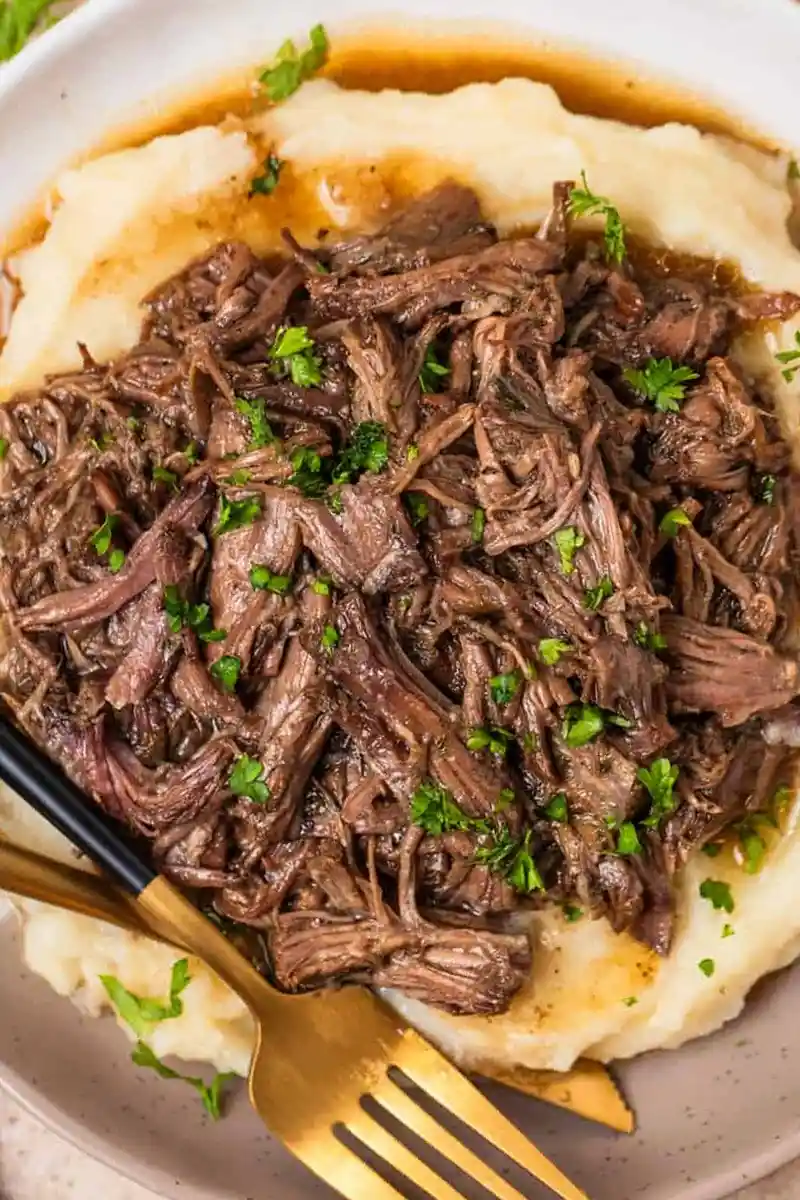
This slow cooker shredded beef is the ultimate solution for home cooks seeking a high-protein, tender, and flavorful meal without the hassle of hours in the kitchen. By utilizing a low and slow cooking process, the tough collagen in the beef chuck roast breaks down completely, resulting in succulent meat that pulls apart with the slightest touch of a fork. This versatile foundation piece works equally well for upscale dinners, quick lunch wraps, or hearty family platters.
List of ingredients
- 3-4 lb chuck roast
- 1 cup beef broth
- 2 Tbsp soy sauce (tamari for gluten-free)
- 2 Tbsp Worcestershire sauce
- ¼ cup vegetable broth (as a substitute)
- 2-3 garlic cloves, minced
- 1-2 tsp Italian seasoning
- ¼ tsp onion powder
- ½ tsp cracked pepper
- ½ – ¾ tsp sea salt
- 2 Tbsp corn starch (optional)
step-by-step instructions
- Step: Add the chuck roast to your slow cooker.
- Step: Pour the beef broth, soy sauce, Worcestershire sauce, and vegetable broth over the meat.
- Step: Cover the meat evenly with the garlic, sea salt, pepper, Italian seasoning, and onion powder.
- Step: Cover and cook on low for 7-9 hours, or until it easily falls apart with a fork.
- Step: Shred the beef once tender and allow it to keep warm in the cooking juices until ready to serve. Add salt or pepper to taste if needed.
Practical cooking methods for better texture
Selecting the right cut of beef
The success of this recipe relies heavily on selecting a roast with significant intramuscular fat, known as marbling. Chuck roast is the premier choice because it contains an abundance of connective tissue, which melts into gelatin during the long braising process, creating that iconic ‘melt-in-your-mouth’ texture. Avoid lean cuts like eye of round or sirloin, as these will likely dry out and become stringy rather than tender when subjected to long, moist cooking cycles.
The importance of the low setting
Using the low setting on your slow cooker is non-negotiable for achieving the correct texture in a chuck roast. High-heat settings can cause the outside of the meat to tighten prematurely, creating a tough exterior that resists shredding even after 8 hours of cooking. By maintaining a gentle, consistent temperature, the muscle fibers have ample time to relax and absorb the aromatic braising liquids.
Managing the cooking juices
The liquid that remains in the pot after the beef is cooked is essentially a concentrated meat essence. Instead of discarding this flavorful byproduct, use it to moisten the shredded beef if it begins to dry out during storage. This liquid serves as an excellent base for gravies, or can be used to re-hydrate the meat when reheating for later meals throughout the week.
Substitutions and flavor adjustments
Customizing the herb profile
While Italian seasoning provides a reliable, herbaceous foundation, you can easily pivot the dish to suit specific culinary themes. For a Mexican-inspired profile, swap the Italian herbs for a blend of cumin, smoked paprika, and a pinch of ground coriander. If you prefer a bolder, more peppery dish, increase the cracked black pepper and add a teaspoon of dried mustard powder to the spice rub before cooking.
Adjusting acidity levels
Acidity is vital for cutting through the richness of a large beef roast, but you have options beyond standard grape juice. A splash of apple cider vinegar or even a dash of pomegranate juice can provide the necessary sharpness to balance the fat. If you find the meat is tasting too heavy, add a tablespoon of tomato paste during the last hour of cooking to introduce a bright, acidic note that rounds out the savory profile.
Managing salt sensitivity
If you are monitoring your sodium intake, the easiest place to cut salt is within the beef broth and soy sauce. Opt for ‘no salt added’ beef stock and use coconut aminos as a lower-sodium substitute for soy sauce. Since you are using dried herbs and aromatic garlic, the dish will retain plenty of flavor even without a heavy hand on the salt shaker.
Serving ideas for various occasions
Classic comfort food applications
The most traditional way to serve this shredded beef is piled high over a bed of creamy, garlic-infused mashed potatoes. The juices from the beef act as a natural gravy, seeping into the potatoes and creating a deeply satisfying, cohesive dish. Alternatively, serve the meat over wide egg noodles tossed with a little bit of butter and parsley to create a quick, restaurant-style beef stroganoff substitute.
Casual handheld variations
Because the meat is so tender, it is a perfect candidate for sandwiches and tacos. For a classic deli-style sandwich, pile the shredded beef onto a toasted ciabatta roll, top with a sharp, melted provolone cheese, and add a layer of pickled peppers for crunch. When making tacos, briefly crisp the shredded beef in a hot pan after it has been removed from the slow cooker to give the edges a bit of texture before filling your tortillas.
Low-carb and grain-free options
For those avoiding heavy starches, this beef pairs exceptionally well with roasted root vegetables or a fresh, crisp slaw. Toss shredded cabbage, carrots, and a light vinegar-based dressing to create a coleslaw that cuts through the richness of the beef. Serving the beef over cauliflower mash or inside large, sturdy lettuce cups provides a satisfying crunch and freshness that balances the heavier, savory elements of the meat.
Effective storage and reheating strategies
Freezing for long-term use
Shredded beef is an ideal candidate for batch cooking and freezer storage. To freeze, allow the meat and its juices to reach room temperature, then divide the portions into heavy-duty, freezer-safe bags. Press as much air out of the bags as possible to prevent freezer burn, and label them with the date; the beef will maintain peak quality for up to three months in the freezer.
Safe refrigerator storage
When storing in the refrigerator, always keep the meat submerged in a portion of its cooking juices. This prevents the exposed fibers from oxidizing and drying out while sitting in the cold air. Use an airtight glass or plastic container, and ensure the beef is stored in the coldest part of your refrigerator, away from the door, to maintain its quality for the full 3-4 day duration.
Reheating without losing moisture
The best way to reheat shredded beef is in a small saucepan over medium-low heat with a tablespoon or two of broth or water. If you are using a microwave, place the beef in a bowl, add a small splash of liquid, and cover the top with a damp paper towel to trap the steam. This prevents the ends of the meat fibers from becoming rubbery or burnt during the reheating process.
Common questions and troubleshooting
Why is my beef still tough after the recommended cooking time?
If the beef is still tough, it simply requires additional cooking time to break down the connective tissue. Some roasts are leaner or have more rigid collagen than others, which can vary the cooking time even with the same weight of meat. Continue cooking on the low setting and check every 30 to 45 minutes; eventually, the fibers will soften significantly.
Can I add vegetables directly into the slow cooker?
You certainly can add carrots, celery, or chunks of potato to the slow cooker to create a one-pot meal. Keep in mind that vegetables often cook faster than a large roast, so place them at the bottom of the pot where the liquid is most concentrated. Avoid adding delicate vegetables like zucchini, as they will turn into mush during the 8-hour cooking window required for the beef.
How do I handle too much liquid in the pot?
If you prefer a more concentrated, intense flavor, you can reduce the juices after the beef is shredded. Transfer the liquid to a small saucepan and simmer over medium-high heat until it reduces by half. Alternatively, use the corn starch slurry method mentioned in the instructions to transform the thin liquid into a thickened, coating-style sauce that clings better to the meat fibers.
Print
Slow Cooker Shredded Beef
- Total Time: PT425M
- Yield: 8 servings
- Diet: High Protein
Description
This easy, 5-minute prep slow cooker shredded beef is juicy, tender, and full of amazing flavor. A perfect dump-and-go meal that is versatile enough for tacos, sandwiches, or serving over mashed potatoes.
Ingredients
- 3–4 lb chuck roast
- 1 cup beef broth
- 2 Tbsp soy sauce (tamari for gluten-free)
- 2 Tbsp Worcestershire sauce
- ¼ cup vegetable broth (as a substitute)
- 2–3 garlic cloves, minced
- 1–2 tsp Italian seasoning
- ¼ tsp onion powder
- ½ tsp cracked pepper
- ½ – ¾ tsp sea salt
- 2 Tbsp corn starch (optional)
Instructions
- Step: Add the chuck roast to your slow cooker.
- Step: Pour the beef broth, soy sauce, Worcestershire sauce, and vegetable broth over the meat.
- Step: Cover the meat evenly with the garlic, sea salt, pepper, Italian seasoning, and onion powder.
- Step: Cover and cook on low for 7-9 hours, or until it easily falls apart with a fork.
- Step: Shred the beef once tender and allow it to keep warm in the cooking juices until ready to serve. Add salt or pepper to taste if needed.
Notes
If the meat is still tough, it needs more cooking time. To thicken the juices, ladle out 1/2 cup of liquid, whisk in 2-3 tablespoons of corn starch until smooth, and stir the mixture back into the slow cooker. Leftovers can be refrigerated for 3-4 days or frozen for up to 3 months.
- Prep Time: PT5M
- Cook Time: PT420M
- Category: Main Course
- Method: Slow Cooker
- Cuisine: American
Nutrition
- Serving Size: 1 serving
- Calories: 323 kcal
- Sugar: 1 g
- Sodium: 543 mg
- Fat: 20 g
- Saturated Fat: 9 g
- Unsaturated Fat: 10 g
- Trans Fat: 0 g
- Carbohydrates: 2 g
- Fiber: 1 g
- Protein: 34 g
- Cholesterol: 117 mg