
I absolutely love making restaurant-quality desserts at home that impress everyone, and this sticky rice recipe is one of my favorites.
The aroma of the steaming pandan leaves fills my kitchen, and the creamy texture of the sweet rice is completely irresistible. This recipe captures the exact flavor profile and creamy texture right in your own kitchen with a simple-to-follow process. We’re making a sweet, aromatic dessert that highlights the unique pairing of sticky rice and coconut milk. The secret ingredient, pandan, infuses a beautiful green color and unique vanilla-like aroma that takes this from simple to spectacular. It’s an easy-to-master recipe that guarantees a high-end experience without a lot of effort, perfect for family dinners.

Ingredients
- 300 g (1 ½ cups) Glutinous Rice (Sweet Sticky Rice)
This must be short-grain glutinous rice, also known as sweet rice. Rinse thoroughly before soaking to remove excess starch, ensuring proper texture. - 400 ml (1 ¾ cups) Full-Fat Coconut Milk
Use full-fat canned coconut milk (not light or a beverage blend) for maximum creaminess and flavor. Avoid coconut cream (the solid part) unless specifically called for; we need liquid consistency for infusion. - 100 g (½ cup) Granulated Sugar
Standard white sugar provides the necessary sweetness for a dessert-style sticky rice. Balances the richness of the coconut milk. - 2 g (½ teaspoon) Fine Sea Salt
Crucial for enhancing the sweet notes and balancing the overall flavor profile. Use fine grain salt for fast dissolving in the warm liquid. - 5-6 fresh Pandan Leaves (about 20 cm or 8 inches long)
Pandan leaves impart a unique vanilla, grassy, and floral aroma and natural green color that elevates this sticky rice recipe. Find these fresh or frozen in most Asian markets; avoid dried leaves as they lack flavor. - 30 g (¼ cup) Unsweetened Toasted Coconut Flakes
Used for garnish; provides essential texture contrast against the soft rice. Unsweetened flakes prevent the dessert from becoming overly sweet.
Instructions
I always set a timer for the soaking step, especially when preparing this for a family dinner; it’s easy to forget if you get busy.
- Soak and Prepare the Glutinous Rice
Rinse the glutinous rice thoroughly under cold running water until the water runs completely clear, indicating excess starch removal. Place the rinsed rice in a large bowl, cover with at least 5 cm (2 inches) of cold water, and soak for a minimum of 4 hours or preferably overnight to prepare for this sticky rice recipe. Drain the soaked rice completely before steaming to avoid soggy results. - Steam the Rice until Tender
Set up a steamer by lining the basket with cheesecloth or parchment paper (with holes pierced in it). Spread the drained glutinous rice evenly in the lined steamer basket; avoid overcrowding so steam can circulate. Steam over vigorously boiling water for 25-30 minutes, or until the rice is tender, translucent, and perfectly sticky. If the rice still feels hard in the center after 30 minutes, add 5 more minutes of steaming time, ensuring the water below is still boiling vigorously. - Prepare the Sweet Coconut Cream Base
While the rice steams, prepare the coconut cream mixture by combining 400 ml (1 ¾ cups) full-fat coconut milk, 100 g (½ cup) granulated sugar, and 2 g (½ teaspoon) fine sea salt in a medium saucepan. Heat over medium-low heat, stirring constantly, until the sugar and salt are fully dissolved and the mixture is warm but not boiling. Remove from heat immediately once dissolved. - Infuse the Pandan Cream for Garnish
Divide the warm coconut milk mixture into two equal portions (approximately 200 ml or ¾ cup each). To one portion, add the knotted pandan leaves; return this pandan-infused portion to low heat and gently simmer for 5-7 minutes. Press the leaves occasionally with a spoon to extract maximum flavor and color, and watch for the cream to turn pale green, then strain out the leaves. This is your Sweet Coconut Pandan Cream. - Combine Steamed Rice and Unflavored Cream
Transfer the hot steamed sticky rice to a large mixing bowl immediately after steaming. Pour the *unflavored* warm coconut milk mixture (the other portion) over the rice. Stir gently to combine, cover tightly with a lid or plastic wrap, and let it sit for 15-20 minutes to absorb the liquid fully. This step is crucial for the final texture of the sticky rice recipe. - Serve and Garnish
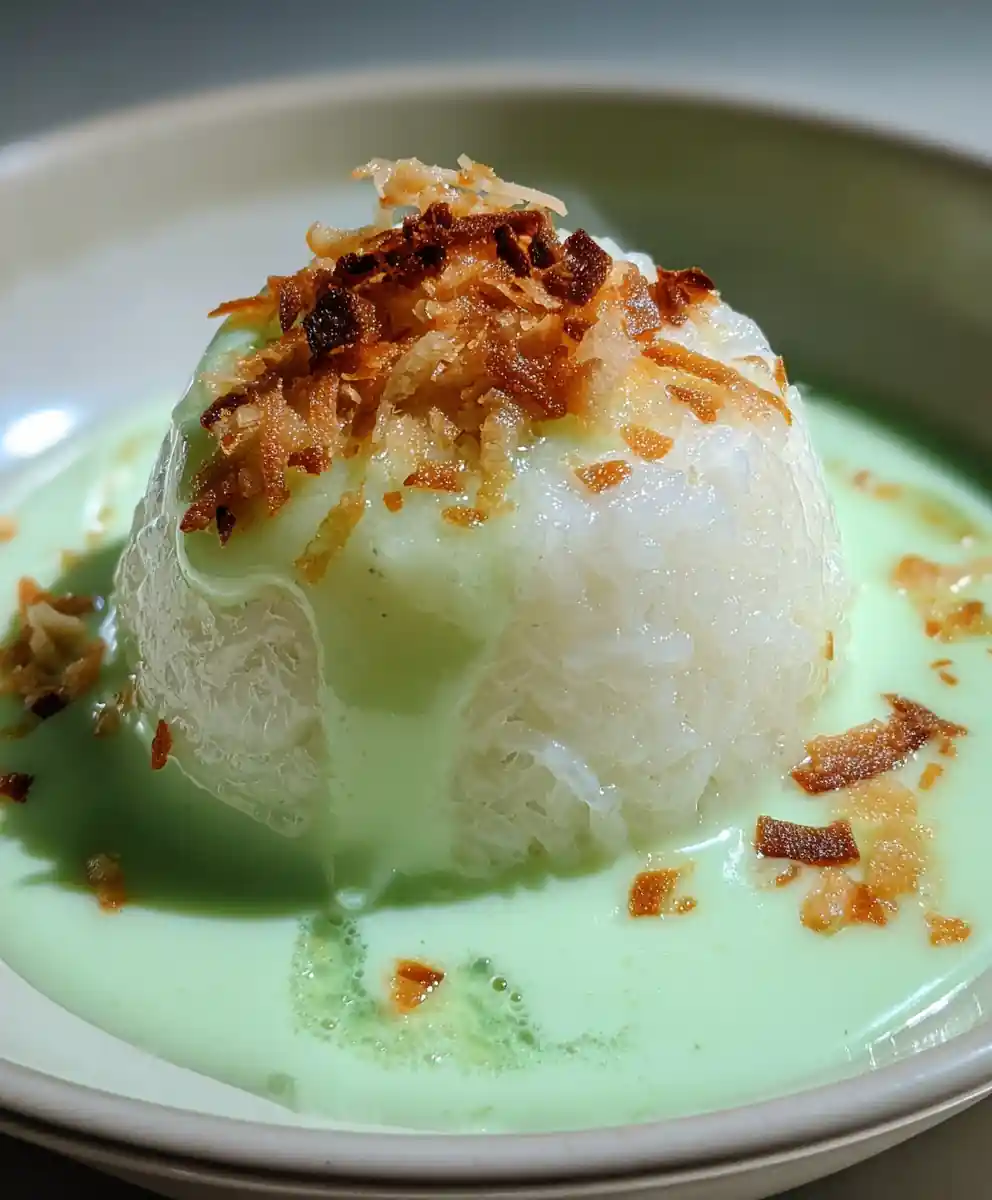
To serve, scoop generous portions of the warm, plain coconut sticky rice into individual shallow bowls. Drizzle the vibrant green Sweet Coconut Pandan Cream generously over each serving, allowing it to naturally pool and create contrasting streaks. Finish by sprinkling the unsweetened toasted coconut flakes over the top for texture and visual appeal.
Why Soaking and Steaming is Essential for this Dessert
Glutinous rice has a very dense structure compared to standard long-grain rice, requiring specific preparation steps to achieve the soft, chewy texture characteristic of this sticky rice recipe.
- Soaking is non-negotiable: The long soak time allows water to penetrate the thick glutinous rice grains, ensuring even cooking and a soft texture. If you skip this step, the rice will be hard in the center, regardless of how long you steam it.
- Steaming vs. Boiling: Steaming prevents the rice from becoming overly mushy or waterlogged, which is a common problem when boiling glutinous rice. It results in a perfectly chewy and separate-but-sticky texture, allowing the grains to retain their integrity while clumping together.
- The Hot Rice/Hot Cream Combination: Pouring the warm coconut cream over hot rice ensures fast absorption. The residual heat in the rice helps the grains open up and absorb the liquid fully, creating the glossy, rich final texture that defines a successful sticky rice recipe.
Flavor Variations and Serving Suggestions
This sweet sticky rice recipe is delicious on its own, but it’s often paired with fresh fruits to create a balanced dessert. Try these variations for different experiences:
- Serving Temperature: For the best experience, serve warm, as the coconut cream melts beautifully into the rice. It can also be served at room temperature or chilled for a firmer texture, which is great for meal prep.
- Serving Ideas: This sticky rice pairs wonderfully with fresh mango slices or other tropical fruits like lychee, durian, or jackfruit for an added layer of freshness.
- Simple Variations: If pandan leaves are hard to find, omit them and serve the plain sweet coconut sticky rice as a delicious base. You could also infuse the cream with vanilla bean or lime zest for a different flavor profile.
How to Store and Reheat Leftovers
Leftovers from this sticky rice recipe store well and make excellent high-protein snacks or family-friendly desserts for later in the week. Proper storage is key to maintaining quality.
- Storage: Store any leftover sticky rice and the pandan cream separately in airtight containers in the refrigerator. The rice will harden as it cools, which is normal for glutinous rice, but it keeps well for up to 3 days.
- Reheating: To restore the soft texture, gently reheat the sticky rice in a steamer or microwave for 1-2 minutes until warm and pliable again. Reheat the pandan cream gently in the microwave or on the stovetop.
FAQs
Q: What is glutinous rice and why is it so sticky?
Glutinous rice, also known as sweet rice or sticky rice, contains high levels of amylopectin, a specific starch that makes it exceptionally sticky when cooked. This differs from regular long-grain or jasmine rice, which contains more amylose and cooks up much fluffier.
Q: Can I use a rice cooker instead of a steamer for sticky rice?
Yes, you can steam the rice in a rice cooker if it has a steamer basket attachment. Follow the same soak time and cooking time guidelines. Steaming in a dedicated steamer, however, gives me more consistent results for this specific sticky rice recipe.
Q: Why did my sticky rice turn out hard in the middle?
This almost always means the rice wasn’t soaked long enough (at least 4 hours) or the steamer wasn’t hot enough during the cooking process. Ensure the water is boiling vigorously to create enough steam for even cooking.
Q: Where can I buy fresh pandan leaves for this recipe?
Look for pandan leaves in the fresh produce section or frozen section of larger Asian grocery stores (Thai, Vietnamese, or Filipino markets). Fresh leaves provide the best flavor for this sticky rice recipe, but frozen works just as well.
Q: Can I make this a day ahead of time?
Yes, this recipe is perfect for meal prep. Prepare the rice and coconut cream separately and store them in the refrigerator. Reheat gently before serving to restore the soft texture and flavor for easy weeknight dinners.
Q: Can I use pandan extract instead of fresh leaves for the green color?
Yes, use pandan extract sparingly (a few drops) as it is very potent. Add it to the coconut cream infusion step, but note that the flavor won’t be as complex as using fresh leaves. The color will still be vibrant.
Conclusion
This easy sticky rice recipe delivers a beautiful, sweet, and aromatic dessert that tastes exactly like authentic restaurant fare. Pin this recipe for later and try making this delicious sticky rice dessert next time you’re craving something special.
Print
sticky rice recipe
- Total Time: 305 minutes
- Yield: 4 servings
- Diet: Vegetarian
Description
A sweet sticky rice dessert featuring coconut milk and pandan leaves for a creamy texture and vanilla-like aroma.
Ingredients
- 300 g (1.5 cups) Glutinous Rice (Sweet Sticky Rice)
- 400 ml (1.75 cups) Full-Fat Coconut Milk
- 100 g (0.5 cup) Granulated Sugar
- 2 g (0.5 teaspoon) Fine Sea Salt
- 5–6 fresh Pandan Leaves (about 20 cm or 8 inches long)
- 30 g (0.25 cup) Unsweetened Toasted Coconut Flakes
Instructions
- Soak and Prepare the Glutinous Rice: Rinse the glutinous rice thoroughly under cold running water until the water runs completely clear. Soak in cold water for a minimum of 4 hours or overnight. Drain completely before steaming.
- Steam the Rice until Tender: Set up a steamer by lining the basket with cheesecloth or parchment paper. Spread the drained rice evenly in the basket and steam over vigorously boiling water for 25-30 minutes, or until the rice is tender, translucent, and perfectly sticky.
- Prepare the Sweet Coconut Cream Base: While the rice steams, combine coconut milk, granulated sugar, and fine sea salt in a medium saucepan. Heat over medium-low heat, stirring constantly, until the sugar and salt are fully dissolved and the mixture is warm. Remove from heat immediately.
- Infuse the Pandan Cream for Garnish: Divide the warm coconut milk mixture into two equal portions. To one portion, add the knotted pandan leaves and gently simmer for 5-7 minutes. Press leaves occasionally to extract flavor and color. Strain out leaves.
- Combine Steamed Rice and Unflavored Cream: Transfer the hot steamed sticky rice to a large mixing bowl. Pour the unflavored warm coconut milk portion over the rice. Stir gently, cover tightly, and let sit for 15-20 minutes to absorb the liquid fully.
- Serve and Garnish: Scoop generous portions of the warm sticky rice into individual bowls. Drizzle the green Sweet Coconut Pandan Cream generously over each serving, and finish by sprinkling with unsweetened toasted coconut flakes.
Notes
For best results, use full-fat canned coconut milk for maximum creaminess. Pandan leaves can be found fresh or frozen in most Asian markets; avoid dried leaves as they lack flavor. Store leftover sticky rice tightly covered in the refrigerator for up to 3 days.
- Prep Time: 30 minutes
- Cook Time: 35 minutes
- Category: Dessert
- Method: Steaming
- Cuisine: Thai
Nutrition
- Serving Size: 1 serving
- Calories: 570 calories
- Sugar: 25 g
- Sodium: 200 mg
- Fat: 20 g
- Saturated Fat: 18 g
- Unsaturated Fat: 2 g
- Trans Fat: 0 g
- Carbohydrates: 85 g
- Fiber: 2 g
- Protein: 6 g
- Cholesterol: 0 mg
FREE PRINTABLE RECIPE
Get the Printable Recipe PDF (Free)
Enter your email and we’ll send you the ingredients + step-by-step instructions as a clean PDF you can save to your phone.
- ✅ Printable PDF (ingredients + steps)
- ✅ Save it to your phone (no long scrolling)
- ✅ Includes cook time + servings
- ✅ Easy to follow
FAQ
Where’s the full recipe?
It’s delivered as a printable PDF so you can save it and cook without scrolling.
I didn’t get the email.
Check Spam/Promotions and search your inbox for your site name. Then click Confirm to receive the PDF.