
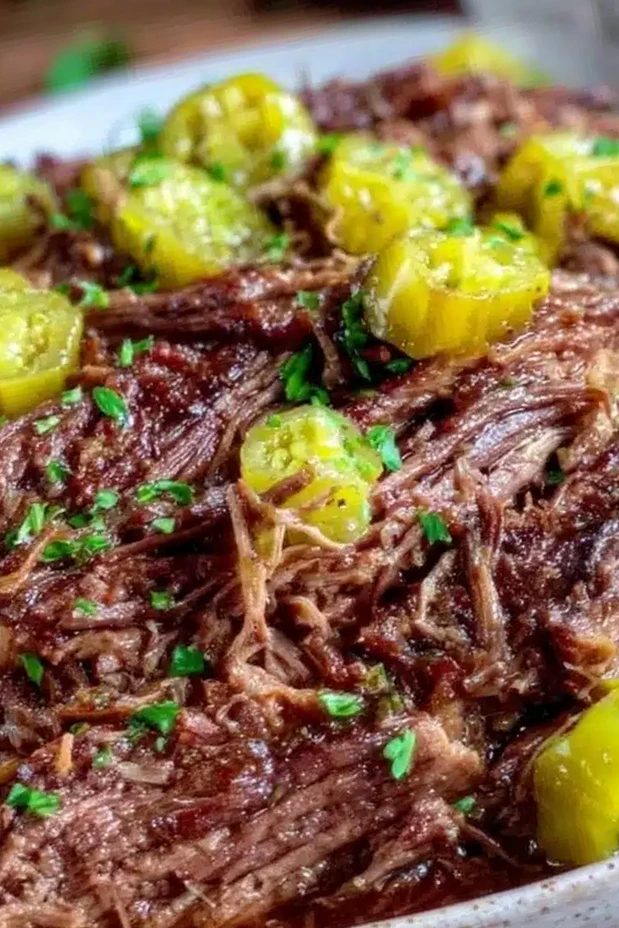
Experience the rich, melt-in-your-mouth texture of a classic slow-cooked beef roast infused with the bright, tangy notes of pickled pepperoncini peppers. This simple preparation transforms a tough cut of meat into a fork-tender centerpiece, making it an ideal solution for busy households seeking a hearty, flavorful dinner. By utilizing a gentle, long-duration cooking process, you achieve a depth of savory flavor that feels both elevated and comforting, requiring minimal active preparation time.
List of ingredients
- 3-4 pounds beef chuck roast
- 1 packet (about 1/4 cup) Mississippi pot roast seasoning mix (ranch seasoning, au jus gravy mix, garlic powder, onion powder)
- 1/2 cup (1 stick) unsalted butter, softened
- 8-10 pepperoncini peppers with juice and brine
- 1 cup beef broth
- Optional: fresh thyme or rosemary sprigs
- Optional: sliced onions
- Optional: splash of Worcestershire sauce
step-by-step instructions
- Step: Trim any large chunks of fat from the chuck roast.
- Step: Sprinkle the Mississippi pot roast seasoning mix evenly over all sides of the roast.
- Step: Spread softened butter all over the seasoned roast, pressing it in gently.
- Step: Place the roast in the slow cooker. Pour beef broth around the roast, avoiding washing away the seasoning. Scatter pepperoncini peppers on and around the meat, then pour the pepperoncini brine over everything.
- Step: If using, add fresh thyme or rosemary sprigs and sliced onions now.
- Step: Cover and cook on low for 7-8 hours or on high for 4-5 hours until the meat is tender and shreds easily with a fork.
- Step: About 30 minutes before the end of cooking, check to ensure there is enough liquid; add more beef broth or water if needed.
- Step: Remove the roast carefully and shred it with two forks in the slow cooker or on a platter. Mix shredded beef with cooking juices and pepperoncini peppers.
Mastering the Slow Cooker Environment
The success of this dish relies heavily on maintaining a consistent temperature and moisture level inside your cooker. Avoid the temptation to remove the lid during the initial six hours of the cooking cycle, as each release of steam significantly drops the internal temperature and resets the cooking clock. If you notice your specific appliance runs hotter than average, monitoring the liquid volume early is a practical strategy to prevent the base from scorching.
Selecting the Ideal Beef Cut
Chuck roast is the superior choice for this recipe due to its high connective tissue content, which breaks down into gelatin over extended, moist heat exposure. While other cuts like rump or round might seem similar, they lack the intramuscular fat required to achieve that signature melt-in-your-mouth consistency. Aim for a roast that is evenly shaped, which helps in ensuring uniform heat distribution throughout the duration of the cycle.
The Role of Pepperoncini Brine
The brine from the pepperoncini jar is not merely a liquid filler; it acts as a tenderizing agent due to its mild acidity. This acidity cuts through the heaviness of the beef fat and the rich butter, balancing the profile so the dish does not taste overly greasy. If you prefer a more pronounced tang, you can increase the amount of brine by a few tablespoons, though keep an eye on total salt content if you are sensitive to sodium.
Practical Serving Strategies
This roast produces a substantial amount of flavorful, seasoned jus that should be treated as an essential component of the meal. Serving the shredded beef over starches like mashed potatoes, steamed jasmine rice, or buttered noodles allows the cooking liquid to coat the base layer effectively. These starches act as a blank canvas, absorbing the savory intensity of the gravy while tempering the slightly spicy, tangy impact of the pepperoncini.
Building a Balanced Menu
To round out the meal, serve the rich beef alongside vibrant, crisp vegetables that offer a textural contrast to the soft, shredded meat. Steamed green beans with toasted almonds, roasted root vegetables, or a simple arugula salad with a bright vinaigrette provide the necessary acidity and crunch to cleanse the palate between bites. These additions ensure the plate feels complete and visually appealing without requiring complex preparation techniques.
Storage and Reheating Methods
Proper storage is essential for maintaining the quality of the beef once it has been shredded and tossed in its juices. Transfer the cooled mixture to airtight containers, ensuring the meat is fully submerged in its liquid to prevent the edges from drying out in the refrigerator. This method effectively locks in the moisture and keeps the beef succulent for up to four days after the initial cooking.
Refreshing Leftovers
When reheating, choose a method that retains moisture, such as a gentle stovetop warm-up on low heat. Adding a small splash of water or additional beef broth to the pan helps recreate the original gravy consistency if the juices have thickened significantly in the fridge. Avoid using high heat, which can toughen the fibers of the already-cooked beef, sacrificing that carefully achieved tenderness.
Long-Term Preservation
For those looking to save portions for future quick meals, the finished roast freezes exceptionally well. Portion the shredded beef and juice into freezer-safe bags, removing as much air as possible to prevent frost buildup, and store them for up to three months. Thawing the meat slowly in the refrigerator overnight prior to reheating ensures that the texture remains as close to the fresh version as possible.
Common Troubleshooting and Advice
If you encounter issues during the preparation, there are simple ways to adjust. If the liquid in the pot seems too thin, you can remove the beef and reduce the juices in a saucepan over medium-high heat for a few minutes to concentrate the flavors before recombining. Conversely, if the dish is too salty, adding a few large chunks of raw potato during the last hour of cooking can help absorb excess sodium, though remember to remove the potatoes before serving.
Managing Potential Saltiness
Because the seasoning packets and the pepperoncini brine both contribute significant sodium, it is advisable to taste the liquid before adding extra salt to the recipe. If you find the balance is shifting toward being too salty, try balancing the profile with a touch of sweetness, such as a half-teaspoon of brown sugar or honey. This small addition can mellow the sharp edges of the vinegar and salt without altering the essential character of the dish.
Adjusting to Your Appliance
Every slow cooker model features slightly different thermal properties, which means your first attempt should be treated as a learning process. If your model tends to cook very quickly, checking the roast for tenderness at the earlier end of the suggested time window is a smart move. Consistent results depend on knowing how your specific equipment handles long-duration heat, so keep a note of the timing that works best for your unit for future batches.
Print
Tender Mississippi Pot Roast with Zesty Pepperoncini Peppers
- Total Time: 495 minutes
- Yield: 6 servings
- Diet: Gluten-Free Friendly
Description
A simple and flavorful slow cooker pot roast featuring zesty pepperoncini peppers and a savory seasoning mix, resulting in tender, melt-in-your-mouth beef perfect for any occasion.
Ingredients
- 3–4 pounds beef chuck roast
- 1 packet (about 1/4 cup) Mississippi pot roast seasoning mix (ranch seasoning, au jus gravy mix, garlic powder, onion powder)
- 1/2 cup (1 stick) unsalted butter, softened
- 8–10 pepperoncini peppers with juice and brine
- 1 cup beef broth
- Optional: fresh thyme or rosemary sprigs
- Optional: sliced onions
- Optional: splash of Worcestershire sauce
Instructions
- Step: Trim any large chunks of fat from the chuck roast.
- Step: Sprinkle the Mississippi pot roast seasoning mix evenly over all sides of the roast.
- Step: Spread softened butter all over the seasoned roast, pressing it in gently.
- Step: Place the roast in the slow cooker. Pour beef broth around the roast, avoiding washing away the seasoning. Scatter pepperoncini peppers on and around the meat, then pour the pepperoncini brine over everything.
- Step: If using, add fresh thyme or rosemary sprigs and sliced onions now.
- Step: Cover and cook on low for 7-8 hours or on high for 4-5 hours until the meat is tender and shreds easily with a fork.
- Step: About 30 minutes before the end of cooking, check to ensure there is enough liquid; add more beef broth or water if needed.
- Step: Remove the roast carefully and shred it with two forks in the slow cooker or on a platter. Mix shredded beef with cooking juices and pepperoncini peppers.
Notes
Searing the roast before slow cooking adds flavor but is optional. Do not skip the pepperoncini brine as it keeps the roast juicy and flavorful. Avoid lifting the slow cooker lid frequently to prevent heat loss and extended cooking time. Author: Lora Marie Bennett.
- Prep Time: 15 minutes
- Cook Time: 480 minutes
- Category: Main Course
- Method: Slow Cooker
- Cuisine: American
Nutrition
- Serving Size: 6 oz
- Calories: 375 kcal
- Sugar: 1 g
- Sodium: 850 mg
- Fat: 22 g
- Saturated Fat: 9 g
- Unsaturated Fat: 11 g
- Trans Fat: 0 g
- Carbohydrates: 4 g
- Fiber: 1 g
- Protein: 38 g
- Cholesterol: 110 mg