
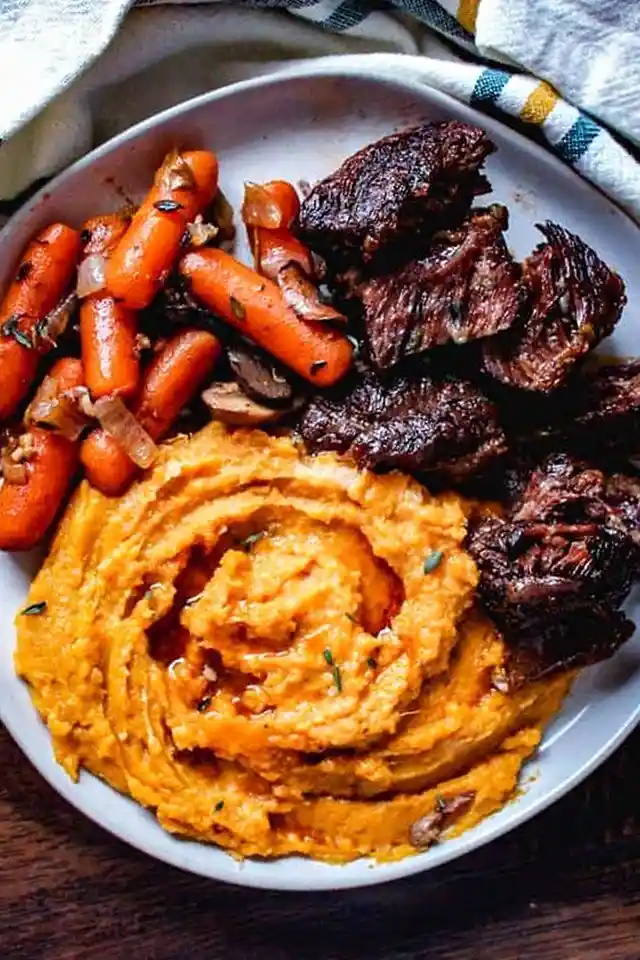
These slow-cooked beef short ribs are designed for maximum tenderness and deep flavor with minimal active preparation. This method ensures the meat becomes fork-tender while creating a natural sauce perfect for hearty side dishes.
List of ingredients
- 3 lbs Bone-In Beef Short Ribs – select well-marbled cuts for the best result.
- 3 Cups Baby Carrots – kept whole to maintain structure during long cooking.
- 2 Cups Mushrooms (Sliced) – cremini or button mushrooms work best.
- 3 Cups Beef Broth – replaces wine to provide a rich, savory base.
- 2 Tbsp Tomato Paste – adds thickness and concentrated umami flavor.
- 3 Tbsp Unsalted Butter – enhances the richness of the final sauce.
- 1 Bay Leaf – provides a subtle herbal depth.
- 8 Sprigs Fresh Thyme – adds a classic earthy aroma.
- 1 Tbsp Garlic (Minced) – for aromatic pungency.
- Salt (To Taste) – used for seasoning and drawing out moisture during searing.
- Pepper (To Taste) – adds a mild spice and depth.
step-by-step instructions
- Season the Beef: Generously apply salt and pepper to all sides of each short rib to ensure a seasoned crust.
- Sear the Meat: Heat a large skillet over medium heat and brown every side of the ribs for about 20 seconds per side to develop a deep color.
- Combine Ingredients: Place the seared ribs, baby carrots, sliced mushrooms, beef broth, tomato paste, butter, bay leaf, thyme, and minced garlic into a large crockpot.
- Slow Cook: Cover the pot and cook on the low setting for 8 hours, or until the meat easily pulls away from the bone.
- Final Preparation: Remove the short ribs and vegetables from the pot and set them aside on a platter. Discard the bay leaf and thyme sprigs, but keep the remaining cooking liquid.
- Serve: Plate the ribs and vegetables immediately, ideally with mashed sweet potatoes, and drizzle the remaining liquid over the top.
Selecting the Right Beef Cuts
Prioritize Bone-In Ribs
Choosing ribs with the bone still attached is essential for depth of flavor. The marrow inside the bone releases during the slow cooking process, which naturally thickens the sauce and adds a richer taste to the meat.
Identify Proper Marbling
Look for ribs with significant white flecks of intramuscular fat, known as marbling. This fat renders down over eight hours, basting the meat from the inside and preventing the beef from drying out.
Ensure Uniform Cut Sizes
Try to purchase ribs that are roughly the same thickness. Uniform pieces ensure that all the meat reaches the same level of tenderness at the same time, preventing some pieces from overcooking while others remain tough.
Improving the Searing Process
Use a High-Smoke Point Oil
When browning the meat, use a neutral oil with a high smoke point, such as avocado or canola oil. This allows the pan to get hot enough to create a proper sear without the oil breaking down or smoking excessively.
Avoid Overcrowding the Skillet
Sear the ribs in batches if they do not fit comfortably in the pan. Overcrowding drops the temperature of the skillet, which causes the meat to steam in its own juices rather than brown, resulting in a loss of flavor.
Deglaze the Pan for Extra Flavor
After searing the meat, you can pour a small amount of the beef broth into the hot skillet to scrape up the brown bits, known as fond. Pouring these concentrated bits into the crockpot adds a significant amount of savory depth to the braise.
Slow Cooking Time and Temperature
The Benefit of Low and Slow
Cooking on the low setting for 8 hours is the ideal way to break down the tough connective tissues and collagen in short ribs. This slow transformation turns the meat into a tender, gelatinous texture that is impossible to achieve with fast cooking.
Adjusting for High Heat Settings
If you are short on time, you can cook the ribs on high for approximately 5 hours. While the meat will still be cooked through, it may not be as exceptionally tender as it would be after a full 8-hour low-temperature cycle.
Performing the Fork-Tender Test
To check if the ribs are done, insert a fork into the thickest part of the meat and twist gently. If the meat separates easily with no resistance, it has reached the optimal level of tenderness for serving.
Managing the Braising Liquid
Substituting Wine with Beef Broth
Using additional beef broth instead of red wine maintains the necessary liquid volume for braising. This ensures the meat stays submerged and moist throughout the day while keeping the flavor profile focused on the savory beef notes.
Balancing Salt Levels
Because beef broth reduces over several hours, the salt concentration can increase. Taste the liquid at the end of the cooking process before adding any additional salt to the final sauce.
The Role of Tomato Paste
Tomato paste acts as both a flavor enhancer and a thickening agent. It adds a slight acidity that cuts through the richness of the beef fat and helps the liquid cling to the meat and vegetables.
Adding and Preparing Vegetables
Managing Root Vegetable Texture
Baby carrots are ideal for slow cookers because they hold their shape better than sliced carrots. Adding them at the start allows them to absorb the beef juices without turning into mush.
Selecting the Right Mushrooms
Cremini or baby bella mushrooms are recommended because they have a firmer texture and more robust flavor than white button mushrooms. This allows them to stand up to the long cooking time without disappearing into the sauce.
Alternative Vegetable Additions
You can replace or add to the carrots and mushrooms with parsnips or celery. These root vegetables complement the earthy tones of the thyme and garlic and provide additional nutritional value to the meal.
Creating a Thickened Pan Gravy
Using a Cornstarch Slurry
To transform the thin cooking liquid into a thick gravy, whisk one tablespoon of cornstarch into a half-cup of cold water. Stir this mixture into the simmering liquid in a saucepan over medium heat until it thickens, usually within 2 to 4 minutes.
Stovetop Reduction Method
For a more concentrated flavor without adding thickeners, simmer the cooking liquid in a wide pan over medium-high heat. Reducing the liquid by a third or half concentrates the natural gelatins and flavors.
Straining for a Smooth Finish
If the liquid contains too many small herb fragments or sediment, pour it through a fine-mesh sieve before thickening. This results in a professional, glossy gravy that looks cleaner on the plate.
Serving Suggestions and Pairings
Pairing with Mashed Sweet Potatoes
The natural sweetness of mashed sweet potatoes provides a stark contrast to the salty, savory nature of the beef. This combination balances the palate and makes the meal feel more substantial.
Using Traditional Starch Bases
Alternatively, serve the ribs over a bed of garlic mashed potatoes or buttered egg noodles. These options are excellent for soaking up the rich braising liquid and ensuring none of the sauce goes to waste.
Adding Fresh Herb Garnishes
Garnish the finished dish with freshly chopped parsley or chives. The bright, fresh taste of raw herbs cuts through the richness of the slow-cooked beef and adds a pop of color to the presentation.
Storage and Freezer Instructions
Refrigeration Guidelines
Store leftover short ribs and vegetables in an airtight glass or plastic container. Ensure the meat is fully covered in the remaining sauce to prevent it from drying out in the fridge, where it will keep for up to four days.
Freezing for Long-Term Use
Beef short ribs freeze well when stored in a heavy-duty freezer bag with the sauce. Squeeze out as much air as possible to prevent freezer burn, and store them for up to two months.
Proper Thawing Methods
To maintain the quality of the meat, thaw frozen ribs in the refrigerator overnight. Avoid thawing at room temperature to ensure the beef stays within safe temperature zones.
Best Practices for Reheating
Oven Reheating for Texture
Place the ribs in a baking dish, cover tightly with aluminum foil, and heat at 325 degrees F until warmed through. The foil traps the moisture and prevents the meat from becoming tough or dry.
Microwave Reheating for Speed
If using a microwave, place the ribs in a covered dish and heat in 60-second intervals. The cover is essential to steam the meat and keep it succulent.
Stovetop Simmering
For the best results, place the meat and sauce in a pot over low heat. Add a splash of beef broth if the sauce has thickened too much during storage and simmer gently until hot.
Solving Common Cooking Issues
Addressing Tough Meat
If the meat is not falling off the bone after 8 hours, it likely needs more time. Connective tissue breaks down at specific temperature thresholds, so adding another hour of cooking often solves the problem.
Fixing Watery Sauce
If the liquid is too thin, it is usually due to excess moisture from the vegetables. Use the cornstarch slurry method described above or simmer the liquid on the stove to reduce the water content.
Removing Excess Grease
Beef short ribs can release a significant amount of fat. Use a wide spoon or a fat separator to skim the oil from the surface of the liquid before serving or thickening the gravy.
Frequently Asked Questions
Do I have to brown the meat first?
Browning is not strictly required, but it is highly recommended. The searing process creates a chemical reaction that adds a deep, savory layer of flavor and improves the final texture of the beef.
Can I use boneless short ribs?
Yes, you can use boneless ribs, but you should reduce the cooking time slightly as they may cook faster. Note that you will lose some of the richness that comes from the bone marrow.
What is the best beef broth to use?
A low-sodium beef broth is best because it allows you to control the salt levels. This is important since the liquid reduces during the slow cooking process, which naturally concentrates the salt.
Can I use a different herb than thyme?
Rosemary is an excellent alternative to thyme and pairs well with beef. Use it sparingly, as rosemary has a more potent flavor that can easily overpower the other ingredients.
Print
Tender Slow Cooker Beef Short Ribs
- Total Time: 8 hours 10 minutes
- Yield: 6 servings
- Diet: General
Description
The perfect holiday dinner, date night in or anniversary meal. Big flavor with little effort!
Ingredients
- 3 lbs bone-in beef short ribs
- 3 cups baby carrots
- 2 cups mushrooms, sliced
- 3 cups beef broth
- 2 tbsp tomato paste
- 3 tbsp unsalted butter
- 1 bay leaf
- 8 sprigs fresh thyme
- 1 tbsp garlic, minced
- salt to taste
- pepper to taste
Instructions
- Step 1: Add salt and pepper to all sides of the short ribs. In a large skillet over medium heat brown all the sides of each piece of short rib. About 20 seconds per side.
- Step 2: Add all ingredients to a large crockpot and cook on low for 8 hours, or until meat is falling off the bone. Once finished, remove short ribs and vegetables, set aside. Discard herbs. Don’t dispose of the liquid!
- Step 3: Serve immediately with a side of mashed sweet potatoes and drizzle with the liquid* from the crockpot.
Notes
Tip: If you want your liquid to be thicker like gravy combine ½ cup water and 1 tablespoon of cornstarch and stir till combined. Add the liquid to a sauce pan over medium heat and whisk in water-cornstarch mixture. Whisk continuously until slightly thickened, about 2-4 minutes.
- Prep Time: 10 minutes
- Cook Time: 8 hours
- Category: Main Course
- Method: Slow Cooker
- Cuisine: American
Nutrition
- Serving Size: 1 serving
- Calories: 739 kcal
- Sugar: 2.1 g
- Sodium: 353 mg
- Fat: 65.9 g
- Saturated Fat: 29.5 g
- Unsaturated Fat: 36.4 g
- Trans Fat: 0 g
- Carbohydrates: 4.8 g
- Fiber: 1.2 g
- Protein: 27.2 g
- Cholesterol: 138 mg