
I’ve found there’s nothing quite like a warm bowl of traditional miso soup recipe to bring comfort to my day. The delicate steam rising, carrying hints of savory umami, promises a moment of gentle nourishment. This easy, hearty traditional miso soup recipe is perfect for busy weeknights when my family craves something light yet satisfying. It’s an incredibly healthy and flavorful addition to any meal, truly a family-friendly favorite.
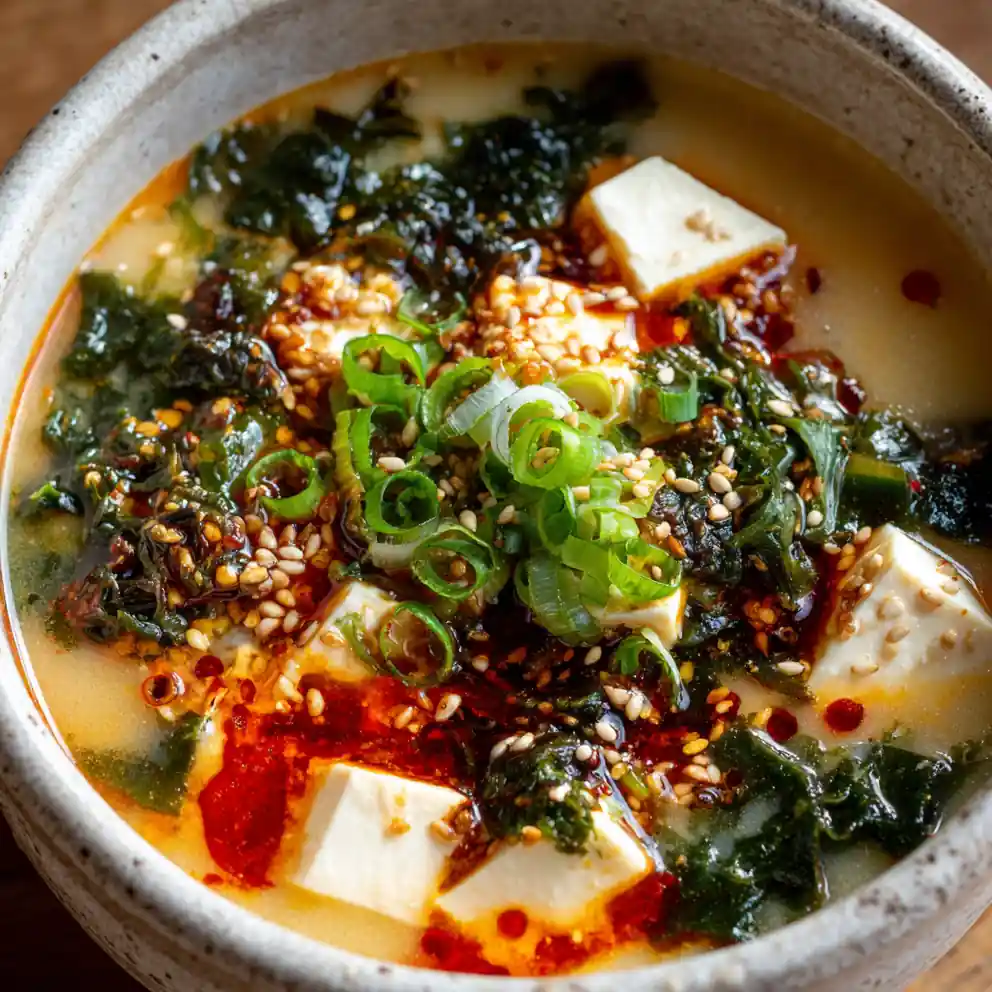
What You’ll Need (Ingredients and Why They Matter)
Gathering your ingredients is the first step to a delightful meal. Here’s what makes this soup so special:
- Filtered water: 1 L (4 cups) – for the clean dashi base.
- Dried kombu: 10 g (0.35 oz) – provides foundational umami flavor.
- Dried shiitake mushrooms: 2 – adds earthy depth and flavor to the dashi.
- Awase miso paste: 60 g (4 tablespoons) – for rich, savory depth (try red miso for bolder flavor).
- Silken tofu, firm: 200 g (7 oz) – adds soft texture and plant-based protein (or medium-firm for more bite).
- Dried wakame seaweed: 5 g (0.18 oz) – for oceanic flavor and nutrients, rehydrates quickly.
- Vegetable oil (canola or grapeseed): 120 mL (1/2 cup) – for infusing the chili-ginger oil.
- Fresh ginger, peeled and finely minced: 30 g (2 tablespoons) – bright, warming spice for the drizzle.
- Garlic, finely minced: 2 cloves – aromatic depth for the chili oil.
- Dried chili flakes (gochugaru or Aleppo): 5 g (1 tablespoon) – for vibrant color and gentle kick (or crushed red pepper).
- White sesame seeds: 5 g (1 teaspoon) – nutty crunch for the drizzle.
- Scallions, thinly sliced on the diagonal: 2 – fresh, mild oniony garnish.
Spotlight on freshness:
Choosing a high-quality awase miso paste makes a significant difference in the overall flavor profile of your traditional miso soup recipe. While instant dashi granules offer a quick shortcut, preparing fresh dashi from kombu and shiitake provides a truly superior, nuanced taste, making this a healthy and easy dinner idea.
Smart swaps:
Gluten-free miso paste is easily available for dietary needs, ensuring everyone can enjoy this traditional miso soup recipe. You can also choose low-sodium dashi for healthier options. For extra plant-based protein, consider adding more sliced mushrooms like enoki or even edamame for a family-friendly twist.
Flavor boosters:
A tiny dash of mirin can subtly enhance the soup’s sweetness. A pinch of sansho pepper offers a unique, citrusy aroma if you’re feeling adventurous.
Cooking Directions Made Simple
Here are the straightforward steps to creating your comforting bowl of soup:
- In a medium pot, combine 1 L (4 cups) water, 10 g kombu, 2 dried shiitake. Soak 30 minutes. Heat medium-low; remove kombu just as small bubbles appear. Simmer shiitake 10 minutes to deepen flavor. Strain dashi, reserving sliced shiitake.
- In a small saucepan, combine 120 mL (1/2 cup) vegetable oil, 30 g minced ginger, 2 minced garlic. Heat low for 5-7 minutes until fragrant, oil infuses. Add 5 g chili flakes, 5 g sesame seeds; heat 2-3 minutes until oil turns reddish-orange. Remove, cool.
- Cut 200 g (7 oz) silken tofu into 1.5 cm cubes. Place 5 g dried wakame in a small bowl; cover with cold water for 5 minutes to rehydrate until soft. Drain, squeeze excess water.
- Return strained dashi to pot, heat medium-low. Add rehydrated wakame, sliced shiitake, tofu cubes. Simmer 2-3 minutes until tofu is warmed through and ingredients mingle.
- Scoop a ladleful of warm dashi; whisk in 60 g (4 tablespoons) awase miso paste until dissolved and smooth. If lumpy, strain for silky texture.
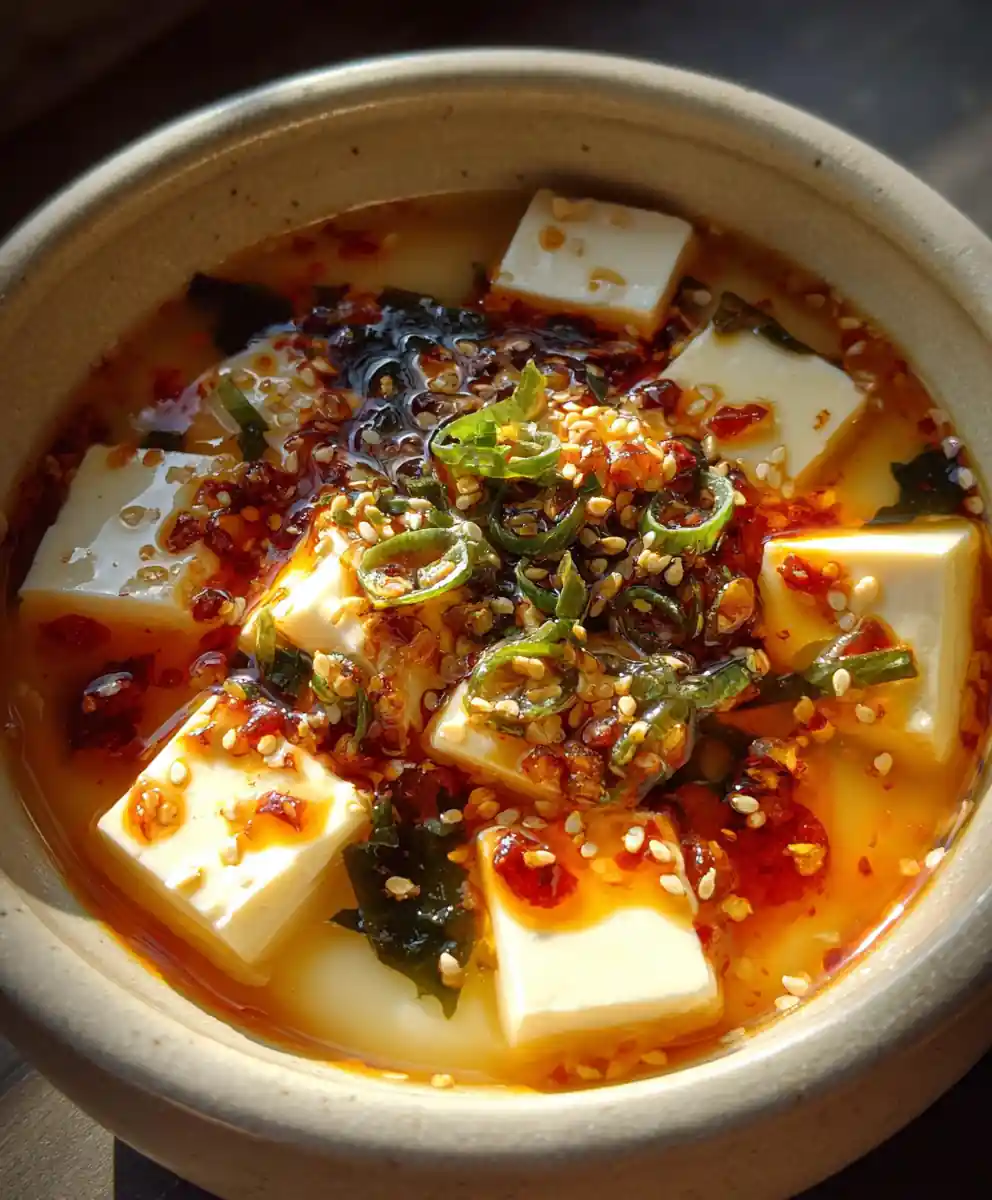
- Pour dissolved miso into main pot; stir gently. Heat 1-2 minutes until warmed, *do not* boil. Ladle hot traditional miso soup recipe into bowls. Drizzle chili-ginger oil over, creating a glossy spread. Garnish with sliced scallions.
Small cautions for common slip-ups:
Ensure the dashi does not boil vigorously after adding the miso, as high heat can destroy its beneficial probiotics and alter its delicate flavor. I once forgot this rule and my miso soup tasted off, so I always make sure to keep a close eye on it now!
Inline notes for quick shortcuts or healthier adjustments:
Using instant dashi powder significantly cuts down prep time if you’re in a hurry, making this traditional miso soup recipe even more convenient for busy schedules. For a low-sodium version, choose low-sodium miso and dashi powder, or make dashi from scratch without adding any extra salt.
Perfect Ways to Serve and Store Your Homemade Miso Soup
This light yet satisfying dish offers incredible versatility, fitting into almost any part of your day. It’s a wonderful addition to your family-friendly meal planning, providing quick and healthy options.
Everyday uses:
- A light, energizing breakfast to start your day right.
- A comforting lunch option on its own or with a side.
- A sophisticated appetizer before a main meal.
- A warm, protein-packed snack anytime you need a boost.
Creative serving ideas:
- Boost your bowl with leftover cooked chicken or salmon for a heartier, high-protein meal.
- Add ramen or udon noodles for a full noodle soup experience, perfect for easy dinner ideas.
- Stir in fresh spinach or thinly sliced mushrooms (enoki, shiitake) for extra veggies and nutrients.
- Drizzle with a touch of chili oil or toasted sesame oil for added depth and aroma.
Storage guide:
Store leftover miso soup in an airtight container in the fridge for 2-3 days. Reheat gently on the stovetop over low heat, ensuring it doesn’t boil to preserve its delicate flavor and probiotics. Freezing is not ideal for the tofu, as it changes texture, but you can freeze the dashi broth separately for longer storage, making it a great meal prep recipe component.
Wellness and Lifestyle Perks of This Hearty Miso Soup
Embracing simple, healthy eating doesn’t mean sacrificing flavor. This traditional miso soup recipe truly delivers on wellness benefits, making it a valuable addition to your kitchen.
How traditional miso soup recipe supports balanced eating:
It’s low in calories, rich in beneficial probiotics from fermented miso, and provides satisfying plant-based protein from tofu. This combination makes it an excellent choice for a balanced diet.
Call out diets:
This soup is excellent for high-protein diets, gut-friendly eating plans, and vegetarian lifestyles. With a careful dashi choice, it’s completely vegan, using kombu-based broth. It can also be a great low-carb or diabetic-friendly option.
Natural keyword spots:
This traditional miso soup recipe makes for healthy weeknight meals. It’s great for protein-packed snacks. The broth can be an easy meal prep recipe component. Choosing low-sodium ingredients makes it a low-sodium option for healthier eating.
Everyday Benefits That Make Life Easier
Beyond its wonderful taste and health advantages, this soup offers practical benefits for busy households, making mealtime stress-free.
Budget-friendly angle:
Made with inexpensive pantry staples like miso, tofu, and dried seaweed, this traditional miso soup recipe offers incredible value, proving healthy eating doesn’t have to be expensive.
Quick and time-saving prep:
This recipe comes together in under 15 minutes, perfect for busy schedules when you need a quick, wholesome meal without fuss.
Versatility for family and entertaining:
Easily adaptable to different tastes by adding various vegetables or proteins, this soup works as a light starter or a comforting main dish for any occasion. It’s a guaranteed family favorite.
Expert Tips and Smart Variations for Traditional Miso Soup
Elevate your homemade miso soup with these simple yet impactful tips, ensuring every bowl is perfect.
Pro chef tips for texture, flavor, and presentation:- Always use a fine mesh strainer or whisk to ensure miso paste dissolves smoothly into the broth, preventing clumps.
- Adjust the amount of miso paste to your personal taste; some prefer it milder, others saltier. I find a ¼ cup of awase miso for 4 cups of dashi is perfect for my family’s preference, offering a rich, savory depth.
- Garnish with freshly sliced scallions just before serving for the best flavor and visual appeal.
- For a vegan traditional miso soup recipe, ensure your dashi is kombu-based, omitting bonito flakes.
- Edamame can be a fun, kid-approved alternative or addition to tofu for extra texture and protein.
- Try different types of miso (white, red, awase) to explore varied flavor profiles and find your favorite.
- Make your dashi from scratch using quality kombu and bonito for unparalleled depth and a truly premium ingredient experience.
- Add a sheet of roasted nori, cut into strips, as a final garnish for an extra oceanic touch.
- A few drops of high-quality toasted sesame oil can add an aromatic, complex flavor.
Common Questions Answered About Making Miso Soup
Is traditional miso soup recipe good for meal prep?
Yes, the dashi broth can be made ahead and stored. Add fresh miso, tofu, and wakame when you’re ready to serve for the best texture and to maximize probiotic benefits. This makes it an ideal healthy meal prep recipe.
Can I freeze traditional miso soup recipe for later?
While the dashi broth freezes well, tofu and wakame don’t hold their ideal texture after freezing and thawing. So, it’s best to add these fresh when reheating the defrosted broth for optimal taste and quality.
What are the best healthy sides with traditional miso soup recipe?
Steamed brown rice offers a hearty complement. A simple grilled fish like salmon provides additional protein, or a crisp green salad with a light vinaigrette makes an excellent fresh pairing for a complete, healthy meal.
What kind of miso paste should I use for traditional miso soup recipe?
White miso is milder and slightly sweet, red miso is saltier and more robust, and awase miso is a balanced blend of both. I often choose awase miso because it consistently delivers a well-rounded, umami-rich flavor that my family loves.
Can I make traditional miso soup recipe vegetarian or vegan?
Absolutely! To ensure your traditional miso soup recipe is completely vegan, simply use kombu (seaweed) only for your dashi broth, omitting bonito flakes. The tofu already provides a great plant-based protein.
Why shouldn’t I boil miso soup?
Boiling destroys the beneficial probiotics in miso paste, which are key for gut health. High heat also significantly alters its delicate flavor, making it taste harsher. Always add miso off the heat or at a gentle simmer.
This easy traditional miso soup recipe offers warmth, comfort, and incredible flavor in minutes, making it a perfect healthy addition to your family’s meal rotation. Pin this recipe for your next cozy and quick meal to simplify your healthy eating journey!
Print
traditional miso soup recipe
- Total Time: 60 minutes
- Yield: 4 servings
- Diet: Vegetarian
Description
This easy, hearty traditional miso soup recipe offers a comforting and savory umami experience, perfect for a light yet satisfying meal on busy weeknights. It is a healthy and flavorful addition to any family meal.
Ingredients
- 4 cups Filtered water
- 0.35 oz Dried kombu
- 2 Dried shiitake mushrooms
- 4 tablespoons Awase miso paste
- 7 oz Silken tofu, firm (or medium-firm for more bite)
- 0.18 oz Dried wakame seaweed
- 0.5 cup Vegetable oil (canola or grapeseed)
- 2 tablespoons Fresh ginger, peeled and finely minced
- 2 cloves Garlic, finely minced
- 1 tablespoon Dried chili flakes (gochugaru or Aleppo)
- 1 teaspoon White sesame seeds
- 2 Scallions, thinly sliced on the diagonal
Instructions
- Prepare Dashi Base: In a medium pot, combine 4 cups water, 0.35 oz kombu, and 2 dried shiitake mushrooms. Soak for 30 minutes. Heat over medium-low; remove kombu just as small bubbles appear. Simmer shiitake for 10 minutes to deepen flavor. Strain the dashi, reserving the sliced shiitake.
- Infuse Chili-Ginger Oil: In a small saucepan, combine 0.5 cup vegetable oil, 2 tablespoons minced ginger, and 2 minced garlic cloves. Heat over low for 5-7 minutes until fragrant and the oil infuses. Add 1 tablespoon chili flakes and 1 teaspoon sesame seeds; heat for 2-3 minutes until the oil turns reddish-orange. Remove from heat and cool.
- Prepare Tofu and Wakame: Cut 7 oz silken tofu into 1.5 cm cubes. Place 0.18 oz dried wakame in a small bowl; cover with cold water for 5 minutes to rehydrate until soft. Drain and squeeze out excess water.
- Combine Soup Ingredients: Return the strained dashi to the pot and heat over medium-low. Add the rehydrated wakame, reserved sliced shiitake, and tofu cubes. Simmer for 2-3 minutes until the tofu is warmed through and the ingredients mingle.
- Dissolve Miso Paste: Scoop a ladleful of warm dashi into a separate bowl. Whisk in 4 tablespoons awase miso paste until dissolved and smooth. (If lumpy, strain for a silky texture.)
- Finish and Serve Soup: Pour the dissolved miso into the main pot with the dashi; stir gently. Heat for 1-2 minutes until warmed, but do not boil. Ladle the hot soup into bowls. Drizzle the chili-ginger oil over, creating a glossy spread. Garnish with sliced scallions.
Notes
Ensure the dashi does not boil vigorously after adding the miso, as high heat can destroy beneficial probiotics and alter its delicate flavor. Using instant dashi powder significantly cuts down prep time. For a low-sodium version, choose low-sodium miso and dashi powder, or make dashi from scratch without adding extra salt.
- Prep Time: 45 minutes
- Cook Time: 15 minutes
- Category: Soup
- Method: Stovetop
- Cuisine: Japanese
Nutrition
- Serving Size: 1.5 cups (350 mL)
- Calories: 180 calories
- Sugar: 5 g
- Sodium: 800 mg
- Fat: 12 g
- Saturated Fat: 2 g
- Unsaturated Fat: 8 g
- Trans Fat: 0 g
- Carbohydrates: 10 g
- Fiber: 3 g
- Protein: 8 g
- Cholesterol: 0 mg
FREE PRINTABLE RECIPE
Get the Printable Recipe PDF (Free)
Enter your email and we’ll send you the ingredients + step-by-step instructions as a clean PDF you can save to your phone.
- ✅ Printable PDF (ingredients + steps)
- ✅ Save it to your phone (no long scrolling)
- ✅ Includes cook time + servings
- ✅ Easy to follow
FAQ
Where’s the full recipe?
It’s delivered as a printable PDF so you can save it and cook without scrolling.
I didn’t get the email.
Check Spam/Promotions and search your inbox for your site name. Then click Confirm to receive the PDF.