
This rustic fruit tart combines the sweetness of ripe peaches with the tartness of fresh blackberries in a flaky pastry. It is a simpler alternative to a traditional pie that focuses on fresh summer flavors.
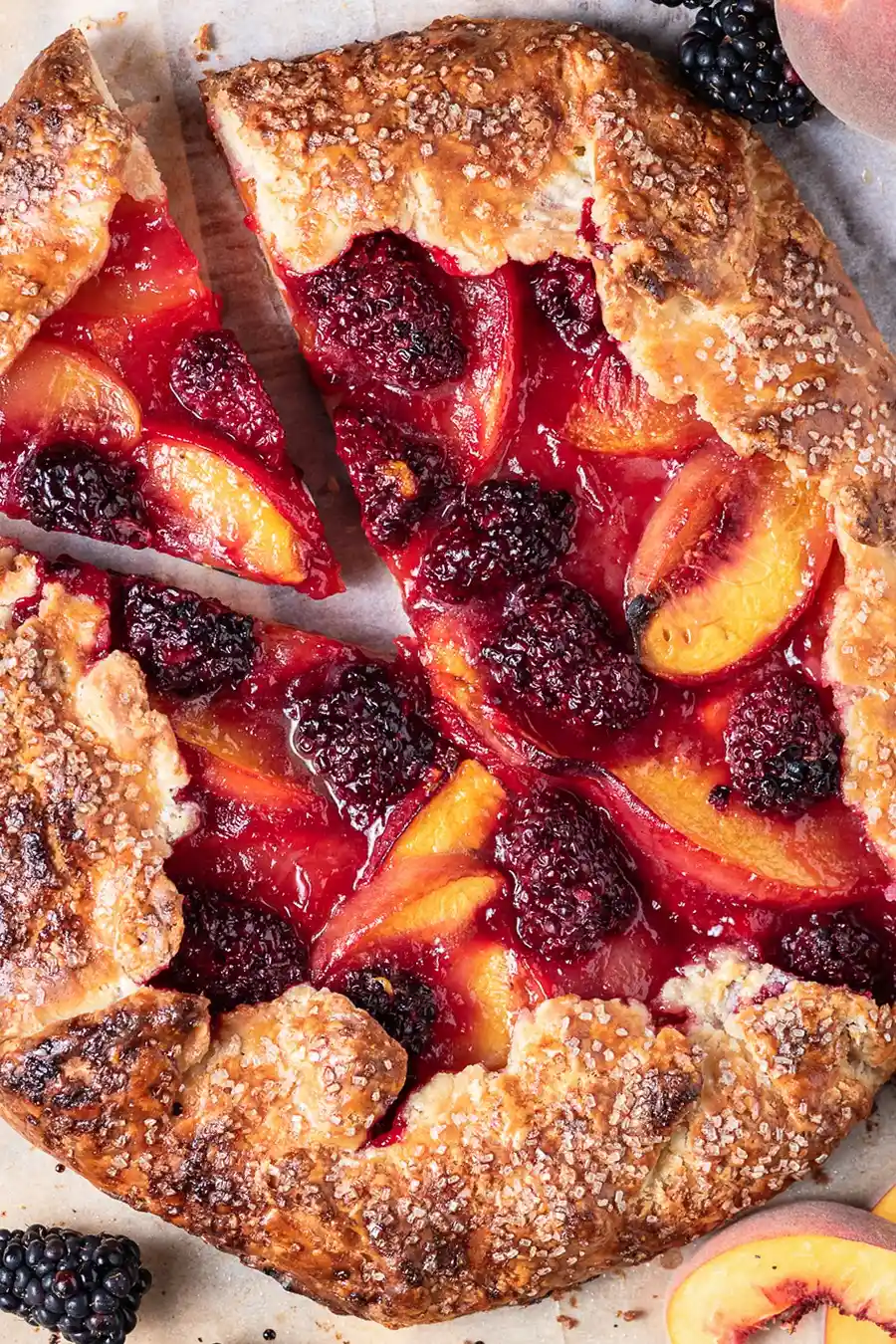
List of ingredients
- 1 1/3 cups all-purpose flour (165g) – provides the structure for the crust.
- 1/2 cup cold unsalted butter, cubed (116g) – creates a flaky texture.
- 1 tbsp granulated sugar (15g) – adds a hint of sweetness to the pastry.
- 2 tsp freshly-squeezed lemon juice – enhances the dough flavor.
- 1/2 tsp fine sea salt – balances the sweetness.
- 1 large egg – binds the dough and used for the wash.
- 1/2 cup heavy cream – used for dough binding and the final glaze.
- 1/2 tsp lemon zest – adds a bright citrus note to the crust.
- 2 cups ripe peaches, thinly sliced – the primary sweet filling.
- 1 cup fresh blackberries – adds tartness and color.
- 1/2 cup granulated sugar (100g) – sweetens the fruit filling.
- juice and zest of 1/2 lemon – prevents oxidation and brightens fruit.
- 3 tbsp cornstarch – thickens the fruit juices during baking.
- pinch of sea salt – enhances overall flavor profile.
step-by-step instructions
- Prepare the dry base: In a large bowl, whisk together the flour, sugar, and salt. In a small measuring cup, lightly beat the egg with a fork, then add enough heavy cream until the total volume is 1/3 cup, whisking them together.
- Combine the dough: Cut the cold butter into the flour mixture using a pastry cutter or food processor, ensuring you leave chickpea-sized lumps of butter. Add most but not all of the egg and cream mixture to the dough and stir with a rubber spatula just until it starts to come together.
- Finalize the pastry: Stir in the lemon juice and zest until combined; the dough should look like big crumbs. Pour the dough onto a floured surface, press it into a ball, flatten into a disk, wrap in plastic, and chill in the fridge for at least 2 hours.
- Roll and chill: Preheat your oven to 400°F. Roll the chilled dough into a roughly 12-inch circle and place it on a rimmed baking sheet lined with parchment paper, then return it to the fridge while you prepare the fruit.
- Mix the filling: In a large bowl, toss the sliced peaches, blackberries, sugar, salt, lemon juice, and lemon zest until well coated. Stir in the cornstarch until the fruit is evenly covered.
- Assemble the galette: Pour the filling onto the dough, piling it in the center and leaving a 1.5-inch border. Gently fold and pleat the pastry edges over the fruit. Brush the crust with the remaining egg and cream mix and sprinkle with coarse sugar if desired.
- Bake and cool: Bake for 30-40 minutes until the crust is golden brown and the filling is bubbling. Transfer to a wire rack and let cool for 20 minutes before serving warm or at room temperature.
Essential Crust Techniques
Maintain Cold Butter Temperatures
Keep the cubed butter in the refrigerator until the moment you are ready to incorporate it into the flour. Cold butter creates small pockets of steam during baking, which is what produces a flaky, layered crust. If the butter melts before it hits the oven, the crust will be dense and mealy.
Allow Sufficient Chilling Time
Chilling the dough for at least two hours is critical for relaxing the gluten and firming up the fats. This prevents the pastry from shrinking in the oven and ensures the edges hold their shape. Skipping this step often leads to a tough crust and a distorted final shape.
Avoid Overworking the Flour
When mixing the egg and cream into the flour, use a rubber spatula and stir only until the dough begins to clump. Over-mixing develops too much gluten, which transforms a tender pastry into a chewy, bread-like texture. Stop stirring as soon as the dough holds together in large crumbs.
Proper Rolling Surface Preparation
Use a lightly floured countertop to prevent the dough from sticking while rolling it into a circle. If the dough sticks, avoid the temptation to keep adding flour to the top, as this can make the crust dry. Instead, use parchment paper to help lift and move the dough onto the baking sheet.
Filling Preparation Guide
Select Properly Ripened Peaches
Choose peaches that are fragrant and yield slightly to gentle pressure but are not mushy. Overripe peaches release too much moisture, which can lead to a soggy bottom crust. Firm-ripe peaches maintain their shape better during the baking process.
Handle Blackberries Gently
Wash blackberries immediately before adding them to the mixing bowl to prevent them from absorbing excess water. Toss them gently with the other ingredients to avoid crushing the berries. Intact berries provide a better visual contrast and bursts of flavor.
Manage Fruit Moisture with Cornstarch
Cornstarch is essential for absorbing the juices released by the peaches and blackberries as they heat up. Without it, the filling will be too runny, making the galette difficult to slice. Ensure the cornstarch is evenly distributed to avoid white clumps in the finished product.
Balance Flavors with Citrus
The addition of lemon juice and zest cuts through the sugar and enhances the natural acidity of the fruit. This prevents the galette from tasting one-dimensionally sweet. The citric acid also helps keep the peach slices looking bright and fresh.
Baking Performance Tips
Ensure Correct Oven Positioning
Place the baking sheet on the center rack of the oven to ensure an even distribution of heat. Positioning the galette too low may burn the bottom, while placing it too high can brown the crust before the fruit is bubbling. This balance is key for a perfectly cooked pastry.
Apply a Thin Egg Wash
Use a pastry brush to apply a thin, even layer of the remaining egg and cream mixture to the pleated edges. This creates a professional, golden-brown sheen and helps the coarse sugar adhere to the crust. Avoid letting the wash drip into the fruit filling.
Monitor the Bubbling Filling
The galette is done when the pastry is golden and the fruit juices in the center are bubbling vigorously. These bubbles indicate that the cornstarch has reached the temperature necessary to thicken the juices. Pull the galette out as soon as this occurs to avoid overcooking the fruit.
Implement a Resting Period
Let the galette cool on a wire rack for at least 20 minutes before attempting to slice it. This allows the fruit filling to set and thicken as it cools slightly. Slicing too early will result in the filling flowing out of the crust.
Ingredient Substitutions
Swap Heavy Cream for Plant-Based Alternatives
For a dairy-free option, replace the heavy cream with a thick coconut cream or a commercial plant-based heavy cream. Ensure the substitute has a similar fat content to maintain the crust’s richness. This adjustment keeps the texture consistent without altering the flavor profile significantly.
Use Alternative Sweeteners
If you prefer a different taste, replace the granulated sugar in the filling with coconut sugar or light brown sugar. Brown sugar adds a slight molasses note that complements the peaches. Keep the quantity the same to ensure the cornstarch can still thicken the liquid.
Substitute Flour Types
You can replace a small portion of the all-purpose flour with almond flour for a nuttier flavor and a slightly more tender crumb. A ratio of 1 cup all-purpose to 1/3 cup almond flour works well. Avoid using 100% whole wheat flour, as it may make the crust too heavy.
Try Different Fruit Combinations
While peaches and blackberries are classic, you can substitute peaches with nectarines or apricots. Replace blackberries with blueberries or raspberries for a different tartness level. Keep the total volume of fruit at 3 cups to fit the 12-inch crust.
Flavor Variations
Incorporate Warm Spices
Add a half-teaspoon of ground cinnamon or a pinch of nutmeg to the fruit filling for a warmer, autumnal taste. These spices pair exceptionally well with peaches. Mix them in with the sugar and cornstarch for an even distribution.
Add Almond Extract
A drop of pure almond extract added to the filling enhances the stone-fruit flavor of the peaches. This provides a subtle professional bakery taste. Use only a small amount, as almond extract can easily overpower the berries.
Experiment with Top Crust Toppings
Instead of coarse sugar, try sprinkling sliced almonds or sesame seeds on the egg wash. These additions provide an extra layer of crunch and a nutty aroma. This is particularly effective when using the almond flour substitution in the crust.
Introduce Fresh Herbs
Tossing a few finely chopped mint or basil leaves into the filling adds a sophisticated, fresh contrast to the sweetness. This variation is ideal for summer gatherings. Add the herbs at the very end of the mixing process to keep them from bruising.
Serving Suggestions
Pair with Vanilla Ice Cream
Serve a warm slice of galette with a scoop of high-quality vanilla bean ice cream. The cold creaminess of the ice cream balances the hot, tart fruit and the buttery crust. This is the most traditional way to enjoy a fruit galette.
Add a Dollop of Whipped Cream
For a lighter accompaniment, use freshly whipped cream with a touch of vanilla. This adds volume and a soft texture that complements the crispiness of the pastry. Avoid over-sweetening the cream to let the fruit shine.
Garnish with Fresh Mint
Place a small sprig of fresh mint on top of each slice for a pop of color and a refreshing scent. The mint cuts through the richness of the butter in the crust. It also makes the presentation look more polished and appetizing.
Serve with a Side of Fresh Berries
If the galette doesn’t have enough fruit for your preference, serve it with a side of fresh raspberries or blueberries. This adds a fresh, raw element to the dish. A light drizzle of honey over the extra berries can tie the flavors together.
Storage and Preservation
Use Airtight Containers
Store leftover galette in an airtight container or wrap slices individually in parchment paper and foil. This prevents the crust from absorbing odors from the refrigerator and keeps the pastry from drying out. Ensure the galette is completely cool before storing.
Optimal Refrigeration Time
The galette will stay fresh in the refrigerator for 3 to 4 days. Because of the high moisture content of the fruit, the crust may soften over time. To restore the crunch, a brief reheating process is necessary.
Freezing the Baked Galette
You can freeze the baked galette for up to two months by wrapping it tightly in plastic wrap and then aluminum foil. This protects the pastry from freezer burn. Thaw it in the refrigerator overnight before reheating.
Storing the Raw Dough
The raw dough can be kept in the fridge for up to 48 hours before rolling. If you need to store it longer, wrap the disk tightly and place it in the freezer. Thaw it in the fridge for several hours before using.
Reheating Instructions
Restore Crispiness in the Oven
The best way to reheat a slice is in a preheated oven at 350°F for about 10 minutes. This evaporates any moisture that settled in the crust during refrigeration. Place the slice on a baking sheet to ensure the bottom heats through.
Use a Toaster Oven for Single Slices
A toaster oven is ideal for reheating a single piece of galette quickly. Set it to a medium heat and monitor closely to prevent the edges from burning. This method maintains the contrast between the flaky crust and the soft filling.
Avoid Microwave Reheating
Do not use a microwave to reheat the galette, as this will make the pastry rubbery and soft. Microwaves heat the water molecules in the fruit and crust, destroying the flaky texture. If you must use one, keep the time to under 30 seconds.
Reheating from Frozen
If reheating from frozen, thaw the slice in the refrigerator first. Once thawed, follow the oven reheating instructions. This prevents the outside from burning while the center remains frozen.
Common Baking Troubleshooting
Preventing a Soggy Bottom
To avoid a soggy bottom, ensure you use parchment paper on your baking sheet. You can also pre-bake the center of the crust for 5 minutes before adding the fruit, though this is rarely necessary if the cornstarch is used correctly. Ensure the fruit is well-drained if using frozen alternatives.
Fixing Leaking Fillings
If the filling leaks during baking, it is usually due to a tear in the pastry or overfilling the center. Be gentle when pleating the edges and leave a clear 1.5-inch border. If a leak occurs, simply slide a piece of foil under the drip to prevent it from burning on the pan.
Managing Over-Browned Edges
If the crust edges are browning too quickly while the center is still pale, create a ring of aluminum foil around the perimeter. This shields the edges from direct heat. Continue baking until the center fruit is bubbling.
Correcting a Tough Crust
If the crust is too tough, it is likely due to over-mixing or using butter that was too warm. For your next batch, use a pastry cutter to keep the butter in distinct lumps. Always ensure the dough is chilled thoroughly before rolling.
Frequently Asked Questions
Can I use frozen fruit instead of fresh?
Yes, you can use frozen peaches and blackberries. However, you must thaw them completely and drain any excess liquid before mixing them with the sugar and cornstarch to prevent the crust from becoming soggy.
Do I have to use heavy cream in the dough?
Heavy cream adds richness and tenderness to the pastry. If you don’t have it, you can use cold whole milk, but the crust will be slightly less flaky and rich. Ensure the liquid is very cold.
Why did my crust shrink during baking?
Shrinkage usually happens because the gluten in the flour was not allowed to relax. Ensure you chill the dough for at least two hours and avoid over-handling the dough while rolling it out.
Can I make the dough a day in advance?
Yes, making the dough a day ahead is a great way to ensure it is properly chilled. Keep it wrapped tightly in plastic wrap in the refrigerator to prevent it from drying out or absorbing other food smells.
Print
Peach Blackberry Galette
- Total Time: 2 hours 50 minutes
- Yield: 1 galette
- Diet: General
Description
A rustic and delicious Peach Blackberry Galette featuring a buttery crust and a sweet-tart filling of ripe summer peaches and blackberries.
Ingredients
- 1 1/3 cups all-purpose flour (165g)
- 1/2 cup cold unsalted butter, cubed (116g)
- 1 tbsp granulated sugar (15g)
- 2 tsp freshly-squeezed lemon juice
- 1/2 tsp fine sea salt
- 1 large egg
- 1/2 cup heavy cream
- 1/2 tsp lemon zest
- 2 cups ripe peaches, thinly sliced
- 1 cup fresh blackberries
- 1/2 cup granulated sugar (100g)
- juice and zest of 1/2 lemon
- 3 tbsp cornstarch
- pinch of sea salt
Instructions
- Step: In a large bowl, whisk together the flour, sugar, and salt. In a small measuring cup, lightly beat the egg with a fork, and then add enough heavy cream until the total volume is 1/3 cup, and then whisk the egg and cream together.
- Step: Cut the cold butter into the flour mixture using a pastry cutter or a food processor (if you use a food processor, be careful not to over process, you want chickpea-sized lumps of butter). Add most but not all of the egg and cream mix to the dough and stir it together with a rubber spatula just until it starts to come together. Add the lemon juice and zest and mix until combined.
- Step: Pour out the dough onto a floured counter top and press together to form a ball of dough. Flatten the dough into a disk and wrap in plastic wrap and chill in the fridge for at least 2 hours.
- Step: When ready to bake, preheat the oven to 400°F. Roll the dough out into roughly a 12" circle and place on a rimmed baking sheet lined with parchment paper. Add back to the fridge to chill while you prepare the filling.
- Step: In a large bowl, add the fruit, sugar, salt, lemon juice, and lemon zest. Toss together until well combined, making sure all the fruit is coated. Add the cornstarch and mix until well combined. Carefully pour the filling out onto the dough, piling it in the center, making sure to leave ~1.5" border. Fold the pastry up over the fruit around the edges, pleating as you go. Once folded, brush the pastry with the remaining egg/cream mix and sprinkle with coarse sugar if desired.
- Step: Bake for 30-40 minutes, until the crust is golden brown and the filling is bubbling. Let cool for 20 minutes on a wire rack.
Notes
The crust can fall into the ‘ugly delicious’ category. This galette can be served warm or at room temperature.
- Prep Time: 20 minutes
- Cook Time: 30 minutes
- Category: Dessert
- Method: Baking
- Cuisine: French
Nutrition
- Serving Size: 1 slice
- Calories: 320 kcal
- Sugar: 15 g
- Sodium: 180 mg
- Fat: 16 g
- Saturated Fat: 10 g
- Unsaturated Fat: 6 g
- Trans Fat: 0 g
- Carbohydrates: 32 g
- Fiber: 2 g
- Protein: 4 g
- Cholesterol: 50 mg